
Chef Freja
Æblegelé
Tart autumn apples, slow-boiled and strained clear overnight, then cooked with sugar to a trembling pale amber jelly that belongs on the cheese board, on morning toast, and in the kitchen of anyone who respects the season.
A cooking platform built around craft, culture, and the stories behind what we eat.
Created by Chef Freja
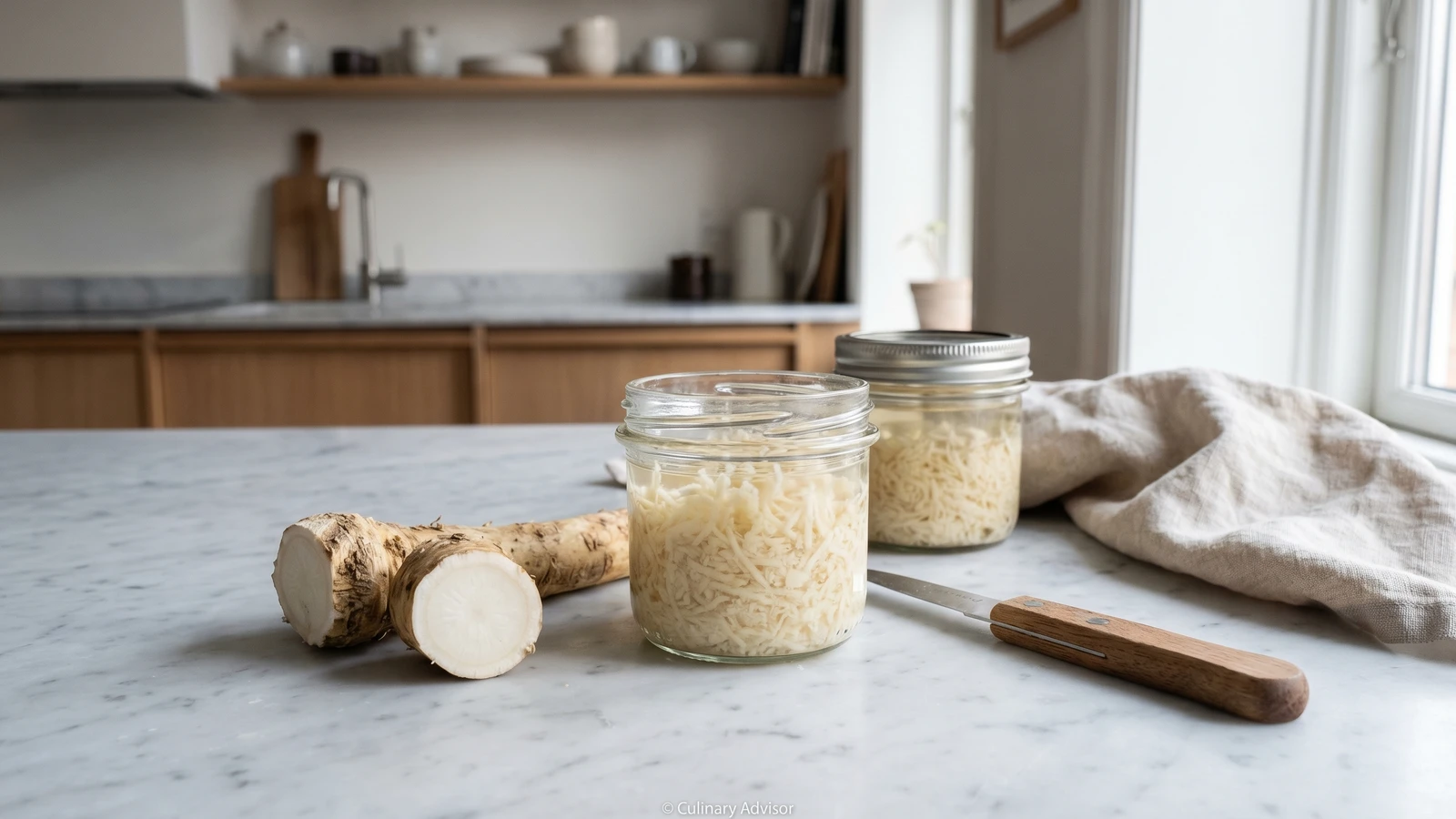
Freshly grated horseradish locked in vinegar brine while the fire is still alive. Three jars in thirty minutes, ready to cut through cold juleskinke and smoked eel all season long.
December in Denmark is a month of preparation. The tree goes up, the candles come out, and somewhere in the kitchen, quietly, the preserves get made. Revet peberrod i lage, freshly grated horseradish jarred in vinegar brine, is one of those things that waits in the back of the fridge for its moment. And its moment always comes.
Peberrod is the sharp edge of the Danish julefrokost. It cuts through the richness of cold juleskinke, wakes up a slice of boiled beef, stands its ground next to smoked eel on rugbrod. Without it the Christmas table is softer, rounder, and something essential is missing. The Danes know this the way they know to light candles when the afternoons go dark. A jar of preserved horseradish is as necessary as the rodkal.
The whole process takes thirty minutes and the only thing you need to understand is this: vinegar stops the fire. The moment grated horseradish meets acid, the heat locks in place. Wait too long and the sharpness fades to nothing. Work quickly, add the brine while the root is still making your eyes water, and you'll have jars that hold their bite for months. I'll walk you through exactly when and how, so you're never guessing. This is the joy of waiting: knowing what you've put away, knowing it's ready when the table is set.
Horseradish has been cultivated in Denmark since at least the 1500s, brought north from southeastern Europe along the same trade routes that carried mustard seed and vinegar to Scandinavian kitchens. By the 1800s, preserved peberrod had become a fixed companion to the cured and boiled meats of the julefrokost, the great Danish Christmas lunch. The practice of preserving it in lage (brine) rather than grating it fresh at the table is a characteristically Danish solution: the acidity of the vinegar holds the volatile compounds that give horseradish its fire, allowing one morning's work in early December to serve the entire holiday season and beyond.
Quantity
400g
Quantity
200ml
Quantity
100ml
Quantity
2 tablespoons
Quantity
1 teaspoon
| Ingredient | Quantity |
|---|---|
| fresh horseradish root | 400g |
| white wine vinegar | 200ml |
| water | 100ml |
| caster sugar | 2 tablespoons |
| fine sea salt | 1 teaspoon |
Wash three small glass jars and their lids in hot soapy water. Place them on a baking tray and put them in the oven at 120C for fifteen minutes. Clean is not the same as sterilized. Sterilized jars are what keep the peberrod safe for months in the fridge, and this step is the reason you can make it once in December and reach for it all season. Leave the jars in the warm oven until you're ready to fill them. Hot glass accepts warm brine without cracking.
Combine the vinegar, water, sugar, and salt in a small saucepan. Heat gently over low flame, stirring until the sugar and salt dissolve completely. This takes two or three minutes. Don't let it boil. You want a clear brine, not a reduced one. Boiling drives off the acetic acid that does the preserving. Set the pan aside and let the brine cool for five minutes while you grate the horseradish. It should be warm when it meets the root, not hot.
Peel the horseradish root with a vegetable peeler or small knife. The skin is thin and papery and comes off easily. Then grate it finely. A box grater works, but a food processor fitted with the fine grating disc is faster and far kinder to your eyes. Horseradish releases volatile compounds the moment its cells break open, and they will make you cry harder than any onion you've ever met. Work near an open window. Better yet, do this step outside if you can. The fumes are sharp and real and relentless.
This is the step that matters most. As soon as the horseradish is grated, pour the warm brine over it and stir. Work quickly. The acid in the vinegar halts the enzymatic reaction that creates the heat. Every second you wait, the volatile compounds escape into the air (that's what's stinging your eyes) and the preserved result grows milder. Speed is how you keep the fire in the jar. Stir until the grated root is evenly coated, then pack it into the warm sterilized jars. Press down gently with a spoon so the brine rises to cover the surface completely. Leave a centimetre of headspace at the top.
Screw the lids on tightly while the jars are still warm. As they cool, the lids will pull inward slightly. You'll hear a faint click. That's the vacuum forming, and it means the seal is good. Store the jars in the fridge. The peberrod is ready to use immediately, but the flavor settles and rounds after a day or two as the vinegar and sugar soften the raw edge without dulling the heat. It keeps for up to three months unopened. The first week is the fiercest. After that the fire eases gradually into something warmer, rounder, still with enough bite to do its job at the table.
1 serving (about 17g)
Culinary guides, cultural storytelling, and the editorial depth that makes cooking meaningful.
Discover Culinary ExplorerChef Freja
Tart autumn apples, slow-boiled and strained clear overnight, then cooked with sugar to a trembling pale amber jelly that belongs on the cheese board, on morning toast, and in the kitchen of anyone who respects the season.

Chef Freja
Autumn apples simmered slowly with vanilla until they collapse into a rough, golden sauce. The condiment that waits on the shelf for flaeskesteg, for roast duck, for the meals that carry you through the Danish winter.

Chef Freja
The pan sauce that holds the Danish Christmas plate together. Duck drippings, good stock, cream, and a spoonful of red currant jelly for the tart brightness that makes juleaften taste like itself.

Chef Freja
September plums slow-cooked with onion, ginger, vinegar, and warm spice into a dark, glossy chutney that belongs beside aged cheese on a cold evening. The joy of waiting, sealed in a jar.