Culinary Explorer

A cooking platform built around craft, culture, and the stories behind what we eat.
Discover Culinary Explorer
Rettichsalat

Rettichsalat

Created by

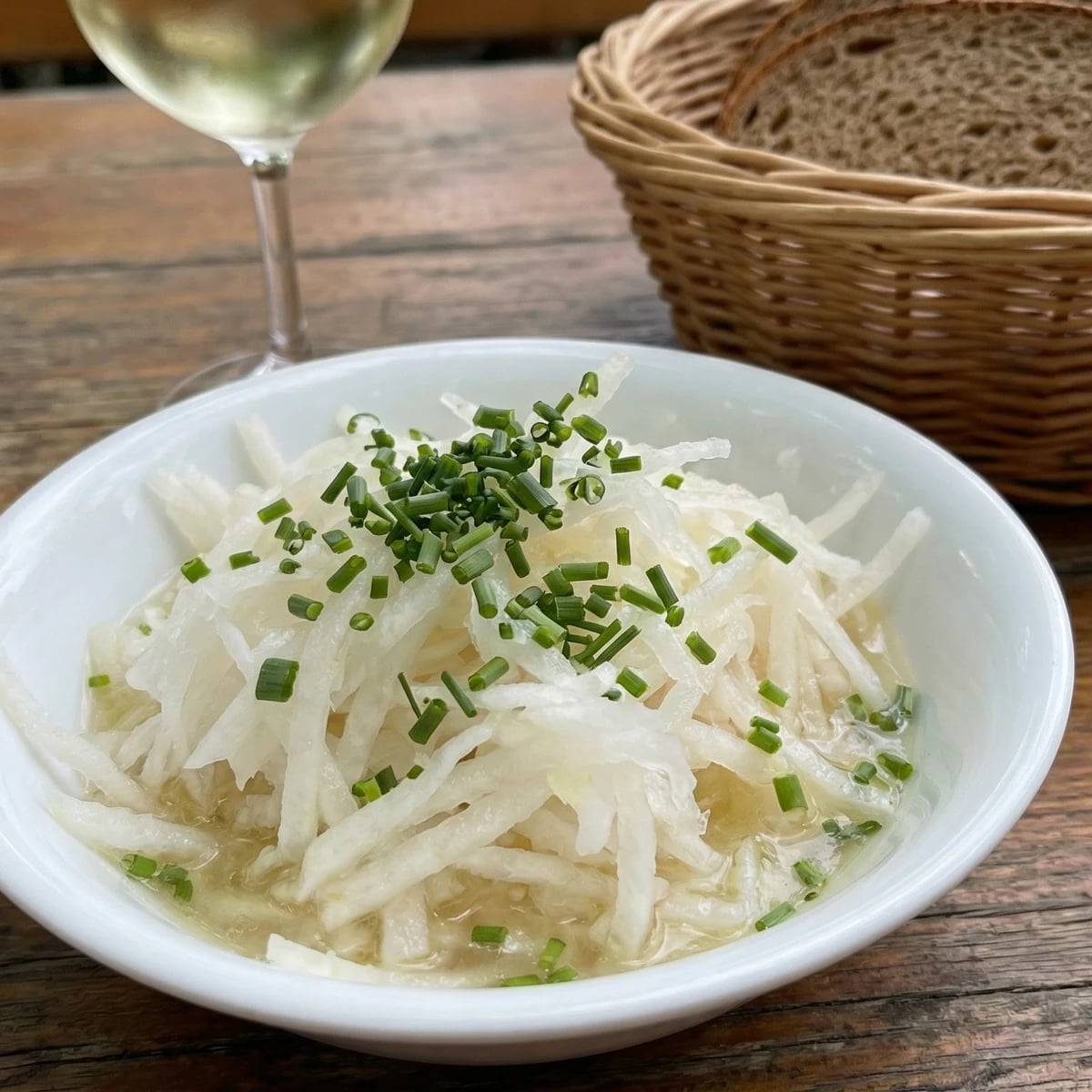
Peppery grated radish, salted until tender, dressed in a sharp vinegar Marinade, and served the way they do at every good Heuriger in Vienna: simply, honestly, with a glass of wine.

Salads
Austrian
Weeknight
Quick Meal
15 min
Active Time
0 min cook45 min total
Yield4 servings

The first time I remember eating Rettichsalat I was eight or nine, sitting at a wooden table in a Heuriger courtyard outside Vienna with Gretel and my grandmother Eva. There were platters of cold meat and cheese, baskets of bread, and a row of small white bowls, each holding a different salad. The Rettichsalat was nothing to look at. Pale shreds in a plain bowl. I took a bite and the pepper hit the back of my nose and made my eyes water. Gretel laughed and told me to keep eating. By the third bite I understood. The heat blooms and then fades, and what's left is this clean, sharp freshness that cuts through everything else on the table.

Rettichsalat is Heuriger food at its most honest. A single vegetable, salted, dressed, served. No fuss, no complexity, nothing to hide behind. The technique is salt and time. You grate the radish, salt it to draw out water and soften the bite, squeeze it dry, and dress it with good vinegar and a little oil. The dressing is vinegar-forward, the way all Austrian Marinaden should be. The oil rounds things out but never dominates.

Outside Austria, this salad has been almost entirely forgotten. People know Schnitzel and Strudel. They don't know Rettichsalat, or Vogerlsalat, or any of the small salads that make up a Gemischter Salat at a proper Gasthaus. That's a shame, because these simple preparations are where you really taste what Austrian cooking is about: good ingredients, treated with respect, served without pretension.

Rettichsalat belongs to the Heuriger tradition, the Viennese wine taverns licensed since a 1784 decree by Emperor Josef II that allowed vintners to sell their own new wine alongside simple cold food. The salads served at these taverns, Rettichsalat, Krautsalat, Erdäpfelsalat, Gurkensalat, reflect centuries of Austrian farmhouse cooking where root vegetables and preserved foods fed families through long winters. Black radish in particular was a staple of Central European peasant kitchens long before it appeared on Heuriger platters, valued for its hardiness in cold soil and its ability to keep through the winter months in a root cellar.

The technique, the tradition, and the story behind every dish.

Discover Culinary Explorer

Ingredients

black radish (Schwarzer Rettich) or white radish (Weißer Rettich)

Quantity

1 large, about 400g

peeled

fine salt

Quantity

1 heaped teaspoon

Apfelessig (apple cider vinegar) or Hesperidenessig

Quantity

3 tablespoons

sunflower oil or mild rapeseed oil

Quantity

2 tablespoons

sugar

Quantity

1 pinch

black pepper

Quantity

to taste

freshly ground

fresh chives

Quantity

1 tablespoon

finely cut

Equipment Needed

  • Box grater with coarse side (or traditional Rettichhobler)
  • Wide mixing bowl
  • Clean kitchen towel or hands for squeezing

Instructions

  1. 1

    Grate the radish

    Peel the radish and grate it on the coarse side of a box grater into long, thin shreds. If you have a Rettichhobler, a traditional radish slicer that cuts it into spiraling ribbons, even better. You want thin, consistent pieces so the salt can do its work evenly. Don't use a food processor. It bruises the flesh and you lose that clean, sharp bite that makes Rettich worth eating.

    Black radish (Schwarzer Rettich) has a stronger, more peppery bite than the white variety. If you find it too fierce, soak the grated shreds in cold water for five minutes before salting. This mellows the heat without killing it.
  2. 2

    Salt and draw moisture

    Spread the grated radish in a wide bowl and sprinkle the salt evenly over it. Toss it through with your hands so every shred gets coated. Now leave it alone for twenty to thirty minutes. The salt draws water out of the radish cells, softening the texture and concentrating the flavor. You'll come back to a puddle of sharp, peppery liquid at the bottom of the bowl. This is exactly what you want.

    Don't skip the salting and don't rush it. Without this step, you're eating raw grated radish in a puddle of dressing. The salt transforms the texture from crunchy and harsh to supple and clean. Twenty minutes minimum.
  3. 3

    Squeeze out the liquid

    Take handfuls of the salted radish and squeeze them firmly over the sink. Get as much liquid out as you can. The shreds should feel damp but not wet when you drop them back into a clean bowl. If you leave too much water in, your Marinade will be diluted and the whole salad goes limp and tasteless within an hour. Be thorough here. It matters.

  4. 4

    Dress the salad

    Add the vinegar first, toss it through, then add the oil. This order is important. The vinegar penetrates the radish shreds directly. If you add oil first, it coats the surface and the vinegar slides off. Austrian salad dressings are vinegar-forward by nature. The oil is there for roundness, not richness. Add the pinch of sugar. It doesn't sweeten the salad, it smooths the sharp edges of the vinegar. Finish with freshly ground black pepper.

    If you can find Hesperidenessig, the Viennese citrus-infused vinegar, use it here. It has a brightness that plain white vinegar can't match. Good Apfelessig is the next best thing. Avoid anything harsh or industrial.
  5. 5

    Rest and serve

    Let the dressed salad sit for ten minutes at room temperature so the flavors come together. Scatter the chives over the top just before serving. Rettichsalat should be cool but not ice cold. Straight from the fridge deadens the pepper. Serve it in a small porcelain bowl as part of a Gemischter Salat, or on its own alongside cold cuts, bread, and a glass of Grüner Veltliner. Mahlzeit!

Chef Tips

  • Black radish (Schwarzer Rettich) is the traditional choice and the one you'll find at any Austrian market from autumn through spring. It has a thick dark skin and dense white flesh with real heat. If you can't find it, a large white radish (Weißer Rettich, sometimes called Bierrettich) works well and is milder. In a pinch, daikon will do, though it lacks the peppery punch. Small red radishes are a different vegetable entirely and won't give you the right result.
  • The ratio of vinegar to oil should lean toward vinegar. This is not a French vinaigrette. Austrian Marinade wants the acid to lead. Two parts vinegar to one part oil is closer to what you'll taste at a Heuriger than the other way around.
  • Rettichsalat is best eaten within a few hours of making it. By the next day, the radish has gone soft and lost its character. Make it fresh, eat it that evening.
  • Serve it as one bowl in a Gemischter Salat, the mixed salad plate you'll find at every Gasthaus in Austria. Each salad gets its own small bowl: Rettichsalat, Gurkensalat, Erdäpfelsalat, Krautsalat, a handful of Vogerlsalat. Together they're greater than any one alone.

Advance Preparation

  • The radish can be grated and salted up to an hour before serving. Leave it in its salt, squeeze and dress just before you bring it to the table.
  • Do not dress the salad ahead of time. The vinegar continues to work on the radish and the texture goes from supple to mushy if it sits too long in the Marinade.

Frequently Asked Questions

Nutrition Information

1 serving (about 95g)

Calories
80 calories
Total Fat
7 g
Saturated Fat
1 g
Trans Fat
0 g
Unsaturated Fat
6 g
Cholesterol
0 mg
Sodium
450 mg
Total Carbohydrates
4 g
Dietary Fiber
2 g
Sugars
3 g
Protein
1 g

Note: Chef personas and recipes are created with AI assistance. Cook with care: follow safe food-handling practices, check doneness with a thermometer when needed, and adapt for allergies and your kitchen.

Where cooking meets culture.

Culinary guides, cultural storytelling, and the editorial depth that makes cooking meaningful.

Discover Culinary Explorer

More from Austrian Salads

Browse the full collection