
Chef Takumi
Black Soybean Tea (黒豆茶, Kuromame-cha)
Whole black soybeans, roasted until their skins split, make a clear amber tea with a roasted sweetness and no caffeine. Drink it plain, then eat the softened beans while they still hold their warmth.
A cooking platform built around craft, culture, and the stories behind what we eat.
Created by
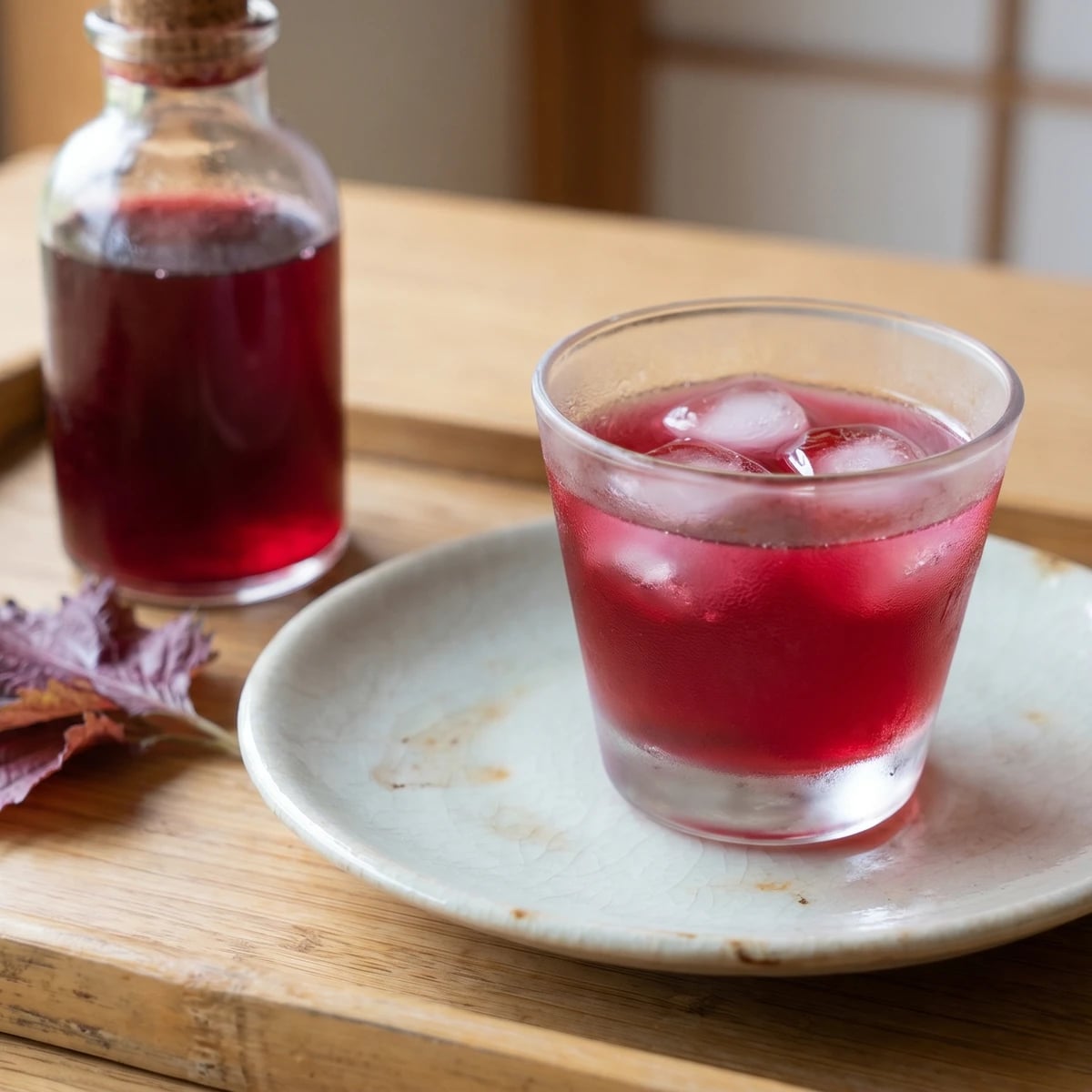
June gives red shiso its brief, fragrant window. Simmer the leaves, strain them clean, then add acid and watch the dull purple liquor turn clear crimson.
Red shiso arrives with the rainy season, bundled in markets for ume work and gone before the careless cook has made up their mind. This is 旬 (shun), the short moment when the leaves are fragrant, tender, and full of color. Wait until late summer and the stalks turn tough, the scent goes thin, and no amount of sugar will make it honest.
The drink looks like a little kitchen magic. It isn't. Simmer the leaves just long enough for the color and perfume to move into the water, then strain them away before their grassy edge takes over. Add lemon and a little rice vinegar off the heat, and the dark liquid brightens at once. Red shiso's pigment loves acid, which is why the color wakes up so cleanly.
The one detail that decides it is restraint. Don't boil the leaves into submission, don't sweeten until the shiso disappears, and don't pretend tired leaves can be rescued in the pot. This is honmono summer preserving, simple and plain: leaf, water, sugar, acid, cold. Serve it diluted over ice after a meal, or carry a bottle outside when the heat has made everyone quiet.
Shiso appears in Japanese materia medica by the Heian period, including the Honzō Wamyō of 918, where it belonged first to the world of medicinal plants. Red shiso later became closely tied to umeboshi making, because its acid-sensitive red pigment colors the salted plum brine and perfumes the fruit during the early-summer rainy season. Akajiso jūsu is a modern household preserving use of those same June and July leaves, made when bunches appear for ume work.
Quantity
300g
stripped from stems, tough or blackened leaves discarded
Quantity
2 liters
Quantity
250g
Quantity
120ml
Quantity
60ml
Quantity
as needed
Quantity
as needed
for diluting
| Ingredient | Quantity |
|---|---|
| fresh red shiso leavesstripped from stems, tough or blackened leaves discarded | 300g |
| water | 2 liters |
| granulated sugar | 250g |
| fresh lemon juice | 120ml |
| rice vinegar | 60ml |
| ice (optional) | as needed |
| cold water (optional)for diluting | as needed |
Strip the red shiso leaves from the stems and put them in a large bowl of cold water. Swish them well, lift them out, and change the water until no grit settles at the bottom. Red shiso grows close to the soil, and grit has no business in a clear drink. Drain the leaves in a basket, but don't worry about drying them perfectly.
Bring the 2 liters of water to a boil in a large pot. Add the leaves by handfuls, pressing them under the surface with chopsticks or a wooden spoon. Simmer gently for 5 to 7 minutes, until the leaves turn dull green and the water is deep purple. That color change is not failure. It means the leaf has given the pot what you asked of it.
Set a fine-mesh strainer lined with sarashi cotton or a clean thin cloth over a heatproof bowl. Pour in the shiso liquid and leaves, then press the leaves gently with a ladle to recover the colored liquid. Don't wring the cloth hard. A little pressure is sensible, but mashing the leaves brings bitterness along with the last spoonful.
Return the strained liquid to the pot while it is still hot. Stir in the sugar until fully dissolved, then bring it just back to a quiet simmer for 2 minutes. Sugar dissolves cleanly in heat, and this short simmer helps the concentrate keep without driving off the shiso's perfume.
Take the pot off the heat and stir in the lemon juice and rice vinegar. The color will shift from dark purple to clear crimson almost at once. Taste it now. It should be too strong, too tart, and a little too sweet to drink straight, because ice and cold water will soften everything later.
Pour the hot concentrate into clean heatproof bottles or jars. Let it cool until just warm, cap it, and refrigerate until cold, at least 2 hours. This is a lightly sweetened drink, not a shelf-stable syrup, so keep it cold and use it within 10 days, or freeze what you want for later summer.
For each glass, pour 1 part red shiso concentrate over ice and add 1 to 2 parts cold water. Stir, taste, and adjust with more water if needed. Serve it bright and cold, with nothing hidden and nothing piled on top.
1 serving (about 150g concentrate)
Culinary guides, cultural storytelling, and the editorial depth that makes cooking meaningful.
Discover Culinary Explorer
Chef Takumi
Whole black soybeans, roasted until their skins split, make a clear amber tea with a roasted sweetness and no caffeine. Drink it plain, then eat the softened beans while they still hold their warmth.

Chef Takumi
A proper glass of Calpis is all ratio and cold: one part concentrate, four parts water, ice enough to keep it bright, and soda when you want shuwashuwa fizz.

Chef Takumi
The kissaten cream soda asks for no hidden trick: bright melon syrup, hard cold soda, a neat scoop of vanilla, and one red cherry placed with a steady hand.

Chef Takumi
Hatomugi-cha looks like a medicinal tea and drinks like roasted grain in a cup: pale, clean, faintly nutty, and easier to make than the label would have you believe.