
Chef Takumi
Ago Dashi (あごだし, grilled flying fish stock)
Ago dashi is quiet luxury: roasted flying fish, konbu, and patient water. Steep it slowly and you get a clear stock that tastes sweet, clean, and full without heaviness.
A cooking platform built around craft, culture, and the stories behind what we eat.

Created by
Beni shōga is not decoration. Young ginger, salt, and red ume vinegar make a bright, sharp pickle that cuts the richness of yakisoba, gyūdon, and takoyaki.
That crimson tangle on yakisoba and gyūdon is not there to look cheerful. Beni shōga cuts oil, sweetness, and soy-dark sauce with one clean sour bite, which is why a small pinch can wake a whole bowl. People see the color and suspect dye or some factory secret. The real thing is simpler, and better behaved: young ginger, salt, time, and aka-umezu, the red brine from the umeboshi barrel.
The ingredient decides half the dish. Use shin-shōga, young ginger, when it is at its shun in early summer and the skin is thin enough to scrape with a spoon. Old ginger will pickle, yes, but it keeps a woody heat and stringy bite, like a lecture that has gone on too long. Sourcing first. Good ginger gives you sweetness and snap before the jar does anything.
The one detail that decides beni shōga is not the color, but the drying. Salt draws water from the cut ginger, then a short rest in air leaves the surface ready to drink the umezu. Skip that and the brine is diluted before it can season, so the pickle tastes loud but thin. Cut the ginger into fine threads with the grain, keep it submerged, and wait at least a day. After three days it becomes what we want: bright, salty-sour, crisp, and nothing hidden.
Umezu is the salty, acidic liquid drawn from ume plums as they are salted for umeboshi; when akajiso, red shiso, is added, the brine turns crimson and becomes aka-umezu. Umeboshi itself is documented by the Heian period, while the use of red shiso coloring in pickles became common in the Edo period as urban pickle shops spread. Beni shōga grew especially visible with modern everyday foods such as yakisoba, takoyaki, okonomiyaki, and gyūdon, where its sour saltiness cuts oil and sweetness.
Quantity
300g
scraped and cut into fine matchsticks
Quantity
2 teaspoons
Quantity
1 cup, or enough to cover
Quantity
1 leaf
Quantity
as needed
for blanching
| Ingredient | Quantity |
|---|---|
| shin-shōga (young ginger)scraped and cut into fine matchsticks | 300g |
| fine sea salt | 2 teaspoons |
| aka-umezu (red ume vinegar from umeboshi) | 1 cup, or enough to cover |
| red shiso leaf from the umeboshi jar (optional) | 1 leaf |
| waterfor blanching | as needed |
Use shin-shōga if you can, the pale young ginger with pink tips and skin so thin it rubs away. It should feel firm and heavy, with a wet-looking cut face and a clean ginger scent. Mature ginger works only as a practical stand-in: blanch it a little longer and expect a sharper, woodier pickle. The old root won't become young just because we put a red coat on it.
Scrape away only the rough skin with a spoon, keeping any pink tips. Slice the ginger lengthwise into thin sheets, about 1mm thick, then stack a few sheets and cut them with the grain into fine matchsticks. This cut matters. Long threads keep their snap and sit lightly on noodles or rice, while thick pieces taste blunt and short crosswise cuts feel fibrous.
Bring a pot of plain water to a lively boil. Add the cut ginger for 30 seconds, then drain at once and spread it on a clean towel. This brief heat takes off the raw sting and opens the fibers just enough for pickling. Longer boiling steals the ginger's perfume, and the umezu is already salty, so the water needs no salt.
While the ginger is still warm, toss it with the sea salt and leave it for 30 minutes. You will see water collect in the bowl. Squeeze the ginger gently by handfuls, pressing rather than twisting, then spread it in a thin layer on a bamboo zaru or towel-lined tray for 1 hour, until the surface feels almost dry. The salt pulls out excess water, and the drying keeps that water from weakening the aka-umezu.
Pack the ginger loosely into a clean glass jar. Add the red shiso leaf if you have one, then pour in enough aka-umezu to cover the ginger by about 1cm. Tap the jar and press through the ginger with a clean chopstick to release trapped air. The threads must stay below the brine, because the umezu can only season and protect what it touches.
Cover the jar with a nonreactive lid and refrigerate. The ginger is usable after 24 hours, but it is better after 3 days, when the color has deepened and the sour saltiness has settled into the cut. Serve in small pinches on yakisoba, gyūdon, takoyaki, okonomiyaki, or plain rice. Use clean chopsticks each time, keep the ginger submerged, and refrigerate for up to 1 month.
1 serving (about 18g)
Culinary guides, cultural storytelling, and the editorial depth that makes cooking meaningful.
Discover Culinary ExplorerChef Takumi
Ago dashi is quiet luxury: roasted flying fish, konbu, and patient water. Steep it slowly and you get a clear stock that tastes sweet, clean, and full without heaviness.
Chef Takumi
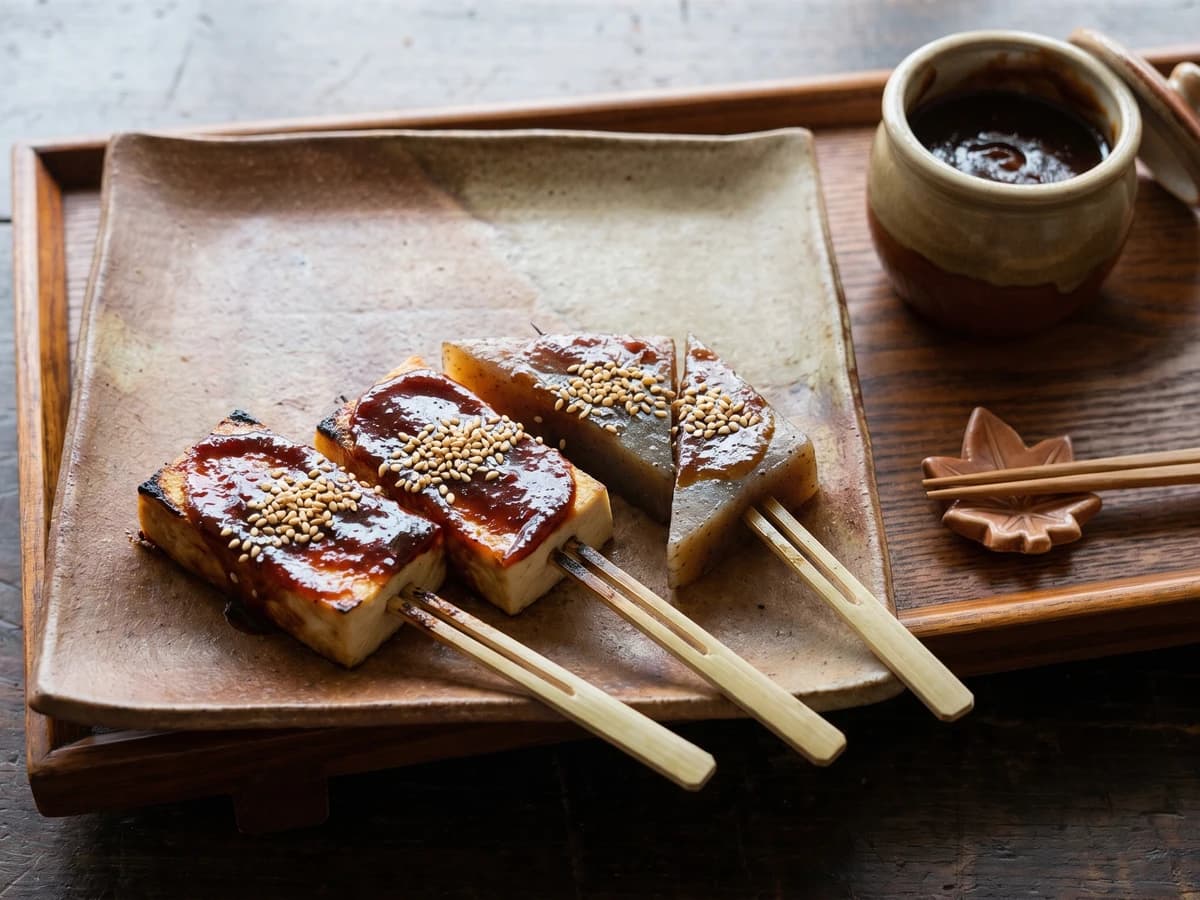
Akamiso dengaku-miso is plain work: bean miso, sweetness, sake, and patient stirring until the glaze turns dark, glossy, and thick enough to cling to the grill.
Chef Takumi
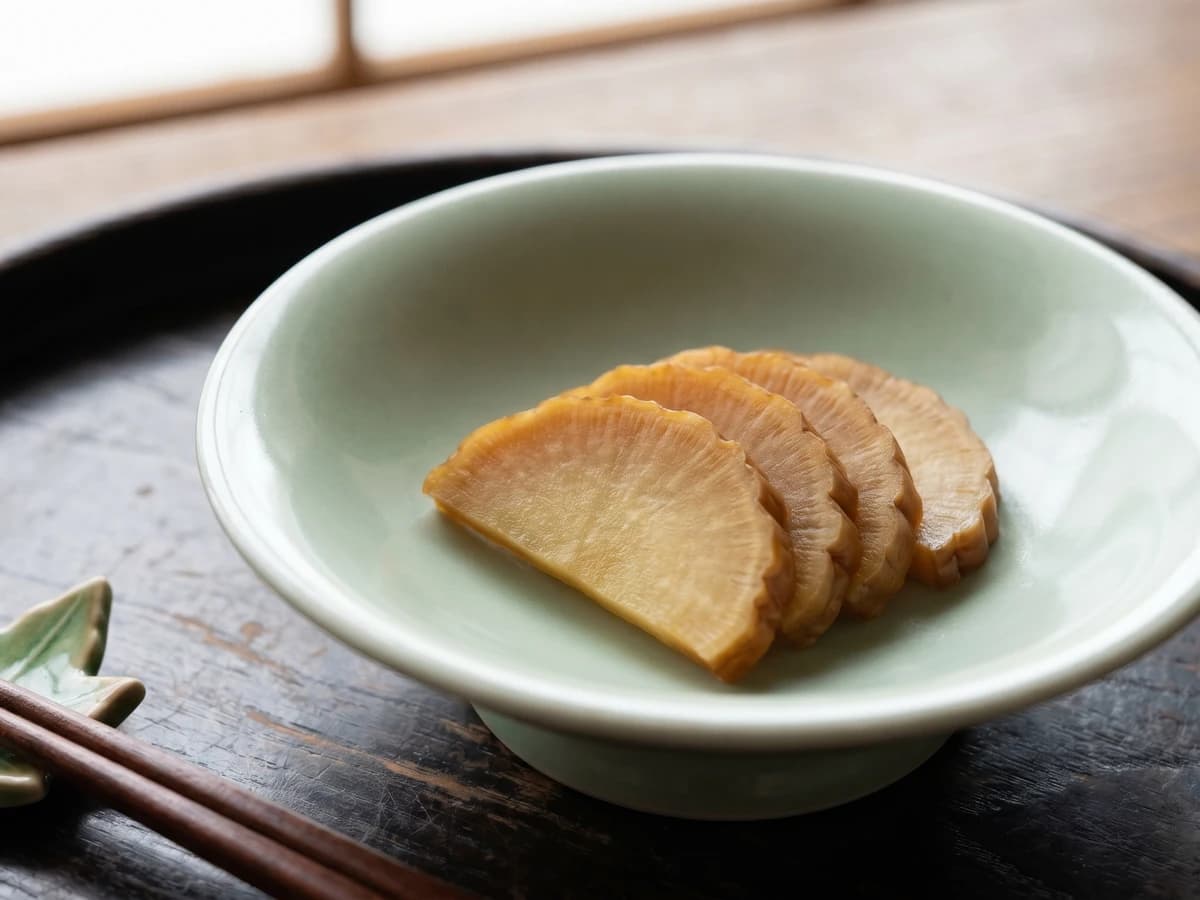
Snow-country takuan begins with smoke. Hang the daikon, dry it gently, then let rice bran, salt, and time turn it into Akita's amber pickle.

Chef Takumi
Aso takanazuke is spring caught in salt: sharp mustard greens pressed until they soften, fermented until their edge turns round, then fried briefly with sesame for rice.