
Chef Lupita
Aceite de Chiltepin Bajacaliforniano
Baja California's wild chiltepin steeped in olive oil with garlic, orejon, and lime peel, until the oil turns ruby-amber and carries the slow, sneaky burn of the desert coast.
A cooking platform built around craft, culture, and the stories behind what we eat.
Created by
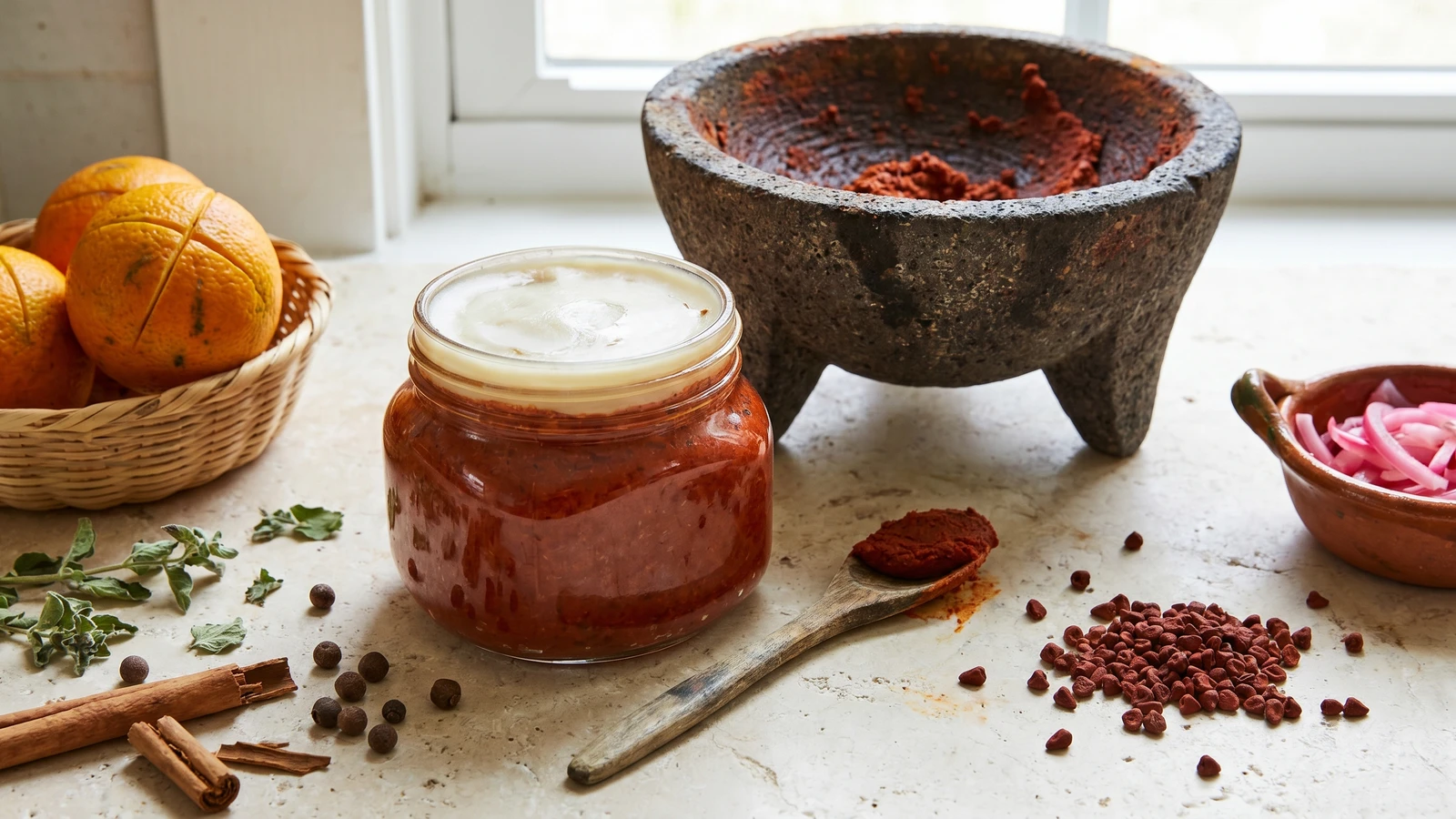
Yucatan's brick-red foundation paste, ground from achiote, allspice, clove, cumin, black pepper, garlic, and naranja agria. The recado that builds cochinita pibil and the architecture of Peninsula cooking.
This is from Yucatan. Not from a generic Mexico that does not exist in any kitchen I have ever cooked in. The Peninsula has its own grammar, its own chiles, its own citrus, its own ceramic on the table, and at the center of all of it sits a small jar of brick-red paste called recado rojo. Without it there is no cochinita pibil. There is no pollo pibil, no tikin xic, no relleno negro's red cousin. The recados are the spine of Yucatecan cooking and recado rojo is the one that walks first.
The color is achiote. Annatto seed, not paprika, not tomato, not chile. Achiote grows on the Peninsula and the Maya were grinding it long before any Spaniard set foot in Campeche. The seeds are hard as gravel when you buy them and they need to soak before they will surrender to a molcajete. This is the step that separates a real recado from the cubes of food-color paste sold in supermarkets. Those cubes are a shortcut. They taste like the shortcut they are.
The sour orange, naranja agria, is the other thing this paste cannot do without. It is not lime. It is not orange. It is a bitter, floral citrus that grows in dooryards across the Peninsula and seasons everything from the recado to the pickled onion that crowns the cochinita. If you cannot find it, I will tell you what to use, but I will also tell you what you are losing. Una mujer que sabe cocinar no pasa hambre, and a kitchen that holds a jar of recado rojo can build a Sunday meal for twelve from a pork shoulder and a sheet of banana leaf. Cada estado, su propia cocina. This one belongs to Yucatan and you do not get to forget it.
Recado rojo descends directly from pre-Columbian Maya cooking practice, where achiote (Bixa orellana, native to the tropical Americas) was used both as a ceremonial body paint and as a culinary colorant and seasoning for fish and game cooked in earth pits called pib. The Spanish arrival in the 16th century introduced the European spices that now define the modern recado, allspice (itself native to the Caribbean but absorbed into Spanish trade), black pepper, clove, cumin, coriander, and cinnamon, layering Old World spice trade onto a Maya base. The word recado in Yucatecan Spanish refers to a category of seasoning pastes (rojo, negro, blanco, escabeche, chilmole, among others) rather than a single recipe, and a Yucatecan kitchen historically kept several recados ready in jars at all times; the survival of this system, alongside the persistence of the pib cooking method, is why the cuisines of Yucatan, Campeche, and Quintana Roo remain audibly distinct from any other regional cuisine in Mexico.
Quantity
1/2 cup
Quantity
2 tablespoons
Quantity
1 tablespoon
Quantity
1 tablespoon
Quantity
1 teaspoon
Quantity
1 teaspoon
Quantity
1, about 3 inches
broken into pieces
Quantity
1 tablespoon
Quantity
1 whole
cloves separated and peeled
Quantity
2 teaspoons
Quantity
1/2 cup
or substitute (see chef tips)
Quantity
2 tablespoons
Quantity
1 tablespoon
melted
| Ingredient | Quantity |
|---|---|
| achiote seeds (annatto) | 1/2 cup |
| whole allspice berries | 2 tablespoons |
| whole black peppercorns | 1 tablespoon |
| whole cumin seed | 1 tablespoon |
| whole cloves | 1 teaspoon |
| whole coriander seed | 1 teaspoon |
| Mexican canela (cinnamon stick)broken into pieces | 1, about 3 inches |
| dried Yucatecan oregano | 1 tablespoon |
| head of garliccloves separated and peeled | 1 whole |
| kosher salt | 2 teaspoons |
| naranja agria (sour orange juice)or substitute (see chef tips) | 1/2 cup |
| white vinegar | 2 tablespoons |
| lard (manteca de cerdo)melted | 1 tablespoon |
Achiote seeds are stones when they come out of the bag. They will break a cheap blender and laugh at a mortar. Place the seeds in a small bowl and cover with hot tap water, not boiling. Let them sit for at least four hours, or overnight. The water will turn brick red and the seeds will swell and soften enough to grind. This is the step nobody wants to do and the step that decides whether your recado is a paste or a gritty paint.
Heat a dry comal or heavy skillet over medium-low. Add the allspice, peppercorns, cumin, cloves, coriander, and the broken cinnamon. Toast, shaking the pan, for two to three minutes. You are not browning them. You are waking them up. The kitchen will smell like the spice stalls of the Mercado Lucas de Galvez in Merida. Pull the pan off the heat the moment the cumin and coriander turn fragrant. Burnt spice tastes like ash and a recado made with ash is finished before it starts.
Transfer the toasted spices and the oregano to a spice grinder or a clean coffee grinder. Grind to a fine powder. Sift through a fine-mesh strainer back into a bowl. The bits that refuse to pass through, grind them again. A recado with pieces of unground clove will bite a guest at the table. La cocina no es decoracion, es trabajo.
Drain the soaked achiote seeds in a fine-mesh strainer. Discard the soaking water. The water has done its job. The seeds are still hard at the core but the outer layer has softened enough to break down.
Place the peeled garlic and salt in a generous molcajete. Grind in slow circles until you have a smooth wet paste. The salt is the abrasive. Add the drained achiote in three batches, grinding each batch into the garlic paste before adding the next. Your molcajete will turn brick red and stay that way for weeks. That is the color of Yucatecan cooking and you should be proud of it. Add the ground spice mixture and grind everything together. The recado should now look like a dark red clay.
Add the naranja agria, the white vinegar, and the melted lard. Grind or blend until the paste is smooth and spreadable, the color of fired clay. Taste it. It should be aggressive: sharp, earthy, citric, with the clove and cinnamon humming underneath the achiote. La manteca es el sabor. The lard carries the spice into the meat in a way that water never will.
Pack the recado into a clean glass jar and press it down to push out air pockets. Smooth the surface and pour a thin layer of melted lard over the top to seal it. Cover and refrigerate. The recado needs at least 24 hours before you use it. The spices marry, the achiote calms down, and the garlic loses its bite. Made on a Friday, it is ready for Sunday's cochinita. So senoras in Valladolid keep a jar in the icebox at all times. Asi se hace y punto.
1 serving (about 14g)
Culinary guides, cultural storytelling, and the editorial depth that makes cooking meaningful.
Discover Culinary ExplorerChef Lupita
Baja California's wild chiltepin steeped in olive oil with garlic, orejon, and lime peel, until the oil turns ruby-amber and carries the slow, sneaky burn of the desert coast.

Chef Lupita
Puebla's Lenten convent adobo, a brick-red vinegar chile paste of ancho, guajillo, garlic, oregano, and comino made to dress fish for the meatless calendar.
Chef Lupita
Zacatecas' wedding-table adobo, built from toasted guajillo and ancho, piloncillo, sour orange, chocolate, canela, clavo, almonds, sesame, and lard.

Chef Lupita
Puebla's convent kitchens built this adobo with ancho, guajillo, jerez, almonds, raisins, clove, and lard, a baroque marinade that stains pork loin and finishes as the sauce.