
Chef Lupita
Aceite de Chiltepin Bajacaliforniano
Baja California's wild chiltepin steeped in olive oil with garlic, orejon, and lime peel, until the oil turns ruby-amber and carries the slow, sneaky burn of the desert coast.
A cooking platform built around craft, culture, and the stories behind what we eat.

Created by
Yucatán's peppercorn-heavy spice paste of charred garlic, allspice, clove, cinnamon, and toasted xcatic chile. The grammar behind pavo en escabeche oriental from Valladolid.
This recado is from Yucatán. Specifically from Valladolid, the colonial town in the east of the peninsula where escabeche oriental, the dish this paste was built for, is the dinner that anchors a Sunday family meal and the wedding-night supper for couples married in the cathedral on the plaza.
The recados of Yucatán are not seasonings. They are the foundation grammar of the cuisine. Recado rojo, the brick-red achiote paste, is the one most people outside Mexico have heard of. There is also recado negro, the burnt-chile black paste that stains tamales the color of charcoal. There is recado blanco, recado verde, recado para bistec. And there is this one: recado de escabeche, the peppercorn-forward paste that is the soul of the eastern Yucatan kitchen. Each one is a different language. A senora from Merida can taste the difference between a recado from Valladolid and one from Tizimin in a single spoonful. Cada estado, su propia cocina, and the Yucatan has more dialects within its own borders than most countries have cuisines.
The technique is simple, the discipline is not. You char the whole heads of garlic on the comal until the skins blacken. You toast the whole spices until they bloom. You grind everything together with naranja agria and a splash of vinegar into a dark, sharp paste. If you skip the char on the garlic, you have a spice mix. If you blend it smooth in a food processor with water, you have a marinade. The recado is ground, not blended into a smoothie. It is a paste built to coat poultry, to perfume a sopa, to give pavo en escabeche oriental that sharp, peppery, lightly smoky character that no other Mexican dish has.
My mother was not from Yucatan. She was from Jalisco. But there was a page in her notebook with the heading 'recados de la peninsula,' copied in her handwriting from a woman she met on a trip to Merida in 1991. The page lists three recados. This one has a note in the margin: 'mucha pimienta, no le tengas miedo.' Lots of pepper, do not be afraid of it. She was right. Saber cocinar es saber vivir.
The recado tradition of the Yucatan Peninsula is a direct inheritance from the Maya, whose pre-Columbian cooks ground spices, chiles, and seeds into paste-based seasonings long before European contact, using flat stones called ka' to grind and bitter local citrus to bind. The introduction of black peppercorns, cloves, cinnamon, and allspice through colonial trade routes from the Caribbean and Spain in the 16th and 17th centuries layered onto the existing grinding tradition, producing the hybrid recados that define modern Yucatecan cooking. Recado de escabeche specifically is associated with Valladolid and the eastern Yucatan, where the dish pavo en escabeche oriental, turkey or chicken poached and bathed in a sharp peppery onion broth, became the regional wedding and feast-day dish by the mid-19th century and remains so today.
Quantity
1/4 cup
Quantity
2 tablespoons
Quantity
1 tablespoon
Quantity
1 stick, about 3 inches
broken into pieces
Quantity
1 teaspoon
Quantity
2
preferably Yucatecan laurel
Quantity
1 tablespoon
Quantity
2
unpeeled
Quantity
2
stemmed (or substitute dried chile guero)
Quantity
1 teaspoon
Quantity
2 tablespoons
or substitute 1 tablespoon orange juice mixed with 1 tablespoon lime juice and 1 teaspoon white vinegar
Quantity
1 tablespoon
| Ingredient | Quantity |
|---|---|
| whole black peppercorns | 1/4 cup |
| whole allspice berries (pimienta gorda) | 2 tablespoons |
| whole cloves | 1 tablespoon |
| true Mexican cinnamon stick (canela de Ceylan)broken into pieces | 1 stick, about 3 inches |
| cumin seeds | 1 teaspoon |
| dried bay leavespreferably Yucatecan laurel | 2 |
| dried Yucatecan oregano (oregano yucateco) | 1 tablespoon |
| whole heads of garlicunpeeled | 2 |
| dried chile xcaticstemmed (or substitute dried chile guero) | 2 |
| kosher salt | 1 teaspoon |
| naranja agria (sour orange juice)or substitute 1 tablespoon orange juice mixed with 1 tablespoon lime juice and 1 teaspoon white vinegar | 2 tablespoons |
| white distilled vinegar | 1 tablespoon |
Heat a dry cast iron comal over medium heat. Place the whole heads of garlic on the comal, unpeeled. Turn them every few minutes for about 15 to 20 minutes, until the papery skins are blackened in patches and the cloves inside have gone soft and faintly sweet. This char is not optional. The blackened, almost burnt edge of the garlic is what gives the recado its smoky bottom note and what makes a Valladolid escabeche taste like Valladolid. Without it, you have a spice mix. With it, you have recado de escabeche.
Push the garlic to one side of the comal. Add the dried xcatic chiles to the hot surface. Toast each side for about 20 seconds, pressing them flat with a spatula. They should puff slightly and turn a deeper amber. The xcatic is a pale, slim Yucatecan chile that brings warmth without the heat of the habanero. Burned chile is bitter chile. Pull them the moment they smell toasty.
Lower the heat to medium-low. Add the peppercorns, allspice, cloves, broken cinnamon stick, and cumin seeds to the comal in a single layer. Toast them for about two minutes, shaking the comal constantly so nothing scorches. You will hear the peppercorns crack and smell the allspice and clove bloom into the kitchen. That smell is the whole point of this recado. Pull the spices off the heat immediately and spread them on a plate to stop the cooking. Add the bay leaves and dried oregano to the residual heat of the comal for ten seconds only, then add to the plate.
Once the toasted spices are completely cool, transfer them to a spice grinder or molcajete. Grind them to a fine powder. If you use a molcajete, work in batches and grind in patient circles, not quick mashes. The recado is ground, not blended into a smoothie. You want a dry, fragrant powder, dark with pepper and warm with clove and cinnamon.
Peel the cooled charred garlic, discarding the blackened skins. The cloves inside should be soft, golden, and smoky. Add the garlic to the molcajete along with the toasted xcatic chiles, the salt, the naranja agria, and the vinegar. Grind everything into a thick, dark paste. The paste should hold its shape on a spoon and smell sharp with pepper, sweet with allspice, and faintly smoky from the charred garlic.
Scrape the recado into a small clean glass jar. Press it down so there are no air pockets and smooth the top. Let it rest at room temperature for at least one hour before using, or refrigerate for up to one month. The flavors marry as it sits. A fresh recado tastes sharp. A rested recado tastes whole. Así se hace y punto.
1 serving (about 25g)
Culinary guides, cultural storytelling, and the editorial depth that makes cooking meaningful.
Discover Culinary ExplorerChef Lupita
Baja California's wild chiltepin steeped in olive oil with garlic, orejon, and lime peel, until the oil turns ruby-amber and carries the slow, sneaky burn of the desert coast.

Chef Lupita
Puebla's Lenten convent adobo, a brick-red vinegar chile paste of ancho, guajillo, garlic, oregano, and comino made to dress fish for the meatless calendar.
Chef Lupita
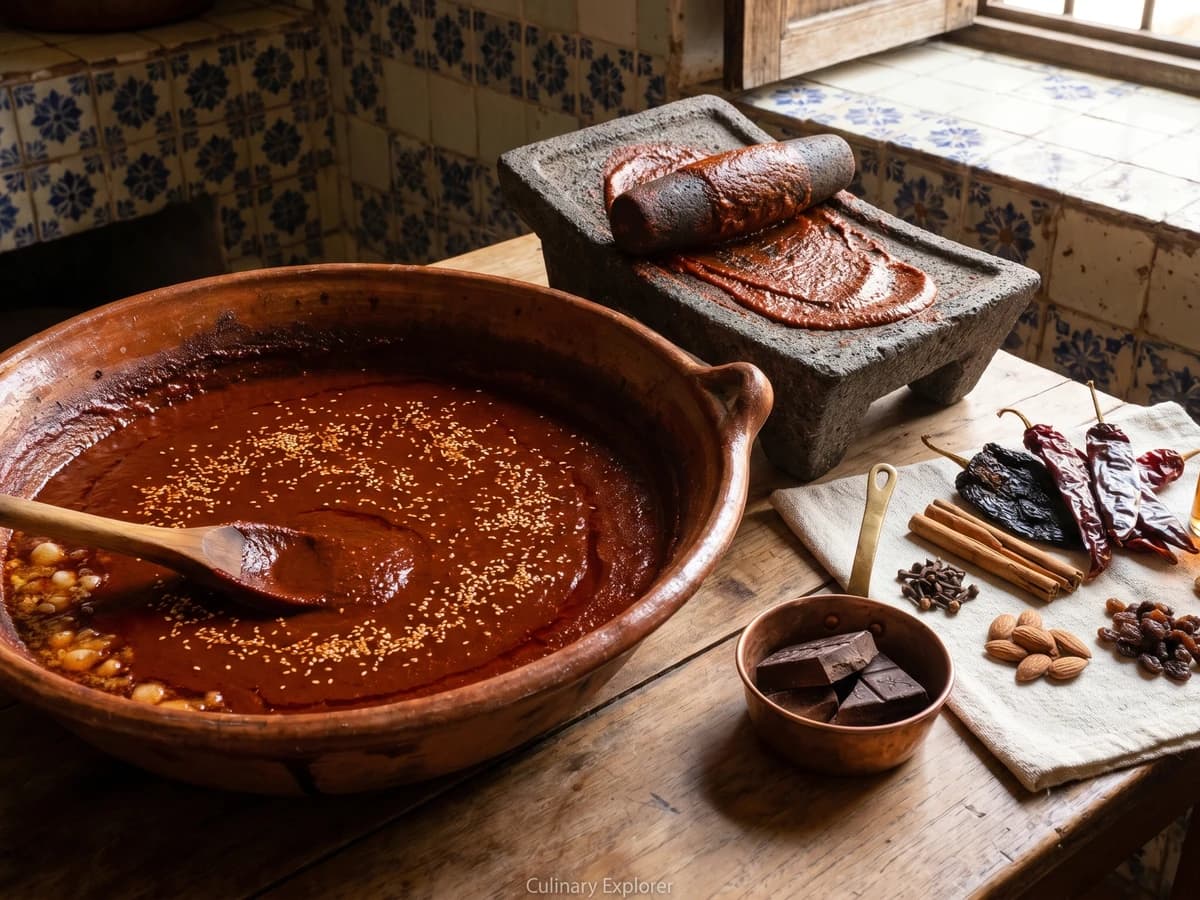
Zacatecas' wedding-table adobo, built from toasted guajillo and ancho, piloncillo, sour orange, chocolate, canela, clavo, almonds, sesame, and lard.

Chef Lupita
Puebla's convent kitchens built this adobo with ancho, guajillo, jerez, almonds, raisins, clove, and lard, a baroque marinade that stains pork loin and finishes as the sauce.