
Chef Lupita
Aceite de Chiltepin Bajacaliforniano
Baja California's wild chiltepin steeped in olive oil with garlic, orejon, and lime peel, until the oil turns ruby-amber and carries the slow, sneaky burn of the desert coast.
A cooking platform built around craft, culture, and the stories behind what we eat.
Created by
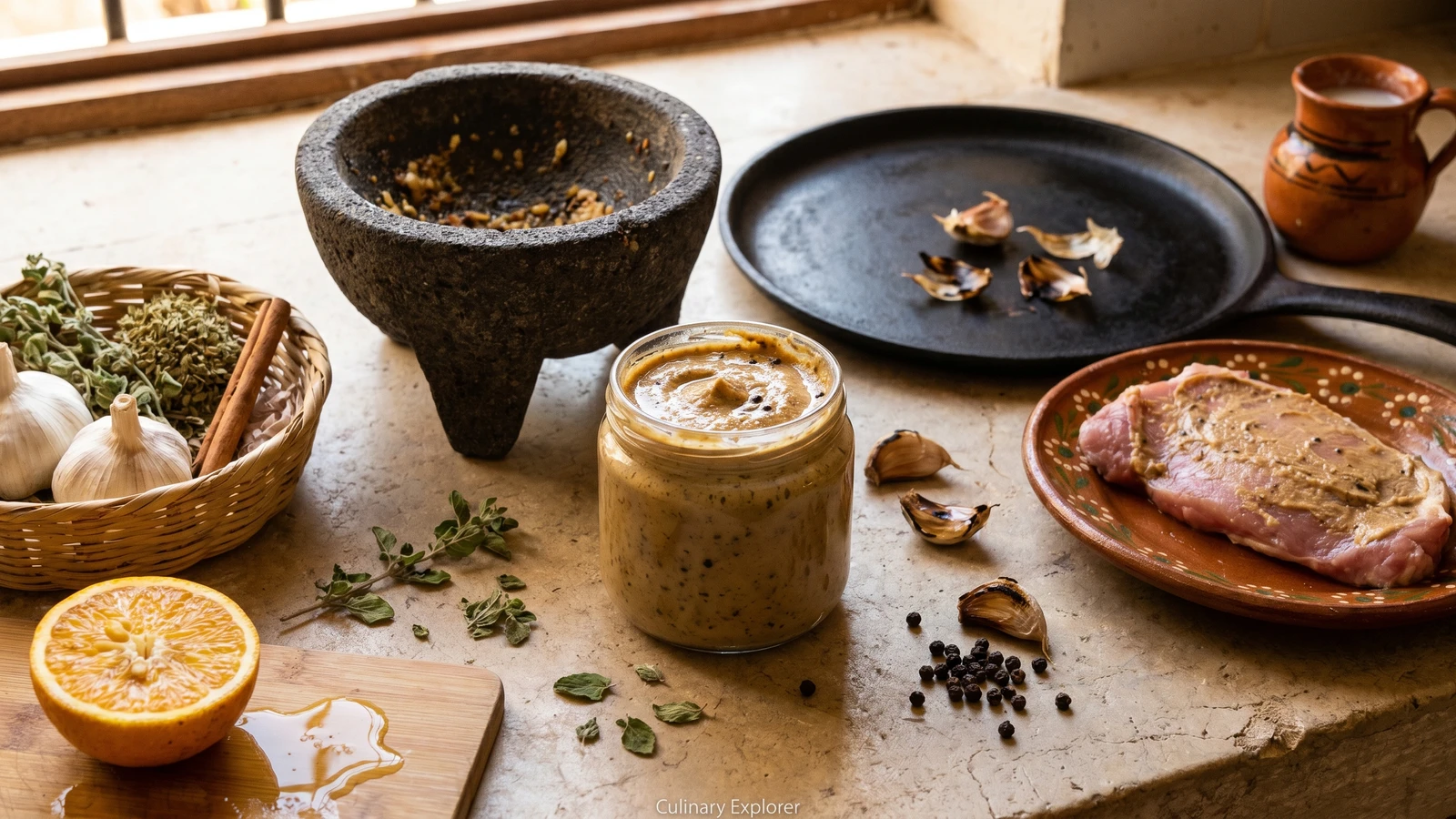
Yucatan's mild all-purpose recado, built on charred garlic, Yucatecan oregano, and warm spices ground into a paste. The marinade for poc chuc and the season for puchero, the recado every cook on the peninsula keeps in a jar.
This is from Yucatan. Specifically from the home kitchens of Merida, Valladolid, and the small towns of the peninsula where every cook keeps three or four recados in glass jars on a shelf. There is rojo for cochinita pibil, negro for relleno negro, and blanco, the mild all-purpose one, for the everyday work of seasoning pork, chicken, and the long-simmered puchero.
Recado blanco is built on charred garlic. Not raw garlic. Charred. You blacken whole heads on a comal until the skins crack and the cloves inside go soft and smoky. That char is the recado. The spices around it, black pepper, Yucatecan oregano, cloves, cinnamon, cumin, are warm and aromatic but they do not lead. The garlic leads. Skip the charring and you have a sharp, raw-tasting paste that no senora in Merida would recognize as her own.
The oregano matters. Yucatecan oregano is a different plant from Mediterranean oregano, more citrusy, with a slight menthol edge that pairs with the sour orange. If you cannot find it, use Mexican oregano. If you reach for Greek oregano you are making a different paste and you should call it something else.
My mother did not cook Yucatecan food. She was from Jalisco. But on my first long trip to Merida I sat with a senora named Dona Lupe in her kitchen in Itzimna and watched her char garlic on a comal that had been in her family since 1962. She told me: el recado blanco es el alfabeto. Si no sabes hacerlo, no sabes hablar cocina yucateca. The recado blanco is the alphabet. If you cannot make it, you cannot speak the Yucatecan kitchen. Saber cocinar es saber vivir.
The recados of Yucatan are direct descendants of Maya spice pastes, which used native pepper, achiote, and ground squash seed long before the conquest. The Spanish introduction of black pepper, cumin, cloves, cinnamon, and garlic in the 16th century transformed these pre-Columbian seasoning pastes into the recado system that defines Yucatecan cuisine today: a family of color-coded pastes (rojo, negro, blanco, chilmole, escabeche) each with a fixed use within the regional cooking repertoire. The peninsula's geographic isolation from central Mexico, separated by the Gulf and historically more connected by sea to Cuba and New Orleans than to Mexico City, allowed Yucatecan cooks to develop a cuisine whose seasoning grammar shares almost nothing with the cooking of central or northern Mexico.
Quantity
2
unpeeled, for charring on the comal
Quantity
3 tablespoons
Quantity
2 tablespoons
Quantity
1 tablespoon
Quantity
1 teaspoon
Quantity
1 stick, about 2 inches
broken into pieces
Quantity
1 tablespoon
Quantity
1/4 cup
fresh squeezed; see chef tips for substitute
Quantity
2 tablespoons
Quantity
1 tablespoon
for sealing the paste in storage
| Ingredient | Quantity |
|---|---|
| heads of garlicunpeeled, for charring on the comal | 2 |
| whole black peppercorns | 3 tablespoons |
| dried Yucatecan oregano (oregano yucateco) | 2 tablespoons |
| whole cumin seed | 1 tablespoon |
| whole cloves | 1 teaspoon |
| cinnamon stick (canela de Ceilan)broken into pieces | 1 stick, about 2 inches |
| kosher salt | 1 tablespoon |
| naranja agria (Seville sour orange juice)fresh squeezed; see chef tips for substitute | 1/4 cup |
| white vinegar | 2 tablespoons |
| manteca de cerdo, melted (optional)for sealing the paste in storage | 1 tablespoon |
Heat a dry comal or heavy skillet over medium-high until you can feel the heat rising off the surface. Lay the unpeeled heads of garlic on their sides and char them, turning every few minutes, until the papery skin blackens in patches and the cloves inside soften. This takes about 15 minutes. The garlic should give when you press it. Charring on the skin is the recado blanco signature. It tames the bite of raw garlic and gives the paste a faint smoke. Skip it and you have a sharp, raw-tasting paste that bears no resemblance to what the senoras in Merida make.
Wipe the comal clean and lower the heat to medium. Add the peppercorns, cumin seed, cloves, and pieces of cinnamon stick. Toast for 2 to 3 minutes, shaking the pan, until the spices darken a shade and the kitchen smells warm and slightly sweet from the clove and cinnamon. Pull them off the heat the moment they smell ready. Burned cumin is bitter cumin and there is no fixing it later. Let the spices cool for five minutes on a plate. They grind cleaner when they are not hot.
Return the comal to low heat. Add the Yucatecan oregano and toast for about 30 seconds, just until you smell it open up. Yucatecan oregano is not Mediterranean oregano. It is more citrusy, slightly grassy, with a menthol edge. If you used Greek or Italian oregano the recado would taste wrong. Pregunta en el mercado por oregano yucateco. Si no lo encuentras, busca oregano mexicano. Es lo mas cercano. Mediterranean is the last resort and it changes the recado.
Transfer the cooled toasted spices and the oregano to a spice grinder or a molcajete. If you are using a molcajete, this is real work. Grind in batches until you have a fine, even powder. The cinnamon is the slowest to break down. Keep going until it surrenders. A coarse grind makes a coarse paste and the recado loses the velvet texture that makes it cling to a piece of pork.
Once the charred heads are cool enough to handle, squeeze the cloves out of their skins. They should slip out as a soft, sticky, slightly smoky paste. Discard the papery skins. Mash the garlic with the flat of a knife or in the molcajete until it is a smooth puree. Some blackened bits from the skin will sneak in. That is part of the flavor. Do not chase them out.
Combine the ground spice powder, the mashed charred garlic, and the salt in the molcajete or a wide bowl. Pour in the naranja agria and the vinegar. Work it together with the pestle or the back of a wooden spoon until you have a thick, spreadable paste the color of damp sand with flecks of black. It should hold its shape on the spoon and smell pungent: garlic forward, then the warm sweetness of clove and cinnamon, then the citrus snap of the oregano and the sour orange. Taste a tiny amount on a fingertip. It should be intense. Recado is a seasoning, not a dipping sauce. It tastes correct when it is almost too much by itself.
Use the recado right away to marinate pork for poc chuc, season a puchero, or rub onto chicken before grilling. To store, pack into a clean glass jar and smooth the top. Pour the tablespoon of melted manteca over the surface to seal it from the air. Refrigerate for up to a month. The flavor deepens after a day of rest. Recetas probadas y garantizadas.
1 serving (about 14g)
Culinary guides, cultural storytelling, and the editorial depth that makes cooking meaningful.
Discover Culinary ExplorerChef Lupita
Baja California's wild chiltepin steeped in olive oil with garlic, orejon, and lime peel, until the oil turns ruby-amber and carries the slow, sneaky burn of the desert coast.

Chef Lupita
Puebla's Lenten convent adobo, a brick-red vinegar chile paste of ancho, guajillo, garlic, oregano, and comino made to dress fish for the meatless calendar.
Chef Lupita
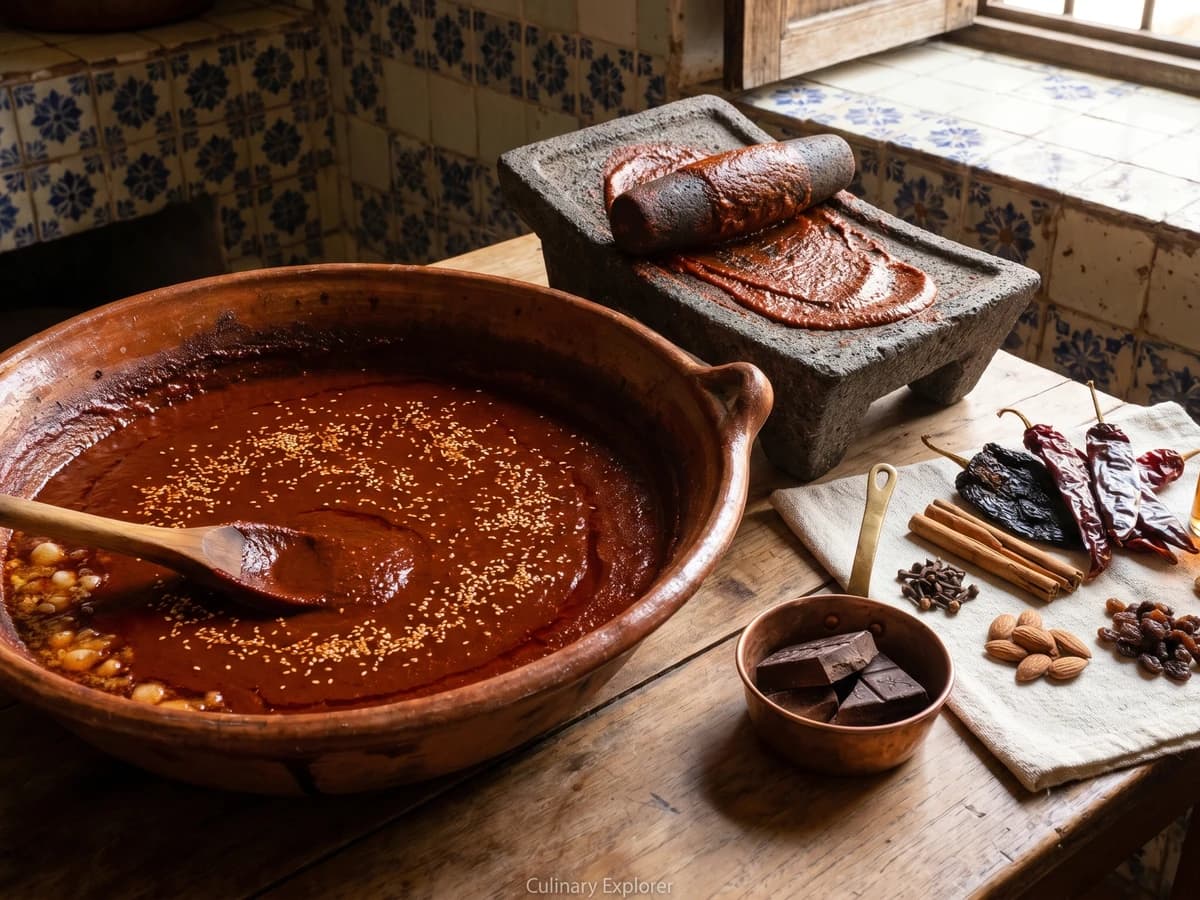
Zacatecas' wedding-table adobo, built from toasted guajillo and ancho, piloncillo, sour orange, chocolate, canela, clavo, almonds, sesame, and lard.

Chef Lupita
Puebla's convent kitchens built this adobo with ancho, guajillo, jerez, almonds, raisins, clove, and lard, a baroque marinade that stains pork loin and finishes as the sauce.