
Chef Thomas
A Proper Hot Toddy
A winter glass of whisky, honey, and lemon, stirred together in a warm mug and carried up to bed when the cough won't leave and the evening has asked you politely to stop.
A cooking platform built around craft, culture, and the stories behind what we eat.
Created by Chef Thomas
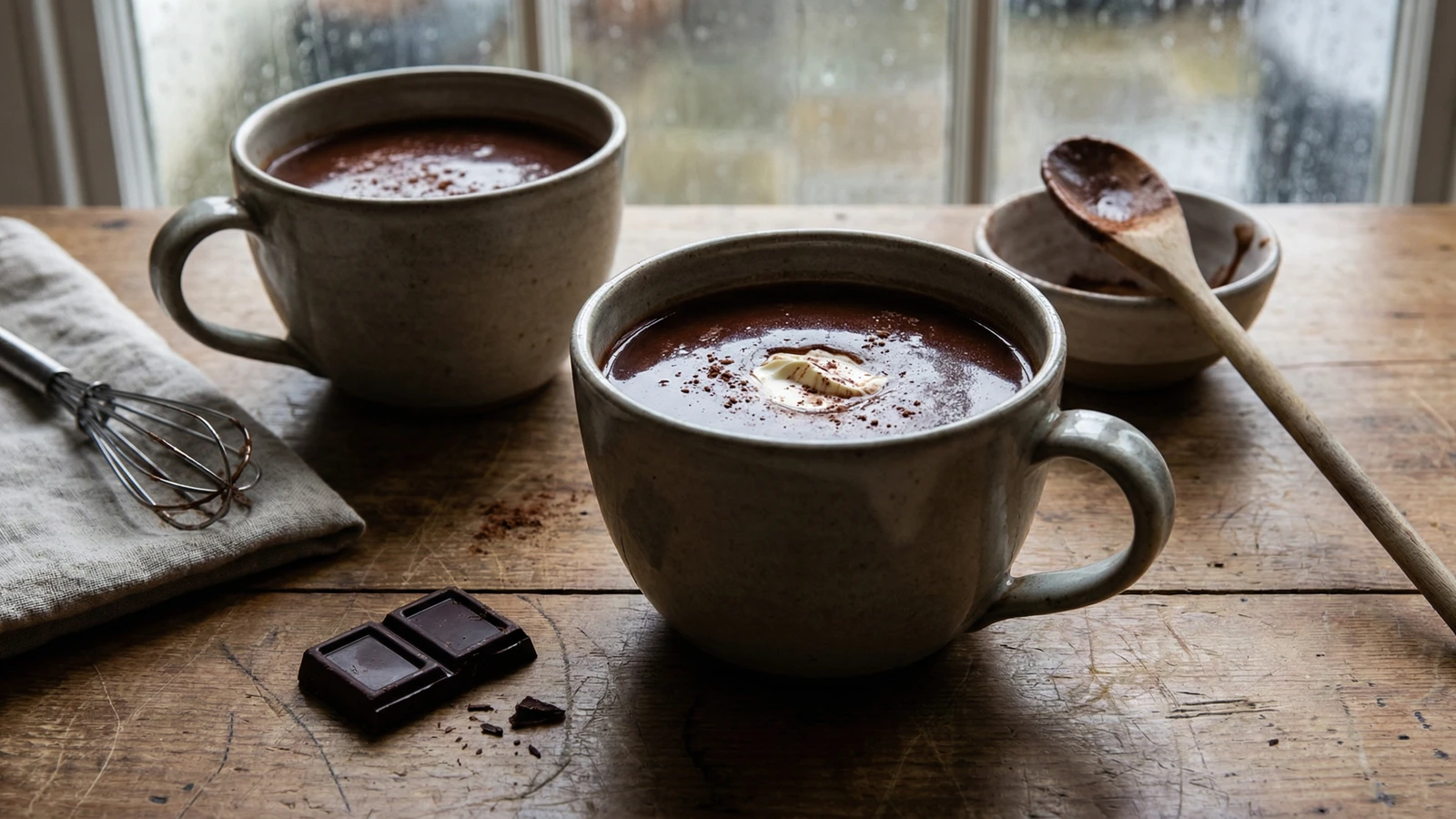
A proper hot chocolate made with real dark chocolate and whole milk, thick enough to coat a spoon and rich enough to make a cold afternoon feel like a small occasion.
There's a particular kind of January afternoon, the light already going at three, the windows ticking with rain, when nothing sensible will do. You've been out in the cold too long and come home with hands that won't warm up. A cup of tea isn't enough. This is the drink for that afternoon.
Real hot chocolate has almost nothing to do with the powder in the sachet. That's a different drink entirely, and a sadder one. This is whole milk warmed gently in a pan, dark chocolate chopped fine and stirred in until it thickens, a spoonful of cocoa to deepen the flavour, a pinch of salt to sharpen it. Five minutes of quiet attention at the hob. That's the whole thing.
The ratio matters more than the recipe. You want a drink that's properly thick, the kind that coats the spoon and leaves a line on your top lip. If it pours like milk, you haven't used enough chocolate. Start with the amounts below and adjust until it feels right in your hand. A recipe is a conversation, not a contract.
I make this for myself when the weather turns properly cold, and for other people when they've had the sort of day that needs feeding. There are few better feelings than putting a warm mug into the hands of someone who came in from the rain. We're only making a drink. But it's the kind of drink that says something words can't.
Quantity
500ml
Quantity
100g (70% cocoa solids)
finely chopped
Quantity
1 tablespoon
Quantity
1 tablespoon, or to taste
Quantity
pinch
Quantity
1 strip or half a pod
Quantity
a small pour
to finish
| Ingredient | Quantity |
|---|---|
| whole milk | 500ml |
| dark chocolatefinely chopped | 100g (70% cocoa solids) |
| cocoa powder | 1 tablespoon |
| caster sugar | 1 tablespoon, or to taste |
| fine sea salt | pinch |
| orange peel or vanilla pod (optional) | 1 strip or half a pod |
| double cream (optional)to finish | a small pour |
Pour the milk into a small saucepan and set it over a gentle heat. If you're using the orange peel or the vanilla pod, drop it in now and let it infuse as the milk warms. You're not trying to boil it. You want small bubbles at the edge of the pan and steam rising quietly from the surface. Trust your nose. When it starts to smell sweet and creamy, it's ready.
While the milk heats, put the cocoa powder and sugar in a small bowl with the pinch of salt. Spoon in a tablespoon or two of the warm milk and stir it into a smooth, glossy paste. This small step matters. It keeps the cocoa from going lumpy later and gives the drink a deeper, rounder chocolate flavour than chocolate alone.
Fish out the orange peel or vanilla pod if you used one. Turn the heat down low. Add the chopped chocolate to the warm milk and whisk gently. The chocolate will streak, then surrender, then disappear into the milk altogether. Stir in the cocoa paste. Keep whisking, slowly, patiently. The drink will thicken as it goes. You're looking for something that coats the back of a spoon and leaves a trail when you draw a finger across it.
Take it off the heat. Taste. If it wants more sugar, add a little. If it feels too rich, a splash more hot milk will lighten it without dulling the flavour. Pour into two warm mugs, the thickest-walled ones you've got. A small pour of cold double cream on top, if you like, will sit in a pale swirl and slowly sink in as you drink. Carry the mugs somewhere you can sit down properly.
1 serving (about 310g)
Culinary guides, cultural storytelling, and the editorial depth that makes cooking meaningful.
Discover Culinary ExplorerChef Thomas
A winter glass of whisky, honey, and lemon, stirred together in a warm mug and carried up to bed when the cough won't leave and the evening has asked you politely to stop.

Chef Thomas
Hot spiced ale with roasted apples bobbing on the surface, honeyed and fragrant with cinnamon and orange peel, the oldest winter drink in the British kitchen and still the best.

Chef Thomas
A deep, inky cordial made from a glut of August blackcurrants, bottled for the months when summer feels like something you dreamed, and poured over ice when you need proof it happened.
Chef Thomas
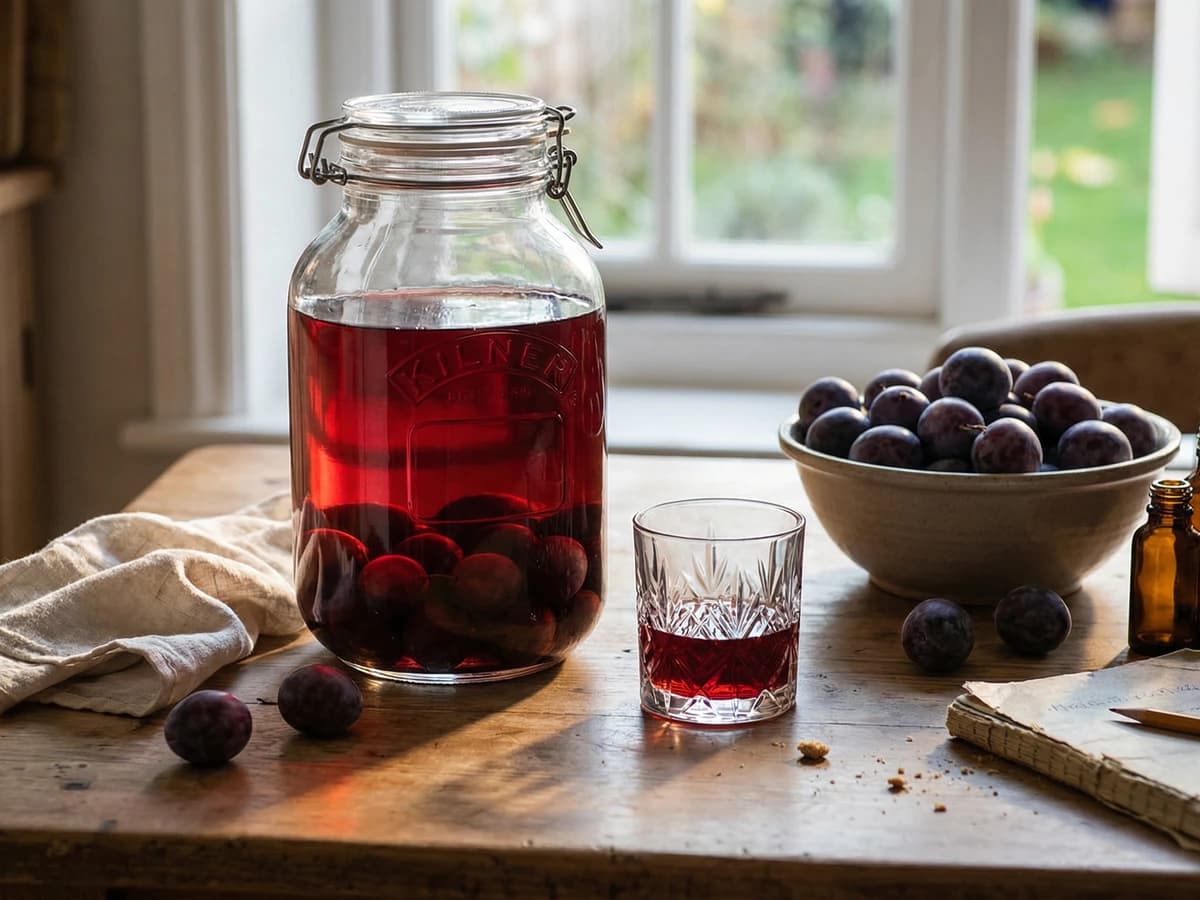
A slow autumn ritual that turns a glut of sharp purple plums into a bottle of ruby warmth, ready to pour on dark December evenings when the kitchen smells of woodsmoke and the year is winding down.