Chef Lupita
Acúmara Tatemada al Comal
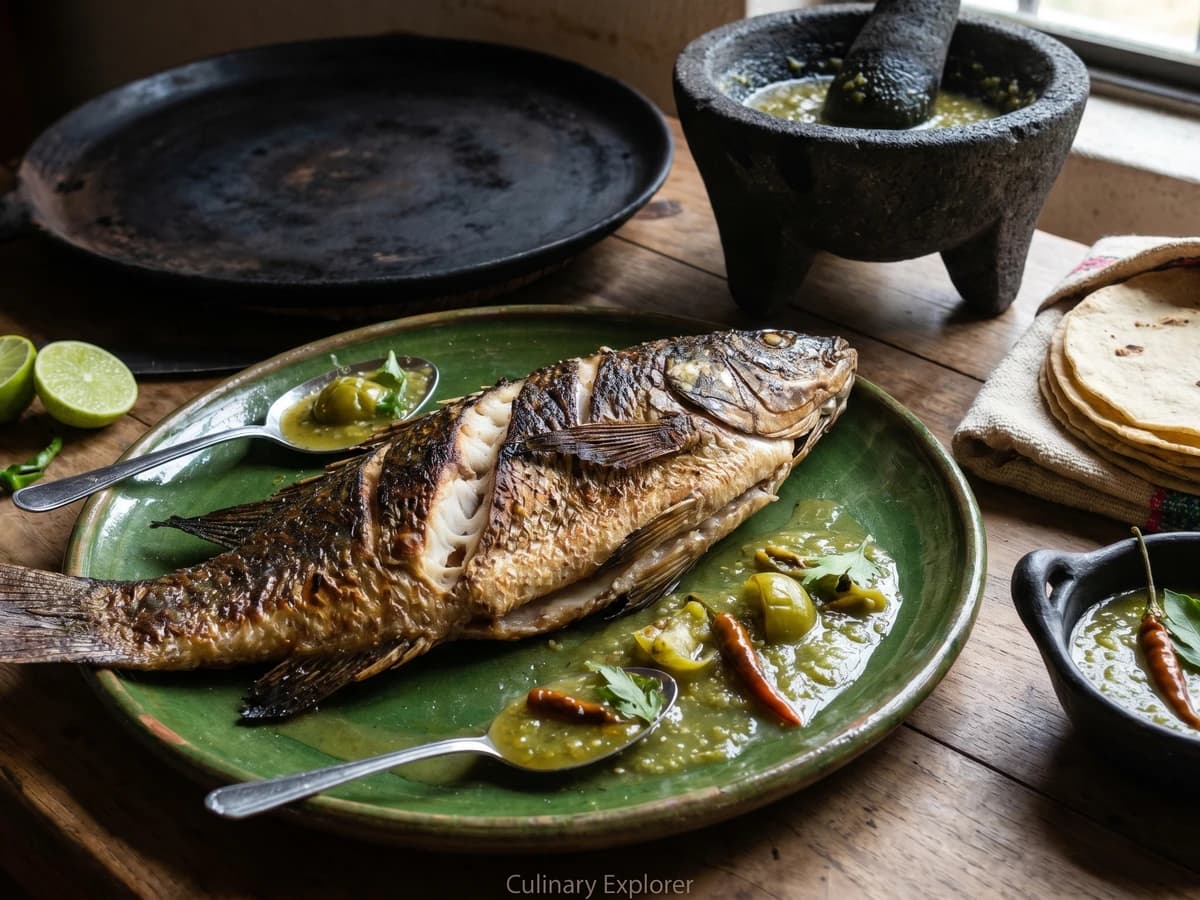
Michoacán's Lake Pátzcuaro acúmara, a whole kurucha from the lago tatemada on a comal de leña and served with chile perón atápakua, corn tortillas, and P'urhépecha discipline.
A cooking platform built around craft, culture, and the stories behind what we eat.

Created by
Puebla's weeknight comfort: roasted chile poblano strips sweated in lard with sweet onion and corn, finished in crema until silky, eaten with the warm tortilla in hand.
This dish is from Puebla. The chile is in the name. Chile poblano, the broad, deep-green chile of the Valle de Puebla, roasted black, sweated under a cloth, peeled by hand, and cut into the long strips that give the dish its identity. Rajas means strips. Cut them any other way and you have made something else.
This is comfort food in the truest sense. Not Sunday-feast food, not occasion food, weeknight food. The kind of dish a poblana cook makes when the chiles are good at the mercado and there is corn on the cob in the bin next to them. The crema is what finishes it. Crema mexicana, not sour cream. The difference is not snobbery, it is chemistry. Sour cream breaks the moment it touches heat. Crema mexicana stays silky, slightly sweet, slightly tangy, and it clings to the rajas the way it is supposed to.
My mother made these often. She wrote in the margin of her notebook: "no escatimes en la manteca," do not skimp on the lard. She was right. The poblano carries smoke from the char, the onion carries sweetness from the slow sweat, the corn carries summer from the cob, and the lard carries all of them across the tongue. Substitute olive oil and you will taste the absence. La manteca es el sabor.
A note on season. This dish is at its best when corn is in the mercado and the poblanos are still firm and shiny. In late summer and early fall, in central Mexico, this is the dish on the table. In January, when the corn is starchy and the poblanos are tired, cook something else. Cada estado, su propia cocina, and every dish, its own season.
The chile poblano takes its name directly from the Valle de Puebla, where the variety has been cultivated since pre-Columbian times and remains one of the defining crops of the region's volcanic soils. Rajas as a preparation predates the Spanish conquest in form (charred chile strips appear in Nahua-era cooking records), but the addition of dairy, specifically crema, is a colonial-era development that arrived with Spanish cattle and the convent kitchens of 16th-century Puebla. The pairing of rajas with elote and crema became codified as a household staple across central Mexico (Puebla, Tlaxcala, Estado de Mexico, and Mexico City) during the 19th century, when corn varieties suited to fresh consumption became widely cultivated alongside the dried-corn nixtamal tradition.
Quantity
6
Quantity
3 tablespoons
Quantity
1 large
sliced into thin half-moons
Quantity
3
finely chopped
Quantity
3 ears (about 2 cups kernels)
kernels cut from the cob
Quantity
1 cup
do not substitute sour cream
Quantity
1/2 cup
Quantity
1 sprig
leaves only, roughly torn
Quantity
1 teaspoon, plus more to taste
Quantity
to taste
Quantity
1/2 cup
crumbled
Quantity
for serving
warmed
| Ingredient | Quantity |
|---|---|
| large fresh chile poblano | 6 |
| manteca de cerdo (pork lard) | 3 tablespoons |
| white onionsliced into thin half-moons | 1 large |
| garlic clovesfinely chopped | 3 |
| fresh sweet cornkernels cut from the cob | 3 ears (about 2 cups kernels) |
| crema mexicanado not substitute sour cream | 1 cup |
| whole milk | 1/2 cup |
| fresh epazoteleaves only, roughly torn | 1 sprig |
| kosher salt | 1 teaspoon, plus more to taste |
| freshly ground black pepper | to taste |
| queso fresco (optional)crumbled | 1/2 cup |
| hand-pressed corn tortillas (optional)warmed | for serving |
Set the chile poblano directly over the open flame of a gas burner, or place them under a hot broiler. Turn them with tongs every minute or two. The skin should blister and blacken evenly on every side. Do not rush this. A pale, half-roasted poblano has a raw vegetal taste that will haunt the dish. You want the skin charred black and the flesh just softened underneath.
Pile the charred chiles into a bowl and cover tightly with a plate or a kitchen towel. Let them sit for ten minutes. The trapped heat loosens the skin from the flesh. Then rub the blackened skin off with your fingers. Do not rinse them under water. Water washes the smoky oils down the drain and those oils are half the flavor. A few black flecks left behind are fine. That is char, not failure.
Tear or cut a slit down one side of each chile. Open it flat. Pull out the stem, the seed pod, and the white veins. Slice the chile lengthwise into strips about half an inch wide. These are your rajas. The word means strips and the cut is the dish. Do not dice them. The long ribbons are how a poblana cook serves them.
Melt the manteca in a heavy 10-inch skillet or cazuela over medium heat. La manteca es el sabor. Add the sliced onion with a pinch of salt. Cook for eight to ten minutes, stirring now and then, until the onion is soft, sweet, and just beginning to turn gold at the edges. This is sweating, not browning. You want sweetness, not caramel.
Stir in the chopped garlic and cook for one minute, just until fragrant. Add the corn kernels and raise the heat to medium-high. Cook for four to five minutes, stirring occasionally. The kernels should turn a deeper yellow and develop a few toasted spots. If your corn is in season and sweet, the smell at this point will tell you. If it is not, you will know that too.
Add the poblano strips and the torn epazote leaves to the skillet. Stir to combine and cook for two minutes, letting the chiles warm through and pick up the lard and the corn sugars. Season with the salt and a few grinds of black pepper. Taste. The dish should already feel almost done at this point. The crema is the finish, not the rescue.
Lower the heat to medium-low. Pour in the crema and the milk. Stir gently to coat everything. Simmer for three to four minutes, until the sauce thickens slightly and clings to the rajas. Do not let it boil hard or the crema will break and split into curds and watery whey. You want it silky, the color of pale ivory streaked with green and gold. Taste one more time for salt.
Bring the cazuela to the table. Crumble the queso fresco over the top and serve immediately with a stack of warm corn tortillas wrapped in a cloth servilleta. Eat the rajas spooned into the tortilla, folded, and eaten with your hands. That is how a poblana eats them. Así se hace y punto.
1 serving (about 255g)
Culinary guides, cultural storytelling, and the editorial depth that makes cooking meaningful.
Discover Culinary ExplorerChef Lupita
Michoacán's Lake Pátzcuaro acúmara, a whole kurucha from the lago tatemada on a comal de leña and served with chile perón atápakua, corn tortillas, and P'urhépecha discipline.

Chef Lupita
Puebla's weekday adobo of pork shoulder braised in a thick guajillo and ancho sauce sharpened with vinegar, cumin, and clove. The deep red of a market spice stall, the dish a poblana cooks without thinking.

Chef Lupita
Loreto's pit-roasted clams, planted hinge-up in beach sand and tatemadas under a fast fire of dried romerillo brush, the resinous Baja desert shrub that gives this dish its smoke.

Chef Lupita
Oaxaca's eighth mole, the silky, almond-and-cinnamon almendrado, served over poached chicken. Mild, sweet, restrained, and a quiet rebuttal to anyone who thinks Mexican food has to be hot to be Mexican.