
Chef Lupita
Arroz a la Oaxaqueña
Oaxaca's red rice, stained with tomato and fried in lard, steamed with carrots, ejotes, black beans, and epazote. The side that anchors a Oaxacan family meal and earns its place beside the main.
A cooking platform built around craft, culture, and the stories behind what we eat.
Created by
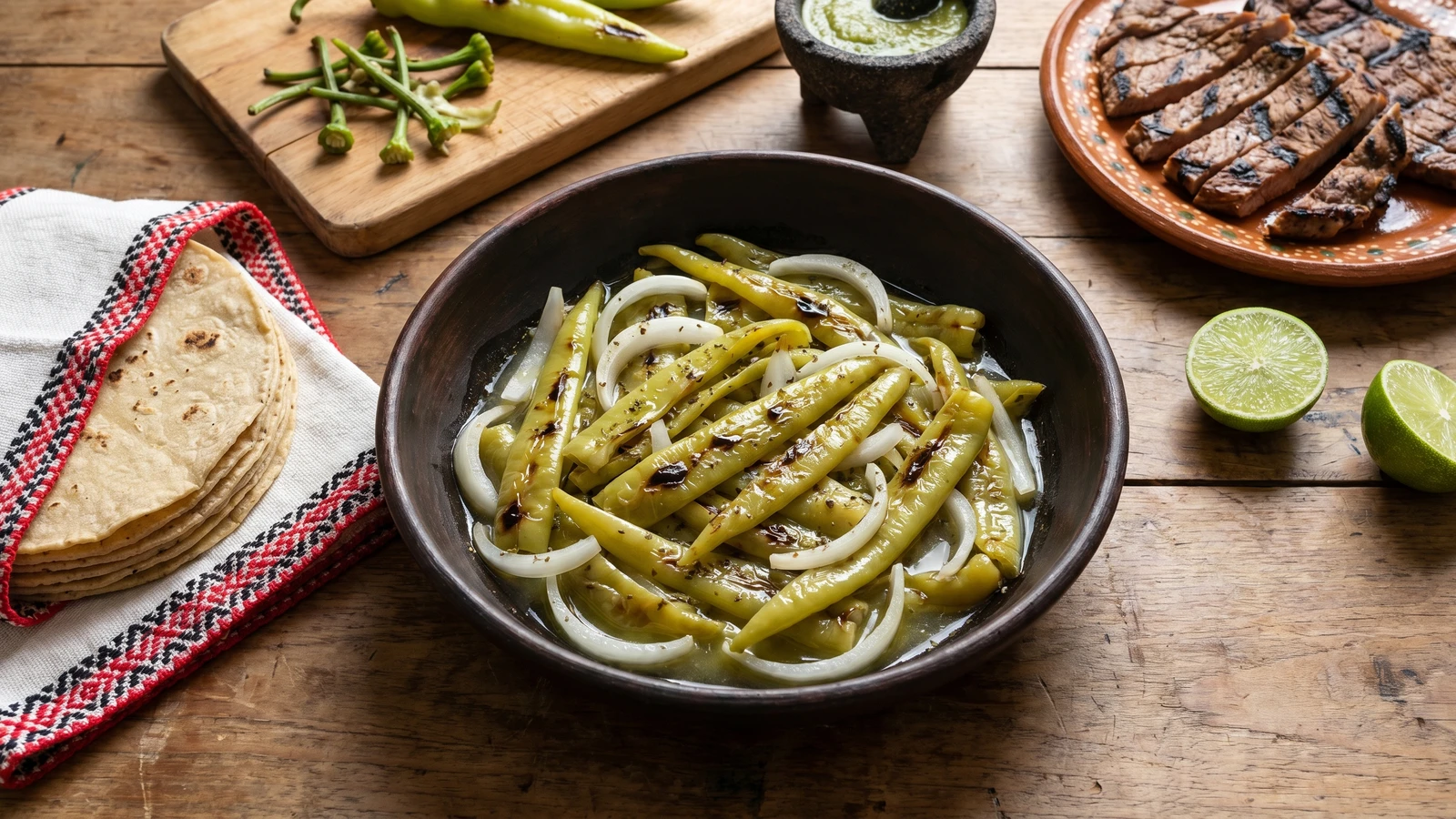
Oaxaca's most quiet side dish: thin strips of chile de agua roasted over flame, peeled, and tossed with white onion and lime. Served next to tasajo, asi se hace y punto.
This is from Oaxaca. Specifically from the Valles Centrales, the broad valley around Oaxaca city where the chile de agua grows and almost nowhere else does. The chile gives the dish its name and its identity. Without chile de agua, you do not have rajas de chile de agua. You have rajas of something else.
Chile de agua is light green, conical, with thin walls and a clean, grassy heat that fades fast. It is one of the few fresh chiles in Mexico that is genuinely regional. You will not find it in Mexico City unless someone trucked it up that morning, and you will not find it outside Mexico unless someone is importing it specifically for the diaspora. When the season is on, from late spring through early fall, the chile vendors at the Mercado de Abastos and the Mercado 20 de Noviembre stack them in pyramids and you buy them by the kilo and you eat them all week.
The technique is simple, which is why everything depends on the chile and the roast. You blister the skin over open flame, sweat them under a cloth, peel them with your fingers, cut them into strips, and dress them with onion, lime, and salt. Some cooks add a spoon of melted manteca. Some sprinkle sal de gusano on top. The senoras at the comedores in Tlacolula will tell you they have been doing it this way for as long as they can remember and that is the only authority this recipe needs.
This is what you eat next to tasajo. The thin-sliced beef gets grilled over charcoal, the rajas go in a clay dish in the middle of the table, the tortillas come off the comal one by one, and you build your taco with whatever salsa is already on the table. My mother never made rajas de chile de agua because she was from Jalisco and you cannot get the chile there. The first time I ate it was in a comedor in Tlacolula on a Sunday, and I understood within two bites why the dish does not need anything else. Cada estado, su propia cocina.
Chile de agua (Capsicum annuum) is a landrace chile cultivated almost exclusively in Oaxaca's Valles Centrales, particularly around the towns of Ejutla, Ocotlan, and Zimatlan, where the volcanic soil and high-altitude valley climate produce a chile with thin walls and a distinct grassy flavor profile that has resisted commercial cultivation elsewhere. The dish is a direct extension of the pre-Columbian Zapotec practice of roasting fresh chiles on the comal and dressing them with salt and lime, a method documented in 16th-century colonial accounts of Oaxacan markets. Rajas de chile de agua remains one of the clearest examples of how a single regional ingredient defines a dish so completely that no substitution survives translation, and it is a fixture of the traditional Sunday tasajo plate in the Valles Centrales.
Quantity
8
whole, unwashed until ready to roast
Quantity
1 medium
sliced into thin half-moons
Quantity
2 tablespoons (about 2 limes)
Quantity
1 tablespoon
melted
Quantity
1 teaspoon
Quantity
a pinch
fresh leaves
Quantity
for serving
warmed on a comal
Quantity
for serving
grilled over charcoal
| Ingredient | Quantity |
|---|---|
| fresh chile de aguawhole, unwashed until ready to roast | 8 |
| white onionsliced into thin half-moons | 1 medium |
| fresh lime juice | 2 tablespoons (about 2 limes) |
| manteca de cerdo (pork lard) (optional)melted | 1 tablespoon |
| flaky sea salt or sal de gusano | 1 teaspoon |
| oregano de monte (optional)fresh leaves | a pinch |
| hand-pressed corn tortillas (optional)warmed on a comal | for serving |
| tasajo or cecina (optional)grilled over charcoal | for serving |
This dish is chile de agua. Not poblano. Not Anaheim. Not Hatch. Chile de agua is the light-green, slightly translucent, conical chile grown in the Valles Centrales of Oaxaca and almost nowhere else. It has thin walls, a clean grassy heat, and a flavor that disappears the moment you swap it for something else. If you cannot find chile de agua at a Oaxacan market or a specialty importer, do not make this dish today. Make something with the chiles your mercado is actually selling. No me vengas con atajos.
Set the whole chiles directly over the flame of a gas burner, or on a very hot comal, or under a broiler. Turn them with tongs every minute or so. You want the skin to blister and blacken in patches across the entire chile, not to ash completely. The flesh underneath should soften but still hold its shape. This takes about six to eight minutes. The kitchen will smell green and a little sharp. That is the chile telling you it is ready.
Transfer the roasted chiles to a bowl and cover with a plate or a clean kitchen towel. Let them sit for ten minutes. The trapped warmth loosens the skin from the flesh. Do not skip this. Trying to peel a chile straight off the flame is a fight you will lose. After ten minutes, rub the skins off with your fingers. A few stubborn black flecks are fine. Do not rinse the chiles under water. Water washes away the smoke flavor that the roast just put there.
Slit each chile lengthwise with a paring knife. Open it like a book. Pull out the stem and scrape out the seeds and veins with the back of the knife. Slice the chile into long strips about a quarter-inch wide. These are your rajas. Some cooks in Oaxaca leave a few seeds in for extra heat. That is up to you and your guests. Asi se hace y punto.
In a clay bowl or a wide cazuelita, combine the rajas with the sliced onion. Pour over the lime juice and the melted manteca if you are using it. The lard rounds the dish out and ties it to the rest of the meal, but if you are serving rajas next to something already rich, leave it out. Sprinkle the salt and a few leaves of oregano de monte over the top. Toss with your hands. Let it sit for five minutes for the onion to soften and surrender its sharpness.
These rajas have one job. They go next to grilled tasajo or cecina, with warm tortillas and a small salsa, on a Sunday in Oaxaca. That is the meal. Pile the rajas in a clay dish at the center of the table and let people build their own tacos. The contrast of the smoky thin-sliced beef and the bright sharp chile is the whole point. Recetas probadas y garantizadas.
1 serving (about 90g)
Culinary guides, cultural storytelling, and the editorial depth that makes cooking meaningful.
Discover Culinary ExplorerChef Lupita
Oaxaca's red rice, stained with tomato and fried in lard, steamed with carrots, ejotes, black beans, and epazote. The side that anchors a Oaxacan family meal and earns its place beside the main.
Chef Lupita
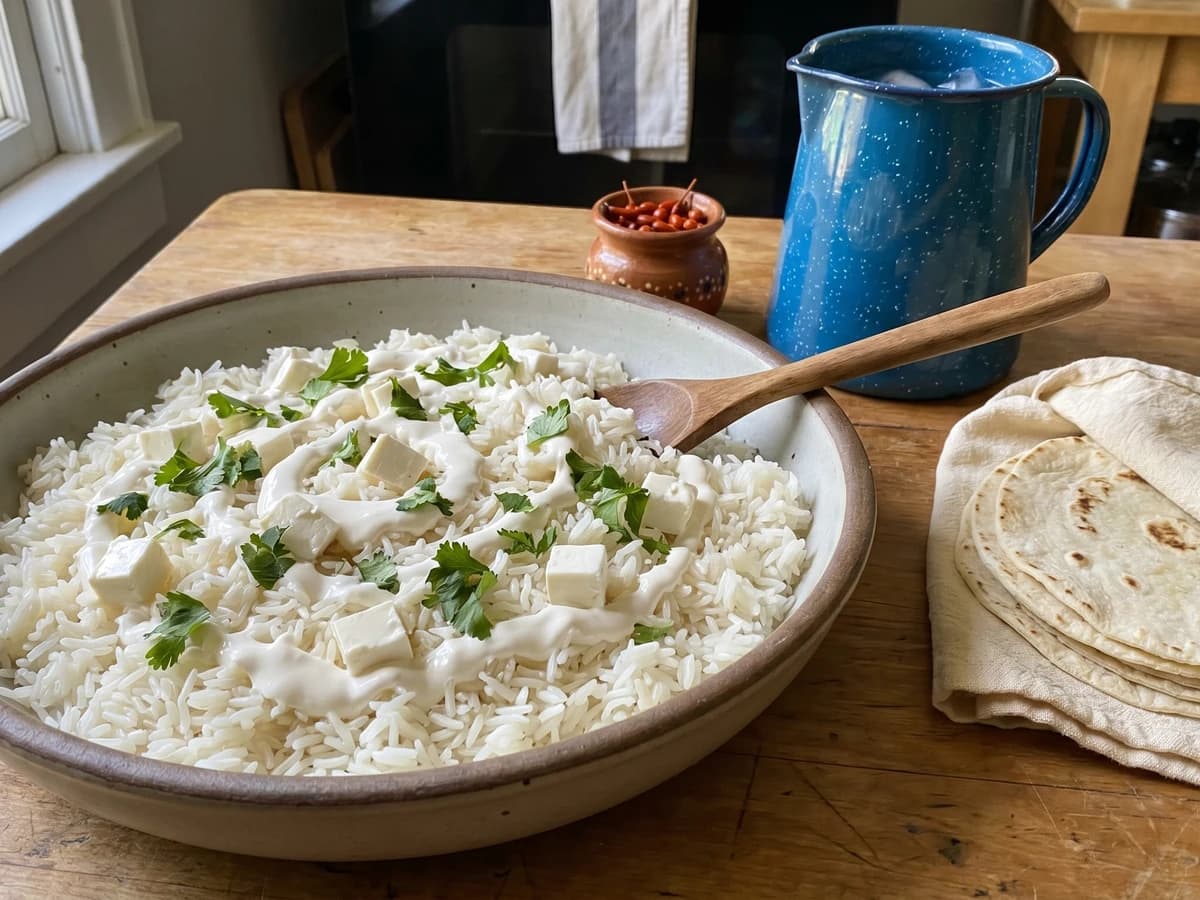
Sinaloa's home-cook white rice topped with cold cubes of cream cheese that soften into the warm grain, finished with crema and a sprinkle of chiltepin at the table. The trick that makes a side dish feel like a small luxury.
Chef Lupita
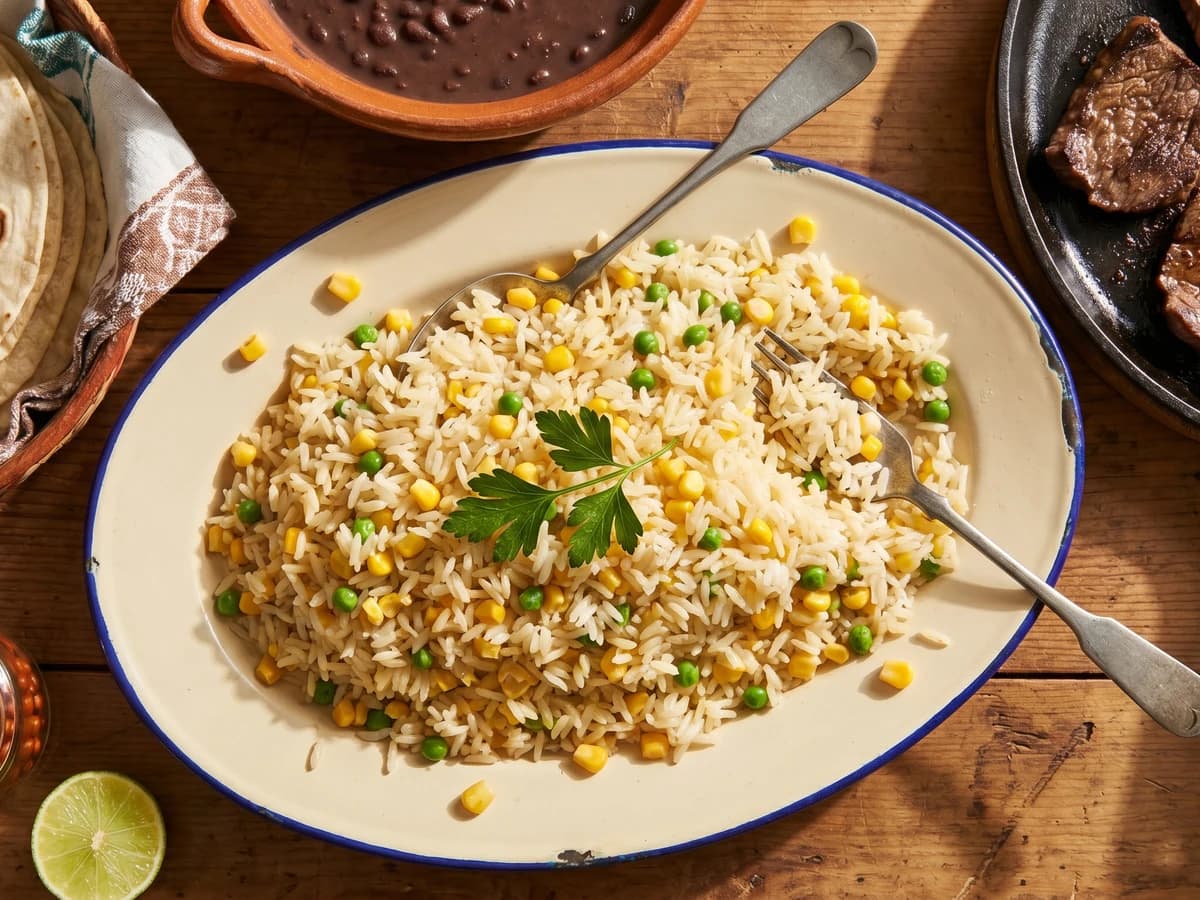
Sonora's white rice, toasted in butter and steamed with sweet corn and tender peas. The clean, quiet partner to a plate of carne asada, not the red rice of central Mexico.

Chef Lupita
Yucatán's white rice with sweet corn kernels, toasted in lard with garlic and onion. The quiet base that holds up against the peninsula's bold achiote-stained stews.