Chef Freja
Aebleflaesk
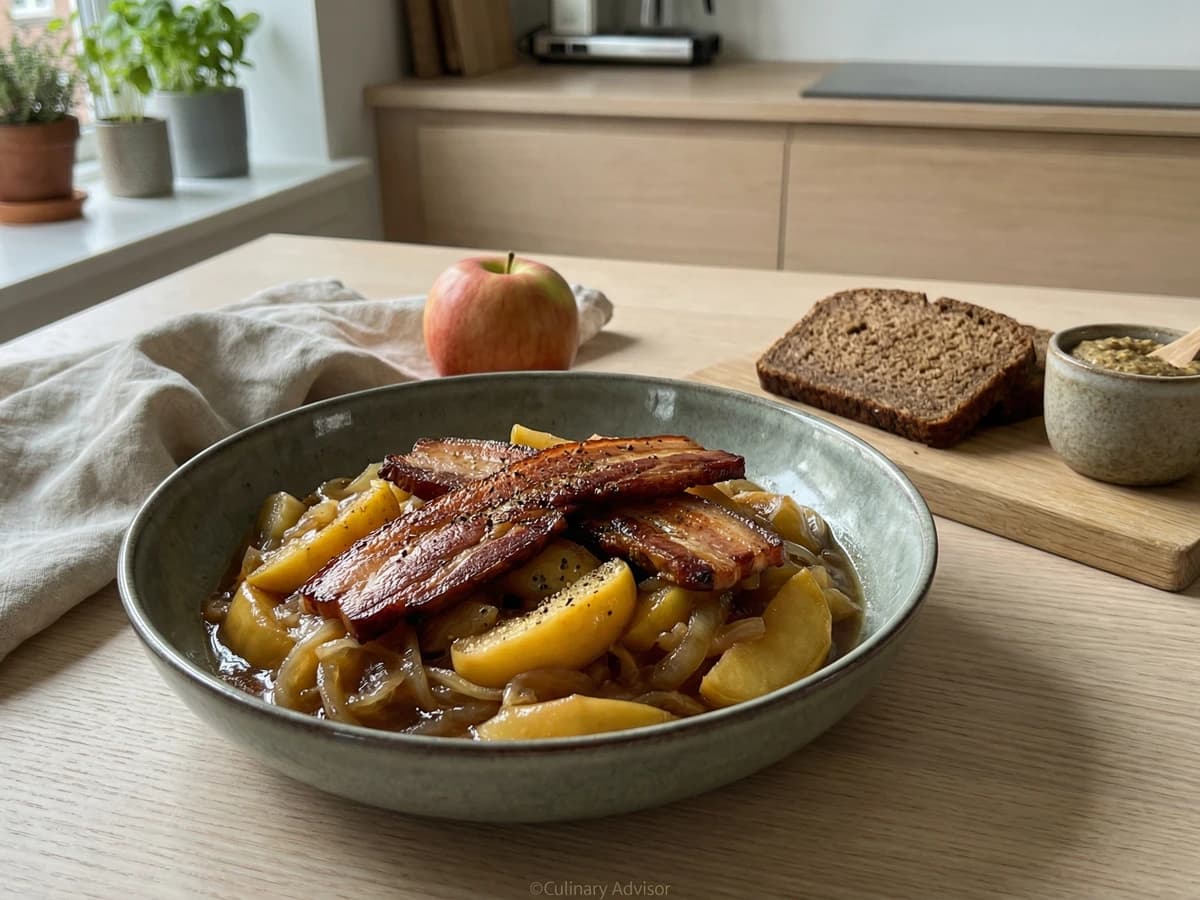
The Fyn autumn supper where thick pork belly renders slowly into its own fat, then meets apples and onions that cook down into a deep amber tangle. Sweet, salt, and the oldest pairing in the Danish larder.
A cooking platform built around craft, culture, and the stories behind what we eat.
Created by Chef Freja
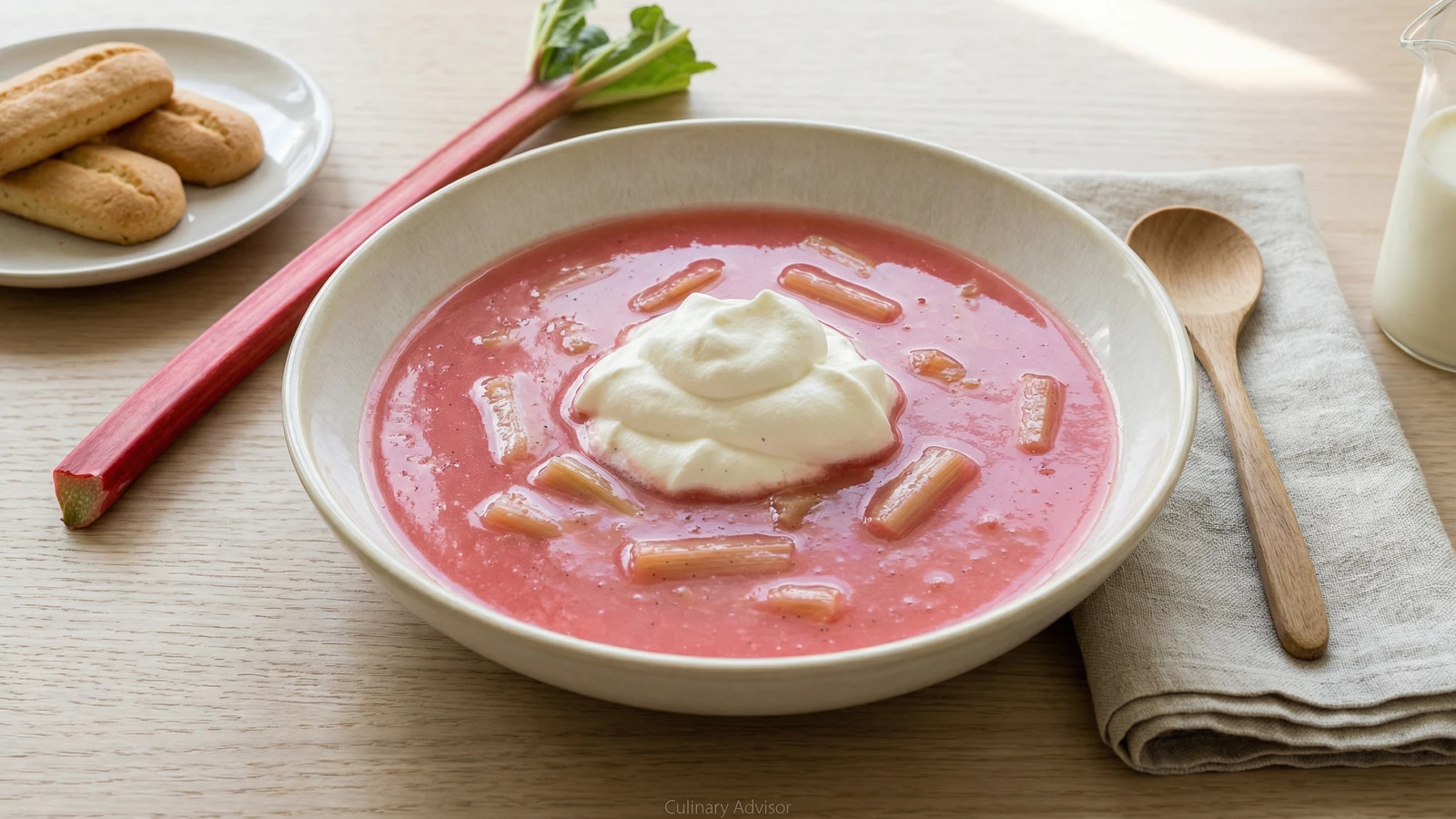
Early summer's first rhubarb simmered with sugar and vanilla, thickened into a glossy pink soup and served cold with a generous dollop of softly whipped cream. The dessert that announces the season in any Danish garden kitchen.
Rhubarb arrives in Danish gardens before almost anything else. Late May, maybe early June if the spring has been cold, and there it is: the first stalks pushing up red and tender against the dark soil. You pull them from the ground yourself if you can, twisting gently at the base so the stem comes away whole. This is when rabarbersuppe happens, and the whole kitchen reorients around it for a few short weeks.
Sodsuppe is the Danish name for the category of cold sweet fruit soups, and it's one of the quietest, loveliest corners of our cooking. Rabarbersuppe sits at the heart of it, served as dessert on warm evenings when the light lasts until ten and the day refuses to end. You simmer the rhubarb with sugar and vanilla, thicken it with potato starch so it holds itself together, chill it completely, and finish it with a cloud of softly whipped cream. That's the whole thing. The season does most of the work, which is why it matters so much that you catch the rhubarb at the right moment. The joy of waiting is the whole point.
Two things matter most. First, don't cook the rhubarb to mush. You want pieces that still hold their shape, tender but intact, suspended in the pink liquid like little jewels. Second, the potato starch. Mix it with cold water, stir it into the hot soup off the heat, return it briefly to warm through, and then stop. If you boil it after, the starch breaks down and your glossy soup goes thin and sad. Handle it gently and you'll know when it's right: the soup coats the back of a spoon and holds a soft sheen that looks almost like silk.
Rhubarb reached Denmark in the late 1700s, brought from Siberia via the botanical gardens of Copenhagen where it was first cultivated as a medicinal plant for the city's apothecaries. By the mid-1800s it had escaped the physic garden and become a fixture of every Danish backyard, and the tradition of sodsuppe, the cold sweet fruit soups thickened with potato starch, rose with it. Rabarbersuppe belongs to the same family as kirsebaersuppe (cherry soup) and blommesuppe (plum soup), the summer desserts of the Danish home that nearly disappeared during the restaurant era of the twentieth century and are only now finding their way back to the family table.
Quantity
800g
trimmed and cut into 2cm pieces
Quantity
1 litre
Quantity
180g, plus extra to taste
Quantity
1
split lengthwise
Quantity
3 tablespoons
Quantity
3 tablespoons
for the slurry
Quantity
250ml
very cold
Quantity
1 tablespoon
Quantity
to serve
| Ingredient | Quantity |
|---|---|
| fresh rhubarbtrimmed and cut into 2cm pieces | 800g |
| water | 1 litre |
| caster sugar | 180g, plus extra to taste |
| vanilla podsplit lengthwise | 1 |
| potato starch (kartoffelmel) | 3 tablespoons |
| cold waterfor the slurry | 3 tablespoons |
| double creamvery cold | 250ml |
| icing sugar (optional) | 1 tablespoon |
| kammerjunkere or toasted flaked almonds (optional) | to serve |
Trim the rhubarb by cutting off the leaves (they're mildly toxic and should never be eaten) and the dry ends of the stalks. If the outer skin looks tough or stringy, peel it lightly with a small knife. Young early-season rhubarb rarely needs peeling; its skin is thin and tender and carries most of the pink. Cut the stalks into pieces about two centimetres long. Uniform pieces cook at the same pace, and that's what you want.
Put the water, sugar, and split vanilla pod into a heavy saucepan. Scrape the vanilla seeds into the liquid with the tip of a knife, then drop the pod in too. Bring everything to a gentle simmer and stir until the sugar dissolves completely. Add the rhubarb and let it simmer gently for eight to ten minutes. You want the pieces tender but still holding their shape. Rhubarb turns to mush quickly if you look away, so check it early. When a piece yields easily to the back of a spoon but doesn't fall apart, it's ready.
While the rhubarb simmers, stir the potato starch together with three tablespoons of cold water in a small bowl until completely smooth. This is called an opslaemning, the Danish word for a cold slurry. The starch needs cold water to dissolve evenly; if you stir it into the hot soup without this step, you'll get lumps that never smooth out.
Take the pan off the heat completely. This is the most important moment in the whole recipe, so pay attention. Stir the slurry once more to re-suspend the starch, then pour it into the hot soup in a slow steady stream, whisking gently as you go. Return the pan to a low heat and warm the soup through for about a minute, stirring constantly. You'll see it change: the cloudy liquid turns glossy and silken, and it coats the back of a spoon. Stop there. Don't let it boil. Boiling breaks the potato starch and the soup loses its body and goes thin again.
Pour the soup into a wide bowl and let it cool to room temperature. Fish out the vanilla pod, rinse it, and save it for another use (dropped into a jar of sugar, it perfumes everything it touches for months). To stop a skin forming on the surface as it cools, either press cling film directly against it or sprinkle a fine dusting of sugar over the top. Chill in the fridge for at least three hours, preferably longer. This soup is meant to be cold, truly cold. Lukewarm rabarbersuppe is not the dish you're after.
Just before serving, whip the cold cream with the icing sugar, if using, until it holds soft peaks. Soft peaks, not stiff. You want the cream to fall from the spoon in lazy folds, not stand up like meringue. The cream is going to sit on the surface of the soup and slowly melt into it, and soft peaks do this far better than stiff ones. Danish whipped cream is almost always underwhipped on purpose, and you'll understand why the first time you eat it.
Ladle the cold soup into shallow bowls or tall glasses, making sure each portion gets some of the rhubarb pieces suspended in the pink. Spoon a generous cloud of whipped cream into the centre of each one. If you have kammerjunkere, the small twice-baked Danish biscuits made for exactly this purpose, scatter a few over the top or serve them in a bowl alongside for dipping. Toasted flaked almonds work beautifully too. Eat slowly, outside if the evening allows, while the long northern light holds. Tak for mad.
1 serving (about 420g)
Culinary guides, cultural storytelling, and the editorial depth that makes cooking meaningful.
Discover Culinary ExplorerChef Freja
The Fyn autumn supper where thick pork belly renders slowly into its own fat, then meets apples and onions that cook down into a deep amber tangle. Sweet, salt, and the oldest pairing in the Danish larder.

Chef Freja
Warm Danish apple soup for the first cool evenings of autumn. Tart apples simmered with cinnamon and lemon peel, thickened to a soft gloss, and served with cold cream and buttery toasted oats.

Chef Freja
Danish white asparagus velouté with tiny veal meatballs, flour dumplings, and bright green tips scattered on the surface. The Easter soup of Copenhagen, built from five small pans of spring.
Chef Freja
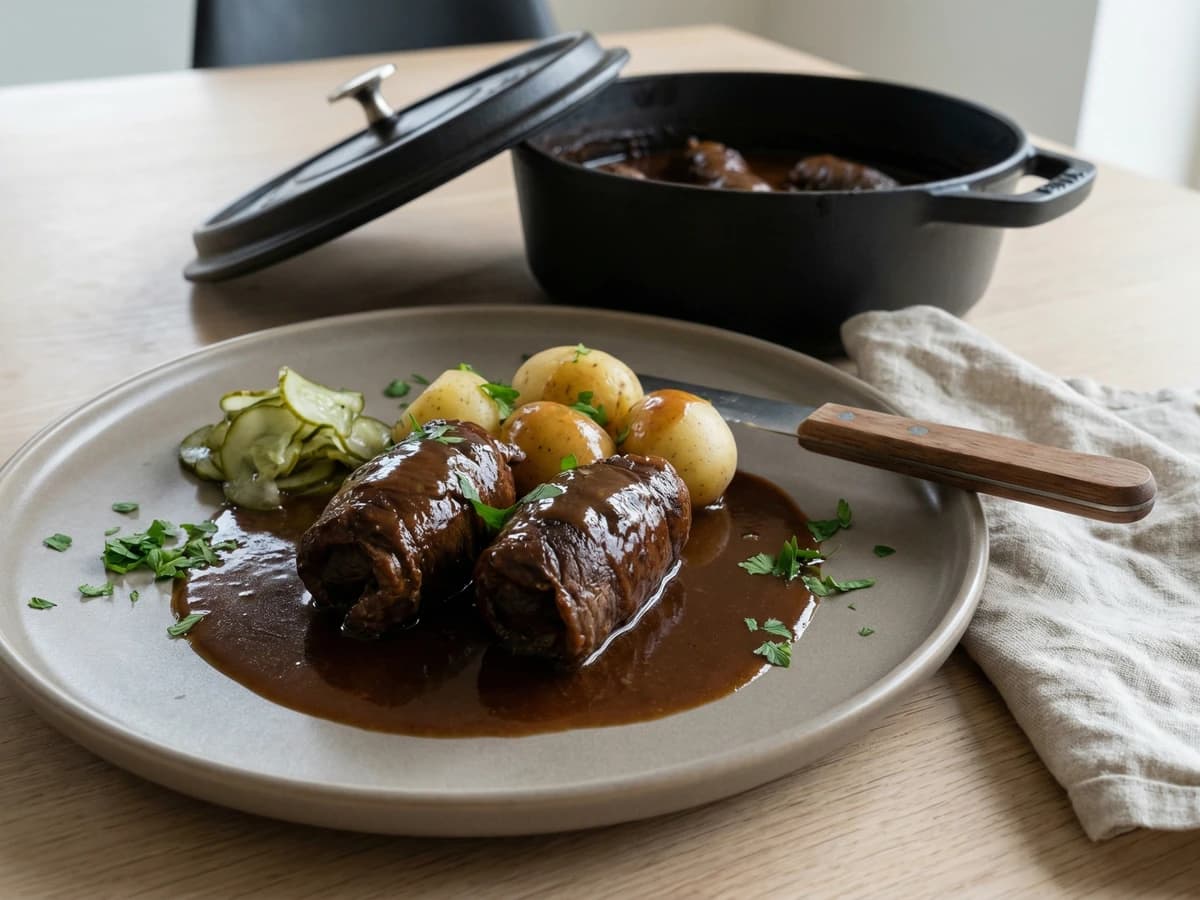
Thin beef slices rolled around bacon and onion, tied with string, and braised slowly in a dark glossy gravy finished with cream and redcurrant jelly. Danish Sunday dinner at its most comforting.