
Chef Juliana
Beiju Chica de Santarém Novo
You don't need the right grandmother or a festival oven to learn the logic: grate mandioca fine, squeeze it damp, mix in coconut, and bake thin. Two ingredients, no packet, real crunch.
A cooking platform built around craft, culture, and the stories behind what we eat.
Created by
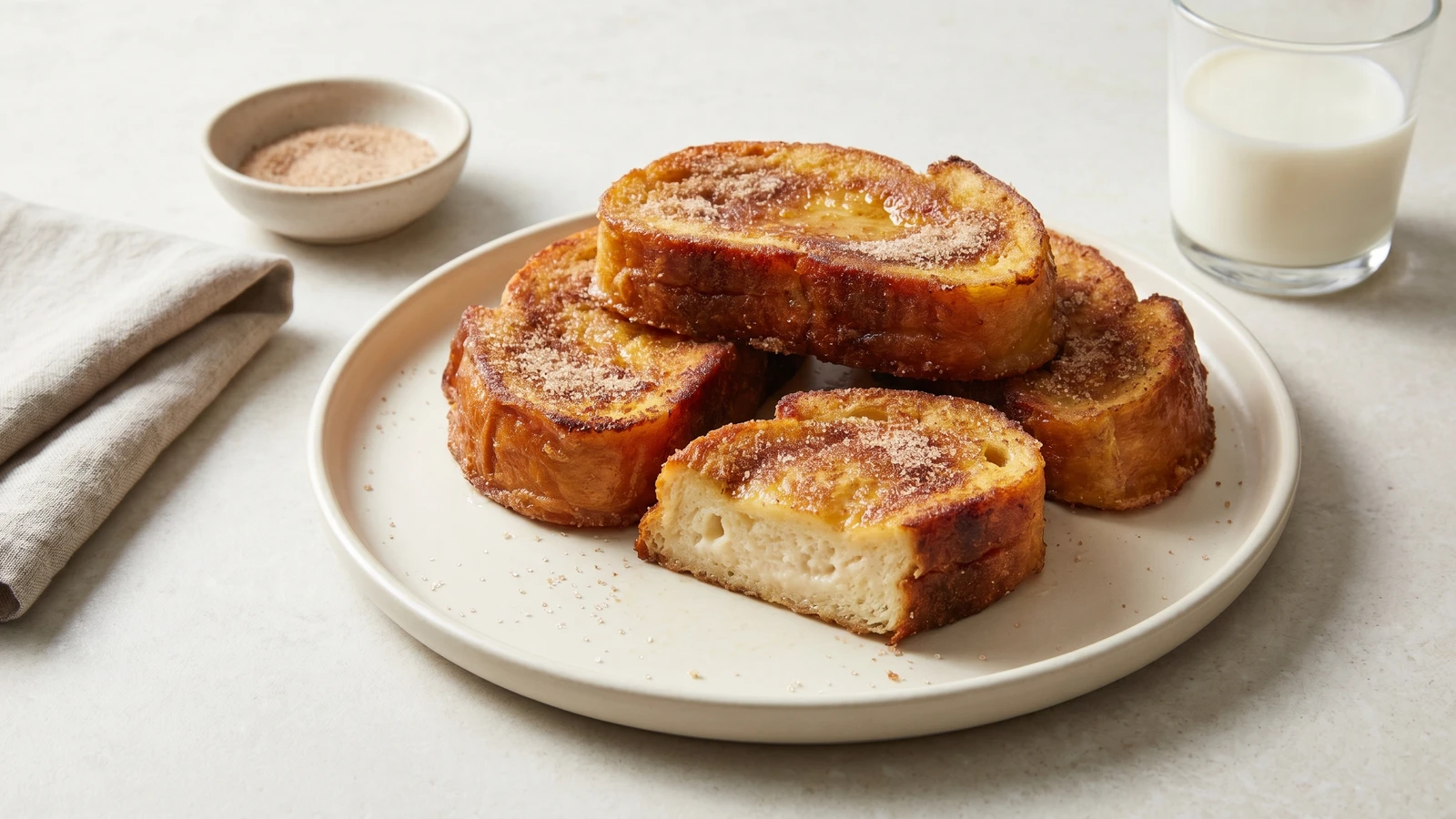
You think frying bread for Christmas is beyond you. It isn't. Stale bread, milk, eggs, cinnamon sugar, and the sense to let each slice drip before it hits the oil.
You look at a plate of golden rabanadas and hear that little voice: isso não é pra mim. Too much oil, too much mess, too much Christmas expectation standing over your shoulder. Anota aí: this is not a talent. Cozinhar não é dom, é um aprendizado, and this recipe is bread learning to behave in your hands.
I like rabanada because it tells the truth about home cooking. The best slice starts with old bread, the one nobody got around to eating. Fresh bread collapses in the milk and turns dramatic, like a person who has never missed lunch. Stale bread holds its shape, drinks just enough, and fries into a crisp edge with a soft middle. That's not magic. That's structure.
This isn't the pê-efe, rice, beans, meat or egg, and something green, the plate that quietly keeps a country itself. But it belongs beside that same logic: comida de verdade, made from ordinary things, with no packet pretending to be flavor and no mystery sold back to you. A gente uses what is already in the kitchen and makes the holiday out of it.
You'll soak, drain, fry, and roll. That's the whole thing. The only ponto is paying attention: bread wet but not falling apart, oil lively but not smoking, sugar clinging while the slice is still warm. Do that and Christmas is solved, at least the sweet part.
Rabanada came to Brazil through Portuguese Christmas cooking, where slices of stale bread were soaked in milk or wine, dipped in egg, fried, and sweetened as a way to use bread that had gone dry. In Brazil it became especially tied to the Christmas table, often made with French bread or a long rabanada loaf and rolled in cinnamon sugar. Regional homes argue about condensed milk, wine, syrup, and whether it should be served warm or cold, but the old idea is the same: stale bread is not waste when the cook knows what to do with it.
Quantity
1 baguette or 6 rolls
sliced 2 cm thick
Quantity
2 cups
Quantity
1/3 cup
for the milk
Quantity
1 teaspoon
Quantity
1 pinch
Quantity
3 large
Quantity
2 cups
for frying
Quantity
1/2 cup
for coating
Quantity
1 tablespoon
for coating
| Ingredient | Quantity |
|---|---|
| day-old French baguette or Brazilian French rollssliced 2 cm thick | 1 baguette or 6 rolls |
| whole milk | 2 cups |
| sugarfor the milk | 1/3 cup |
| vanilla extract (optional) | 1 teaspoon |
| salt | 1 pinch |
| eggs | 3 large |
| neutral oilfor frying | 2 cups |
| sugarfor coating | 1/2 cup |
| ground cinnamonfor coating | 1 tablespoon |
Slice the stale bread about 2 cm thick and lay the pieces on a tray. They should feel firm and a little dry, not fresh and bendy. Stale bread holds its shape in the milk; fresh bread drinks too fast, falls apart, and then you blame yourself instead of the bread.
In a shallow bowl, stir the milk, 1/3 cup sugar, vanilla if using, and a pinch of salt until the sugar mostly dissolves. Taste it. It should be gently sweet, not candy. This is what seasons the middle of the bread, so plain milk alone leaves the slice tasting sweet only on the outside.
In a second shallow bowl, beat the eggs until no streaks of white remain. The eggs make the outside set in the oil, giving you that golden coat. Half-beaten eggs leave slippery white patches on the bread, and nobody needs that little Christmas sadness.
Dip each slice into the milk mixture, turning once, just until the center softens but the slice still lifts in one piece. Hold it over the bowl for a few seconds and let the extra drip off. Wet bread is good; dripping bread drops milk into the oil, spits at you, and fries heavy instead of crisp.
Move the soaked slice into the beaten egg and turn it to coat both sides. Let the extra egg drip back into the bowl. You want a thin coat, not a puddle, because too much egg makes ragged edges and burns before the bread warms through.
Heat the oil in a medium heavy pan over medium heat until a tiny drop of egg sizzles right away but the oil is not smoking. Fry 2 or 3 slices at a time, turning once, until deep golden on both sides, about 2 minutes per side. Don't crowd the pan. Too many slices drop the temperature, the bread drinks oil, and suddenly your rabanada is heavy and sulking.
Lift the rabanadas out with tongs or a slotted spoon and set them on a rack or paper towels. Give them a minute to shed the extra oil. The surface should look glossy and gold, not greasy and wet. That pause keeps the cinnamon sugar from turning into paste.
Mix the 1/2 cup sugar and cinnamon in a shallow plate. While the rabanadas are still warm, roll each one in the mixture until coated on all sides. Warm bread grabs the sugar; cold bread lets it fall off, and then you're sweeping Christmas off the counter.
1 serving (about 90g)
Culinary guides, cultural storytelling, and the editorial depth that makes cooking meaningful.
Discover Culinary ExplorerChef Juliana
You don't need the right grandmother or a festival oven to learn the logic: grate mandioca fine, squeeze it damp, mix in coconut, and bake thin. Two ingredients, no packet, real crunch.

Chef Juliana
You think tiny wrapped wedding sweets are for people with magic hands. They're not. They're sponge, filling, glaze, and patience, taught in plain steps until they behave.

Chef Juliana
You think this is bakery magic. It isn't. Scald sour cassava starch, beat in eggs, pipe rings, and let a hot oven crack them into crisp, hollow biscuits.

Chef Juliana
You don't need bakery courage for this. Polvilho, queijo Minas, milk, butter, and your hands make crisp little sticks for coffee, lunchboxes, or the snack that keeps dinner sane.