Chef Juliana
Abobrinha Refogada
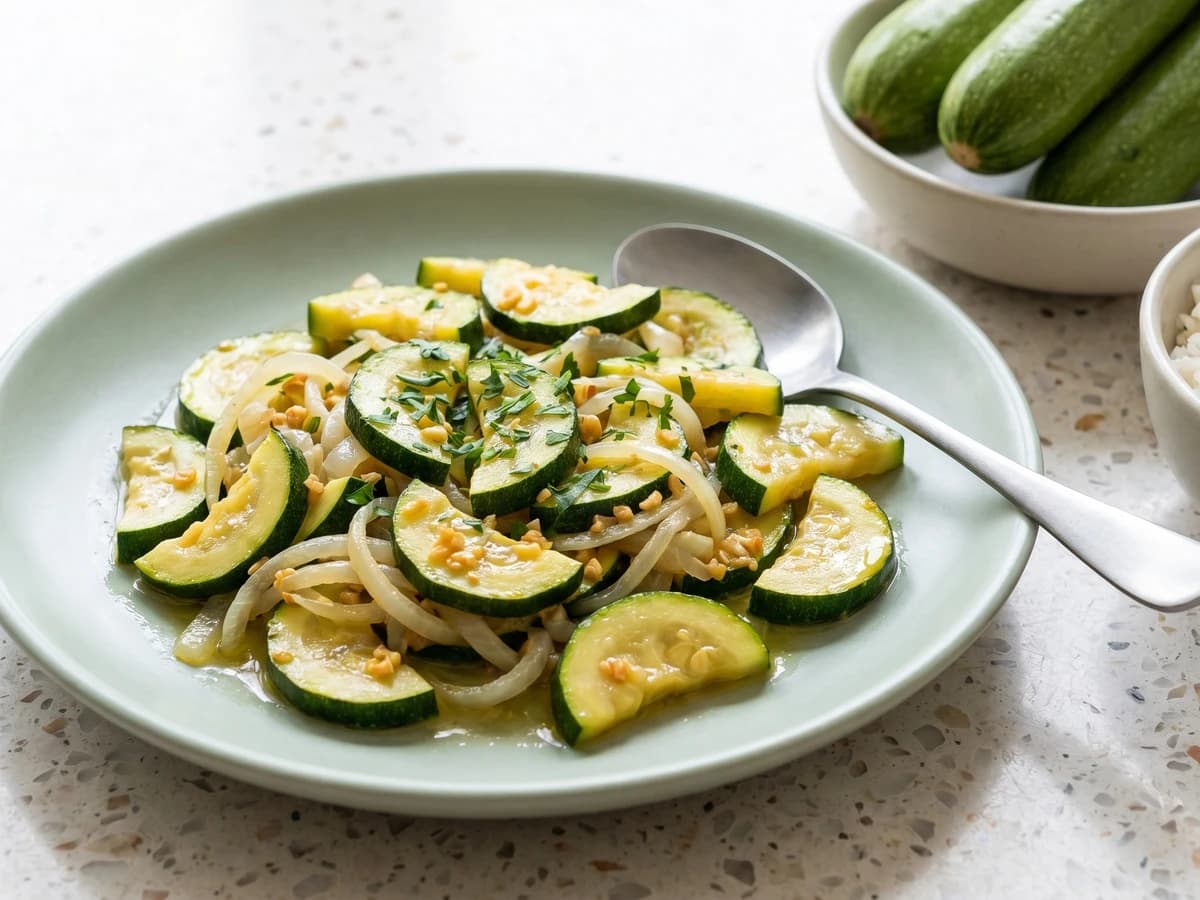
You think you'll turn zucchini into mush. Fine. Anota aí: high heat, wide pan, salt at the end, and suddenly this little green side starts solving dinner.
A cooking platform built around craft, culture, and the stories behind what we eat.
Created by
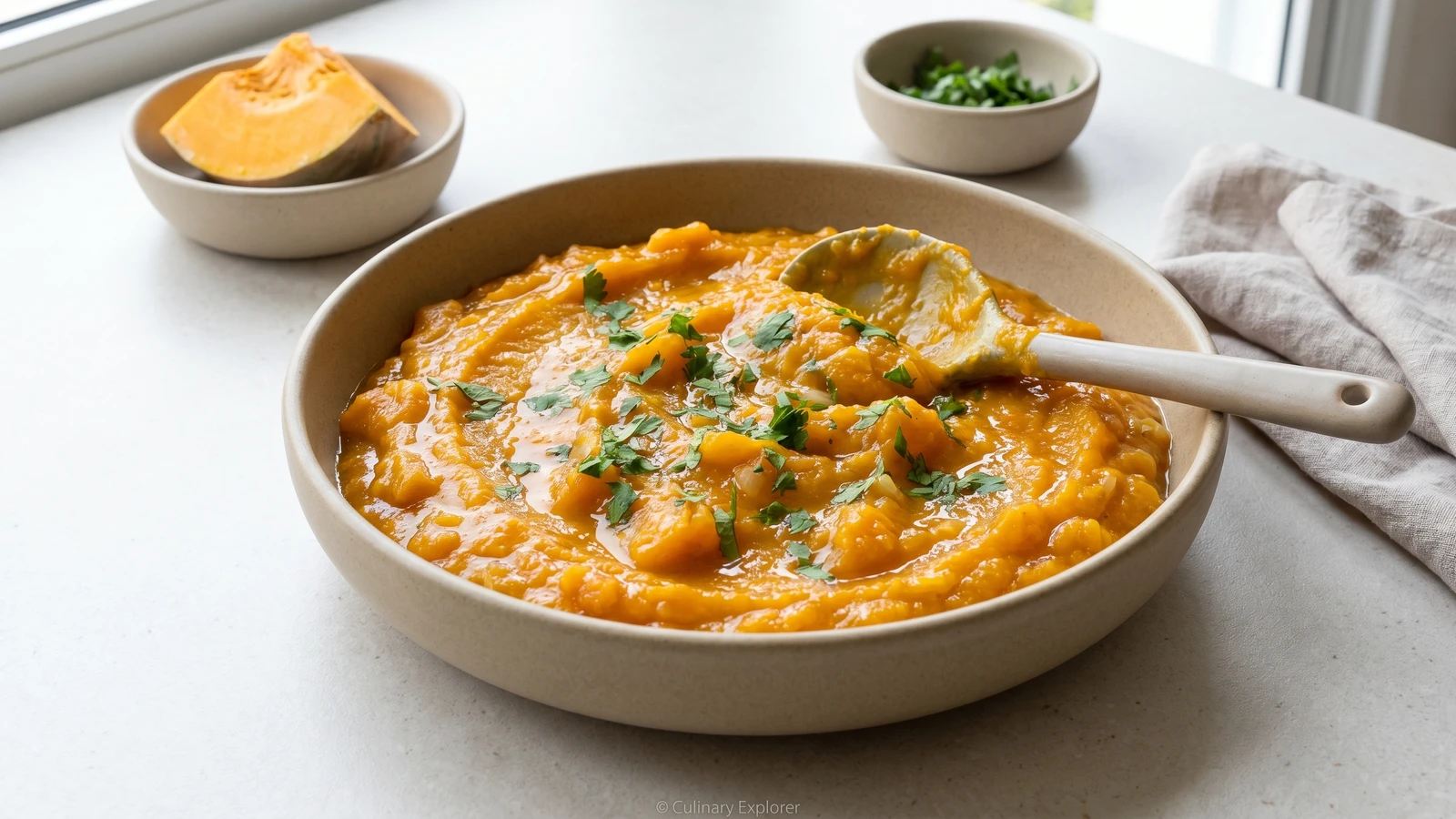
You think pumpkin purê is fussy until the pan proves otherwise: onion, garlic, jerimum, salt, and patience. Mash it rough and your pê-efe gets orange, sweet, savory sense.
You look at a hard orange wedge of jerimum and hear that little voice: isso não é pra mim. Too hard to cut, too watery, too sweet, too much trouble. Anota aí: the pumpkin is not the boss of you. Cozinhar não é dom, é um aprendizado, and this one is mostly cutting, covering the pan, and knowing when to stop mashing.
I learned plenty of things late, and pumpkin was one of those vegetables I used to bully into blandness. Too much water, no refogado, then a blender, because apparently I wanted baby food with ambitions. No. Quibebe is not a smooth purê in a restaurant voice. It's jerimum softened in its own water, mashed rough, with onion, garlic, and cheiro-verde doing their honest work.
This is comida de verdade for the everyday plate. Put it beside arroz soltinho, feijão, a fried egg or a piece of chicken, and something green, and the pê-efe suddenly has color, sweetness, and comfort without a packet pretending to be flavor. The method is simple: cut the pieces evenly so they cook together, refogar the onion until it turns sweet, salt the jerimum so it releases its own moisture, then mash it only until it holds together.
By the end, you'll have a bright orange side that costs little, feeds many, and makes dinner look like someone cared. Someone did. You.
The name quibebe is traced to Kimbundu kibebe, a pumpkin porridge or purê, one of many African-language food words that settled into Brazilian Portuguese during colonial Brazil. Versions appear in Bahia, Minas Gerais, and across the Northeast, with jerimum naming pumpkin or squash on many tables and the texture ranging from loose mash to thick side. In the sertão, plates built around cured, dried, pounded, and stretched foods often use sweet jerimum to soften salt and make the meal go further; that is scarcity-driven intelligence, not backward poverty food.
Quantity
6 cups (about 900 g)
peeled, seeded, and cut into 2 cm cubes
Quantity
2 tablespoons
Quantity
1 medium
finely chopped
Quantity
3 cloves
minced
Quantity
1 teaspoon, plus more to taste
Quantity
2 to 4 tablespoons
only if the pan gets dry
Quantity
1/4 teaspoon
Quantity
1/4 cup
chopped parsley and scallions, or cilantro if that's your table
| Ingredient | Quantity |
|---|---|
| jerimum, pumpkin, or kabocha squashpeeled, seeded, and cut into 2 cm cubes | 6 cups (about 900 g) |
| oil | 2 tablespoons |
| onionfinely chopped | 1 medium |
| garlicminced | 3 cloves |
| fine salt | 1 teaspoon, plus more to taste |
| water (optional)only if the pan gets dry | 2 to 4 tablespoons |
| black pepper (optional) | 1/4 teaspoon |
| cheiro-verdechopped parsley and scallions, or cilantro if that's your table | 1/4 cup |
Cut the peeled jerimum into 2 cm cubes, close enough in size that they can soften together. The pan cannot make a tiny piece and a giant chunk finish at the same time. Even pieces mean you mash once, not fight half-cooked orange rocks later.
Warm the oil in a heavy 3-liter pan over medium heat. Add the onion and cook, stirring now and then, until it goes soft, see-through, and sweet-smelling, about 5 to 6 minutes. Add the garlic and stir for 1 minute, just until you smell it. This refogado is where plain pumpkin becomes dinner, so don't replace it with a seasoning powder in a little cube costume.
Add the jerimum and salt to the pan. Stir until every cube is shiny with the oil and flecked with onion and garlic, then cook uncovered for 3 minutes. The salt starts pulling moisture from the vegetable, and the oil carries the refogado around each piece. Skip this and the middle tastes sweet, but the outside tastes like you forgot it.
Cover the pan, lower the heat to medium-low, and cook for 15 to 20 minutes, stirring every 5 minutes. The jerimum should soften mostly in its own water, turning glossy and tender enough to break with a spoon. If the bottom gets dry and starts catching before the pumpkin softens, add water 1 tablespoon at a time. Flood the pan and you'll make soup, then stand there pretending that was the plan.
Uncover the pan and mash the jerimum with a potato masher or a sturdy spoon, leaving a few small pieces. Cook uncovered for 3 to 5 minutes, stirring, until the mash thickens and a spoon dragged through it leaves a path for a second before closing. That's the ponto. The extra minutes drive off water and give you quibebe with body, not orange sauce.
Turn off the heat and stir in the black pepper, if using, and the chopped cheiro-verde. Taste for salt while it's still hot, because bland sweetness is not comfort, it's a missed opportunity. Let it sit for 5 minutes so it firms up, then serve beside rice, beans, a fried egg or chicken, and something green. Dinner solved.
1 serving (about 200g)
Culinary guides, cultural storytelling, and the editorial depth that makes cooking meaningful.
Discover Culinary ExplorerChef Juliana
You think you'll turn zucchini into mush. Fine. Anota aí: high heat, wide pan, salt at the end, and suddenly this little green side starts solving dinner.

Chef Juliana
You think this is sacred enough to be impossible. It isn't. Acaçá is patience, stirring, and ponto, taught plainly, with respect for the terreiros that carry it.
Chef Juliana
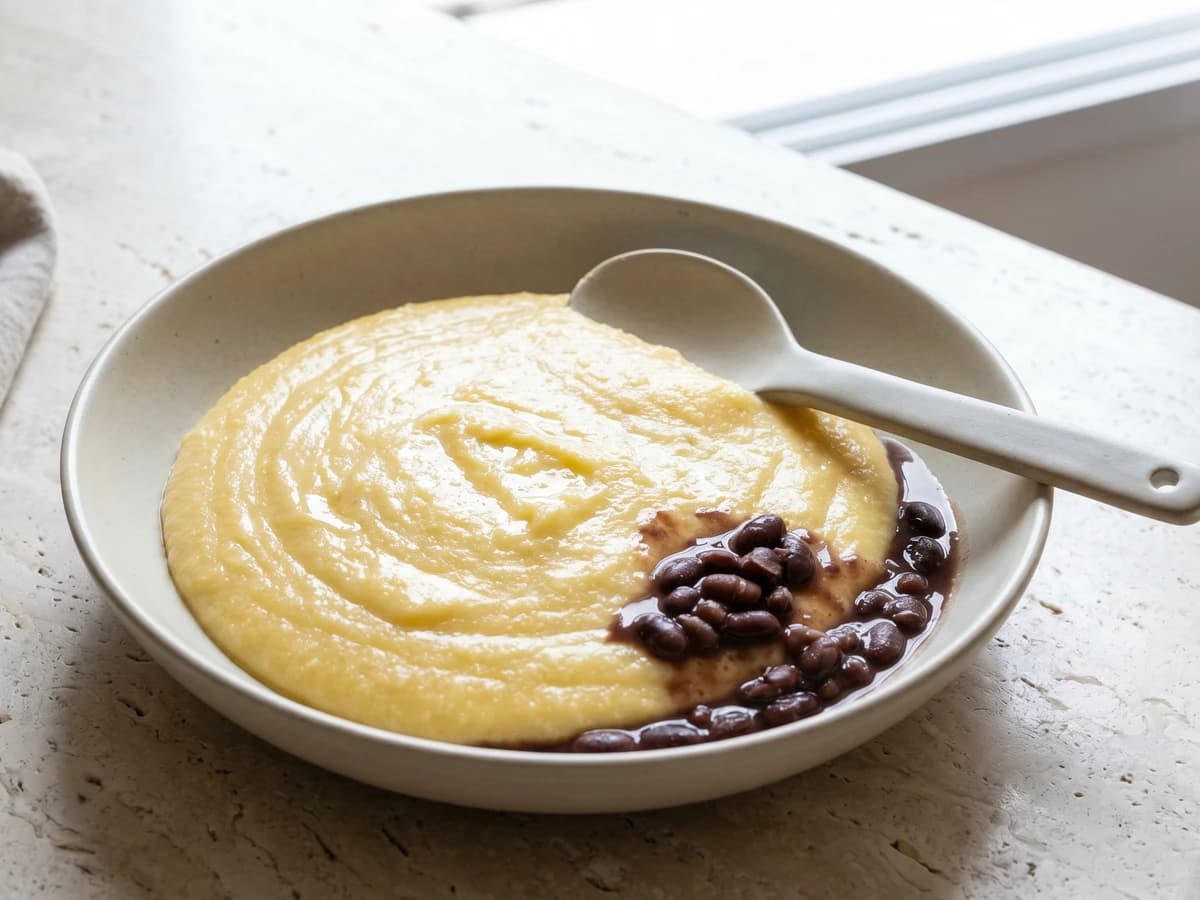
You think cornmeal will turn into lumps and shame. It won't. Cold water first, patient stirring, and a real garlic base give you angu that solves dinner.
Chef Juliana
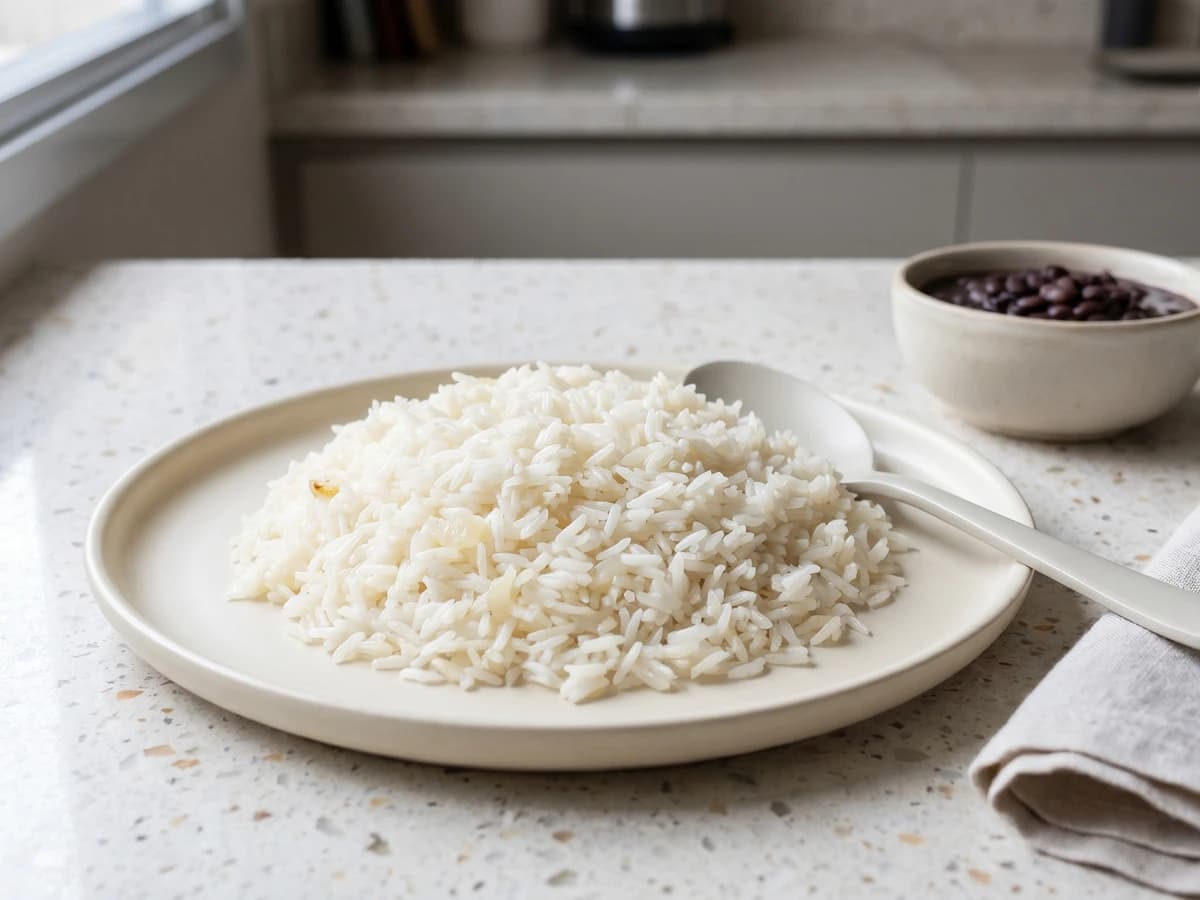
Everyone swears they can't make good rice. They're wrong. Refogue onion and garlic, use two parts water to one rice, then close the lid and leave the poor thing alone.