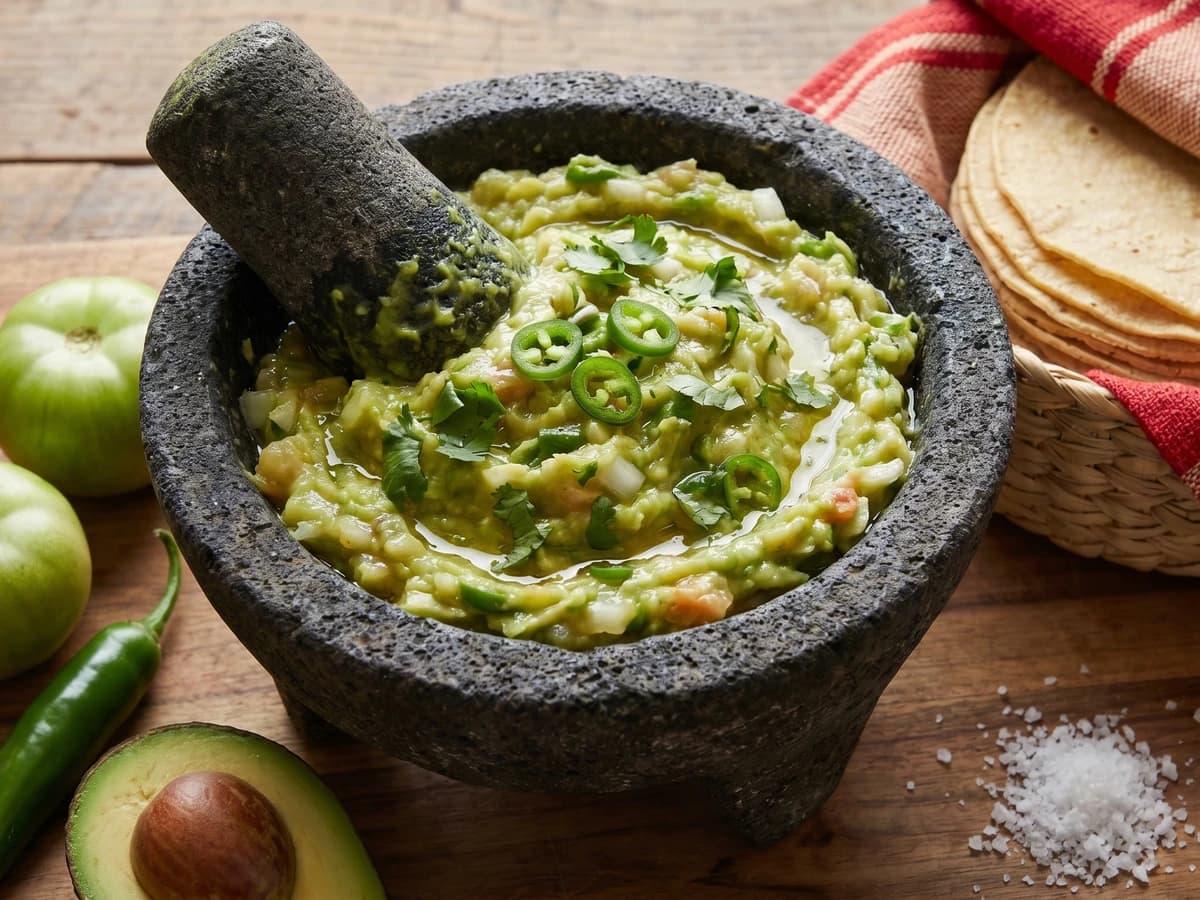
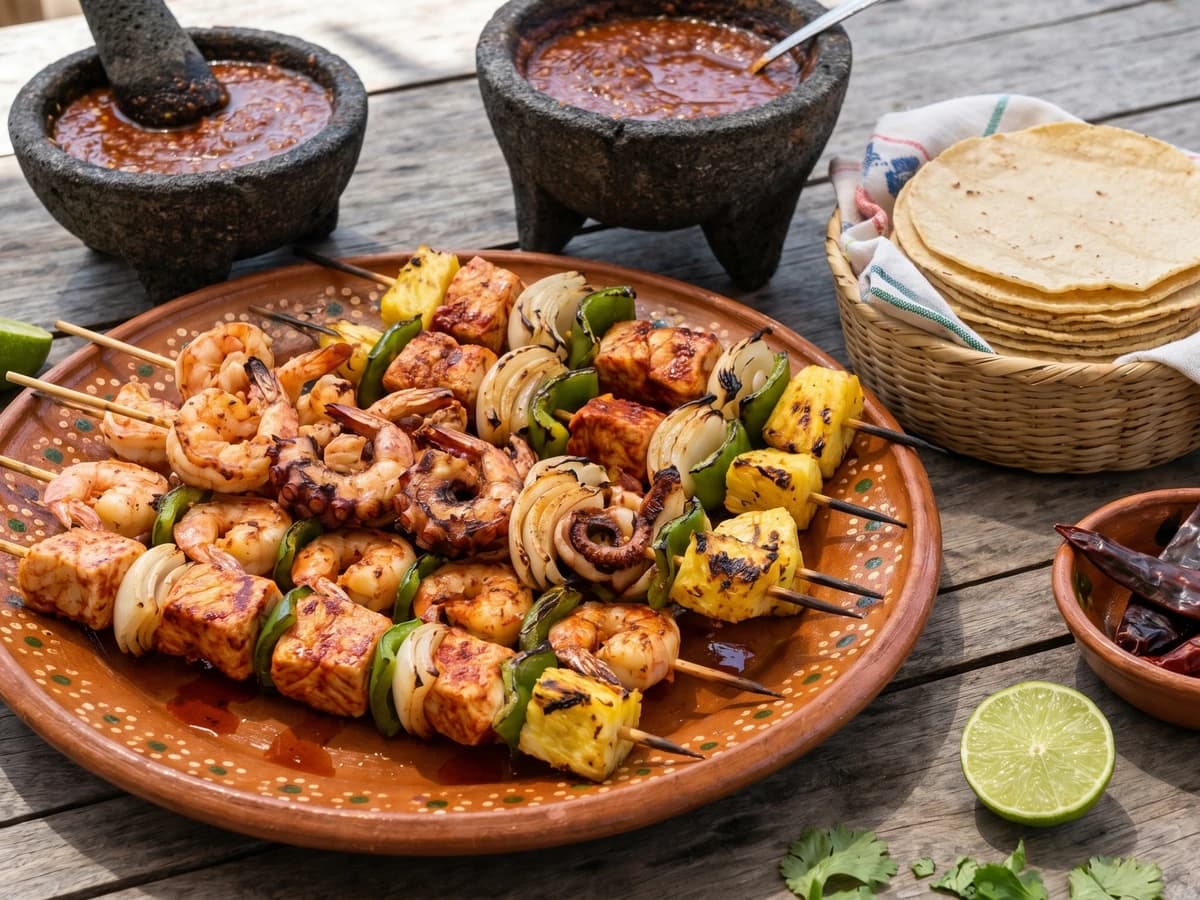
Tabasco's Los Ríos cheese, pressed, salted, and aged until the rind shows small pores and the paste turns sharp, served room temperature with chile amashito salsa.
Appetizers & Snacks
Mexican
Dinner Party
Picnic
Special Occasion
45 min
Active Time
3 hr 30 min cook•528 hr total
Yield2 small cheeses, about 1 1/2 pounds total; 10 to 12 appetizer servings
Tabasco, Los Ríos region, Balancán and Tenosique: this is where queso de poro belongs. The cattle graze on wet lowland country shaped by the Grijalva and Usumacinta waters, and the cheese carries that geography in its milk. This is not Oaxaca cheese. It is not queso fresco. It is not a northern melting cheese. Cada estado, su propia cocina.
The little pores are the signature. Not big Swiss holes, not a trick made with a skewer, not a cute name. They come from a firm rennet curd, careful draining, salt, pressure, and a short age that lets the cheese sharpen without losing its honest milk flavor. In the ranch kitchens around Balancán, women learned this with their hands before anyone wrote it down: how warm the curd should feel, how much whey to let go, when the rind is dry enough to age.
At the Mercado José María Pino Suárez in Villahermosa, I learned to ask which block came from Balancán, not just for 'Tabasco cheese.' The women at the stall know the difference and they will look at you if you pretend not to. Serve it at room temperature with a salsa de chile amashito on the side. The chile is Tabasco too, but it stays in the salsa, not in the cheese. No me vengas con atajos.
My mother's notebook had no recipe for this one. She was from Jalisco. But in the margin of a page about market cheeses she wrote: 'buy from the woman who knows the milk.' She was right. If you make this outside Tabasco, understand the compromise and work cleanly. Saber cocinar es saber vivir.
Queso de poro is tied to Balancán and Tenosique in Tabasco's Los Ríos region, where twentieth-century cattle ranching and small dairy production shaped one of the state's most recognizable cheeses. Its modern commercial history is usually dated to the 1940s, when ranch families began selling small aged cow's milk cheeses marked by tiny pores from lactic fermentation, draining, and pressing rather than Swiss-style gas cultures. Producers later organized around the name Queso de Poro de Balancán to defend the regional identity of the cheese as industrial queso fresco spread through national markets.
The technique, the tradition, and the story behind every dish.
small corn tostadas or warm hand-pressed corn tortillas (optional)
Quantity
for serving
hoja de plátano (optional)
Quantity
1
wiped clean and passed over a flame, for lining the platter
Ingredient
Quantity
whole cow's milkpasteurized but not ultra-pasteurized
2 gallons
mesophilic starter cultureMA11 or Flora Danica
1/8 teaspoon
calcium chloridediluted in 1/4 cup cool non-chlorinated water
1/4 teaspoon
liquid animal rennetdiluted in 1/4 cup cool non-chlorinated water
1/2 teaspoon
fine non-iodized sea salt
2 tablespoons
non-iodized sea saltfor wiping brine
1 tablespoon
boiled and cooled waterfor wiping brine
1 cup
fresh chile amashitostemmed
8 to 12
Roma tomatoesroasted on a comal
2 ripe
garlic cloveroasted on a comal
1 small
fresh Mexican lime juice
1 tablespoon
fine sea saltfor the salsa
1/2 teaspoon
small corn tostadas or warm hand-pressed corn tortillas (optional)
for serving
hoja de plátano (optional)wiped clean and passed over a flame, for lining the platter
1
Equipment Needed
•Heavy 10-quart stainless steel pot
•Accurate instant-read thermometer
•Long curd knife or offset spatula
•Cheesecloth and two small cheese molds with followers
•Cheese press or clean weights totaling 5 to 15 pounds
•Aging box or dedicated refrigerator held at 50F to 55F
•Volcanic stone molcajete for the chile amashito salsa
•Cast iron comal for roasting tomatoes and garlic
Instructions
1
Sanitize the tools
Wash and sanitize the pot, thermometer, curd knife, molds, follower, cheesecloth, and draining rack. Cheese is milk held long enough for flavor to develop, so cleanliness is not decoration. It is the first technique. If your kitchen is careless here, the aging will punish you later.
2
Warm the milk
Pour the milk into a heavy stainless pot and warm it slowly to 90F / 32C, stirring from the bottom so the cream does not catch. Use whole cow's milk with body. Ultra-pasteurized milk will not set into a proper curd, no matter how much rennet you throw at it. Start with good milk or don't start.
In Balancán, the milk comes from local cattle country. Outside Tabasco, buy the freshest non-ultra-pasteurized milk you can find from a small dairy. Sourcing wins before technique.
3
Culture the milk
Sprinkle the mesophilic culture over the surface of the warm milk. Let it hydrate for 3 minutes, then stir gently for 1 full minute. Cover the pot and let the milk ripen for 45 minutes at 90F / 32C. This is where the clean lactic sharpness begins. Do not rush it. The women who made this cheese on ranches along Los Ríos understood that milk needs time before it becomes food.
4
Set the curd
Stir in the diluted calcium chloride for 30 seconds. Then stir in the diluted animal rennet for 1 minute, using slow up-and-down strokes so the rennet spreads evenly without beating air into the milk. Cover and leave the pot still for 45 to 60 minutes, until the curd gives a clean break when lifted with a knife. Lemon juice is for other cheeses. Queso de poro is a rennet-set cheese. Así se hace y punto.
5
Cut the curd
Cut the curd into 1/2-inch cubes, first in straight lines, then crosswise, then at an angle to reach the lower curd. Let the cut curds rest for 5 minutes so the edges firm. Stir gently for 10 minutes. The curds should shrink slightly and release pale yellow whey. Small, even curds give you a firm paste with tiny pores, not a loose fresh cheese.
6
Cook the curds
Raise the temperature slowly to 100F / 38C over 25 minutes, stirring often and gently. Hold at that temperature for 10 more minutes. The curds should feel springy between your fingers and squeak lightly against the spoon. This slow warming drives out whey and prepares the cheese for aging. Too much heat gives rubber. Too little gives a wet cheese that spoils before it ripens.
7
Drain and salt
Let the curds settle for 5 minutes, then ladle off enough whey to expose them. Pour the curds into a cheesecloth-lined colander and drain for 20 minutes. Break the warm curd gently with clean fingers and mix in the 2 tablespoons of sea salt. The salt should disappear into the curd, not sit in white streaks. Salt seasons, yes, but it also controls the aging. Respect it.
8
Press the cheese
Pack the salted curds into two cheesecloth-lined molds. Fold the cloth over the top, set the followers in place, and press with 5 pounds for 1 hour. Unwrap, flip, rewrap, and press with 10 pounds for 4 hours. Flip once more and press with 12 to 15 pounds overnight in a cool room. You are not making big Swiss holes. The pores in queso de poro are small, irregular, and earned by draining, salting, and aging.
9
Dry the rind
Unmold the cheeses and set them on a clean rack in the refrigerator, uncovered, for 12 to 24 hours, until the surface feels dry to the touch but not cracked. Mix the wiping brine with 1 tablespoon salt and 1 cup boiled and cooled water. If any suspicious spot appears, wipe it with the brine and dry the cheese again. Pink, black, or fuzzy mold means discard the cheese. No heroics.
10
Age and turn
Move the cheeses to an aging box or dedicated cheese refrigerator held at 50F to 55F / 10C to 13C with moderate humidity. Turn them every day for the first week and every other day after that. Age for 14 days for a younger cheese, 21 days for the sharper Balancán character. The rind should firm, tiny pores should show, and the aroma should be clean, salty, and lactic, never rotten or ammoniacal.
11
Grind the salsa
On serving day, roast the tomatoes and garlic on a dry comal until blistered in spots. In a molcajete, grind the chile amashito with the 1/2 teaspoon salt first, then add the garlic, tomatoes, and lime juice. The salsa should be bright and sharp. The chile belongs here, beside the cheese, not mashed into the curd. Tabasco knows where its chile goes.
12
Serve room temperature
Bring the cheese to room temperature for 45 minutes before cutting. Slice it thick enough that the pores and firm paste show. Lay the slices on a flame-softened hoja de plátano over a Chontal red clay plate, with the chile amashito salsa in a molcajete and small tostadas or warm corn tortillas on the side. Cold cheese tastes mute. Let the milk speak.
Chef Tips
•Real queso de poro de Balancán depends on the milk of Tabasco's Los Ríos cattle country. A home version made elsewhere can be disciplined and delicious, but it is still a compromise. Say that clearly and cook with respect.
•Use pasteurized, non-ultra-pasteurized milk for home cheesemaking unless you work with tested raw milk, proper equipment, and local raw-milk cheese rules. Traditional does not mean careless.
•Do not poke holes into the cheese. The pores should appear naturally from draining, pressure, and aging. If you have to fake the mark, you missed the technique.
•Chile amashito is endemic to Tabasco and belongs in the salsa served alongside the cheese. If you cannot find it, chile piquín is the closest compromise. It is not the same chile, and you should know what you are missing.
•Serve the cheese at room temperature. Straight from the refrigerator, the fat tightens and the sharpness hides. Give it 45 minutes on the table before cutting.
Advance Preparation
•Make the cheese at least 14 days before serving. Twenty-one days gives a sharper, more serious flavor closer to the Balancán table.
•The chile amashito salsa should be made the day you serve it. After a night in the refrigerator, the tomato dulls and the chile loses its clean bite.
•The aged cheese keeps wrapped in waxed paper in the refrigerator for about 2 weeks. Bring only what you plan to serve to room temperature.
Frequently Asked Questions
Nutrition Information
1 serving (about 105g)
Calories
260 calories
Total Fat
17 g
Saturated Fat
10 g
Trans Fat
0 g
Unsaturated Fat
6 g
Cholesterol
50 mg
Sodium
1650 mg
Total Carbohydrates
14 g
Dietary Fiber
2 g
Sugars
2 g
Protein
14 g
Where cooking meets culture.
Culinary guides, cultural storytelling, and the editorial depth that makes cooking meaningful.