
Chef Lupita
Birria Tacos with Consome
Jalisco's goat birria, born around Cocula and carried into Guadalajara's markets, slow-braised in ancho, guajillo, cascabel, and chile de arbol, then tucked into corn tortillas crisped in its own red fat.
A cooking platform built around craft, culture, and the stories behind what we eat.
Created by
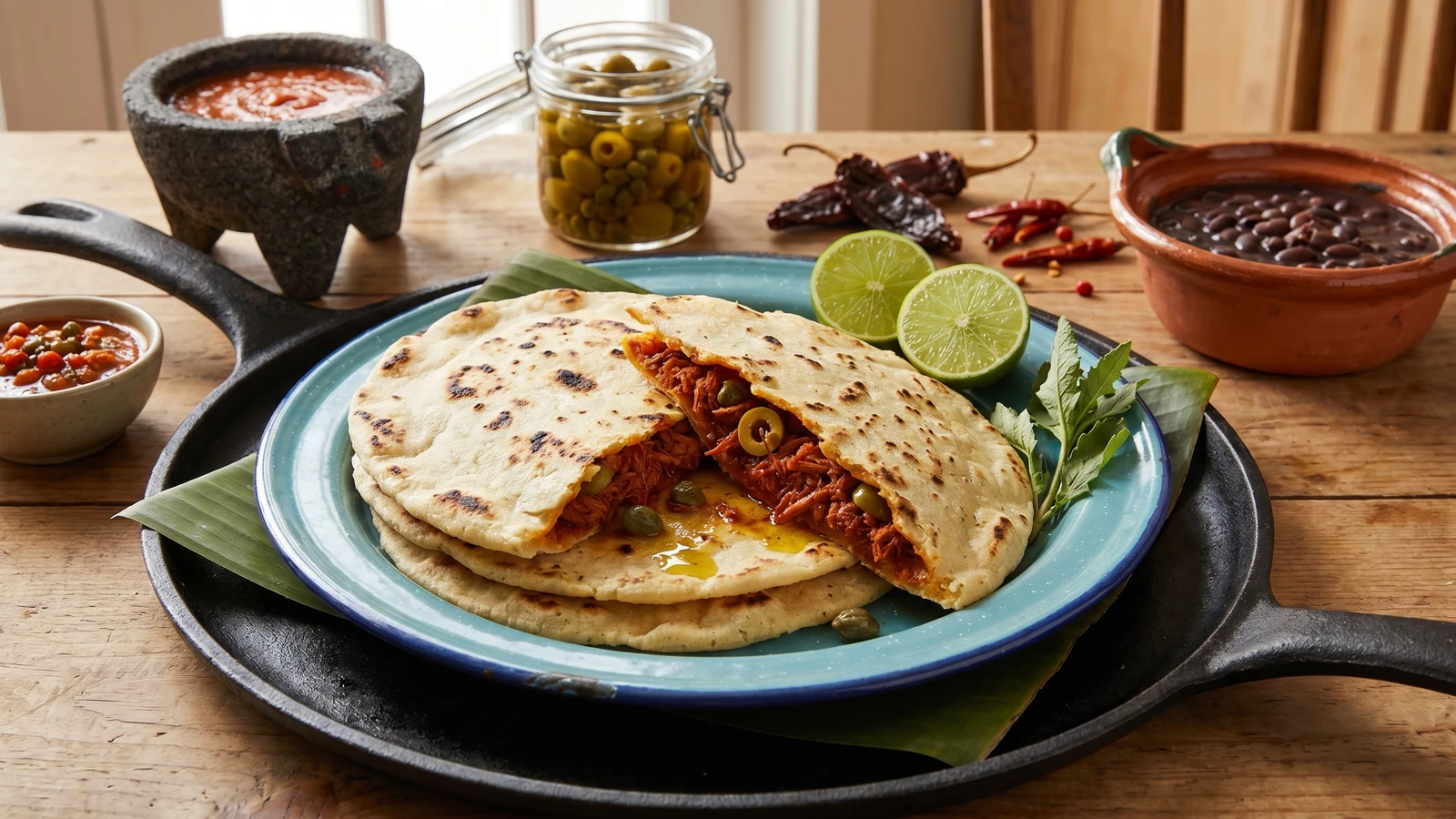
From the Sotavento lowlands of Veracruz, fresh corn masa folded around shredded cazón braised with jitomate, green olives, capers, and chipotle, then pressed on the comal. A Lenten quesadilla that never needed cheese.
This is from the Sotavento, the low, hot, green south of Veracruz where the Papaloapan river runs out to the Gulf. Tlacotalpan, Alvarado, Cosamaloapan. This is where the cazón comes off the boats and goes into the masa. Not Campeche, which has its own cazón and its own pan de cazón, and we can argue about that another day. Today we are in Veracruz.
A quesadilla de cazón has no cheese. None. In Mexico City they will ask whether you want your quesadilla with cheese or without, and people have nearly come to blows over the question. In the Sotavento nobody asks, because the cazón is the filling. This is a comida de vigilia, a Lenten dish, made in the weeks when the church set meat aside and the Gulf gave up fish instead. Shredded shark braised down with jitomate, green olives, capers, and chipotle, folded into corn masa and pressed on the comal.
Look at what is in the pan and you will see all three roots of this coast on one plate. The corn masa and the epazote are Indigenous, older than the conquest. The olives and the capers came off Spanish ships through the port of Veracruz. And the culture that cradles this food, the son jarocho coming off the radio, the rhythm of the whole Sotavento, carries the African inheritance the port also brought, whether the history books care to say so or not. This is La Tercera Raíz. Three roots, one quesadilla.
My mother was from Jalisco and never made these. I learned them from a woman named Doña Chofi who worked a comal in the market at Alvarado, selling them wrapped in paper, three for whatever the morning fishermen could pay. She told me the filling has to be dry or the masa splits on the comal. She was right. I have made them a hundred times since and that is the one rule that never bends. The filling must be dry. Recetas probadas y garantizadas.
The port of Veracruz served as New Spain's principal Atlantic gateway from the early 16th century, and the olives, capers, and bay leaf that define the region's minilla arrived through that harbor on Spanish ships. Cazón, a small shark abundant in the warm Gulf, became a fixture of Lenten cooking across the Sotavento and neighboring Campeche, where Catholic abstinence from red meat during Cuaresma turned fish into the center of the table for weeks each spring. The dish also carries the imprint of La Tercera Raíz, the African heritage brought to the Veracruz coast through the colonial slave trade, which shaped the music, speech, and kitchens of the Sotavento as profoundly as its Indigenous and Spanish roots.
Quantity
1 1/2 pounds
skin removed (sierra or firm white fish if unavailable)
Quantity
1/2
Quantity
3
peeled
Quantity
1 sprig
Quantity
2
Quantity
1 teaspoon
Quantity
3 tablespoons
Quantity
1
finely chopped
Quantity
4
minced
Quantity
1 1/2 pounds
finely chopped
Quantity
2 to 3
chopped, plus 1 tablespoon of the adobo
Quantity
1/3 cup
chopped
Quantity
2 tablespoons
drained and rinsed
Quantity
2
Quantity
1 sprig
chopped
Quantity
to taste
Quantity
2 pounds
or substitute 4 cups masa harina such as Maseca
Quantity
2 1/2 cups
only if using masa harina, plus more as needed
Quantity
1 teaspoon
Quantity
for serving
Quantity
for serving
Quantity
for serving
| Ingredient | Quantity |
|---|---|
| cazón (small shark)skin removed (sierra or firm white fish if unavailable) | 1 1/2 pounds |
| white onion (for poaching) | 1/2 |
| garlic cloves (for poaching)peeled | 3 |
| fresh epazote (for poaching) | 1 sprig |
| bay leaves (for poaching) | 2 |
| kosher salt (for poaching) | 1 teaspoon |
| olive oil | 3 tablespoons |
| white onionfinely chopped | 1 |
| garlic clovesminced | 4 |
| ripe roma tomatoes (jitomate)finely chopped | 1 1/2 pounds |
| chiles chipotles en adobochopped, plus 1 tablespoon of the adobo | 2 to 3 |
| pitted green oliveschopped | 1/3 cup |
| capersdrained and rinsed | 2 tablespoons |
| bay leaves | 2 |
| fresh epazotechopped | 1 sprig |
| kosher salt | to taste |
| fresh masa for tortillas (masa de maíz nixtamalizado)or substitute 4 cups masa harina such as Maseca | 2 pounds |
| warm water (optional)only if using masa harina, plus more as needed | 2 1/2 cups |
| kosher salt (for the masa) | 1 teaspoon |
| salsa de chiltepín or chipotle (optional) | for serving |
| lime halves (optional) | for serving |
| frijoles negros refritos (optional) | for serving |
Put the cazón in a pot with the half onion, the 3 peeled garlic cloves, one sprig of epazote, 2 bay leaves, and the teaspoon of salt. Cover with cold water by an inch. Bring it up to a gentle simmer and cook 10 to 12 minutes, until the flesh turns opaque and flakes when you press it. Do not boil it hard. A hard boil makes shark rubbery and drives the flavor into the water instead of leaving it in the meat. Lift the fish out, save half a cup of the broth, and let it cool enough to handle.
Flake the cazón with your fingers, not a fork. Your fingers find the bits of cartilage and skin a fork misses, and cazón has a soft spine you want to pull out. Shred it fine. Small pieces fold into the masa without tearing it open. Discard the poaching onion, garlic, and bay.
Heat the olive oil in a wide skillet or clay cazuela over medium. Olive oil, not lard. This is a comida de vigilia, a Lenten dish, and the Spanish hand in Veracruz reaches for the olive before the pig. Add the chopped onion and cook until it turns glassy, about 5 minutes. Add the minced garlic and cook one minute more, until you can smell it.
Add the chopped tomato and the 2 bay leaves. Cook over medium heat, stirring now and then, until the tomato breaks down and most of the liquid cooks off, 12 to 15 minutes. You want a thick, jammy base, not a loose sauce.
Stir in the chopped chipotle and its adobo, the olives, the capers, and the chopped epazote. This is what turns a plain fish guiso into a Veracruz minilla. The olive and the caper are the Mediterranean inheritance that came through the port. The epazote is older than all of it. Cook two minutes to let them marry.
Add the shredded cazón and fold it through the tomato. If it looks dry, add a spoonful of the reserved poaching broth, but only a spoonful. The filling should hold in a mound on a spoon, not run off it. Taste for salt now, and go easy. The olives, capers, and adobo are already salty. Pull it off the heat and let it cool while you work the masa. Hot filling tears cold masa.
If you have fresh masa, knead it with the teaspoon of salt until it is smooth and soft, like the lobe of your ear. If the edges crack when you press it, work in warm water a tablespoon at a time. If you are using masa harina, mix it with the salt and the warm water, knead a few minutes, then let it rest 10 minutes so the corn drinks the water. Dry masa cracks and falls apart on the comal. Así se hace y punto.
Roll a ball of masa the size of a small lime. Press it in a tortilla press lined with a split plastic bag into a round about 5 inches across, not paper thin. Lift the top plastic. Spoon a heaping tablespoon of filling onto one half, leaving a clean border. Using the bottom plastic to help you, lift and fold the masa over the filling into a half-moon. Press the edge to seal, then peel it off the plastic into your hand.
Heat a comal or heavy skillet over medium. Lay the quesadillas down, a few at a time, and cook 3 to 4 minutes a side. The masa should toast into pale gold spots and feel dry and set when you tap it, not pasty. Press the sealed edge with a spatula so it holds. Cook them all the way through. Underdone masa is gummy and no salsa on earth will save it.
Eat them straight off the comal with salsa, a squeeze of lime, and a side of frijoles negros if you want them. No cheese. This quesadilla never needed it, and in Veracruz nobody asks. Saber cocinar es saber vivir.
1 serving (about 400g)
Culinary guides, cultural storytelling, and the editorial depth that makes cooking meaningful.
Discover Culinary ExplorerChef Lupita
Jalisco's goat birria, born around Cocula and carried into Guadalajara's markets, slow-braised in ancho, guajillo, cascabel, and chile de arbol, then tucked into corn tortillas crisped in its own red fat.

Chef Lupita
Sonora's working morning burrito: chicharrón de cáscara stewed in chile colorado with diced potato, rolled tight in a paper-thin tortilla sobaquera and eaten standing up at the carreta.

Chef Lupita
Mocorito's pork chilorio, shredded and confited in lard with chile ancho and pasilla, rolled into a thin handmade flour tortilla. The burrito Sinaloa sends out into the world.

Chef Lupita
Sonora's morning burrito of mashed pinto frijoles puercos and melted queso asadero, wrapped in a paper-thin sobaquera and seared on the comal until the cheese pulls in long strings.