
Chef Lupita
Arroz a la Oaxaqueña
Oaxaca's red rice, stained with tomato and fried in lard, steamed with carrots, ejotes, black beans, and epazote. The side that anchors a Oaxacan family meal and earns its place beside the main.
A cooking platform built around craft, culture, and the stories behind what we eat.
Created by
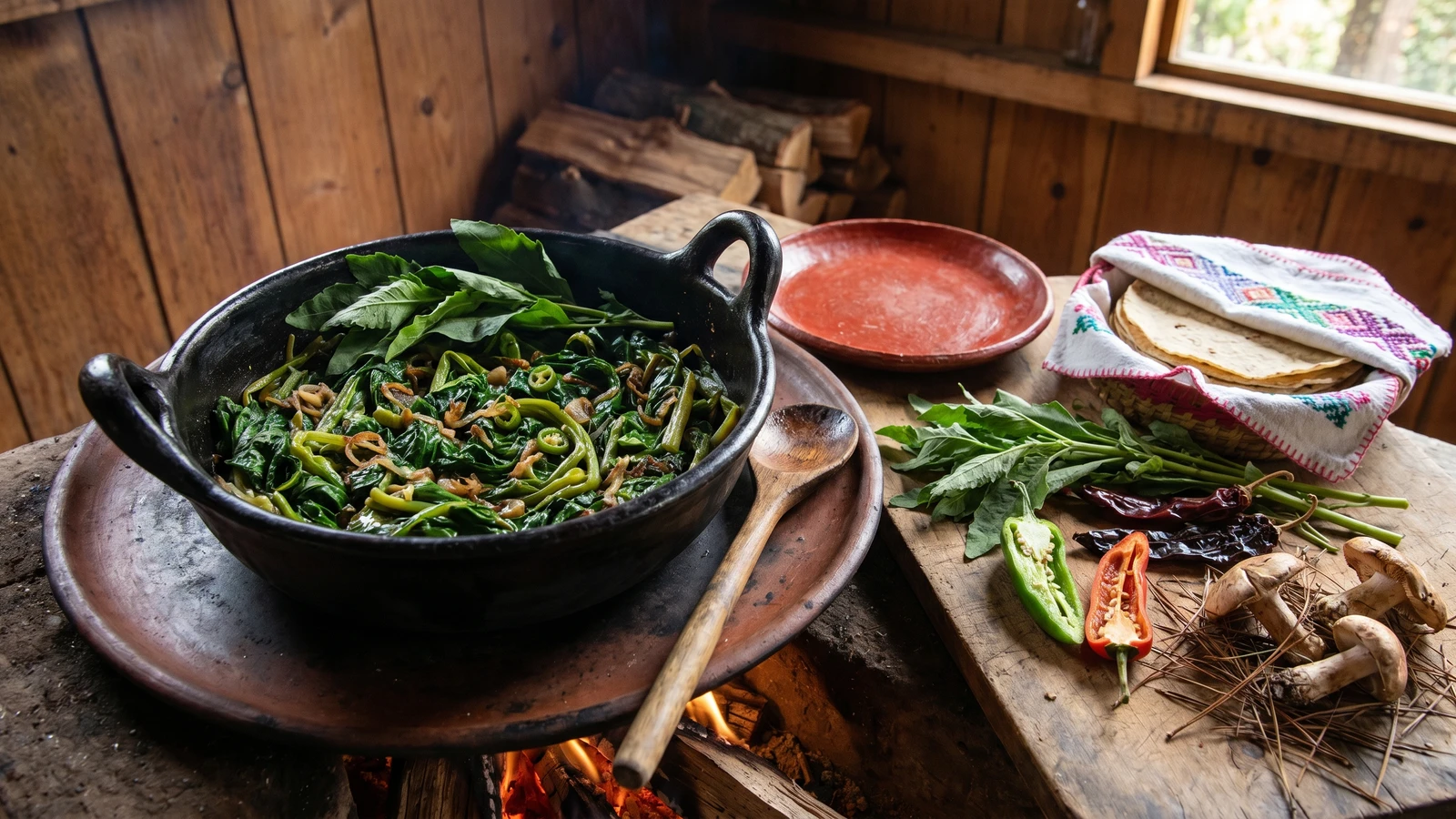
Michoacán's Meseta P'urhépecha side dish of wild milpa greens, wilted in pork lard with epazote, serrano, garlic, and onion on a comal de leña, never dressed raw.
Michoacán, in the Meseta P'urhépecha and the lake towns around Pátzcuaro, is where shakuá belongs. It is not a generic plate of sautéed greens. It is the P'urhépecha wild-greens register of the milpa, gathered when the tender leaves show themselves between corn, beans, and squash, then cooked down with epazote, onion, garlic, chile serrano, and manteca de cerdo.
At the market in Pátzcuaro, and in kitchens from Cherán K'eri toward Nahuatzen, the women don't treat quelites like salad. They sort them, wash them until the grit is gone, and cook them on a comal de leña in barro until the leaves collapse and the lard shines green at the edge of the cazuela. Raw quelites on a plate are not shakuá. Así se hace y punto.
The defining ingredient is not one plant. It is the practice: quintonil, cenizo, verdolaga, nabo silvestre, whichever tender quelite the milpa gives that week, joined by epazote. If you don't know the plant, don't forage it. Pregúntale a las señoras del mercado. If the leaves are tough or bitter, they go in the pot a minute first. If they are tender, they go straight into the lard.
My mother was Jalisciense, so this was not in her notebook. I learned it in Michoacán, where cooks understand that hunger is managed with knowledge before money. A handful of greens, a spoonful of lard, corn tortillas, a clay cazuela on the table. Saber cocinar es saber vivir.
Quelites are one of Mesoamerica's oldest food categories; the Spanish word comes from Nahuatl 'quilitl,' but P'urhépecha communities in Michoacán preserved their own names and preparations, including shakuá for cooked milpa greens. In 2010, UNESCO inscribed Traditional Mexican Cuisine using the Michoacán paradigm, a community model rooted in maize, beans, squash, chiles, quelites, lake fish, and forest foods maintained by P'urhépecha cooks. The related terekuecha mushroom plates obey a strict rainy-season calendar: charámakua (trompa de puerco), iarini terekua (pashakua), and terékua kuín jatsíri (pata de pájaro) belong to July and August, not to champiñón from a supermarket.
Quantity
2 pounds
quintonil, quelite cenizo, verdolaga, and nabo silvestre if available, leaves and tender stems only
Quantity
3 tablespoons
Quantity
1/2 medium
thinly sliced
Quantity
3
finely chopped
Quantity
2
sliced into thin rounds
Quantity
1/2
split and grated from the cut face
Quantity
1 teaspoon, plus more to taste
Quantity
1/4 cup
use only if the cazuela dries before the greens soften
Quantity
8 large
leaves and tender stems chopped
Quantity
for serving
warmed on the comal
| Ingredient | Quantity |
|---|---|
| mixed tender quelites of the milpaquintonil, quelite cenizo, verdolaga, and nabo silvestre if available, leaves and tender stems only | 2 pounds |
| pork lard (manteca de cerdo) | 3 tablespoons |
| white onionthinly sliced | 1/2 medium |
| garlic clovesfinely chopped | 3 |
| fresh chile serranosliced into thin rounds | 2 |
| fresh chile poncho perón or chile perón amarillo (optional)split and grated from the cut face | 1/2 |
| sea salt | 1 teaspoon, plus more to taste |
| water (optional)use only if the cazuela dries before the greens soften | 1/4 cup |
| fresh epazote sprigsleaves and tender stems chopped | 8 large |
| hand-pressed corn tortillas (optional)warmed on the comal | for serving |
Spread the quelites on a clean cloth and work through them with your hands. Pull out roots, yellow leaves, seed heads, tough stems, and anything bruised. Keep the tender stems. They have flavor and body. If you foraged the greens yourself, you must know the plant and the field. Do not cook greens from sprayed edges, roadsides, or plants you cannot name. Si no conoces el mercado, no conoces la cocina.
Fill a large basin with cold water. Swish the quelites hard, lift them out, and leave the grit at the bottom. Empty the basin and repeat until the water is clear, usually three washes. Drain them but leave the leaves damp. If your mix is mostly cenizo or nabo silvestre and the leaves feel thick, blanch them in salted water for 45 seconds, drain, and squeeze lightly. Quintonil and verdolaga can go straight into the cazuela.
Build a steady leña fire and set a comal de barro over it. Set a wide barro cazuela on the comal until it warms through. Add the manteca de cerdo. It should melt and shine across the clay. Do not use vegetable oil here. La manteca es el sabor, and it carries the epazote and chile into the greens.
Add the onion to the lard and cook until it softens at the edges, about 3 minutes. Stir with a wooden cuchara. Add the garlic, serrano, and grated chile perón if using. Cook for 1 minute more, just until the garlic smells round and the chile opens up. Do not brown the garlic hard. Bitter garlic makes bitter greens.
Add the damp quelites by the handful, turning after each addition so they touch the lard and aromatics. Sprinkle in the salt. The pile will look too big, then it will collapse. That is the point. Cover the cazuela for 3 minutes so the greens release their own water, then uncover and keep turning until the leaves are tender, glossy, and still green at the edges. If the cazuela catches before the greens soften, add a splash of water, not a soup ladle.
Fold in the chopped epazote during the last 2 minutes of cooking. Add it earlier and the flavor turns dull. Added at the end, it perfumes the lard and cuts the earthiness of the greens. Taste for salt now. The greens should taste like the field, the fire, and the clay, with the serrano landing clean at the back of the mouth.
Bring the cazuela to the table family-style, with warm hand-pressed corn tortillas wrapped in a cotton servilleta. No flour tortillas. No shredded cheese. No crema poured over the top to hide the greens. Spoon the shakuá into tortillas or serve it beside beans. Cada estado, su propia cocina.
1 serving (about 160g)
Culinary guides, cultural storytelling, and the editorial depth that makes cooking meaningful.
Discover Culinary ExplorerChef Lupita
Oaxaca's red rice, stained with tomato and fried in lard, steamed with carrots, ejotes, black beans, and epazote. The side that anchors a Oaxacan family meal and earns its place beside the main.
Chef Lupita
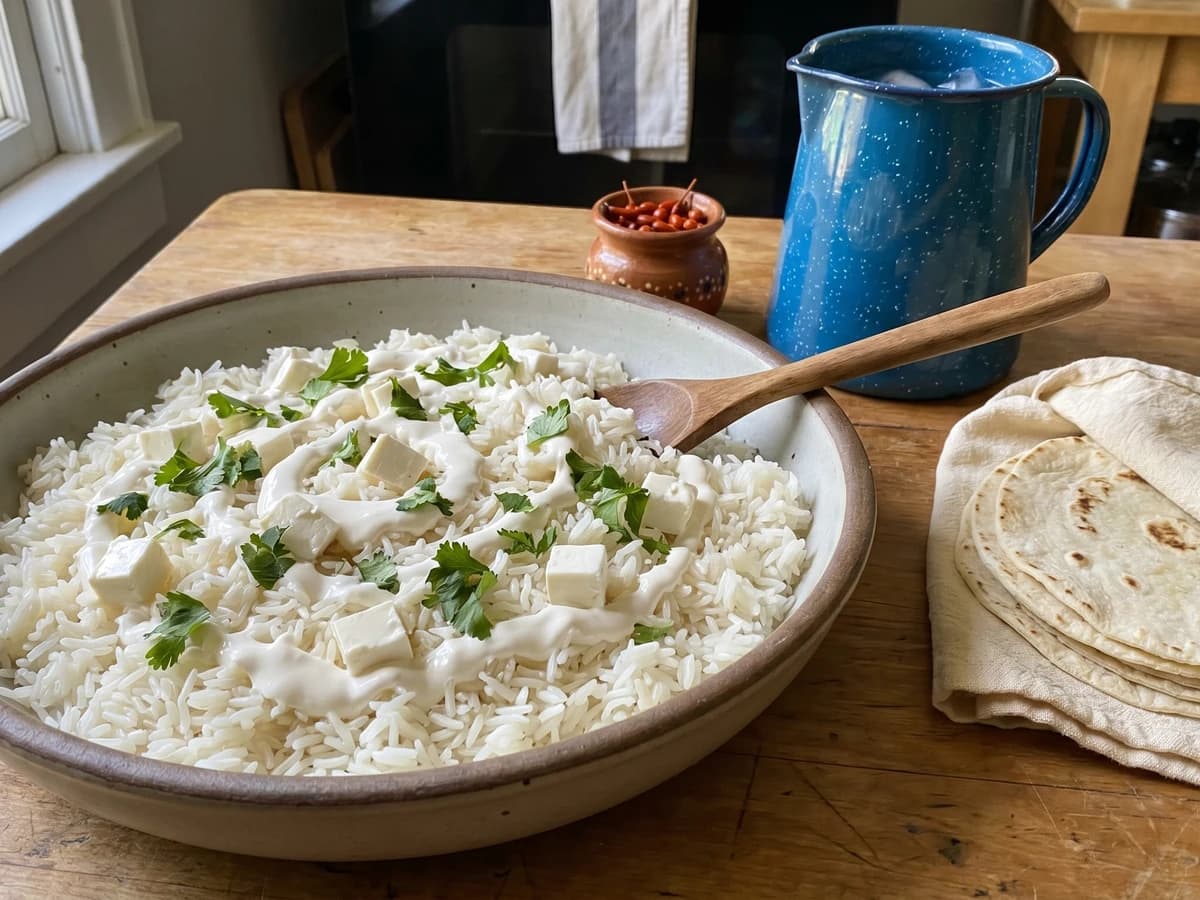
Sinaloa's home-cook white rice topped with cold cubes of cream cheese that soften into the warm grain, finished with crema and a sprinkle of chiltepin at the table. The trick that makes a side dish feel like a small luxury.
Chef Lupita
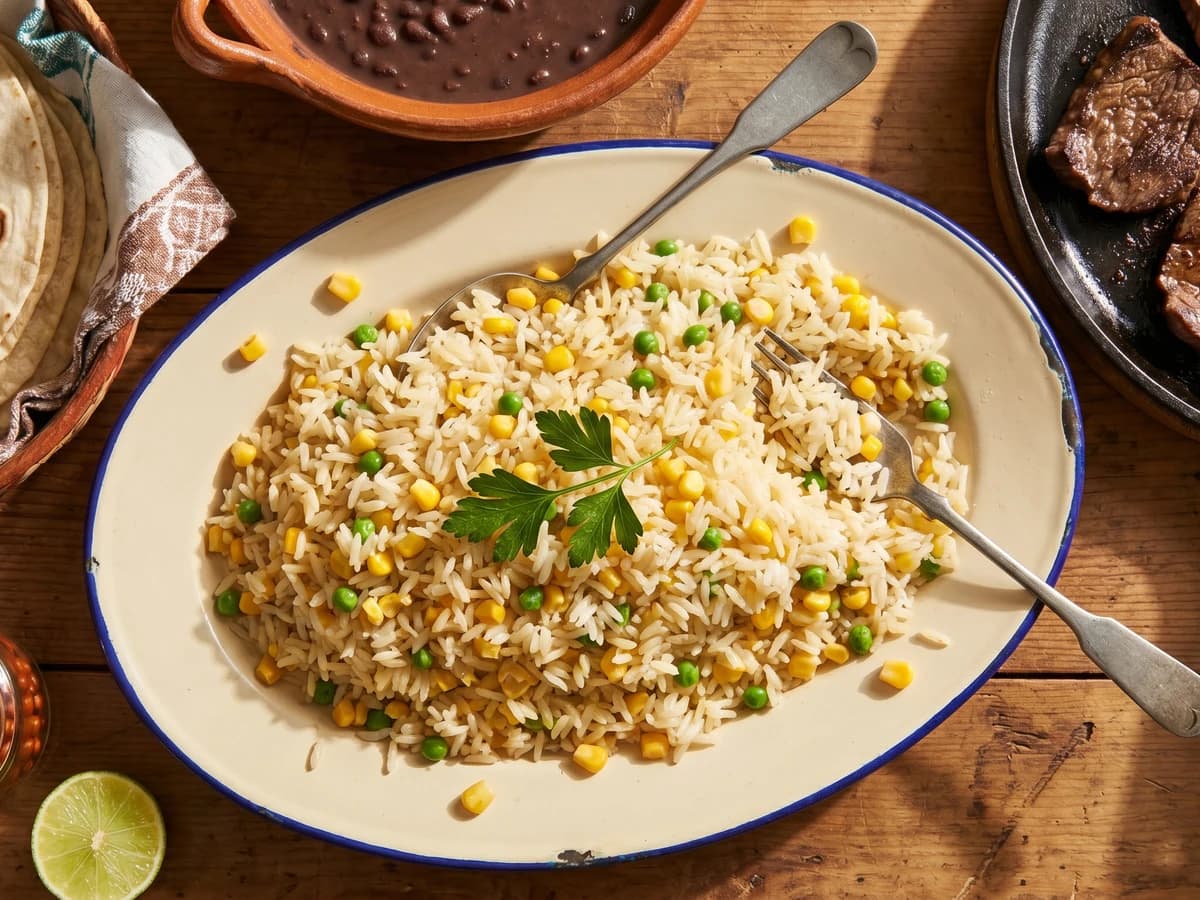
Sonora's white rice, toasted in butter and steamed with sweet corn and tender peas. The clean, quiet partner to a plate of carne asada, not the red rice of central Mexico.

Chef Lupita
Yucatán's white rice with sweet corn kernels, toasted in lard with garlic and onion. The quiet base that holds up against the peninsula's bold achiote-stained stews.