
Chef Margarida
Areias de Cascais
The sand cookies of Cascais, where three simple ingredients become something that melts on your tongue and sparkles like the beach at sunset. Butter, flour, sugar. That's all. That's enough.
A cooking platform built around craft, culture, and the stories behind what we eat.
Created by
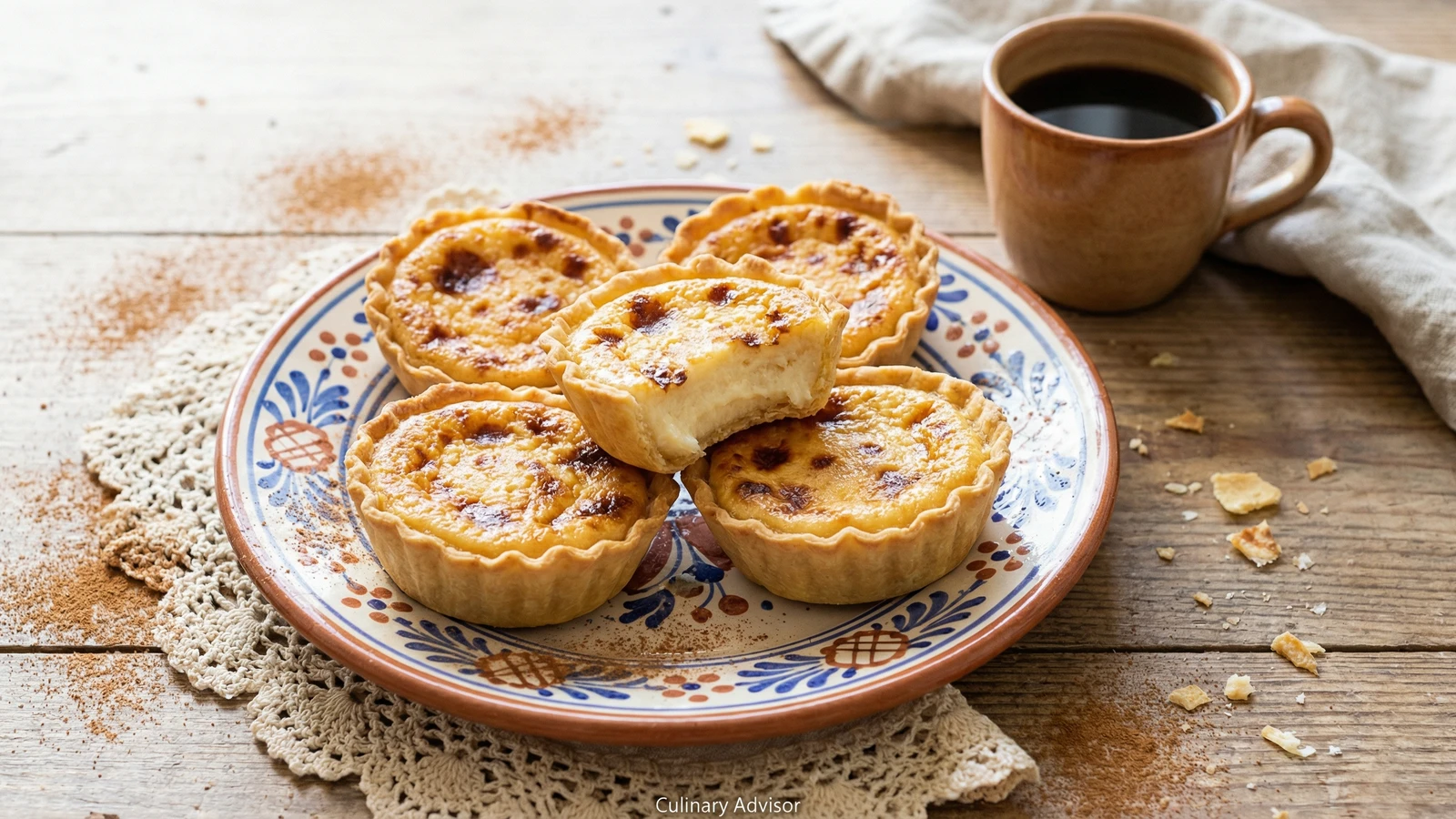
The cheese tarts of Évora, where fresh sheep's milk cheese meets sugar and cinnamon in a paper-thin shell. Alentejo's gift to anyone with a sweet tooth and respect for tradition.
Évora is where my heart lives. It's where Avó Leonor raised her children, where I spent summers learning to cook, where the white walls glow pink at sunset and the cork oaks stretch to the horizon. And it's where these queijadas come from.
Every padaria in Évora sells them. Every grandmother has her version. They're smaller than you expect, just a few bites, but those bites carry centuries of pastoral tradition. Fresh sheep's cheese from the flocks that still graze the Alentejo plains. Sugar and eggs from the convent kitchens that perfected Portuguese sweets. Cinnamon that arrived on ships from the East and never left our cuisine.
The pastry must be thin. Thin as paper, thin as faith, thin enough that it shatters when you bite through to the soft, sweet filling beneath. Too thick and you've made something else entirely. The cheese must be fresh, with that slight tang that tells you it came from an animal, not a factory. Queijo fresco de ovelha is what you want. Cow's milk cheese is not the same. I won't pretend it is.
Avó Leonor made these for special occasions. Baptisms, first communions, the day the cork harvest ended. She'd line them up on her kitchen table, two dozen at a time, and we'd eat them warm from the oven with strong coffee. That memory is why I document these recipes. Someday there won't be grandmothers who remember. But the recipes will survive.
Queijadas de Évora date to at least the 15th century, when Évora was one of Portugal's most important cities and residence to kings. The convents of Évora, particularly the Convento de Santa Clara, refined the recipe using cheese from the region's abundant sheep flocks. Unlike the more famous Queijadas de Sintra (made with requeijão), Évora's version uses fresh sheep's cheese, giving them a distinctly pastoral character tied to Alentejo's grazing lands.
Quantity
250g
for the pastry
Quantity
125g
Quantity
1/4 teaspoon
Quantity
80ml
Quantity
500g
drained
Quantity
300g
Quantity
4 large
Quantity
1 large
Quantity
1 teaspoon
Quantity
1 tablespoon
for the filling
| Ingredient | Quantity |
|---|---|
| all-purpose flourfor the pastry | 250g |
| cold lard (banha) or unsalted butter | 125g |
| fine salt | 1/4 teaspoon |
| ice water | 80ml |
| fresh sheep's cheese (queijo fresco de ovelha)drained | 500g |
| sugar | 300g |
| egg yolks | 4 large |
| whole egg | 1 large |
| ground cinnamon (canela) | 1 teaspoon |
| all-purpose flourfor the filling | 1 tablespoon |
In a large bowl, combine the flour and salt. Add the cold lard in small pieces and work it into the flour with your fingertips until the mixture resembles coarse breadcrumbs. Add the ice water a little at a time, mixing with a fork until the dough just comes together. It should be slightly shaggy, not smooth. Shape into a flat disc, wrap in cloth or plastic, and refrigerate for at least 30 minutes.
While the dough chills, press the sheep's cheese through a fine sieve into a large bowl. This step is important. The filling should be smooth, not grainy. Add the sugar and mix until well combined. Beat in the egg yolks one at a time, then the whole egg. Stir in the cinnamon and flour. The mixture should be thick but pourable, like a loose custard.
Preheat your oven to 200°C (400°F). Grease 24 small tart molds or a muffin tin with lard or butter. Roll the dough very thin on a lightly floured surface, about 2mm. Cut circles slightly larger than your molds and press them gently into each cavity, letting the edges come just above the rim. The pastry should be thin as paper. This is what gives queijadas their distinctive crisp shell.
Spoon the cheese filling into each pastry shell, filling them about two-thirds full. The filling will puff as it bakes. Bake for 18 to 20 minutes, until the filling is set and golden with darker spots on top, and the pastry edges are crisp and golden brown. The centers should still have a slight wobble when you tap the pan.
Let the queijadas cool in their molds for 10 minutes, then carefully transfer to a wire rack. They're fragile when hot but firm up as they cool. Serve at room temperature. They keep for 2 to 3 days in a covered container, but they're best the day they're made, when the pastry is still crisp and the filling soft.
1 serving (about 50g)
Culinary guides, cultural storytelling, and the editorial depth that makes cooking meaningful.
Discover Culinary ExplorerChef Margarida
The sand cookies of Cascais, where three simple ingredients become something that melts on your tongue and sparkles like the beach at sunset. Butter, flour, sugar. That's all. That's enough.

Chef Margarida
The Christmas turnovers of Alentejo, where humble chickpeas become something miraculous inside a crispy shell. Proof that Portuguese grandmothers could turn anything into celebration.

Chef Margarida
The butter cookies of the Azores, shaped into golden rings by island grandmothers who knew that the best things in life are simple: good butter, fresh eggs, and a cup of strong coffee.

Chef Margarida
The almond cookies of the Algarve, where Moorish orchards still bloom white against blue January skies. Three ingredients, centuries of tradition, the taste of southern Portugal in every tender bite.