
Chef Lesia
Arnautka (арнаутка, southern durum-wheat loaf)
Durum wheat makes bread the color of late steppe sun: golden, firm, nutty, and strong enough to hold salo, tomato juice, and green sunflower oil without collapsing.
A cooking platform built around craft, culture, and the stories behind what we eat.
Created by
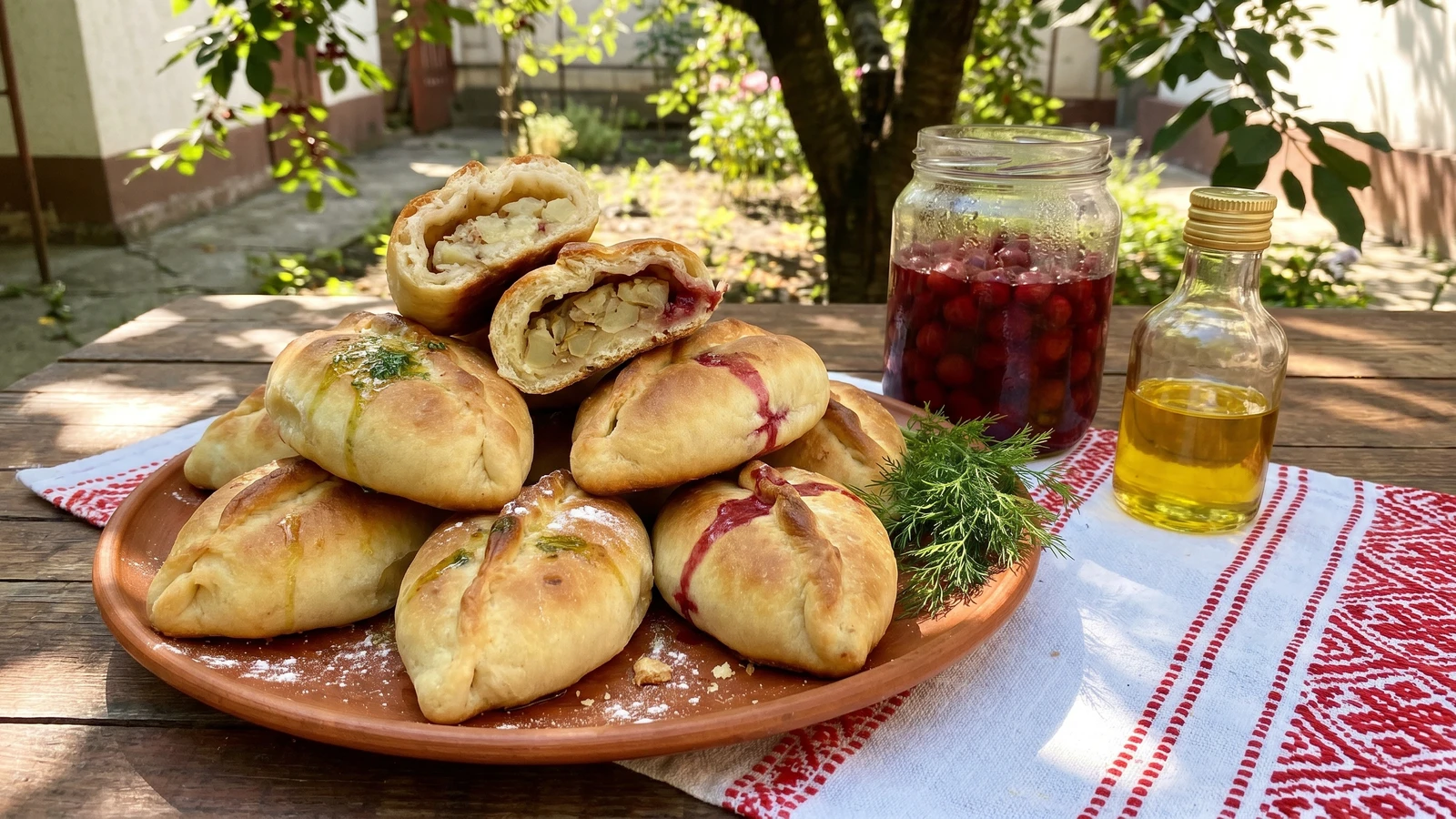
The best pyrizhky are sealed tight enough to travel, but tender enough that the first bite gives way to potato, cabbage, or July cherries making their own little sauce inside.
Agood hand pie has to survive a journey. Into a school bag, onto a train, across a courtyard to someone who has already said they're not hungry and is lying. Pyrizhky are built for that: soft yeast dough, pinched shut over something generous, then baked until the seams hold and the tops shine gold.
The filling decides the mood. Potato with slow onion is quiet comfort, cabbage cooked down until the smell changes is sharper and sweeter, and sour cherries in July make their own violet sauce inside if you don't crowd them. Aunt Nadia once wrote only, "not too wet, or they'll cry," which is rude advice from a recipe and also correct. Cool the filling before it touches the dough. That is the one why that decides the dish: hot filling wakes the yeast too fast, melts the dough at the seam, and your neat little pie opens its mouth in the oven.
Make more than you think. Pyrizhky are not fussy food, but they are social food, the thing you wrap in a cloth and take outside with cucumbers, dill, hard-boiled eggs, and a jar of something sour from the loud shelf. Eat them warm, eat them room temperature, eat one standing at the tray because you have no discipline. Same here.
Pyrizhky belong to the broad Ukrainian family of filled breads, with regional fillings following the pantry: potatoes and mushrooms in forested areas, cabbage where winter storage ruled, fruit in summer villages and city bakeries alike. In the wheat-rich south, baked yeast versions made sense for travel and outdoor meals, especially around the litnya kuhnia, the summer kitchen, where a tray could feed workers, children, and guests without ceremony.
Quantity
500g
plus more for dusting
Quantity
7g
Quantity
250ml
Quantity
1 large
Quantity
50g
melted and cooled
Quantity
1 tablespoon
Quantity
1 1/2 teaspoons
Quantity
1 yolk plus 1 tablespoon milk
for glazing
Quantity
2 tablespoons
for brushing
Quantity
600g
peeled and cut into chunks
Quantity
2 medium
finely diced, for potato filling
Quantity
3 tablespoons
for potato filling
Quantity
700g
finely shredded
Quantity
1 medium
coarsely grated
Quantity
1 medium
finely diced, for cabbage filling
Quantity
3 tablespoons
for cabbage filling
Quantity
1 tablespoon paste or 2 tablespoons mors
Quantity
1 small handful
chopped
Quantity
450g
pitted, fresh or well-drained jarred
Quantity
70g
for cherry filling
Quantity
1 tablespoon
Quantity
to taste
| Ingredient | Quantity |
|---|---|
| strong white flourplus more for dusting | 500g |
| dried yeast | 7g |
| warm milk | 250ml |
| egg | 1 large |
| unsalted buttermelted and cooled | 50g |
| sugar | 1 tablespoon |
| fine sea salt | 1 1/2 teaspoons |
| egg yolk mixed with milkfor glazing | 1 yolk plus 1 tablespoon milk |
| unrefined sunflower oilfor brushing | 2 tablespoons |
| potatoes (optional)peeled and cut into chunks | 600g |
| onions (optional)finely diced, for potato filling | 2 medium |
| unrefined sunflower oil (optional)for potato filling | 3 tablespoons |
| white cabbage (optional)finely shredded | 700g |
| carrot (optional)coarsely grated | 1 medium |
| onion (optional)finely diced, for cabbage filling | 1 medium |
| unrefined sunflower oil (optional)for cabbage filling | 3 tablespoons |
| tomato paste or fermented tomato mors (optional) | 1 tablespoon paste or 2 tablespoons mors |
| dill (optional)chopped | 1 small handful |
| sour cherries (optional)pitted, fresh or well-drained jarred | 450g |
| sugar (optional)for cherry filling | 70g |
| potato starch (optional) | 1 tablespoon |
| salt and black pepper | to taste |
Stir the warm milk with the yeast and sugar and leave it until the surface looks creamy and a little foamy. Add the flour, salt, egg, and cooled butter, then mix into a soft dough. Knead until it stops tearing and starts to stretch under your hands, smooth but still tender.
Put the dough in an oiled bowl, cover it, and leave it somewhere warm until it has doubled and looks airy. Press it gently with a floured finger; if the dent sighs back slowly, it's ready. If your kitchen is cold, give it time. Dough has no interest in your schedule.
For potato pyrizhky, boil the potatoes in salted water until they crush easily. Meanwhile, sweat the onions in sunflower oil until soft, golden at the edges, and sweet-smelling. Mash the potatoes, fold in the onions and their oil, season hard with salt and black pepper, then cool completely.
For cabbage pyrizhky, cook the onion and carrot in sunflower oil until soft, then add the cabbage with a good pinch of salt. Let it collapse slowly, stirring often, until it smells sweet rather than raw and any sharp wateriness has cooked away. Stir in tomato paste or fermented tomato mors, black pepper, and dill, then cool completely.
For cherry pyrizhky, toss the pitted sour cherries with sugar, potato starch, and a pinch of salt just before shaping. If using jarred cherries, drain them well first and save the juice for drinking with sparkling water. The filling should glisten, not swim.
Turn the risen dough onto a floured surface and divide it into 18 pieces. Roll each into a small oval, spoon filling into the middle, then pinch the edges firmly shut from end to end. Don't overfill. A greedy pyrizhka tells on you in the oven.
Set the pyrizhky seam-side down on lined baking trays, leaving room between them, then cover and let them puff until they feel light when you lift one. Brush with egg yolk and milk. The glaze should coat the tops, not drip down and glue them to the tray.
Bake at 190C until the tops are deep golden and the bottoms sound hollow when tapped, about 20 to 25 minutes. Brush the hot pies lightly with sunflower oil so the crust softens and shines. Let them settle for ten minutes before eating; the filling inside keeps its own little weather.
1 serving (about 155g)
Culinary guides, cultural storytelling, and the editorial depth that makes cooking meaningful.
Discover Culinary ExplorerChef Lesia
Durum wheat makes bread the color of late steppe sun: golden, firm, nutty, and strong enough to hold salo, tomato juice, and green sunflower oil without collapsing.

Chef Lesia
A proper hearth loaf announces itself before you cut it: dark crust, hollow knock, flour caught in the blisters, and that deep oven smell that makes people move closer.
Chef Lesia
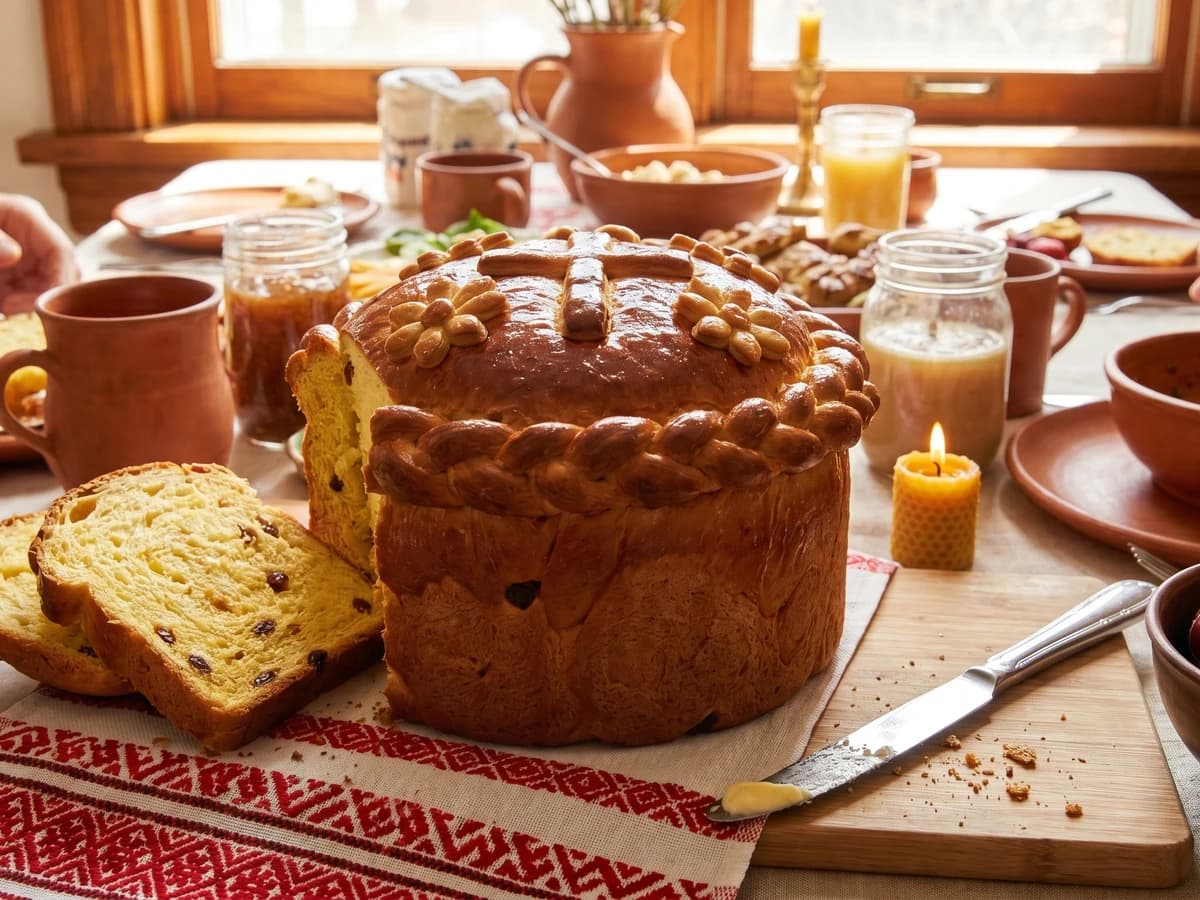
This is the Easter bread that climbs upward before it spreads out, a golden tower of eggs, butter, braids, flowers and crosses from Bukovyna's western table.
Chef Lesia
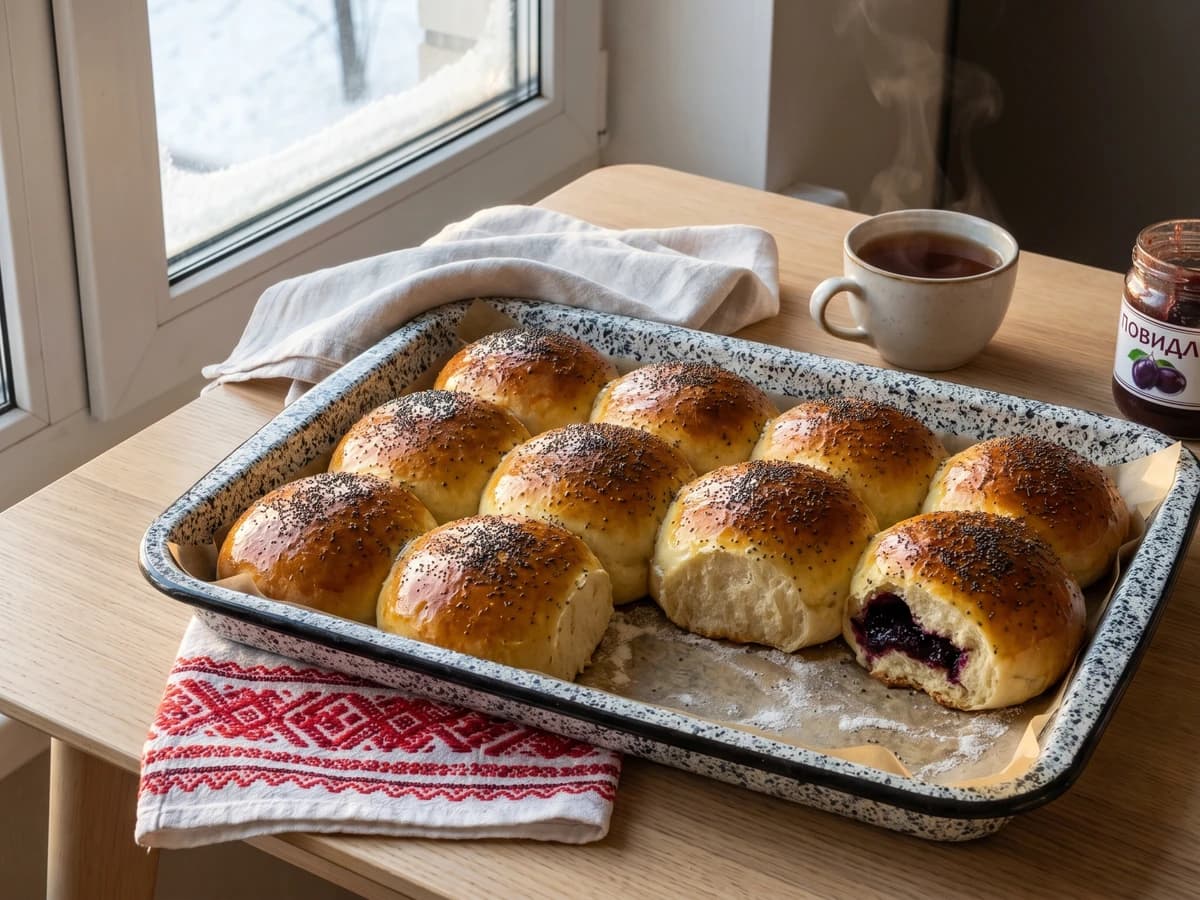
The sweetest part of bulochky is not sugar but milk: it makes a dough that pulls apart in pale threads, ready to stay plain or hide a spoon of thick povydlo.