
Chef Jeong-sun
Aehobak-guk (애호박국, Korean Zucchini Soup)
A clean summer soup of Korean zucchini and salted shrimp, built on quick anchovy-kelp broth and finished before the half-moons lose their shape on a weeknight table.
A cooking platform built around craft, culture, and the stories behind what we eat.
Created by
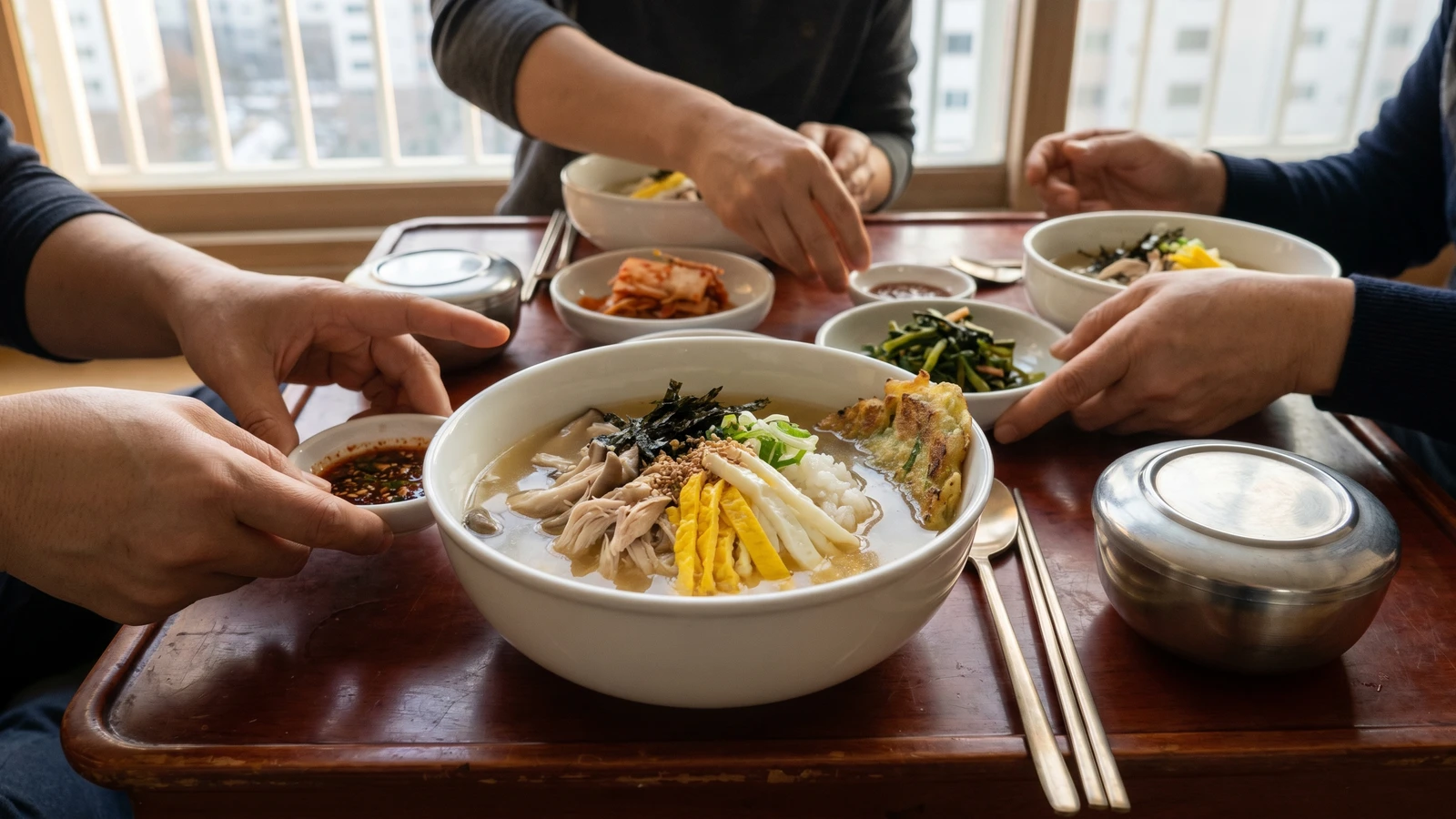
Warm rice under clear chicken broth, shredded meat, mushrooms, and a mung-bean pancake, the northern festive bowl carried south by families who left Pyongyang.
The misunderstanding is that onban is only chicken soup with rice. It is warmer and stricter than that. The rice must be hot, the broth clear, the chicken seasoned before it meets the bowl, and the mung-bean pancake set on top like a promise that this is not an ordinary sick-day juk. Pyongyang-onban belongs to the northern table, festive without being loud, generous without burying anything under chili.
My teacher Master Seong-nyeo made me taste each part alone: one spoon of broth, one shred of chicken, one mushroom, one corner of pancake. Then she put them together and asked what had disappeared. That was the lesson. If the mushroom tastes only of sesame, you used too much oil. If the chicken tastes flat, you seasoned too late. If the pancake is soft before it reaches the soup, you added too much water.
Tonight this dish asks for order. Soak the mung beans ahead, simmer the chicken gently, fry the pancake while the broth rests, and assemble only when the table is ready. 손맛 is real, the hand-taste of a cook who knows when a broth is right. I measure it anyway, so you can hand this bowl to someone who has never stood in a Pyongyang kitchen and still feed them properly.
Pyongyang-onban is one of the best-known regional dishes of Pyongyang, a warm rice bowl served with chicken broth, shredded meat, mushrooms, and a mung-bean pancake called nokdu-jijim. After the Korean War, displaced families from the North carried Pyongyang foods south, and onban remained part of that remembered table alongside Pyongyang naengmyeon and northern-style mandu. The name is plain: onban means warm rice, and the dish's dignity comes from careful assembly rather than palace grandeur.
Quantity
1, about 1.2kg
or 900g bone-in thighs and breasts
Quantity
10 cups
Quantity
1/2 medium
unpeeled and halved
Quantity
6 cloves
divided
Quantity
1 thumb-size piece
sliced
Quantity
2
white parts for broth, green parts for garnish
Quantity
1 teaspoon
Quantity
1 1/2 teaspoons
divided, plus more to adjust
Quantity
200g
soaked overnight, or 1 1/2 cups peeled soaked mung beans
Quantity
1/4 cup
soaked with the mung beans
Quantity
1 cup
rinsed, squeezed dry, finely chopped
Quantity
150g
blanched and chopped
Quantity
1/2 small
finely chopped
Quantity
2 tablespoons
plus more as needed
Quantity
120g
sliced
Quantity
1 tablespoon
divided
Quantity
2 teaspoons
divided
Quantity
1/4 teaspoon
Quantity
4 cups
hot
Quantity
2
separated and cooked into jidan strips
Quantity
2 sheets
cut into fine strips
Quantity
2
thinly sliced
Quantity
1 tablespoon
Quantity
about 1/4 cup
2 tablespoons soy sauce, 1 tablespoon minced scallion, 1 minced small garlic clove, 1 teaspoon gochugaru, 1 teaspoon sesame oil, 1 teaspoon sesame seeds
| Ingredient | Quantity |
|---|---|
| small whole chickenor 900g bone-in thighs and breasts | 1, about 1.2kg |
| cold water | 10 cups |
| onion for brothunpeeled and halved | 1/2 medium |
| garlicdivided | 6 cloves |
| gingersliced | 1 thumb-size piece |
| scallionswhite parts for broth, green parts for garnish | 2 |
| whole black peppercorns | 1 teaspoon |
| kosher saltdivided, plus more to adjust | 1 1/2 teaspoons |
| mung beanssoaked overnight, or 1 1/2 cups peeled soaked mung beans | 200g |
| short-grain rice for pancakesoaked with the mung beans | 1/4 cup |
| napa cabbage kimchi (optional)rinsed, squeezed dry, finely chopped | 1 cup |
| mung bean sproutsblanched and chopped | 150g |
| onion for pancakefinely chopped | 1/2 small |
| neutral oilplus more as needed | 2 tablespoons |
| fresh shiitake or oyster mushroomssliced | 120g |
| soy saucedivided | 1 tablespoon |
| toasted sesame oildivided | 2 teaspoons |
| freshly ground black pepper | 1/4 teaspoon |
| cooked short-grain white ricehot | 4 cups |
| eggsseparated and cooked into jidan strips | 2 |
| roasted gimcut into fine strips | 2 sheets |
| scallion greensthinly sliced | 2 |
| toasted sesame seeds | 1 tablespoon |
| yangnyeomjang seasoning sauce2 tablespoons soy sauce, 1 tablespoon minced scallion, 1 minced small garlic clove, 1 teaspoon gochugaru, 1 teaspoon sesame oil, 1 teaspoon sesame seeds | about 1/4 cup |
Cover the mung beans and the 1/4 cup rice with 3 inches of water and soak overnight, or at least 6 hours. The rice is not filler. It helps the pancake hold together without turning heavy, which matters when it sits in broth. Drain well before grinding.
Put the chicken, 10 cups cold water, broth onion, 4 garlic cloves, ginger, scallion whites, peppercorns, and 1 teaspoon salt in a large pot. Bring slowly to a bare simmer, skimming the gray foam as it rises, then cook gently for 55 to 65 minutes, until the breast meat pulls away cleanly and the thigh is tender. A hard boil clouds the broth and toughens the meat. This bowl lives or dies by a clear chicken broth.
Lift out the chicken and strain the broth through a fine sieve. Let the chicken cool just until you can handle it, then pull the meat into fine shreds. Season the shredded chicken with 1/2 teaspoon soy sauce, 1 teaspoon sesame oil, 1 minced garlic clove, and a pinch of pepper. Taste it now. If the meat is bland before it meets the rice, the broth will not rescue it.
Return 7 cups strained broth to the pot and keep it hot. Skim off visible fat, then season with 1/2 teaspoon salt. It should taste clean and lightly salted, a little less salty than soup you would eat alone, because the seasoned chicken, mushrooms, and yangnyeomjang finish the bowl. Save any extra broth for reheating leftovers.
Warm 1 teaspoon oil in a small skillet. Add the mushrooms and cook 3 to 4 minutes, until they soften and give up their moisture. Season with 1/2 teaspoon soy sauce and 1 teaspoon sesame oil. Keep them separate from the chicken. Each topping should taste like itself before it joins the bowl.
Grind the drained mung beans and soaked rice with 1/2 cup fresh water and 1/2 teaspoon salt until the batter is coarse, not perfectly smooth. Stir in the chopped blanched sprouts, onion, and rinsed kimchi if using. The batter should fall thickly from a spoon. Too much water makes a pancake that drinks oil and breaks in the soup.
Heat 2 tablespoons oil in a wide skillet over medium heat. Spoon the batter into four pancakes, each about 4 inches wide and 1/2 inch thick. Cook 3 to 4 minutes per side, until the edges are crisp and the centers are set. Drain on a rack, not paper if you can help it, so the underside stays crisp. Cut each pancake in half just before serving.
Beat the egg yolks with a pinch of salt and cook in a lightly oiled skillet as a thin yellow sheet. Repeat with the whites. Cool, then slice both into fine strips. This is not decoration for showing off. The pale broth needs small, careful color: yellow egg, white egg, dark gim, green scallion, brown mushroom.
Stir together the yangnyeomjang: 2 tablespoons soy sauce, 1 tablespoon minced scallion, 1 minced small garlic clove, 1 teaspoon gochugaru, 1 teaspoon sesame oil, and 1 teaspoon sesame seeds. Serve it on the side. Let each person season the bowl at the table, because the broth should arrive clear and restrained.
Put 1 cup hot rice in each deep bowl. Lay shredded chicken over the rice, then mushrooms, jidan strips, gim, scallion greens, and half a mung-bean pancake. Ladle about 1 3/4 cups hot broth around the rice, not so much that the toppings drown. Scatter sesame seeds over the top and serve with yangnyeomjang. Write down your final salt amount. Memory is a borrowed bowl.
1 serving (about 1000g)
Culinary guides, cultural storytelling, and the editorial depth that makes cooking meaningful.
Discover Culinary ExplorerChef Jeong-sun
A clean summer soup of Korean zucchini and salted shrimp, built on quick anchovy-kelp broth and finished before the half-moons lose their shape on a weeknight table.
Chef Jeong-sun
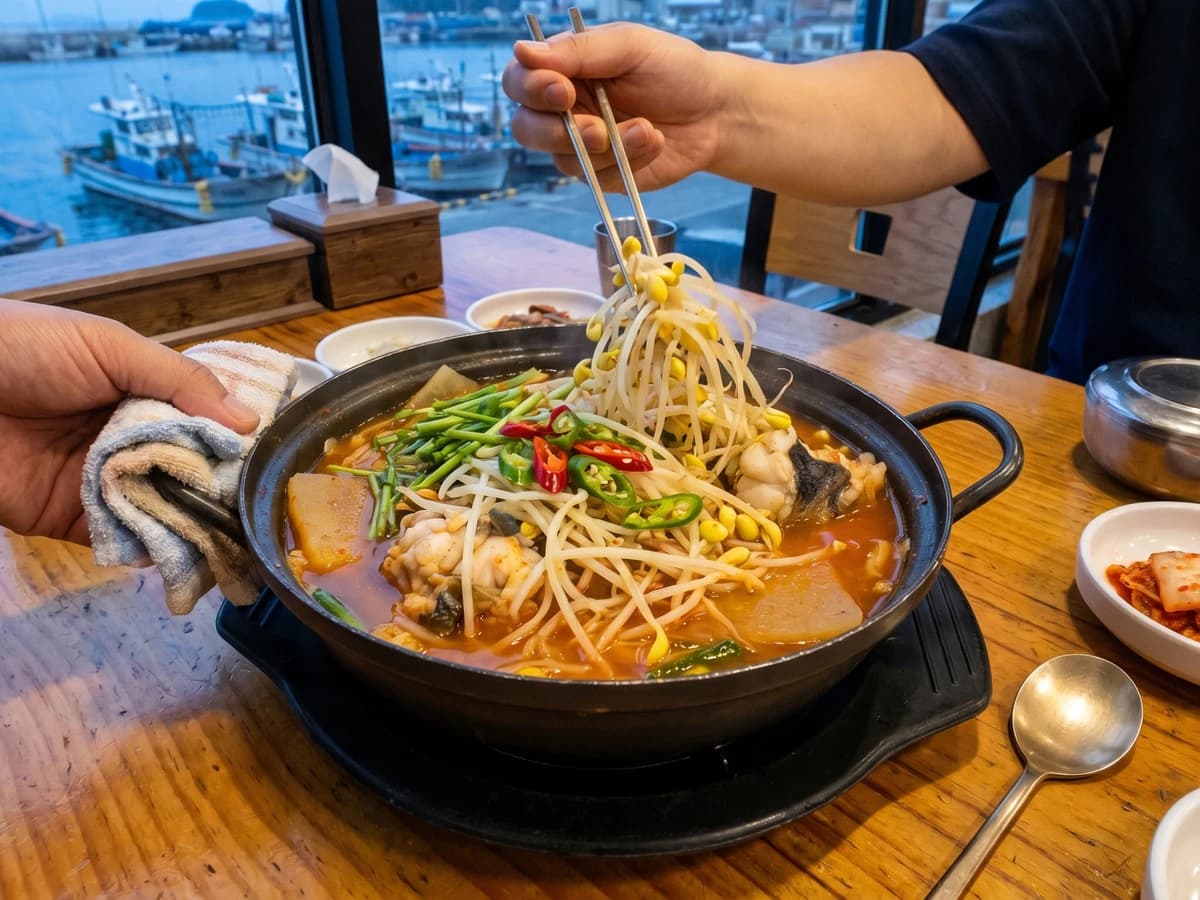
A Masan coast monkfish stew with firm white meat, gelatin at the bones, soybean sprouts for crunch, and a red broth seasoned to carry the fish, not bury it.

Chef Jeong-sun
A weeknight fish roe stew with radish and crown daisy in a clean spicy broth, where the whole success depends on adding the roe late enough that it sets tender, not chalky.

Chef Jeong-sun
Late-summer mallow leaves rubbed with salt until the bitter green water runs off, then simmered in a clean doenjang broth with dried shrimp, the quiet soup a Korean weeknight deserves.