
Chef Lupita
Acitrón de Cidra Conventual
Puebla's convent-style acitrón, made from cidra peel instead of endangered biznaga, built through repeated syrup soakings until the cubes turn firm, translucent, and ready for rosca or chiles en nogada.
A cooking platform built around craft, culture, and the stories behind what we eat.
Created by
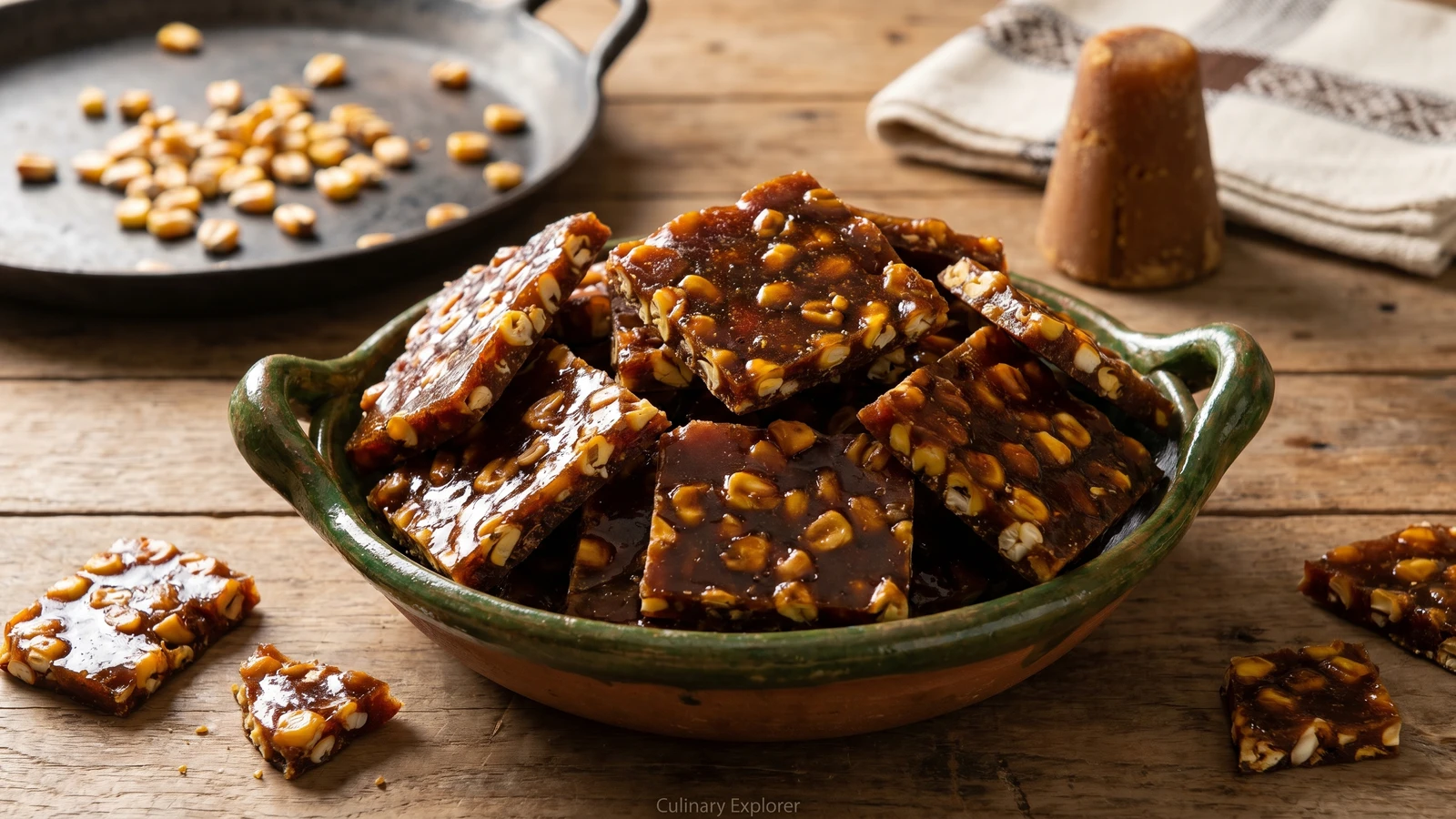
From the Meseta Purépecha in Michoacán, ponteduro is toasted pozole corn locked in dark piloncillo syrup, a hard Christmas candy that tastes of comal, corn, and memory.
Michoacán, the Meseta Purépecha. That is where ponteduro lives, in the highland towns around Paracho, Cherán, Nahuatzen, and Uruapan, where corn is not background. Corn is the structure of the kitchen.
This candy is made from maíz pozolero, dried corn for pozole, toasted until it smells nutty and starts to crackle, then caught in a thick syrup of piloncillo. No chile. No cinnamon unless the family uses it. No chocolate. Not every Mexican sweet is loud. Some are hard, dark, and practical, made from what the milpa and the mercado already gave you.
I learned this from a Purépecha señora who kept the toasted corn in a clay bowl and tested the syrup with cold water, not a thermometer. She told me, 'Si queda blando, no es ponteduro.' If it stays soft, it is not ponteduro. The name tells you the standard: hard bridge, hard bite. You cook the syrup until it snaps. Así se hace y punto.
This is a budget candy, yes, but do not confuse budget with poor. Mexican kitchens have always known how to turn corn, fire, and piloncillo into something that lasts through the holidays. Saber cocinar es saber vivir.
Ponteduro belongs to the corn sweets of Michoacán's Purépecha region, where dried maize and cane sugar products were combined after the colonial expansion of sugar mills in western Mexico. The technique preserves an older pre-Hispanic respect for toasted maize while using piloncillo, a colonial-era sweetener made by boiling and molding unrefined cane juice. In the Meseta Purépecha, ponteduro remains tied to Christmas fairs and household candy making, though it is less common now than commercial sweets.
Quantity
4 cups
picked over
Quantity
1 pound
chopped
Quantity
1/2 cup
Quantity
1/4 teaspoon
Quantity
1 small strip
Quantity
1 teaspoon
| Ingredient | Quantity |
|---|---|
| dried maíz pozolero or cacahuazintle cornpicked over | 4 cups |
| piloncillochopped | 1 pound |
| water | 1/2 cup |
| kosher salt | 1/4 teaspoon |
| Mexican canela (optional) | 1 small strip |
| fresh lime juice | 1 teaspoon |
Line a rimmed sheet pan with parchment or lightly oil a marble slab. Set out a second sheet of parchment and a rolling pin. Once the syrup is ready, it waits for nobody. Ponteduro hardens fast, and the cook who is still looking for a pan will lose the batch.
Heat a dry comal or heavy skillet over medium heat. Add the dried maíz pozolero in batches so the kernels sit in one layer. Toast, stirring and shaking the pan often, until the corn turns golden in spots, smells nutty, and a few kernels crack at the edges, 8 to 10 minutes per batch. Do not burn it. Burned corn turns bitter, and piloncillo will not hide that mistake.
Put the chopped piloncillo, water, salt, and canela if using in a heavy saucepan. Cook over medium heat, stirring until the piloncillo dissolves. Once it is liquid, stop stirring and let it boil steadily. Brush down any sugar crystals on the side of the pan with a wet pastry brush if you see them. The syrup should darken, thicken, and smell like cane, smoke, and caramel.
Cook the syrup to 300F, the hard-crack stage, then remove the canela. If you do not have a thermometer, drop a little syrup into a cup of cold water. It should harden immediately into threads that snap between your teeth, not bend. Add the lime juice and swirl the pan once. No me vengas con atajos. Soft syrup makes sticky corn, not ponteduro.
Immediately add the toasted corn to the syrup and stir with a sturdy wooden spoon until every kernel is coated. Work fast and carefully. The mixture will be heavy, glossy, and loud against the pan. That sound, corn scraping through thick piloncillo, is how you know you are close.
Scrape the hot mixture onto the prepared pan. Cover with the second sheet of parchment and press or roll it into an even slab about 1/2 inch thick. For individual pieces, let it cool 3 to 4 minutes, then cut with an oiled knife while still warm. If it cools completely, break it by hand into rough pieces. Both ways are correct in Michoacán kitchens.
Let the ponteduro cool completely until hard and glossy. Store in an airtight tin or glass jar with parchment between layers. Keep it away from humidity. Sugar pulls moisture from the air, and a damp kitchen will make the surface tacky. This candy should crack under the teeth. That is the point.
1 serving (about 46g)
Culinary guides, cultural storytelling, and the editorial depth that makes cooking meaningful.
Discover Culinary ExplorerChef Lupita
Puebla's convent-style acitrón, made from cidra peel instead of endangered biznaga, built through repeated syrup soakings until the cubes turn firm, translucent, and ready for rosca or chiles en nogada.

Chef Lupita
Ciudad de México's Tulyehualco alegría is popped huautli folded into piloncillo honey, pressed with peanuts, pepitas, and raisins, then cut into the rectangular bars that built a pueblo's identity.

Chef Lupita
Oaxaca's pre-Columbian amaranth bar, popped on a hot comal and bound with piloncillo, honey, and the sacred Zapotec grain that the Spanish tried, and failed, to outlaw.

Chef Lupita
Querétaro's mercado candy of popped amaranto pressed with dark piloncillo syrup, pepitas, pecans, and cacahuate, a Bajío sweet that respects the seed before it decorates the table.