
Chef Lupita
Atápakua Purépecha de Quelites y Pepita
Michoacán's Purépecha atápakua is a chile-red, masa-thickened stew from the Lake Pátzcuaro region, built with guajillo, pasilla, toasted pepita, and quelites until the broth turns sturdy and alive.
A cooking platform built around craft, culture, and the stories behind what we eat.
Created by
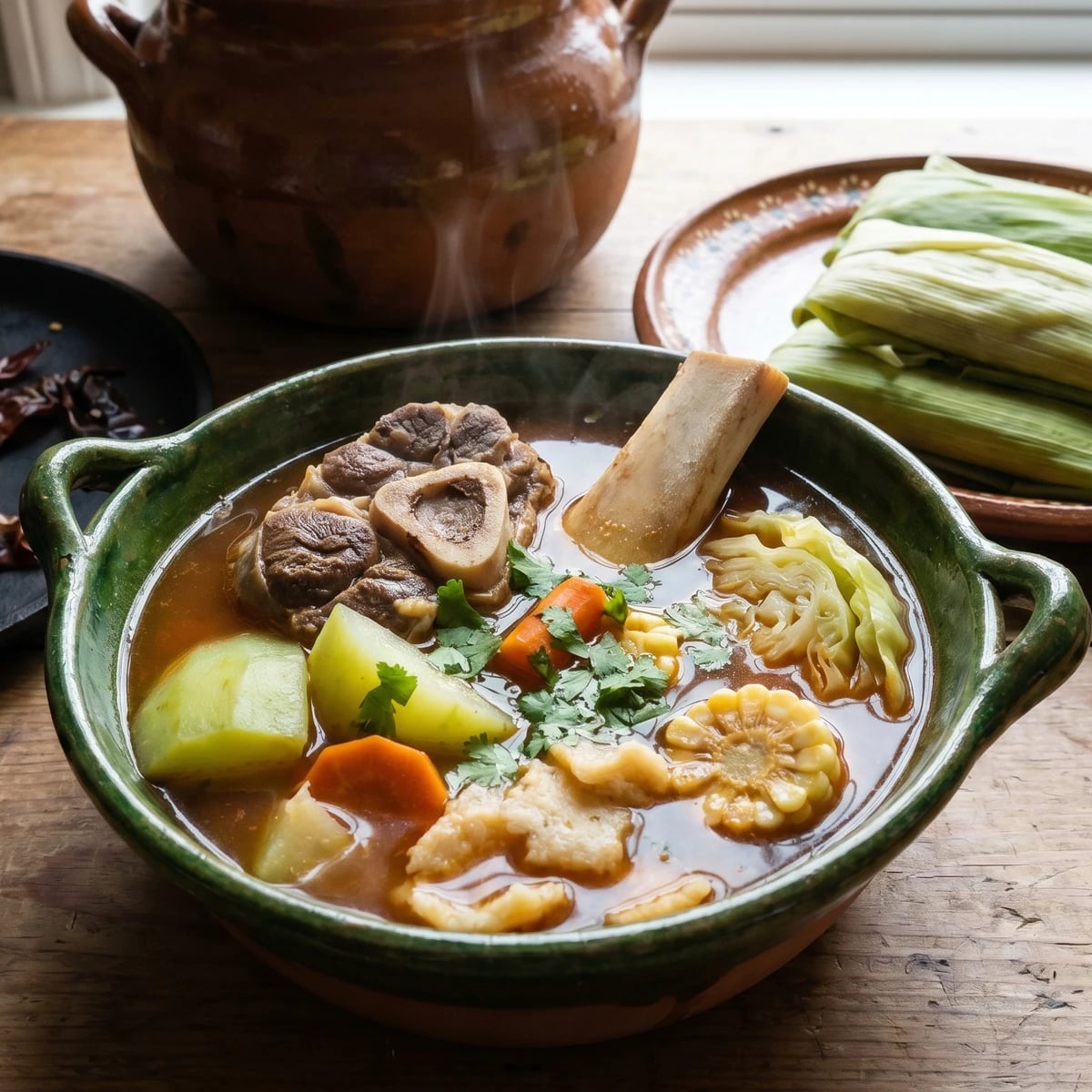
Michoacán's Purépecha celebration stew, beef shank simmered with chile guajillo, cabbage, chayote, and carrot, served with plain corundas that drink the red broth the way the Meseta serves it.
Michoacán, especially the Meseta Purépecha and the lake country around Pátzcuaro, Zacapu, and Tzintzuntzan, is where churipo belongs. This is not generic beef soup with chile. It is ceremonial broth: beef shank, chile guajillo, cabbage, chayote, carrot, and plain corundas waiting to soak up the red pot.
The women who perfected this dish cook it for weddings, baptisms, fiestas patronales, and the days when a family needs a pot big enough to feed whoever walks through the door. The broth comes first. Then the chiles are toasted, soaked, blended, strained, and fried in a little manteca de cerdo before they meet the beef. Skip those steps and the guajillo tastes thin. Some steps are the recipe. Así se hace y punto.
My mother did not make churipo. She was from Jalisco. But in her notebook there was a line from a woman she met near Tzintzuntzan: guajillo limpio, yerbabuena al final. Clean guajillo, mint at the end. She was right. The chile gives the color, the hierbabuena gives the lift, and the corunda makes it Michoacán at the table. Saber cocinar es saber vivir.
The name churipo comes from Purépecha churhípu, a word associated with this red beef broth from Michoacán's Purépecha communities. The modern beef version reflects cattle introduced after the Spanish conquest in the 16th century, while the corundas served beside it keep the older maize base: nixtamalized corn shaped into triangular tamales and wrapped in fresh corn leaves. In 2010, UNESCO inscribed Traditional Mexican Cuisine using the Michoacán paradigm, and dishes like churipo and corundas helped show Mexican cooking as a living system of milpa, community labor, and ritual service.
Quantity
3 pounds
cut into 2-inch pieces
Quantity
1 pound
Quantity
3 1/2 quarts, plus more as needed
Quantity
1 medium
halved
Quantity
1
halved crosswise
Quantity
1 tablespoon, plus more to taste
Quantity
10
stemmed and seeded
Quantity
2
stemmed and seeded
Quantity
2
Quantity
1/2 medium
Quantity
3
unpeeled
Quantity
1 tablespoon
Quantity
2 ears
cut into 2-inch rounds
Quantity
2
peeled, pitted, and cut into thick wedges
Quantity
3
peeled and cut into thick diagonal pieces
Quantity
2
cut into thick half-moons
Quantity
1/2 small head
cored and cut into 8 wedges
Quantity
6 sprigs
tied with kitchen twine
Quantity
4 sprigs
tied with kitchen twine
Quantity
2 sprigs
Quantity
12
warmed
Quantity
for serving
| Ingredient | Quantity |
|---|---|
| bone-in beef shank (chambarete de res)cut into 2-inch pieces | 3 pounds |
| beef short ribs or beef neck bones | 1 pound |
| cold water | 3 1/2 quarts, plus more as needed |
| white onionhalved | 1 medium |
| head of garlichalved crosswise | 1 |
| kosher salt | 1 tablespoon, plus more to taste |
| dried chile guajillostemmed and seeded | 10 |
| dried chile anchostemmed and seeded | 2 |
| Roma tomatoes | 2 |
| white onion | 1/2 medium |
| garlic clovesunpeeled | 3 |
| pork lard (manteca de cerdo) | 1 tablespoon |
| fresh corncut into 2-inch rounds | 2 ears |
| chayotespeeled, pitted, and cut into thick wedges | 2 |
| carrotspeeled and cut into thick diagonal pieces | 3 |
| Mexican squash (calabacitas)cut into thick half-moons | 2 |
| green cabbagecored and cut into 8 wedges | 1/2 small head |
| fresh cilantrotied with kitchen twine | 6 sprigs |
| hierbabuena lisa or spearminttied with kitchen twine | 4 sprigs |
| fresh epazote | 2 sprigs |
| plain corundaswarmed | 12 |
| fresh cilantro leaves (optional) | for serving |
Put the beef shank and short ribs or neck bones in a heavy 8-quart pot. Add the cold water, halved onion, halved head of garlic, and salt. Bring to a gentle simmer over medium heat. Skim the gray foam that rises during the first 20 minutes. Do not boil it hard. Churipo should have a clean red broth, not a cloudy pot that tastes tired.
Lower the heat until the broth moves with slow, steady bubbles. Cover partially and cook for about 2 hours, until the shank meat is tender but still holds together on the bone. Add a little hot water if the liquid drops below the meat. The marrow and collagen are doing the work here. Lean stew meat will not give you the same body.
Heat a dry comal over medium. Toast the chile guajillo one or two at a time, about 15 to 20 seconds per side, just until the skins darken slightly and smell fruity. Toast the chile ancho the same way. Do not blacken them. Burned chile gives bitterness, and bitterness in a broth spreads everywhere.
On the same comal, roast the Roma tomatoes, half onion, and unpeeled garlic cloves until the tomatoes blister, the onion has browned edges, and the garlic softens inside its skin. Peel the garlic. This is not decoration. The comal takes the raw edge off the sauce before it enters the broth.
Put the toasted chiles in a bowl and cover with hot water for 20 minutes. Hot water, not boiling. Drain them and blend with the roasted tomatoes, roasted onion, peeled garlic, and 1 cup of the beef broth until completely smooth. Strain through a fine-mesh sieve, pressing firmly on the solids. The broth should taste like chile, not chile skin.
Melt the manteca de cerdo in a small cazuela or skillet over medium heat. Add the strained chile puree. It will sputter, so stir with respect. Cook 6 to 8 minutes, until the sauce darkens to brick red and the fat begins to separate at the edges. La manteca es el sabor. This step makes the guajillo taste round instead of raw.
Remove the spent onion and garlic head from the beef broth. Stir in the fried chile base. Simmer 15 minutes so the chile and beef stop tasting like separate things. Taste for salt now. The broth should be assertive because the vegetables and corundas will soften it at the table.
Add the corn, chayote, and carrots first. Simmer 12 minutes. Add the calabacitas and cabbage wedges and simmer 8 to 10 minutes more, until the cabbage is tender but not collapsing. The women who make churipo for fiestas know this order. If you throw everything in together, the squash dies before the chayote is ready. No me vengas con atajos.
Add the tied cilantro, hierbabuena lisa, and epazote during the last 5 minutes of cooking. The mint should lift the broth without turning it into tea, and the epazote should sit in the background. Remove the herb bundles before serving. Taste again for salt. A good churipo has beef, chile, and green herb in balance.
Warm the plain corundas in their leaves until soft. Put one whole corunda, or a few torn pieces, into each deep bowl and ladle the red broth, beef, and vegetables over it. Scatter a few cilantro leaves on top if you want them. In some Purépecha communities the corunda is eaten from the side like bread; in this bowl it goes in to drink the broth. Do not serve this with flour tortillas. Flour tortillas are northern. This is Michoacán. Cada estado, su propia cocina.
1 serving (about 750g)
Culinary guides, cultural storytelling, and the editorial depth that makes cooking meaningful.
Discover Culinary Explorer
Chef Lupita
Michoacán's Purépecha atápakua is a chile-red, masa-thickened stew from the Lake Pátzcuaro region, built with guajillo, pasilla, toasted pepita, and quelites until the broth turns sturdy and alive.

Chef Lupita
Colima's river prawn soup from the warm valleys and coastal foothills, with chacales simmered in guajillo, jitomate, garlic, oregano, and a shell broth that tastes like the river it came from.

Chef Lupita
Michoacán's lake-basin caldo, built with delicate pescado blanco, roasted tomato, epazote, and a whole chile perón, gives you Pátzcuaro's clean freshwater cooking in under an hour.

Chef Lupita
Guerrero's Costa Chica caldo largo is a clean red pot of snapper, shrimp, toasted chile guajillo, tomato, and epazote, served with morisqueta rice because the coast knows how to eat.