Culinary Explorer
A cooking platform built around craft, culture, and the stories behind what we eat.
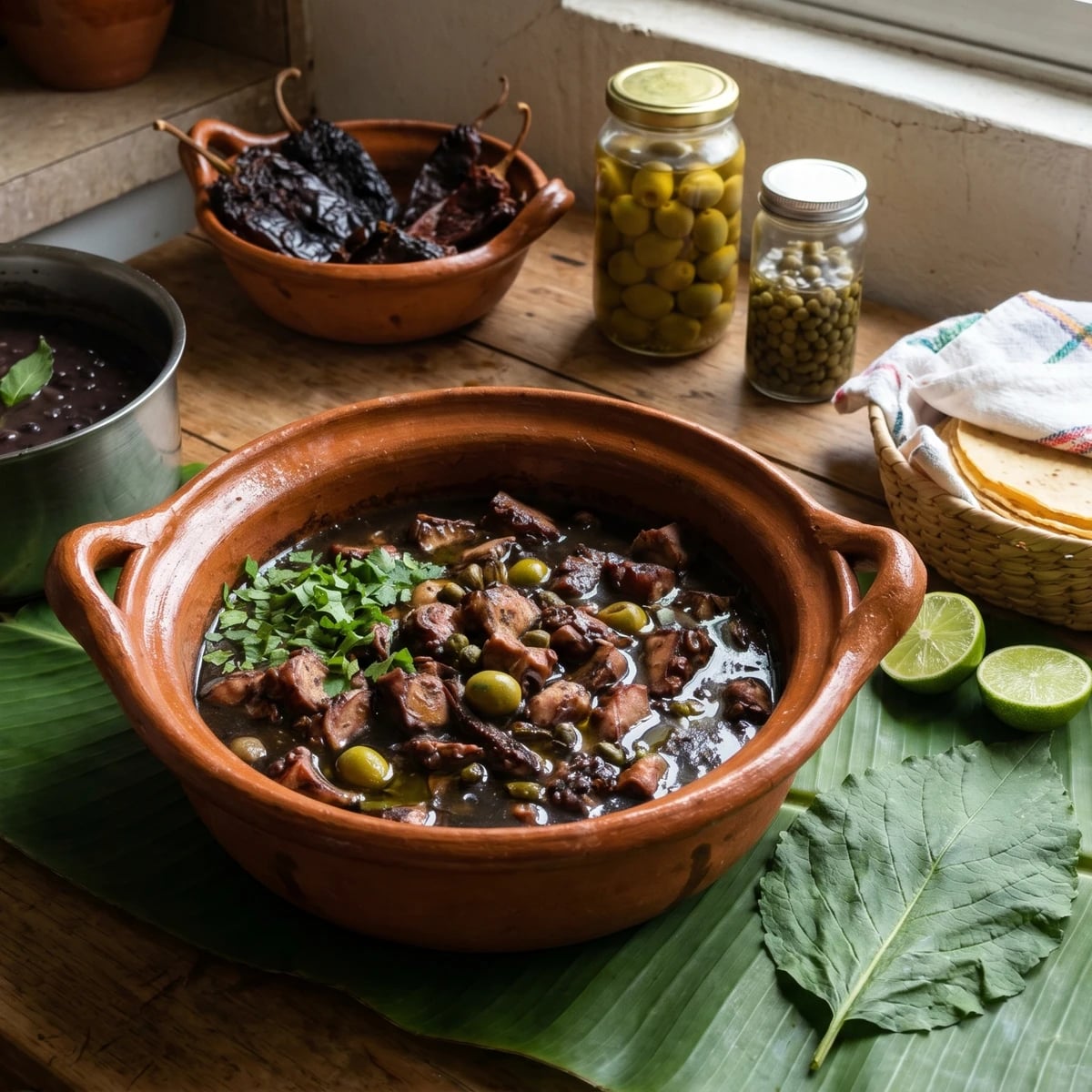
Pulpos en su Tinta Veracruzanos
Created by Chef Lupita
Veracruz octopus cooked in black ink, jitomate, olive oil, ancho, chipotle meco, olives, and capers, a Gulf port dish that carries Spain into a jarocho kitchen.
Veracruz, the port and the Gulf coast, owns this version of pulpos en su tinta. You taste the malecón in it: octopus from the water, olive oil from the Spanish pantry, jitomate de bola from the mercado, green olives and capers sitting in their jars on the counter. Esto no es comida de un solo México. This is Veracruz speaking through a black cazuela of seafood.
The ink is not a trick for color. It is the flavor of the animal, dark, briny, a little mineral, and it needs a disciplined base to carry it. The women who cook this well do not drown it in chile. They build a sofrito with onion, garlic, jitomate, and olive oil, then use chile ancho for round sweetness and chile chipotle meco for smoke. Veracruz cooking knows restraint. Not all Mexican food is loud with heat.
I learned a version like this from a señora near the Mercado Hidalgo in Veracruz, who sold me octopus in the morning and corrected my hand before lunch. She used squid ink when octopus ink was scarce and told me not to apologize for it. A substitution is a compromise, not a sin, if you know what you are giving up. Serve it in clay, with white rice and black beans with epazote. Saber cocinar es saber vivir.
Ingredients
cleaned octopus
Quantity
3 pounds
rinsed well
white onion
Quantity
1 medium
halved for cooking the octopus
white onion
Quantity
1 medium
finely chopped for the sauce
| Ingredient | Quantity |
|---|---|
| cleaned octopusrinsed well | 3 pounds |
| white onionhalved for cooking the octopus | 1 medium |
| white onionfinely chopped for the sauce | 1 medium |
Where cooking meets culture.
Culinary guides, cultural storytelling, and the editorial depth that makes cooking meaningful.
Discover Culinary Explorer