Culinary Explorer
A cooking platform built around craft, culture, and the stories behind what we eat.
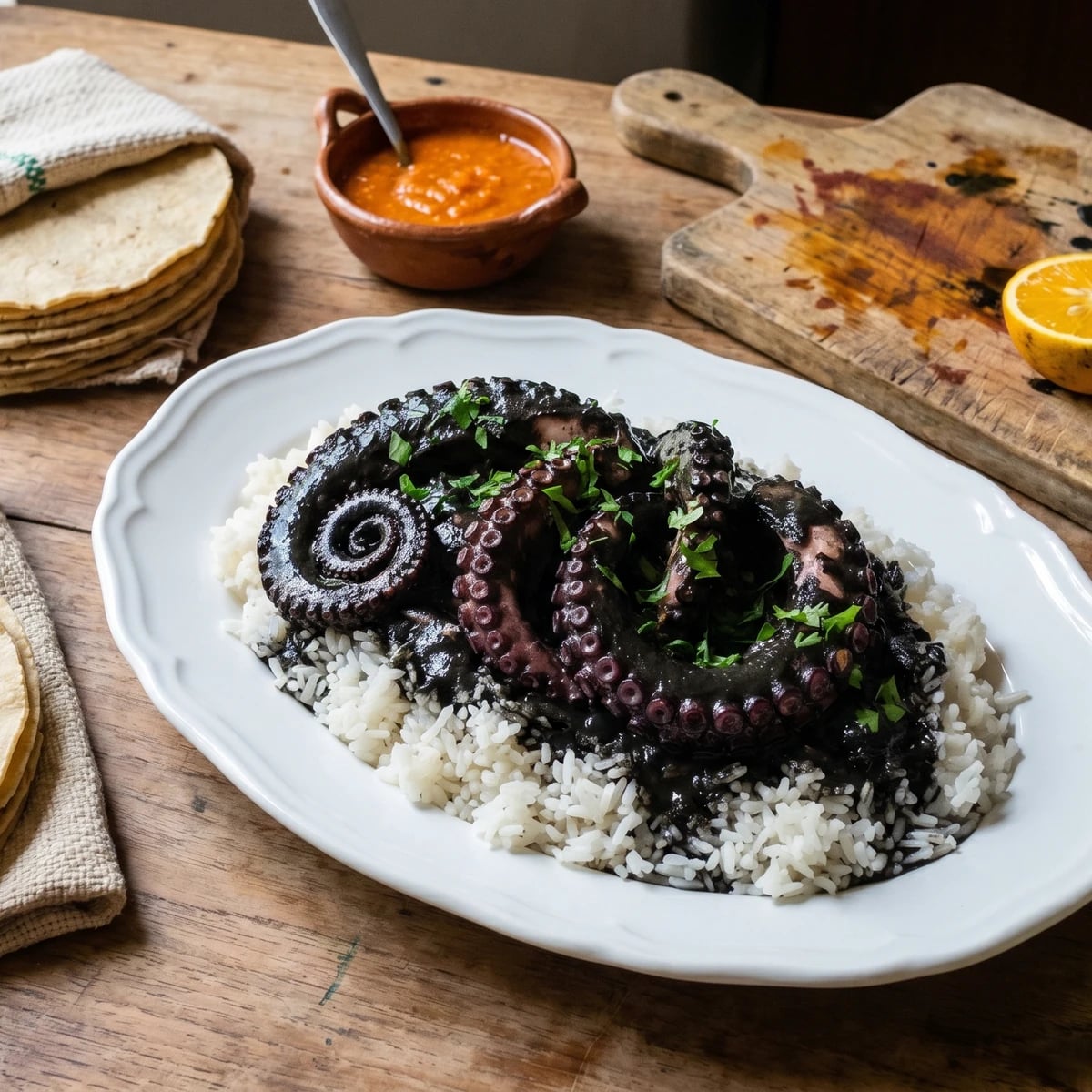
Pulpo en su Tinta Campechano
Created by Chef Lupita
Campeche's pulpo en su tinta, octopus simmered in its own black ink with sofrito of onion, garlic, tomato, and chile dulce. A Gulf coast dish that proves seafood does not need to be pretty to be serious.
This is from Campeche. Not Yucatan, not Quintana Roo. Campeche. The walled port city on the Gulf where the Spanish landed, where the Lebanese settled, where the Maya cooks took octopus out of the boats and figured out how to make it tender, black, and unforgettable.
The ink is the dish. Octopus carries its own ink in small silver sacs tucked into the head, and when you cook the octopus in that ink with a sofrito of onion, garlic, tomato, chile dulce, and a touch of paprika, you get a sauce that is black, briny, and impossibly deep. This is not Spanish chipirones en su tinta. The Spanish version is calamari. The Campechana version is octopus, larger, meatier, and tied to the Gulf coast tradition where pulpo comes off the boats every morning at the muelle. The technique is peninsular: the tres sustos that tenderize the tentacles, the patient sofrito, the moment the ink hits the tomato and the sauce turns from red to black in front of your eyes.
A word about the ink. One octopus does not have enough ink for a serious pot. The señoras at the Mercado Pedro Sainz de Baranda in Campeche know this and they collect ink across multiple octopus, freezing it in small jars until they have enough. Outside Mexico you will buy squid ink in packets and there is no shame in that. La cocina no es decoración, es trabajo. Use what you can get and respect what the dish needs.
My mother never made this. She was from Jalisco and the closest she came to seafood was caldo de pescado on Fridays. I learned pulpo en su tinta in 2014 in the kitchen of a señora named Doña Edith who lived two blocks from the Campeche malecón. She taught me the tres sustos that morning and the ink hit the tomato that afternoon and I stood in her kitchen and watched the sauce turn black and understood why this dish has survived five hundred years on the Gulf coast. Cada estado, su propia cocina, and this one belongs to Campeche.
Ingredients
whole octopus
Quantity
1 (about 3 to 4 pounds)
cleaned, ink sacs reserved
squid ink packets
Quantity
4 packets (4 grams each), or 1/4 cup reserved pulpo ink
white onion (for poaching)
Quantity
1 medium
halved
| Ingredient | Quantity |
|---|---|
| whole octopuscleaned, ink sacs reserved | 1 (about 3 to 4 pounds) |
| squid ink packets | 4 packets (4 grams each), or 1/4 cup reserved pulpo ink |
| white onion (for poaching)halved | 1 medium |
Where cooking meets culture.
Culinary guides, cultural storytelling, and the editorial depth that makes cooking meaningful.
Discover Culinary Explorer