
Chef Takumi
Agar Jelly with Anko and Fruit (あんみつ, Anmitsu)
Anmitsu looks like a tray of small tasks, but the work is calm: dissolve the kanten fully, chill the pieces clean, then let fruit, anko, and kuromitsu do the speaking.
A cooking platform built around craft, culture, and the stories behind what we eat.
Created by
Aruheitō looks like courtly work, but the first secret is plain: boil the sugar cleanly, cool it just enough to touch, then pull until it shines.
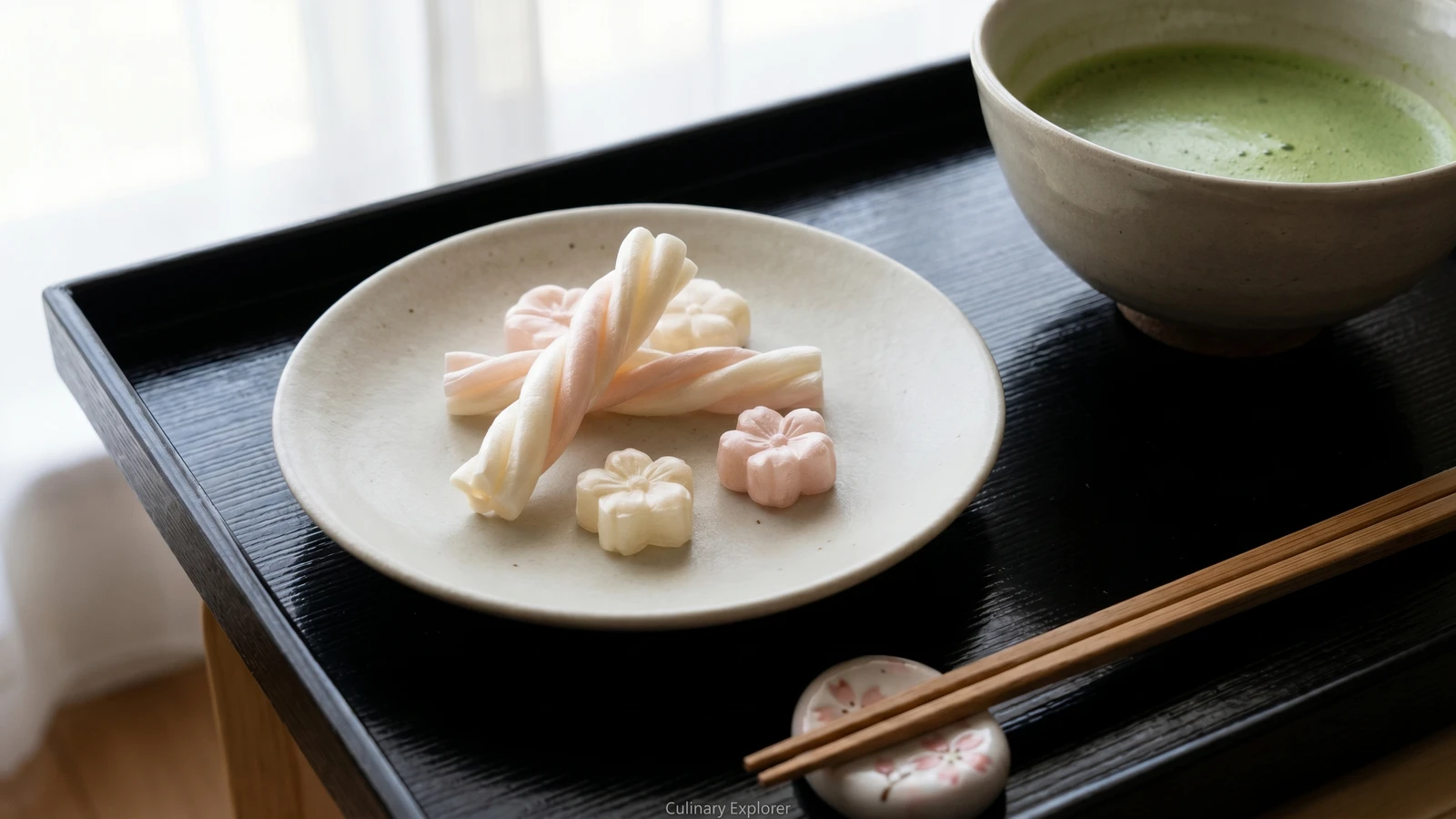
Sugar is not forgiving, but it is honest. Aruheitō looks fearsome because the finished candy is fine and bright, twisted into spirals, ribbons, and small flowers for the tea tray. The work itself is simpler than its reputation. You boil sugar, mizuame, and water to the hard-crack stage, then fold and pull while the mass is warm enough to move and cool enough not to punish your hands. That narrow moment is the dish.
Mizuame, Japanese starch syrup, is the quiet helper here. It keeps the syrup from crystallizing too quickly, so the candy stays clear and workable instead of turning grainy. A few drops of vinegar do the same work from another side, breaking some sucrose into simpler sugars. This isn't decoration pretending to be food. It is sugar controlled by heat, cooling, and patience. Very scholarly, for something that will stick to your sleeve if you get proud.
We serve aruheito as higashi, a dry sweet, often with usucha, thin matcha. It belongs to celebration because it keeps well, catches light beautifully, and asks for restraint. Make fewer pieces than your hands want to make, set them in odd numbers, and leave the plate room. The one detail to watch is temperature: too hot and it slumps, too cold and it snaps. In between, the candy pulls into satin.
Aruheitō entered Japan through the Nanban trade of the sixteenth century, when Portuguese sweets and sugar-working methods reached ports such as Nagasaki. Its name is generally traced to Portuguese alféloa, a pulled-sugar confection, and it predates the more widely known konpeitō in Japan's family of candied higashi. By the Edo period, aruheito was made by specialist confectioners and shaped into ornamental forms for tea gatherings and formal gifts.
Quantity
300g
Quantity
90g
Quantity
90ml
Quantity
1/2 teaspoon
Quantity
1 pinch
Quantity
a few drops
Quantity
a few drops
Quantity
as needed
for gloves and work surface
| Ingredient | Quantity |
|---|---|
| granulated sugar, preferably fine Japanese johakuto | 300g |
| mizuame (Japanese starch syrup) | 90g |
| water | 90ml |
| rice vinegar | 1/2 teaspoon |
| fine sea salt | 1 pinch |
| natural food coloring (optional) | a few drops |
| yuzu or mint extract (optional) | a few drops |
| neutral oilfor gloves and work surface | as needed |
Lightly oil a marble slab, silicone mat, or metal tray, and set out oiled heatproof gloves, kitchen scissors, and a candy thermometer. Sugar waits for no one once it reaches temperature, so prepare the tools before the pot goes on the fire. Keep a bowl of ice water nearby for safety, not for the candy.
Put the sugar, mizuame, water, vinegar, and salt in a small heavy saucepan. Warm over medium-low heat, stirring only until the sugar dissolves. After that, stop stirring. Stirring once crystals have formed on the pan can seed the whole syrup, and grainy aruheito is only sweet gravel.
Raise the heat to medium and boil steadily until the syrup reaches 150 to 154 C, the hard-crack stage. Do not scrape the sides. If crystals appear, wash them down with a wet pastry brush. The syrup should be clear and thick, with bubbles slowing and tightening as the water cooks away.
Pour the syrup onto the prepared slab or mat. Let it spread on its own, then wait until the edges thicken and can be lifted with an oiled scraper. Add coloring or flavoring now if using, a drop at a time. Too much liquid weakens the candy, and the old table prefers a pale hand anyway.
With oiled gloves, fold the edges toward the center again and again until the mass is cool enough to hold. Stretch it into a rope, fold it back on itself, and stretch again. At first it will be clear and glassy. After several pulls it turns pearly and satin-bright as tiny air bubbles are worked through the sugar.
Roll the pulled sugar into thin ropes for spirals, twist two colors together if you made them, or snip small lengths with oiled scissors and pinch them into petals. Work quickly and keep unused candy covered on the warm edge of the mat. The shapes should be small, restrained, and light in the hand.
Let the pieces harden completely on parchment in a dry room. Once cool, store them at once in an airtight tin with a small food-safe desiccant packet. Sugar drinks moisture from the air, and moisture is the enemy here. Keep the candy dry and it stays crisp for days.
1 serving (about 11g)
Culinary guides, cultural storytelling, and the editorial depth that makes cooking meaningful.
Discover Culinary ExplorerChef Takumi
Anmitsu looks like a tray of small tasks, but the work is calm: dissolve the kanten fully, chill the pieces clean, then let fruit, anko, and kuromitsu do the speaking.

Chef Takumi
A cool square of almond-scented milk, set softly and served with mikan in thin syrup, is dinner-party food without theater. The only stern demand is restraint with the fragrance.

Chef Takumi
Azuki bar asks for patience twice: once while the beans soften, and once while the frozen bar yields. That hardness is not a flaw. It is the character of the thing.
Chef Takumi
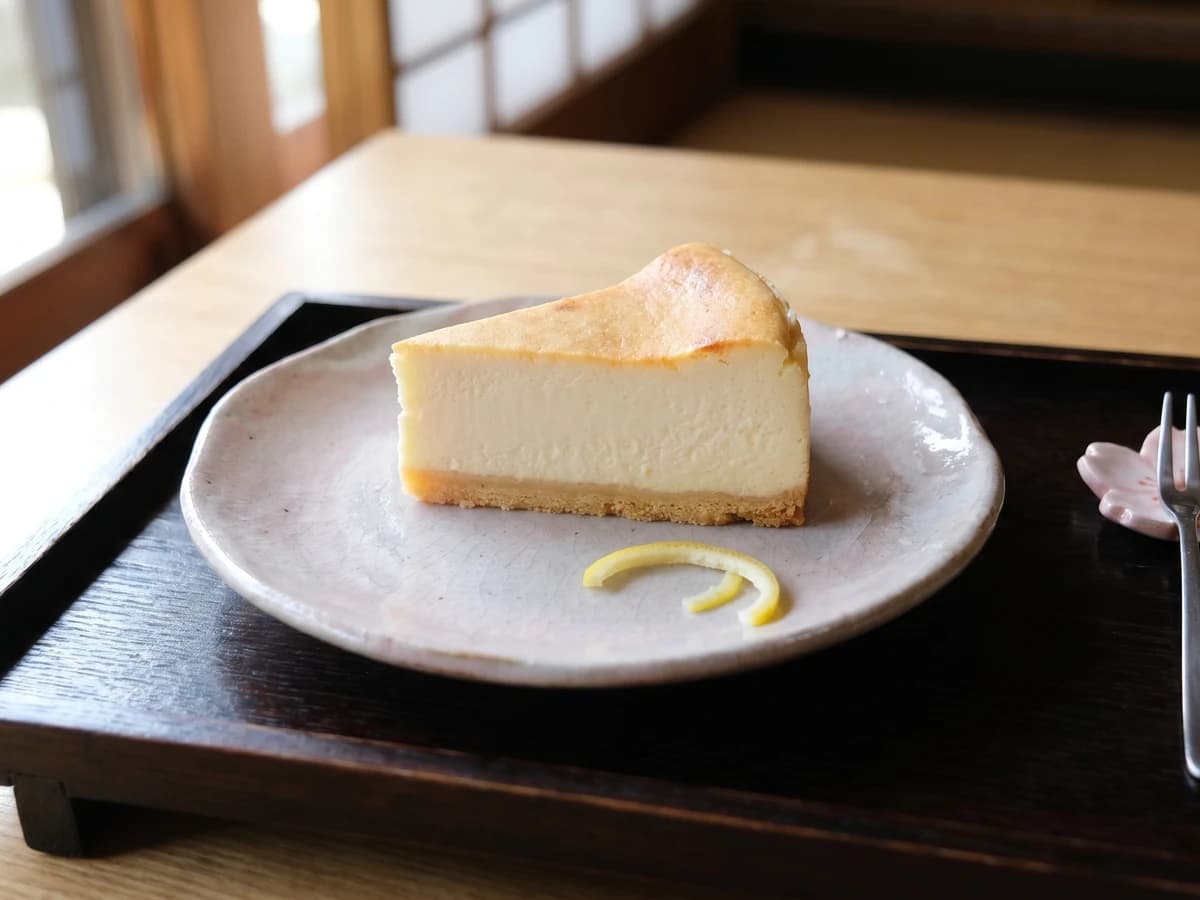
A Japanese baked cheesecake is not trying to float away. It is dense, smooth, and quietly tart, with a clean slice doing the work of decoration.