Culinary Explorer

A cooking platform built around craft, culture, and the stories behind what we eat.
Discover Culinary Explorer
Pudim de Pão

Pudim de Pão

Created by

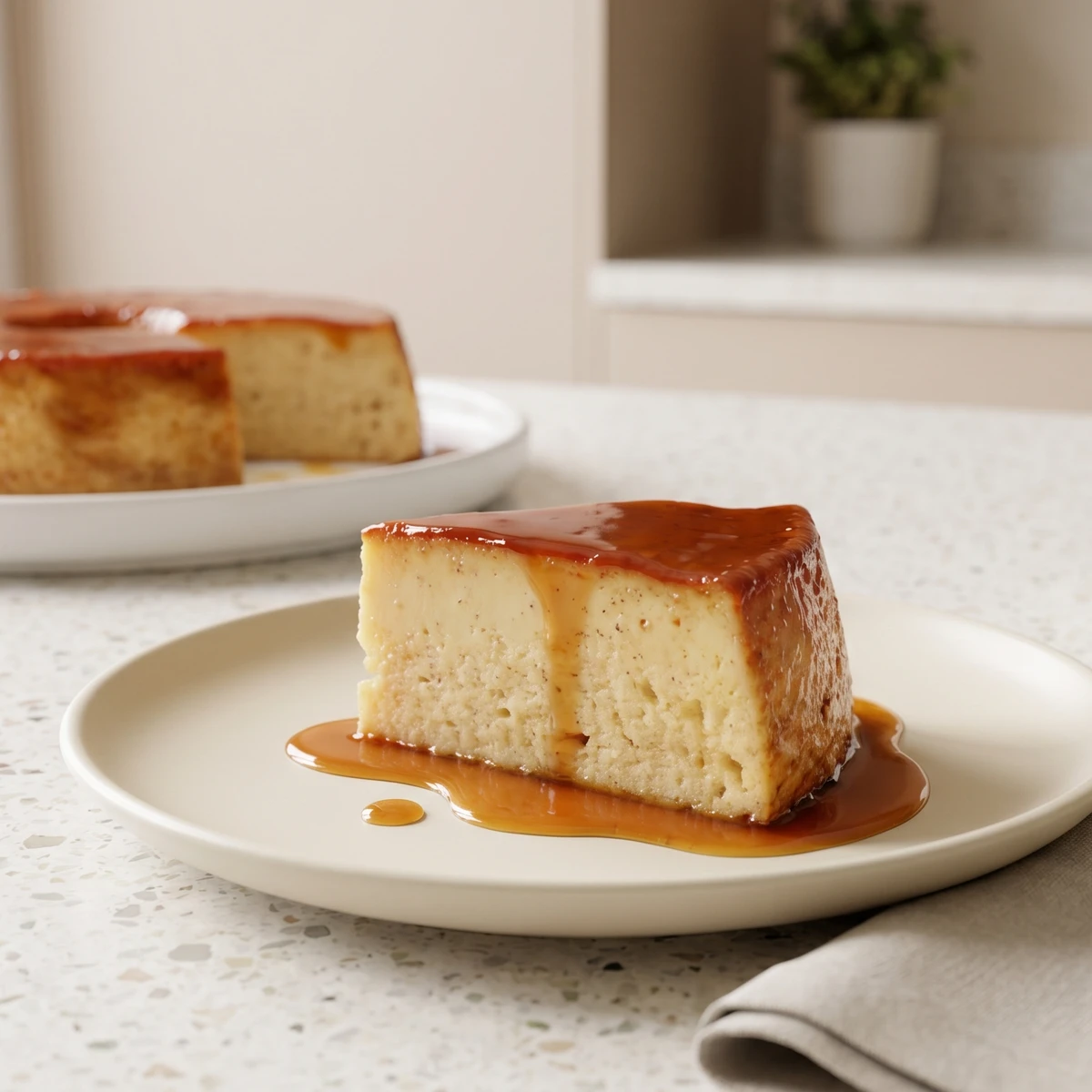
You thought the hard bread was garbage. It's not. Soak it, blend it, bake it gently, and yesterday's loaf becomes the dessert everyone slices twice.

Desserts
Brazilian
Budget Friendly
Make Ahead
Comfort Food
25 min
Active Time
1 hr 10 min cook1 hr 35 min total
Yield8 servings

You look at the hard end of the loaf and think, isso não é pra mim. Dessert is for people who plan, who bake, who have special things in the cupboard. Nonsense. Anota aí: stale bread, milk, eggs, sugar. That's not a miracle, it's a method.

I love this kind of recipe because it teaches the kitchen's best lesson without making a speech. Comida de verdade doesn't start with shopping for expensive little things. It starts by looking at what you already have and refusing to throw dinner's money in the bin. The same kitchen that gives you arroz soltinho, feijão, something green, and an egg on a tired Tuesday can give you pudding tomorrow.

The why is simple. Dry bread drinks milk better than fresh bread, so the pudding sets tender instead of soggy. Eggs hold it together. Caramel gives the top that bitter-sweet edge so it doesn't taste like a bowl of sweet milk. And the water bath keeps the heat gentle, because eggs rushed in a hot oven turn rubbery and rude.

Cozinhar não é dom, é um aprendizado. If you can soak bread and watch a caramel go amber, you can make this. I burned plenty of sugar learning the color, by the way. The pan forgave me. Yours will too.

Pudim de pão belongs to the old household economy of Brazil, where leftover pão francês was saved for breakfast, rabanada, farofa, or dessert instead of being thrown away. Its closest relatives are Portuguese bread puddings and caramel custards, adapted in Brazilian homes with the daily bread sold at padarias across the country. The ring-mold version, baked with caramel like pudim de leite, is common because it turns scraps into a dessert that looks generous without asking for much.

The technique, the tradition, and the story behind every dish.

Discover Culinary Explorer

Ingredients

sugar

Quantity

1 cup

for the caramel

water

Quantity

1/4 cup

for the caramel

stale French bread or plain white bread

Quantity

4 cups

torn into pieces

whole milk

Quantity

3 cups

eggs

Quantity

4 large

sugar

Quantity

3/4 cup

for the pudding

vanilla extract

Quantity

1 teaspoon

ground cinnamon (optional)

Quantity

1/2 teaspoon

salt

Quantity

1/4 teaspoon

raisins (optional)

Quantity

1/3 cup

Equipment Needed

  • 20 cm ring mold or 9 by 5 inch loaf pan
  • Small heavy saucepan for caramel
  • Blender
  • Large baking dish for the water bath
  • Kettle or pot for hot water

Instructions

  1. 1

    Heat the oven

    Heat the oven to 180°C (350°F). Put a kettle or pot of water on to boil, because the pudding will bake in a banho-maria, a water bath. Gentle heat matters here. Eggs set slowly and smoothly when heat comes from water around the pan, instead of turning tough at the edges while the middle is still loose.

  2. 2

    Make the caramel

    Put 1 cup sugar and 1/4 cup water in a small pan over medium heat. Swirl the pan gently, don't stir with a spoon, and cook until the syrup turns deep amber, like guaraná in a glass, about 8 to 12 minutes. Take it off the heat the second it smells toasty, not burnt. Pale caramel tastes only sweet; dark amber gives the pudding its little bitter edge.

  3. 3

    Coat the pan

    Pour the hot caramel into a 20 cm ring mold or loaf pan and tilt the pan carefully so the caramel coats the bottom and a little up the sides. It will harden fast. That's fine. In the oven it melts again and becomes the glossy sauce that runs over the pudding when you unmold it.

  4. 4

    Soak the bread

    Put the torn bread in a bowl and pour the milk over it. Press the pieces down with a spoon and let them sit for 10 minutes, until the bread feels heavy and soft all the way through. Dry bread is useful because it drinks the milk instead of fighting it. Fresh bread can turn gummy, and then you blame yourself instead of the loaf.

  5. 5

    Blend the custard

    Add the soaked bread and milk to a blender with the eggs, 3/4 cup sugar, vanilla, cinnamon if using, and salt. Blend until smooth, about 30 to 45 seconds. Stop when the mixture looks creamy and pourable, with no dry bread pieces hiding at the bottom. The eggs are what make it set, and blending spreads them evenly so every slice holds together.

  6. 6

    Fill the mold

    If using raisins, scatter them into the caramel-coated pan. Pour the custard over the caramel slowly. Tap the pan once or twice on the counter to bring up big air bubbles, because big bubbles make holes in the slice. A few small ones are normal. This is pudding, not a laboratory.

  7. 7

    Bake gently

    Set the mold inside a larger baking dish. Pour hot water into the larger dish until it reaches halfway up the sides of the mold. Bake for 55 to 70 minutes, until the edges are set and the center still gives a small wobble when you nudge the pan. A knife inserted near the center should come out mostly clean. Pull it while it still trembles a little, because it firms as it cools.

  8. 8

    Cool and chill

    Lift the mold out of the water bath and let it cool on the counter for 1 hour. Cover and refrigerate for at least 4 hours, preferably overnight. Don't rush this part. Warm pudding breaks when unmolded, and cold pudding slices cleanly because the eggs have fully set.

  9. 9

    Unmold and serve

    Run a thin knife around the edge of the chilled pudding. Set the bottom of the mold in a bowl of warm water for 30 seconds to loosen the caramel, then place a plate on top and flip with confidence. Listen for the soft drop. If some caramel stays in the pan, warm the pan with a splash of water and pour it over the top. Nothing wasted, not even the sauce.

Chef Tips

  • Use stale bread with a plain crumb: pão francês, sandwich bread, or a simple white loaf. Very rich or strongly flavored bread takes over the pudding, and this recipe is about saving bread, not showing off.
  • The honest shortcut is blending the custard instead of mashing by hand. It makes a smoother pudding and saves time. The cost is that you lose the rustic little bread texture, so choose what kind of pudding you want.
  • Don't use pudding powder here. The bread and eggs already know how to do the job. A packet gives you sweetness and perfume, not comida de verdade.
  • Caramel goes from perfect to burnt quickly. Stay at the stove once it starts turning gold. If it burns black and smells harsh, throw it out and start again. Sugar is cheaper than a ruined dessert.
  • This is better made ahead. Overnight in the fridge gives the caramel time to loosen and the pudding time to settle into clean slices.

Advance Preparation

  • Make the pudding at least 4 hours before serving so it can chill fully.
  • For the cleanest slices and best caramel, bake it the day before and refrigerate overnight.
  • Leftovers keep covered in the fridge for up to 4 days. Do not freeze it, because the custard turns watery when thawed.

Frequently Asked Questions

Nutrition Information

1 serving (about 180g)

Calories
350 calories
Total Fat
6 g
Saturated Fat
3 g
Trans Fat
0 g
Unsaturated Fat
3 g
Cholesterol
100 mg
Sodium
290 mg
Total Carbohydrates
67 g
Dietary Fiber
1 g
Sugars
53 g
Protein
9 g

Note: Chef personas and recipes are created with AI assistance. Cook with care: follow safe food-handling practices, check doneness with a thermometer when needed, and adapt for allergies and your kitchen.

Where cooking meets culture.

Culinary guides, cultural storytelling, and the editorial depth that makes cooking meaningful.

Discover Culinary Explorer

More from Pudim, Mousse & Sobremesa de Colher

Browse the full collection