
Chef Juliana
Amalá de Xangô
You don't need mystery for this pot. You need okra, dendê, onion, dried shrimp, and the patience to stir until the quiabo gives up its own caldo.
A cooking platform built around craft, culture, and the stories behind what we eat.
Created by
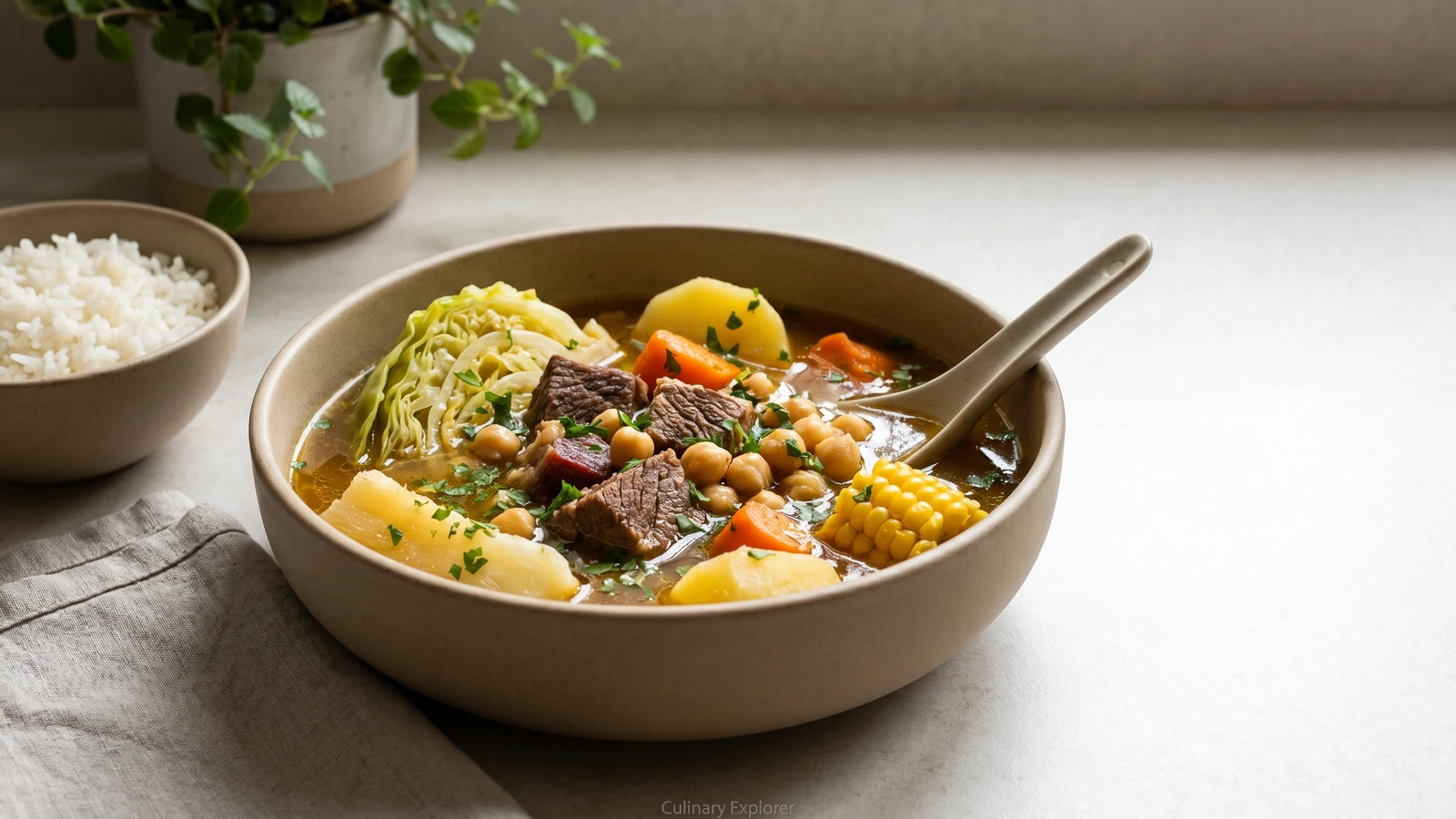
You think a big southern pot is too much for you. It isn't. Salted meat, chickpeas, roots, cabbage, and patience solve dinner for today and tomorrow.
You look at a pot this full and hear that little voice: isso não é pra mim. Too many pieces, too much meat, too much time. Anota aí: this is not difficult cooking. It's organized cooking. Big difference.
A puchero like this belongs to the same intelligence as the pê-efe, rice, beans, meat, something green, only gathered into one pot for a cold day. The chickpeas give body, the charque gives depth, the cabbage brings the green, and the roots stretch the meal without apology. Comida de verdade has always known how to feed people well without turning dinner into a performance.
The method is plain. You soak the chickpeas so they cook evenly and sit easier. You desalt the charque so the broth tastes seasoned, not punished. You brown the fresh beef in batches because color means flavor, and if you crowd the pot you steam the meat grey and sad. Then a gente builds an honest refogado, onion and garlic in fat, no powder pretending to be a kitchen.
By the end, the broth should be rich and glossy, the roots tender but not collapsed, and the meat soft enough to pull apart with a spoon. Serve it with arroz soltinho, a spoon of the broth over the rice, and you have dinner handled. Cozinhar não é dom, é um aprendizado.
Puchero arrived in southern Brazil through the Iberian cocido family and the border foodways shared by Rio Grande do Sul, Uruguay, and Argentina, where boiled meats, legumes, and vegetables made practical sense for cold weather and rural work. In the gaúcho version, charque became central because salted beef was one of the region's great preservation foods, tied to the old charqueadas of Pelotas and the cattle economy of the south. The exact pot changes by household: some use chickpeas, some add pork or sausage, some keep it leaner and more campeiro.
Quantity
1 1/2 cups
soaked overnight
Quantity
500g
desalted overnight and cut into large chunks
Quantity
700g
cut into 2-inch chunks
Quantity
2 tablespoons
Quantity
1 large
finely chopped
Quantity
4 cloves
minced
Quantity
2
Quantity
10 cups, plus more as needed
Quantity
2 teaspoons, plus more to taste
Quantity
1/2 teaspoon
Quantity
2 medium
cut into thick pieces
Quantity
2 medium
peeled and cut into large chunks
Quantity
2 cups
cut into large chunks
Quantity
1 small
cut into large chunks
Quantity
2 ears
cut into thirds
Quantity
1/2 small head
cut into wedges
Quantity
2 tablespoons
chopped
| Ingredient | Quantity |
|---|---|
| dried chickpeassoaked overnight | 1 1/2 cups |
| charque or carne secadesalted overnight and cut into large chunks | 500g |
| beef chuckcut into 2-inch chunks | 700g |
| oil or lard | 2 tablespoons |
| onionfinely chopped | 1 large |
| garlicminced | 4 cloves |
| bay leaves | 2 |
| water | 10 cups, plus more as needed |
| salt | 2 teaspoons, plus more to taste |
| black pepper | 1/2 teaspoon |
| carrotscut into thick pieces | 2 medium |
| potatoespeeled and cut into large chunks | 2 medium |
| peeled cassavacut into large chunks | 2 cups |
| sweet potatocut into large chunks | 1 small |
| corncut into thirds | 2 ears |
| green cabbagecut into wedges | 1/2 small head |
| parsley or scallions (optional)chopped | 2 tablespoons |
The night before, put the chickpeas in a bowl with plenty of water and put the charque in a separate bowl with water. Change the charque water once or twice if you remember. Soaking the chickpeas helps them cook evenly and sit easier, and desalting the charque keeps the finished broth savory instead of aggressively salty. We want depth, not a salt lick.
Drain the chickpeas and put them in a large heavy pot with 8 cups of fresh water and the bay leaves. Bring to a boil, then lower to a steady simmer and cook for 45 minutes, until they are starting to soften but still hold their shape. They finish with the meat, so don't chase tenderness yet or they'll collapse before the roots are done.
Pat the fresh beef dry. Warm the oil or lard in another heavy pot over medium-high heat and brown the beef in batches until the pieces have deep brown edges, 3 to 4 minutes per side. Don't crowd the pot. Too much meat at once drops the heat, the meat releases water, and suddenly you're boiling grey cubes instead of building flavor. Pull the browned beef to a plate.
Lower the heat to medium, add the onion to the same pot, and cook until it murcha, soft and see-through, about 5 minutes. Add the garlic and stir for 1 minute, just until you smell it. Scrape the browned bits from the bottom as the onion releases moisture. That's not dirt, that's dinner. Burn the garlic, though, and bitterness follows the whole pot.
Scoop 1 ladle of partly cooked chickpeas with a little cooking liquid into the refogado and mash them against the side of the pot with a spoon. This is the same trick a gente uses for feijão: the mashed beans make the caldo creamy instead of thin. No packet, no cube, no powdered imitation. The pot already has what it needs.
Add the browned beef, drained charque, the chickpeas with their cooking liquid, the black pepper, and 2 more cups water. Bring to a boil, then lower to a gentle simmer, lid slightly open, for about 1 hour, until the beef is beginning to soften. Taste the broth before adding salt. Charque speaks loudly, and the cook listens before seasoning.
Add the carrots, potatoes, cassava, sweet potato, and corn. Simmer gently for 30 to 40 minutes, until a knife slides into the cassava and potato without resistance. Keep the bubbling calm. A hard boil breaks the roots apart and makes the broth cloudy before the meat has finished relaxing.
Lay the cabbage wedges on top, cover, and cook for 10 to 15 minutes, until the leaves are tender but still green at the edges. Taste the broth and add salt only now, little by little. Finish with parsley or scallions if using. The final pot should smell deep and clean, with tender meat, sweet roots, and a glossy caldo that coats the spoon.
Serve the puchero in deep bowls with pieces of meat, chickpeas, roots, cabbage, and plenty of broth. Put arroz soltinho beside it or underneath it, because rice knows exactly what to do with this caldo. If you want something sharp on the table, a simple green salad or couve refogada brings the plate back to the everyday Brazilian balance.
1 serving (about 700g)
Culinary guides, cultural storytelling, and the editorial depth that makes cooking meaningful.
Discover Culinary ExplorerChef Juliana
You don't need mystery for this pot. You need okra, dendê, onion, dried shrimp, and the patience to stir until the quiabo gives up its own caldo.

Chef Juliana
You think a Polish hunter's stew is not for your kitchen. Wrong. Brown meat properly, build a real refogado, simmer cabbage low, and tomorrow's lunch is already better.
Chef Juliana
Whole fish in a pot looks like a test. It isn't. Build the refogado, layer the filhote, let tucupi do its work, and the Círio table starts making sense.
Chef Juliana
You don't need river wisdom in your bones to cook tambaqui well. You need real tucupi, a calm simmer, and the sense to let the fish stay whole until it gives.