Culinary Explorer

A cooking platform built around craft, culture, and the stories behind what we eat.
Discover Culinary Explorer
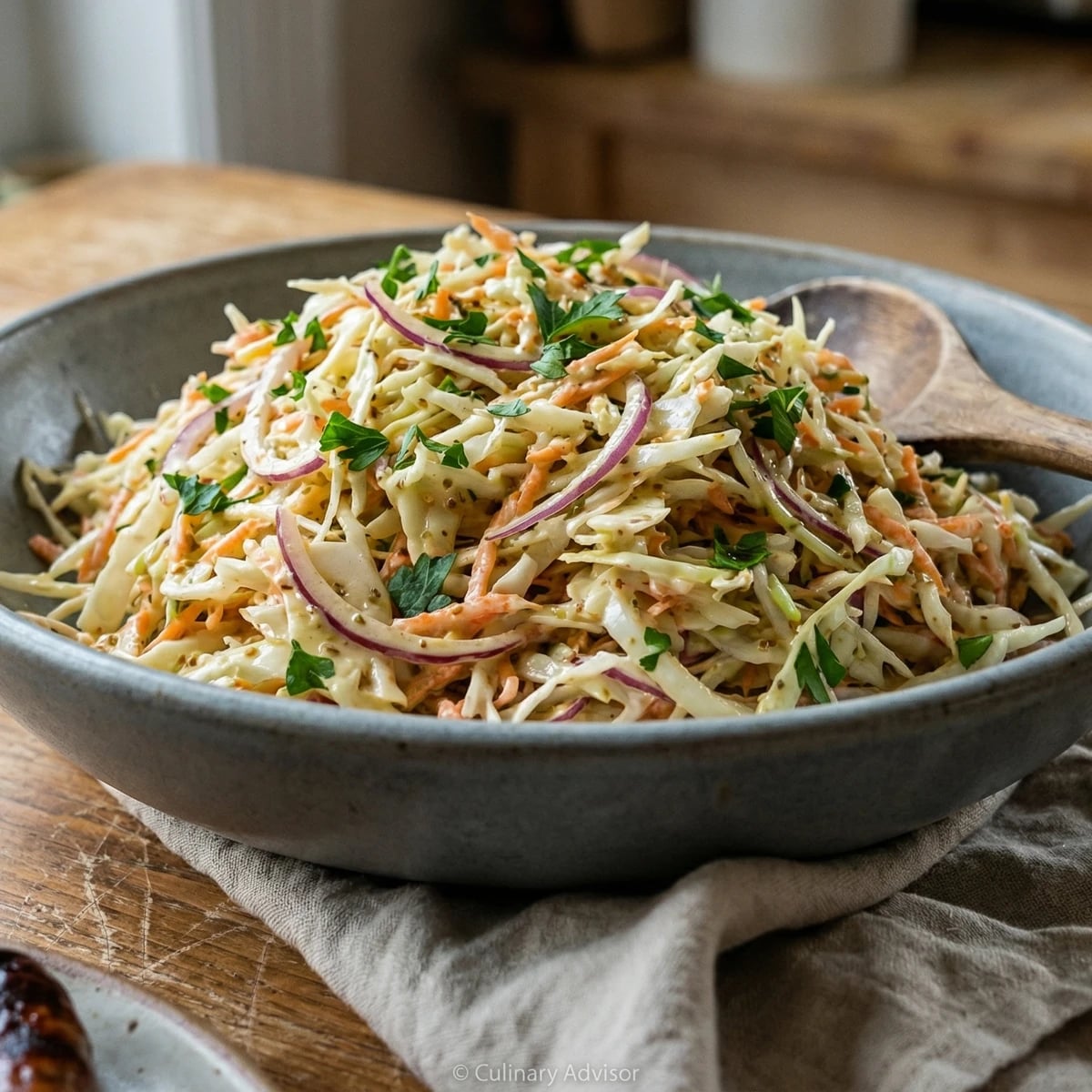
Proper Homemade Coleslaw

Proper Homemade Coleslaw

Created by Chef Thomas

Crisp cabbage, sweet carrot, and sharp red onion in a mustardy dressing that reminds you why you should never buy coleslaw from a supermarket shelf again.

Salads
British
BBQ
Potluck
20 min
Active Time
0 min cook•20 min total
Yield6 servings

The smell of a barbecue carries. You catch it over the fence, through an open window, from three gardens down. Smoke and charcoal and something sweet catching on the grill. But the thing that makes the plate work, the thing nobody talks about, is the coleslaw sitting quietly in a bowl at the end of the table.

I don't know when coleslaw became something to apologize for. Somewhere between the plastic tubs and the all-you-can-eat buffets, it lost its nerve. The shop-bought sort is sweet and flabby, swimming in a dressing that tastes of nothing in particular. It sits on the side of the plate like an afterthought. It deserves better.

Proper coleslaw is a different thing entirely. The cabbage should crunch. The carrot should taste of carrot. The dressing needs sharpness and mustard heat, enough to stand up to a charred sausage or a piece of chicken still hot from the grill. It takes twenty minutes to make, most of that spent shredding, and it is better than anything you will ever unwrap from cling film.

I make this every summer when the barbecue comes out. I make it for the potluck at the village hall and for the plate someone brings round when there's a new baby on the street. I wrote it down in the notebook years ago, just three words: cabbage, mustard, crunch. That's still the whole recipe, really. The rest is just detail.

The technique, the tradition, and the story behind every dish.

Discover Culinary Explorer

Ingredients

white cabbage

Quantity

half, about 500g

finely shredded

carrots

Quantity

2 large

peeled and coarsely grated

red onion

Quantity

1 small

peeled and very finely sliced

good mayonnaise

Quantity

4 heaped tablespoons

Dijon mustard

Quantity

1 tablespoon

cider vinegar

Quantity

1 tablespoon

runny honey

Quantity

1 teaspoon

fine sea salt

Quantity

to taste

black pepper

Quantity

to taste

flat-leaf parsley (optional)

Quantity

small handful

roughly chopped

Equipment Needed

  • •Large sharp knife or mandoline
  • •Box grater
  • •Large mixing bowl

Instructions

  1. 1

    Shred the cabbage

    Quarter the cabbage and cut out the thick core. Lay each quarter flat side down on the board and shred it as finely as you have the patience for. Thinner is better here. You want ribbons, not chunks. A heavy, sharp knife does this best. Take your time with it. The shredding is the recipe, really. Everything else is just dressing.

    Choose a cabbage that feels heavy for its size and squeaks when you press it. That tightness is freshness, and freshness is crunch. A tired, loose cabbage will never give you what you need.
  2. 2

    Prepare carrot and onion

    Grate the carrots on the coarse side of a box grater. You want proper shreds with some texture, not the fine mush you get from the small holes. Slice the red onion as thinly as you possibly can, then halve those slices so they separate into fine little crescents. If raw onion hits you hard, soak the slices in cold water for five minutes and drain them well. It takes the sting away without losing the flavour.

  3. 3

    Make the dressing

    In a small bowl, stir together the mayonnaise, mustard, cider vinegar, and honey. The mustard should be Dijon, not English. English mustard will blow your head off; Dijon gives warmth and a gentle bite. The vinegar lifts everything. The honey rounds it. Taste it. It should be sharp enough to cut through the richness of the mayo, with a mustardy heat at the back. Adjust until it tastes like something you'd want to eat off the spoon.

    If you have the time and the inclination, make the mayonnaise yourself. An egg yolk, a teaspoon of mustard, groundnut or sunflower oil added in a thin stream while you whisk, a squeeze of lemon at the end. It takes five minutes and the difference is remarkable. But good shop-bought will do honestly.
  4. 4

    Toss and season

    Tip the cabbage, carrot, and onion into a large bowl. Pour the dressing over and toss everything together thoroughly with your hands. Your hands, not a spoon. You need to work the dressing into the shreds so every strand is coated. Season generously with salt and pepper. Taste it. More salt than you think. The cabbage absorbs it. If you have parsley, scatter it through now. Cover and let it sit in the fridge for at least half an hour before serving. It needs that time. The cabbage softens just slightly, the dressing settles in, and the whole thing comes together into something that tastes like it was always meant to be one thing, not a collection of ingredients.

Chef Tips

  • •The cabbage is everything. Buy it whole, not pre-shredded in a bag. The bags oxidize and lose their crunch within hours. A whole cabbage, kept in the fridge, stays crisp for a week or more. Choose one that feels dense and tight and sounds hollow when you tap it.
  • •Make it at least half an hour before you plan to eat it. An hour is better. The resting time lets the salt draw a little moisture from the cabbage, the dressing relaxes into the shreds, and the flavours stop being separate. It goes from a salad to a slaw somewhere in that quiet half hour in the fridge.
  • •This keeps well for two days in the fridge, covered. It softens, of course, but that isn't always a bad thing. Second-day coleslaw in a sandwich with cold roast chicken and a bit of mustard is a Monday lunch worth looking forward to.
  • •If you want to vary it through the summer, add a handful of finely sliced fennel for anise sweetness, or some shredded beetroot for colour and earthiness, or a scattering of toastedcaraway seeds if you like that sort of thing. Your kitchen, your rules.

Advance Preparation

  • •The dressing can be made a day ahead and kept refrigerated. The vegetables are best shredded on the day, though they can be prepared a few hours ahead, wrapped in a damp tea towel in the fridge to keep them crisp.
  • •Dressed coleslaw keeps in the fridge for up to two days. It will soften over time but remains good eating.

Frequently Asked Questions

Nutrition Information

1 serving (about 150g)

Calories
135 calories
Total Fat
10 g
Saturated Fat
2 g
Trans Fat
0 g
Unsaturated Fat
9 g
Cholesterol
6 mg
Sodium
345 mg
Total Carbohydrates
10 g
Dietary Fiber
3 g
Sugars
6 g
Protein
2 g

Note: Chef personas and recipes are created with AI assistance. Cook with care: follow safe food-handling practices and adapt for allergies and your kitchen.

Chef Thomas is a fictional culinary guide to British Seasonal Home Cooking, written with the assistance of AI.

Where cooking meets culture.

Culinary guides, cultural storytelling, and the editorial depth that makes cooking meaningful.

Discover Culinary Explorer

More from British Salads

Browse the full collection