
Chef Klaus
Ahle Wurst
North Hesse's old sausage is cured, not cooked: coarse pork, pepper, garlic, and cold weeks in a chamber until the slice turns firm enough for rye and cider.
A cooking platform built around craft, culture, and the stories behind what we eat.
Created by
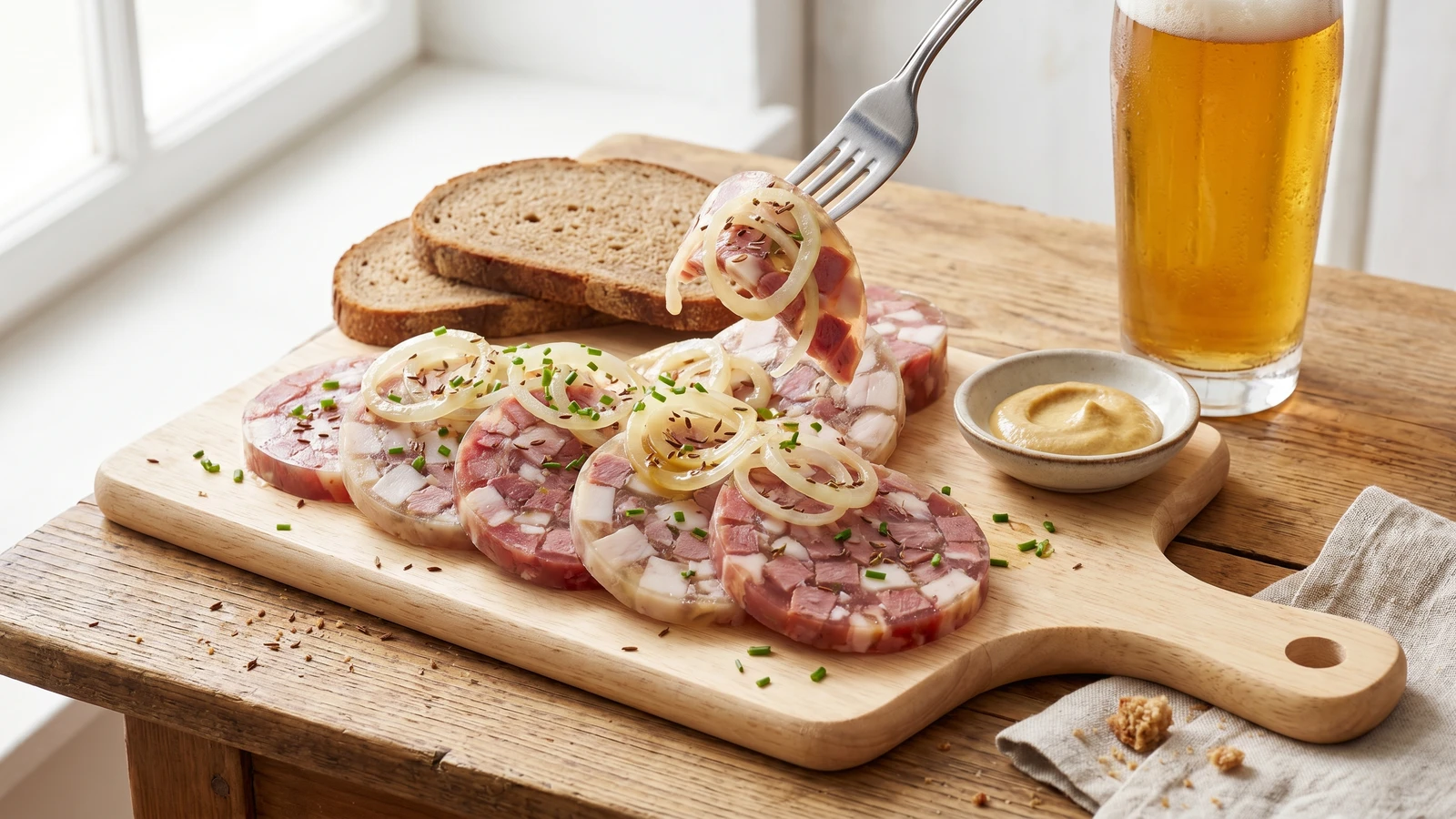
Franconian Presssack is the cold board that shows the pig was respected: red or white head-cheese sliced thin, onion vinegar doing the work, rye bread waiting.
Presssack mit Musik sits on the Franconian Brotzeit board, Brotzeit being the bread-and-cold-cuts meal that solves a summer evening, a picnic, or a Sunday when nobody wants another pot on the stove. Red Presssack gets its dark colour from blood; white Presssack does without it. Both are head-cheese, Sülze, gelled meat in a casing, sliced cool and sharpened with onion, vinegar, and oil.
Franconia claims this board hardest, especially around Würzburg, Bamberg, and the beer cellars, but the family is wider. Swabia and Baden have Schwartenmagen, head-cheese heavy with rind; the north eats Sülze cleaner and often with remoulade and potatoes. The words mit Musik travel through Hesse with Handkäse, sour-milk cheese, but here the music is raw onion on pork. Im Norden anders, im Süden anders. Das ist kein Bierzelt.
The dish works or fails in the onion bowl before the meat is touched. Salt the onion into the vinegar first and let it stand, because salt draws juice from the onion, the vinegar tames the raw heat, and those juices become the dressing. Oil goes in after that. Add it first and it coats the onion, so the acid cannot do its work.
Slice the Presssack cold, then let the dressed plate stand only long enough for the cut faces to take the sour edge, 15 or 20 minutes. A long soak makes the gel weep and turns the board slack. This is the old larder doing its job: head, rind, trim, blood if you choose the red one. Weggeworfen wird nichts. Erst verstehen, dann kochen.
Before mechanical refrigeration became common in rural Germany in the late 19th and early 20th centuries, pig slaughter in Franconia and Bavaria was cold-weather work, often clustered around Martinmas on 11 November. Presssack belongs to that Hausschlachtung, home slaughter: meat from the head, rind, and trim set in its own collagen, with blood for red Presssack and without it for white. The same thrift appears under other names, Schwartenmagen in Swabia and Baden and Sülze further north, while the onion dressing called mit Musik is most famously tied to the Hessian Handkäse table.
Quantity
500g
well chilled
Quantity
2 medium
sliced paper-thin
Quantity
3 tablespoons
Quantity
1 tablespoon
Quantity
1/2 teaspoon, plus more to taste
Quantity
1/4 teaspoon
Quantity
1/2 teaspoon
Quantity
1/2 teaspoon
lightly crushed
Quantity
4 tablespoons
Quantity
2 tablespoons
finely cut
Quantity
to serve
Quantity
to serve
Quantity
to serve
| Ingredient | Quantity |
|---|---|
| red or white Presssackwell chilled | 500g |
| white onionssliced paper-thin | 2 medium |
| white wine vinegar or mild cider vinegar | 3 tablespoons |
| cold water | 1 tablespoon |
| fine salt | 1/2 teaspoon, plus more to taste |
| sugar | 1/4 teaspoon |
| freshly ground black pepper | 1/2 teaspoon |
| caraway seedslightly crushed | 1/2 teaspoon |
| rapeseed or sunflower oil | 4 tablespoons |
| chives (optional)finely cut | 2 tablespoons |
| dark rye bread | to serve |
| German mustard | to serve |
| radishes or pickled cucumbers (optional) | to serve |
Buy a firm red or white Presssack from a good butcher and keep it cold until slicing. Press a finger lightly on the cut face: it should spring back and show clear gel around the meat, not shed liquid. Cold gelatin holds under the knife, so you get clean slices instead of smearing rind and meat across the board.
Put the sliced onions in a non-reactive bowl with the vinegar, cold water, salt, sugar, pepper, and crushed caraway. Work them with your fingers for half a minute, then leave them 15 to 20 minutes. Salt pulls juice from the onion and vinegar takes off the raw burn; that onion juice is not waste, it becomes the sharp part of the dressing.
While the onions rest, peel off any tough casing and slice the Presssack 3 to 4mm thick. Use one steady stroke with a sharp knife. Saw at it and you tear the gel; press too hard and you squeeze out the juices the butcher worked to set.
Whisk the oil into the onion bowl only after the onions have softened. Oil first would coat the onion and shut out the vinegar, so the onion stays harsh and the dressing tastes split. Würzen, Fett, Salz zum Schluss: season first, fat after, then taste for salt.
Fan the Presssack slices on a board or wide plate and spoon the onions and dressing over them. Let the plate stand 10 to 15 minutes in a cool room, just long enough for the cut faces to take the sour edge. Leave it sitting for hours and the gel weeps, the slices slacken, and the board looks tired.
Scatter over chives if you're using them, grind on a little more pepper, and serve with dark rye, mustard, radishes, or pickled cucumbers. This is Brotzeit, the bread-and-cold-cuts meal, so don't fuss it into something it isn't. Schön ist, was schmeckt.
1 serving (about 280g)
Culinary guides, cultural storytelling, and the editorial depth that makes cooking meaningful.
Discover Culinary ExplorerChef Klaus
North Hesse's old sausage is cured, not cooked: coarse pork, pepper, garlic, and cold weeks in a chamber until the slice turns firm enough for rye and cider.

Chef Klaus
Baden's Vesper spread is nothing more than quark, cream, onion, and chives, but the whole dish depends on controlling the whey so the bowl stays spoonable beside hot potatoes.
Chef Klaus
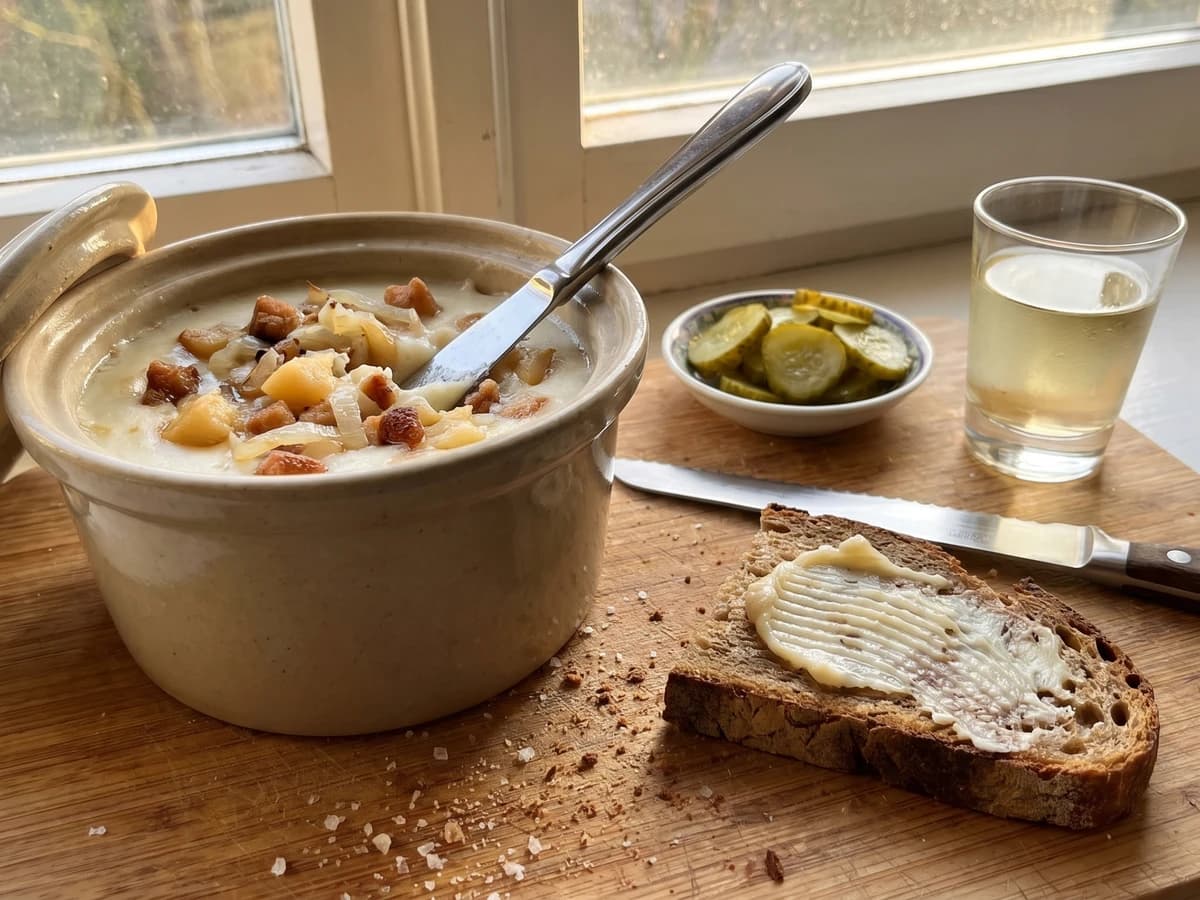
Baden's lard spread is thrift in a crock: pork fat rendered slowly, onion and apple added when the water is gone, and the crisp Grieben stirred back before it sets.

Chef Klaus
The Bavarian beer-garden salad that lives by the cut: thin sausage strips, raw onion, vinegar and oil, no cheese, rested long enough to taste like supper.