
Chef Lupita
Aguascalientes Beef Tongue Pozole (Pozole de Lengua)
Aguascalientes' Bajio pozole de lengua, built with cacahuazintle hominy, tender beef tongue, chile ancho and guajillo, with xoconostle brightness and table garnishes.
A cooking platform built around craft, culture, and the stories behind what we eat.
Created by
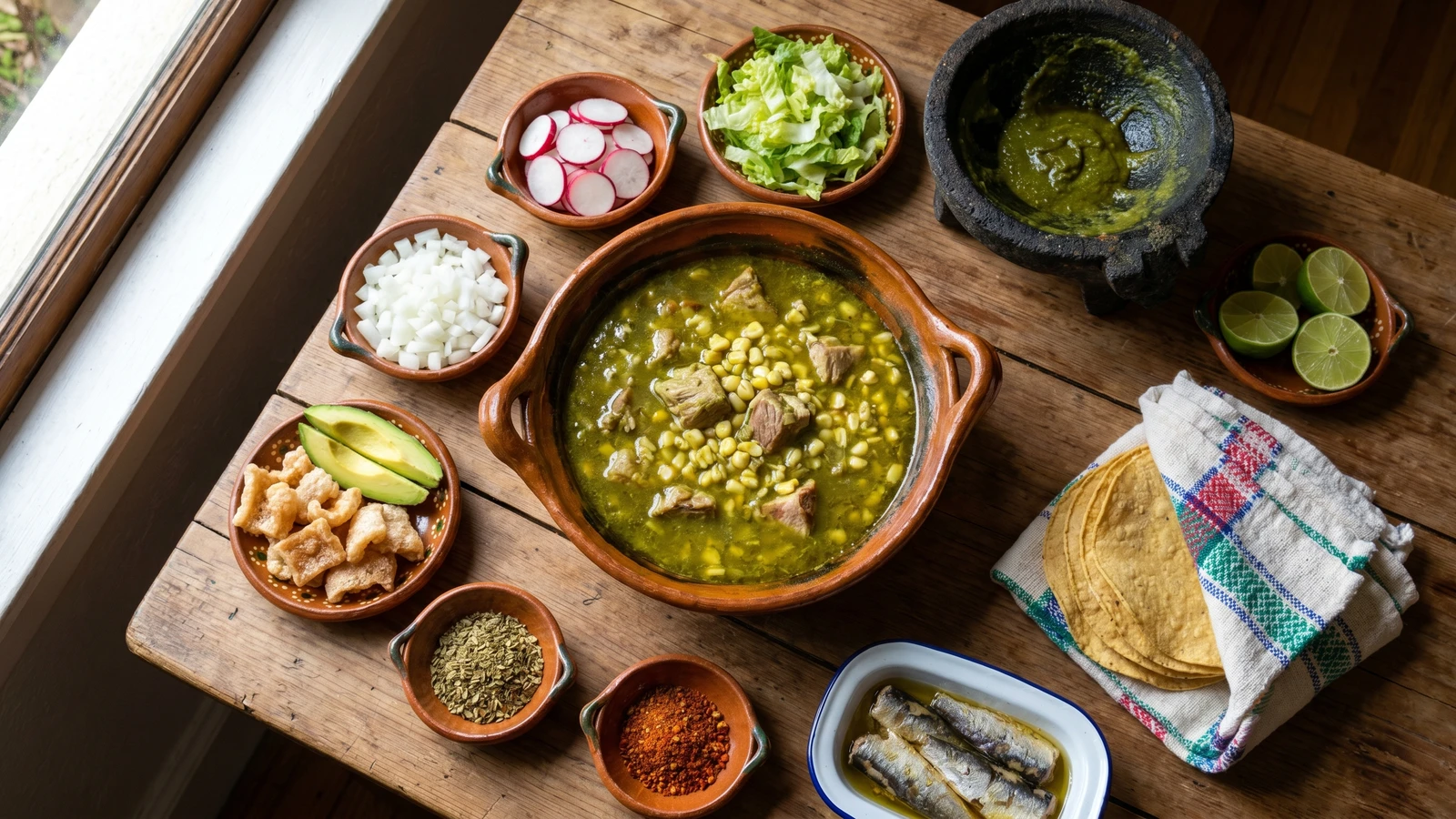
Guerrero's Thursday pozole, a deep green pot of pork, cacahuazintle hominy, toasted pepita, tomatillo, epazote and hoja santa, built for bowls lined with radish, onion, avocado and chicharron.
Guerrero, especially the Centro region around Chilpancingo and Tixtla and the old pozolerias of Acapulco, is where this green pozole lives. Thursday belongs to it. Jueves pozolero is not a cute restaurant slogan. It is the weekly rhythm of a state that knows exactly what belongs in the bowl.
The green does not come from a blender full of random herbs. It comes from semilla de calabaza, tomatillo, chile serrano, epazote, hoja santa, and the patience to fry that paste in manteca de cerdo before it touches the broth. The pepita thickens the pot. The epazote cuts through the pork. The hoja santa gives that anise, root-beer shadow that tells a Guerrerense cook you did not just make any green soup.
I learned this version from a woman in Chilpancingo who stirred the mole verde with a wooden spoon worn flat on one side. She told me the white pozole base must be good enough to eat alone before you turn it green. She was right. Bad broth wearing green sauce is still bad broth.
My mother was from Jalisco, so her pozole was red. In her notebook, next to a Guerrerense version copied from a market cook, she wrote: no olvides la pepita. Do not forget the pumpkin seed. That is the architecture of this dish. Saber cocinar es saber vivir.
Pozole comes from the Nahuatl pozolli, commonly explained as a reference to the foaming or blooming of nixtamalized corn as it opens in the pot. Guerrero's green version grew from a white pozole base enriched with mole verde of semilla de calabaza, chile verde, epazote and hoja santa, which separates it from Jalisco's red pozole and Sinaloa's white versions. The jueves pozolero custom is now one of Guerrero's clearest culinary markers, especially in Chilpancingo and Acapulco, though families still argue about sardines, egg, and how much chicharron belongs on top.
Quantity
1 1/2 pounds
soaked overnight
Quantity
4 pounds
cut into 2-inch chunks
Quantity
1 1/2 pounds
Quantity
1
rinsed
Quantity
2 medium
1 halved and 1 quartered
Quantity
1
halved crosswise
Quantity
3
peeled
Quantity
2
Quantity
1 tablespoon, plus more to taste
Quantity
5 quarts, plus more as needed
Quantity
2 cups
Quantity
1 pound
husked and rinsed
Quantity
5 to 6
stemmed
Quantity
1 packed cup
Quantity
1/2 cup
Quantity
2 large
center rib removed
Quantity
4
chopped
Quantity
2 tablespoons
Quantity
1/4 cup
for mixing with the masa
Quantity
1/4 cup
Quantity
for serving
Quantity
for serving
Quantity
for serving
Quantity
for serving
Quantity
for serving
broken into pieces
Quantity
for serving
crumbled
Quantity
for serving
Quantity
for serving
Quantity
for serving
Quantity
for serving
| Ingredient | Quantity |
|---|---|
| dried prepared maiz pozolero, nixtamalized cacahuazintlesoaked overnight | 1 1/2 pounds |
| bone-in pork shouldercut into 2-inch chunks | 4 pounds |
| pork neck bones or pork spine | 1 1/2 pounds |
| split pork foot (optional)rinsed | 1 |
| white onions1 halved and 1 quartered | 2 medium |
| head of garlichalved crosswise | 1 |
| garlic clovespeeled | 3 |
| bay leaves | 2 |
| kosher salt | 1 tablespoon, plus more to taste |
| cold water | 5 quarts, plus more as needed |
| raw hulled pepitas, semilla de calabaza | 2 cups |
| tomatilloshusked and rinsed | 1 pound |
| fresh chile serranostemmed | 5 to 6 |
| fresh cilantro leaves and tender stems | 1 packed cup |
| fresh epazote leaves and tender stems | 1/2 cup |
| hoja santa leavescenter rib removed | 2 large |
| romaine lettuce leaveschopped | 4 |
| fresh masa de maiz or masa harina | 2 tablespoons |
| cool pork brothfor mixing with the masa | 1/4 cup |
| manteca de cerdo | 1/4 cup |
| diced raw white onion (optional) | for serving |
| thinly sliced radishes (optional) | for serving |
| thinly sliced romaine lettuce (optional) | for serving |
| avocado slices (optional) | for serving |
| crisp chicharron de cerdo (optional)broken into pieces | for serving |
| dried Mexican oregano (optional)crumbled | for serving |
| chile piquin molido (optional) | for serving |
| lime halves (optional) | for serving |
| tostadas de maiz (optional) | for serving |
| oil-packed sardines (optional) | for serving |
Drain the soaked maiz pozolero and place it in a large olla with 3 quarts of fresh water, half of one onion, and half of the garlic head. Bring to a simmer and cook until the kernels bloom open, 1 1/2 to 2 1/2 hours depending on the corn. Do not salt the corn before it opens. The grain needs to soften first. When it looks like little white flowers, you are ready.
While the maiz cooks, put the pork shoulder, neck bones, pork foot if using, remaining halved onion, remaining halved garlic head, bay leaves, salt, and 2 quarts cold water in a second heavy pot. Bring it up slowly over medium heat. Skim the gray foam during the first 15 minutes. Lower the heat and simmer gently until the pork pulls apart with a fork, about 2 1/2 hours.
Lift the pork from the broth and set it aside until cool enough to handle. Strain the broth into the pot with the bloomed maiz and discard the spent onion, garlic, bay, and bones. Cut or pull the pork into spoon-size pieces and return it to the pot. You now have pozole blanco, the base Guerrero cooks turn green with pepita and herbs.
Heat a dry comal or heavy skillet over medium-low heat. Add the pepitas and toast them, stirring constantly, until they puff slightly and turn patchy gold, 4 to 6 minutes. They should smell nutty, not scorched. Burned pepita makes a bitter mole verde. Throw it out and start again if you went too far.
Put the tomatillos and chile serrano in a saucepan and cover with water. Simmer 6 to 8 minutes, just until the tomatillos turn olive green and soften. Do not boil them into gray collapse. Guerrero's green pozole should taste like pepita, epazote, chile verde, and tomatillo, not like a tired salsa jar.
Transfer the toasted pepitas, cooked tomatillos, chile serrano, quartered onion, peeled garlic cloves, cilantro, epazote, hoja santa, romaine leaves, and 2 cups of hot pork broth to a blender. Blend until as smooth as your machine can make it. Mix the masa with 1/4 cup cool broth until no lumps remain, add it to the blender, and blend again. The sauce should be thick, green, and pourable.
Melt the manteca de cerdo in a wide cazuela or heavy skillet over medium heat. Add the green mole carefully. It will sputter. Stir constantly for 12 to 15 minutes, scraping the bottom, until the paste thickens, deepens in color, and little freckles of fat appear at the edges. La manteca es el sabor. This is the step the women in Guerrero pozolerias do not let apprentices rush.
Whisk the fried green mole into the pot of maiz, pork, and broth a ladleful at a time. Simmer gently for 25 to 30 minutes, stirring often so the pepita does not catch on the bottom. Do not let it crash into a hard boil. The broth should thicken slightly and turn a deep green. Taste for salt at the end because the maiz drinks seasoning like a thirsty field.
Ladle the pozole into deep clay bowls. Put the onion, radishes, lettuce, avocado, chicharron, oregano, chile piquin, lime, tostadas, and sardines on the table. Each person finishes the bowl. Add chicharron last so it stays crisp. Sardines are not a joke in Guerrero. If you do not want them, leave them. But do not pretend the custom is strange just because you met it late. Cada estado, su propia cocina.
1 serving (about 800g)
Culinary guides, cultural storytelling, and the editorial depth that makes cooking meaningful.
Discover Culinary ExplorerChef Lupita
Aguascalientes' Bajio pozole de lengua, built with cacahuazintle hominy, tender beef tongue, chile ancho and guajillo, with xoconostle brightness and table garnishes.

Chef Lupita
Veracruz's Gulf coast rice from Alvarado, built with seafood stock, tomato, chile chipotle, epazote, shrimp, fish, jaiba, and pulpo, served loose and brothy in a clay cazuela.

Chef Lupita
Costa Chica's wet salt-beef stew, built from chile costeño, guajillo, tomato, manteca, yuca, plantain, and masa dumplings, the ranching pot of Cuajinicuilapa and Pinotepa.

Chef Lupita
Michoacán's P'urhépecha atápakua is a masa-thickened sauce and stew at once, built with pork, chile guajillo, and hierbabuena added only at the end.