
Chef Makoa
Ahimaʻa Puaʻa (Tahitian Earth-Oven Pork)
Tahitian puaʻa cooked in the spirit of the ahimaʻa, the earth oven of maʻa Tahiti, wrapped in banana leaf and held low and slow until the meat gives in two fingers.
A cooking platform built around craft, culture, and the stories behind what we eat.

Created by
Tahiti's poulet citron, the lemon chicken of the roulottes: French name, Chinese wok hand, bright citrus sauce, and rice underneath. Everyday fenua food, warm and real.
The table in Tahiti carries the old canoe and the busy street both. That is fenua, the land and place in reo Tahiti, feeding its people through breadfruit and taro, reef fish and coconut, then through the roulotte, the food truck parked in Papeʻete with the lights on and rice ready. Poulet citron belongs to that Tahitian table: lemon chicken with a French name, a Chinese stir-fry hand, and the local habit of feeding everybody well without making it fancy.
This is not the deep food of the ahimaʻa, the Tahitian earth oven, and I don't need to pretend it is. Deep food has its own weight. Everyday food has its own kindness. Across the Triangle the cousins do this too: Hawaiʻi has plate lunch chicken over rice, Sāmoa has sapasui on the Sunday table beside the umu food, Tonga feeds the hall with corned beef and rice when that's what the family has. Keeper, not gatekeeper. Eat what you have.
The why is simple. Brown the chicken hard enough to give it flavor, then let the lemon sauce tighten until it shines and clings. The sauce should taste bright, salty, a little sweet, and clean. Same ocean, different bowl, yeah? This one is Tahiti's, and it comes forward into your kitchen quick, warm, and real.
Poulet citron is contemporary Tahitian maʻa, food, shaped by the meeting of French colonial language, Chinese-Tahitian cooking, and the roulotte culture of Papeʻete. It sits on the post-contact side of the table, not as a lesser food, but as proof that island kitchens keep adapting while the older canoe crops and earth-oven practices remain kin and foundation. Across Polynesia, rice, chicken, soy, bread, corned beef, and food-truck cooking now live beside taro, breadfruit, raw fish, coconut, and the ahimaʻa, the umu by any name.
Quantity
1 1/2 pounds
cut into bite-size pieces
Quantity
1 teaspoon
Quantity
1/2 teaspoon
Quantity
3 tablespoons
divided
Quantity
2 tablespoons
Quantity
4
finely chopped
Quantity
1 tablespoon
grated
Quantity
1/2 cup
Quantity
1 tablespoon
Quantity
1/3 cup
Quantity
2 tablespoons
Quantity
1 tablespoon
Quantity
1
thinly sliced
Quantity
2
thinly sliced
Quantity
for serving
Quantity
for serving
| Ingredient | Quantity |
|---|---|
| boneless skinless chicken thighscut into bite-size pieces | 1 1/2 pounds |
| sea salt | 1 teaspoon |
| black pepper | 1/2 teaspoon |
| cornstarchdivided | 3 tablespoons |
| neutral oil | 2 tablespoons |
| garlic clovesfinely chopped | 4 |
| fresh gingergrated | 1 tablespoon |
| fresh lemon juice | 1/2 cup |
| lemon zest | 1 tablespoon |
| chicken stock or water | 1/3 cup |
| soy sauce | 2 tablespoons |
| honey or sugar | 1 tablespoon |
| small onionthinly sliced | 1 |
| green onionsthinly sliced | 2 |
| cooked white rice | for serving |
| lemon wedges (optional) | for serving |
Toss the chicken with salt, pepper, and 2 tablespoons of the cornstarch until every piece has a thin white coat. Let it sit while you mix the sauce. That little rest helps the chicken brown quick and hold its juice.
In a bowl, stir the lemon juice, lemon zest, stock or water, soy sauce, honey, and the remaining 1 tablespoon cornstarch until smooth. Taste it. It should be bright first, salty second, with just enough sweet to round the lemon's edge.
Heat the oil in a wide skillet or wok over medium-high heat. Add the chicken in one loose layer, working in batches if needed, and cook until the outside turns golden in spots and the pieces feel springy, about 3 to 4 minutes per side. Move the chicken to a plate.
Add the onion to the same pan and stir until the edges soften and shine, about 2 minutes. Add the garlic and ginger and keep them moving for 30 seconds, just until the smell comes up. No burn the garlic. Bitter garlic will fight the lemon.
Stir the sauce once more, then pour it into the pan. Let it bubble and tighten until it turns glossy and coats the back of a spoon, about 1 to 2 minutes. Return the chicken and any juices to the pan, tossing until every piece is lacquered and cooked through.
Spoon the chicken and its bright lemon glaze over hot white rice. Scatter green onion over the top and set lemon wedges on the side for the people who like it sharper. This is weeknight food, so serve it generous, not precious.
1 serving (about 390g)
Culinary guides, cultural storytelling, and the editorial depth that makes cooking meaningful.
Discover Culinary ExplorerChef Makoa
Tahitian puaʻa cooked in the spirit of the ahimaʻa, the earth oven of maʻa Tahiti, wrapped in banana leaf and held low and slow until the meat gives in two fingers.
Chef Makoa
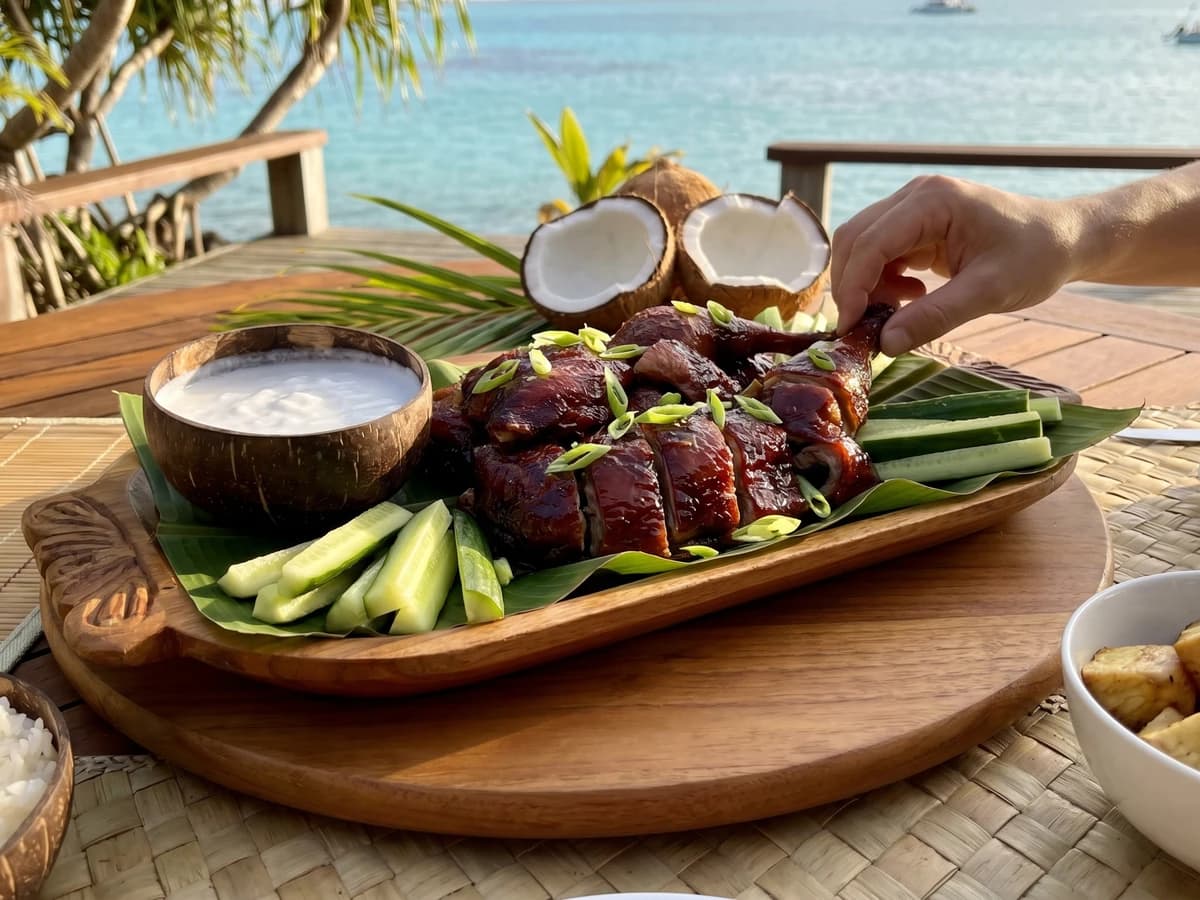
Glossy Chinese-Tahitian roast duck from Papeʻete, lacquered with soy, honey, and five-spice, carved for the lazy Susan, then dipped into thick fresh coconut milk beside rice, ʻuru, and a crowded table.
Chef Makoa
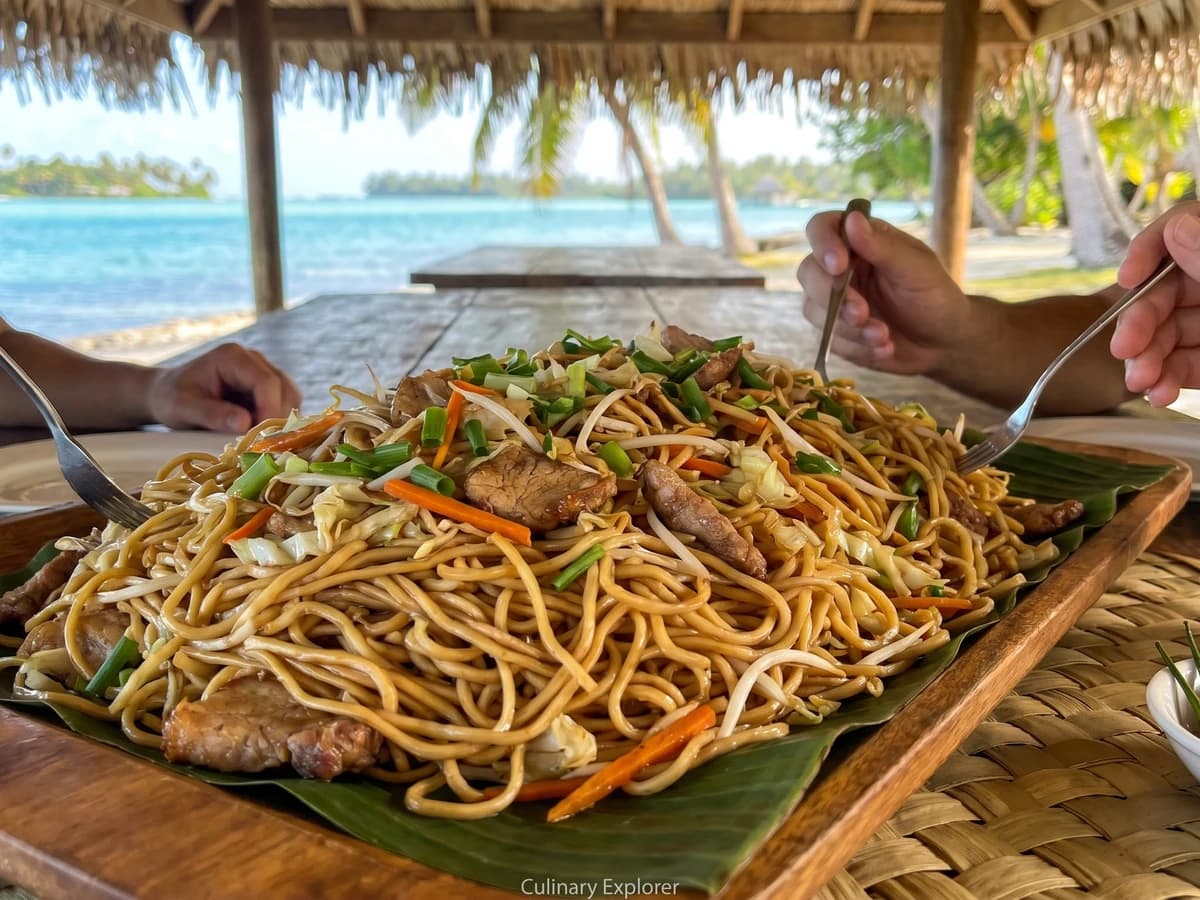
Tahiti's chao men is Hakka chow mein made fully local: glossy egg noodles, pork, cabbage, carrot, and green onion, fast from the wok and generous enough for the table.

Chef Makoa
Tahiti's fāfaru takes raw ʻahi into miti fāfaru, a pungent fermented seawater brine, then brings it back to the table with mitihue, breadfruit, and the lesson that good funk is food kept alive.