
Chef Isabel
Aguaillo de la Sierra de Cadiz
Aguaillo is from the Sierra de Cadiz: cold water, stale bread, garlic, oil and vinegar, closer to a field drink than a bowl of soup, and sharp enough to wake you in the heat.
A cooking platform built around craft, culture, and the stories behind what we eat.
Created by
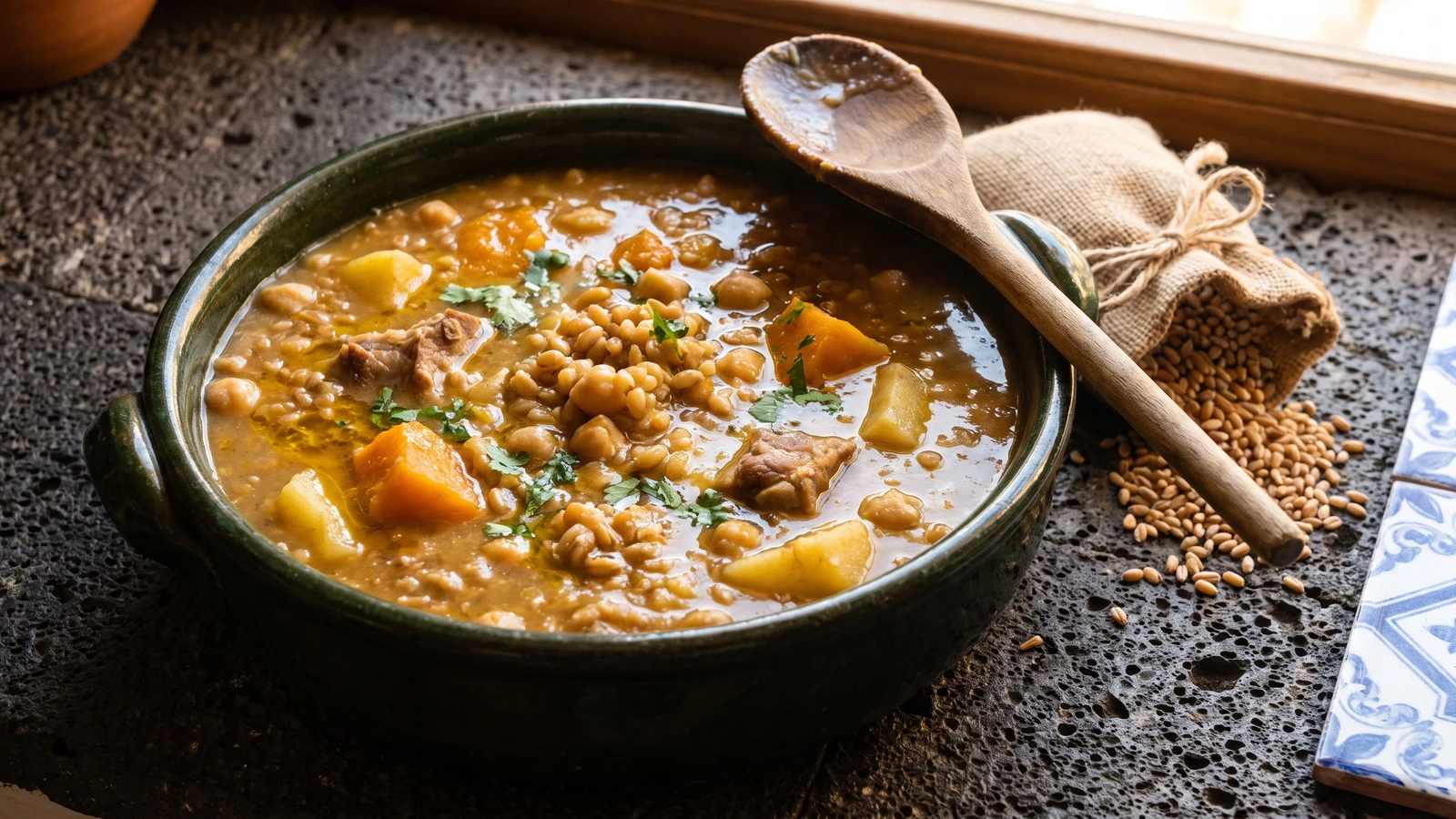
Potaje de trigo palmero is La Palma's sturdy spoon food: whole wheat and chickpeas cooked slowly with papas and pork until the grain opens, thickens the broth, and feeds the table properly.
Potaje de trigo palmero belongs to La Palma, in the Canary Islands, and the wheat is what gives it its name and its body. This isn't a thin vegetable soup with grain added for politeness. It is cocina de cuchara, spoon food: whole trigo, chickpeas, papas, pumpkin, greens, and a little pork cooked until the broth turns thick and the wheat is tender under the tooth.
The method that decides it is the soak and the slow simmer. Whole wheat is stubborn if you rush it. Soak it overnight with the chickpeas, then cook it gently until the grains swell, split a little, and give the potaje its weight. A hard boil batters the papas and leaves the wheat uneven, some soft, some chalky. Low heat does the work. Siempre sale, si lo sigues.
If you are far from La Palma, use whole wheat berries, the kind sold for salads or bread making, not cracked bulgur and not pearled barley. Bulgur has already been broken and steamed, so it will make a different, softer pot. For the pork, salted ribs are best if you can find them; otherwise use fresh pork ribs with a little salt added later. No hace falta haber pisado España. You need the right grain, the overnight soak, and patience.
My Margin for this one has only a practical warning: don't add the papas too early. They should soften into the stew at the end, not disappear before the wheat has finished its long business.
Potaje de trigo is one of La Palma's older household stews, tied to the island's wheat fields and to a larder that stretched grain, legumes, papas, vegetables, and preserved pork into one filling pot. Whole wheat appears in the island's old recetarios as everyday food rather than festival display, a way to make a hard-working meal from what the small farms and household stores already held. The dish belongs to the Canarian family of potajes, but the trigo gives the Palmero version its particular thickness and chew.
Quantity
250g
soaked overnight
Quantity
200g
soaked overnight
Quantity
350g
soaked 1 hour if very salty
Quantity
150g
in one piece
Quantity
1 large
finely chopped
Quantity
1
finely chopped
Quantity
2
grated
Quantity
4 cloves
minced
Quantity
3 tablespoons
Quantity
1 teaspoon
Quantity
1
Quantity
1/2 teaspoon
Quantity
1.8 litres, plus more as needed
Quantity
450g
peeled and cut into large chunks
Quantity
300g
peeled and cut into large chunks
Quantity
200g
roughly chopped
Quantity
1
cut into 6 pieces
Quantity
to taste
Quantity
small handful
chopped
| Ingredient | Quantity |
|---|---|
| whole wheat berriessoaked overnight | 250g |
| dried chickpeassoaked overnight | 200g |
| salted pork ribs, or fresh pork ribssoaked 1 hour if very salty | 350g |
| pork belly or lean pork shoulderin one piece | 150g |
| onionfinely chopped | 1 large |
| green pepperfinely chopped | 1 |
| ripe tomatoesgrated | 2 |
| garlicminced | 4 cloves |
| olive oil | 3 tablespoons |
| sweet pimentón | 1 teaspoon |
| bay leaf | 1 |
| ground cumin | 1/2 teaspoon |
| water | 1.8 litres, plus more as needed |
| potatoespeeled and cut into large chunks | 450g |
| pumpkin or winter squashpeeled and cut into large chunks | 300g |
| cabbage or chardroughly chopped | 200g |
| corn cob (optional)cut into 6 pieces | 1 |
| salt | to taste |
| fresh coriander or parsley (optional)chopped | small handful |
The night before, put the whole wheat berries and chickpeas in separate bowls and cover each with plenty of cold water. Leave them 10 to 12 hours. Pésalo, no lo adivines: whole wheat needs the full soak, or the outside softens while the centre stays chalky.
Warm the olive oil in a heavy pot and add the onion and green pepper with a pinch of salt. Cook slowly for 12 to 15 minutes, until the onion is dark gold and sweet, not pale and wet. Stir in the garlic for 1 minute, then the grated tomato, and cook until the tomato has lost its water and the oil shows at the edges. This sofrito, the slow onion base, is where the potaje gets its depth.
Stir in the pimentón off the heat so it smells warm but does not scorch. Add the drained wheat, drained chickpeas, pork ribs, pork belly or shoulder, bay leaf, cumin, and 1.8 litres water. Bring it to a gentle boil, skim the grey foam, then lower the heat until the pot only murmurs.
Cook gently for about 1 hour 45 minutes, stirring now and then from the bottom so the wheat does not catch. Add hot water if the surface drops below the grain and chickpeas. The wheat should swell and begin to split, and the chickpeas should be nearly tender before the vegetables go in.
Add the potatoes, pumpkin, cabbage or chard, and the corn if using. Keep the simmer gentle and cook 35 to 45 minutes more, until the papas are tender, the pumpkin softens at the edges, and the broth thickens around the wheat. Do not stir hard now, or the papas break before the potaje is ready.
Lift out the pork, cut it into serving pieces, and return it to the pot. Taste for salt only at the end, especially if you used salted ribs. Let the potaje rest off the heat for 10 minutes so the grain settles and the broth thickens. Serve deep, with a little chopped coriander or parsley if you like it that way.
1 serving (about 505g)
Culinary guides, cultural storytelling, and the editorial depth that makes cooking meaningful.
Discover Culinary ExplorerChef Isabel
Aguaillo is from the Sierra de Cadiz: cold water, stale bread, garlic, oil and vinegar, closer to a field drink than a bowl of soup, and sharp enough to wake you in the heat.

Chef Isabel
Ajilimojili is Jaen's tomato-free cold soup: potato, roasted red pepper, garlic, olive oil, and vinegar pounded into a cool, silky spoonful.

Chef Isabel
Ajo carretero is Soriano, from the pine country of Soria: lamb cooked in a plain garlicky broth, then served the old way, meat first and bread-soaked soup after.

Chef Isabel
Ajoblanco Extremeño is the poor-kitchen cold soup of Extremadura: bread, garlic, oil, egg yolk, vinegar, and icy water, with no almonds. Whisk it slowly and serve it bien fresquito.