
Chef Lupita
Aguascalientes Beef Tongue Pozole (Pozole de Lengua)
Aguascalientes' Bajio pozole de lengua, built with cacahuazintle hominy, tender beef tongue, chile ancho and guajillo, with xoconostle brightness and table garnishes.
A cooking platform built around craft, culture, and the stories behind what we eat.
Created by
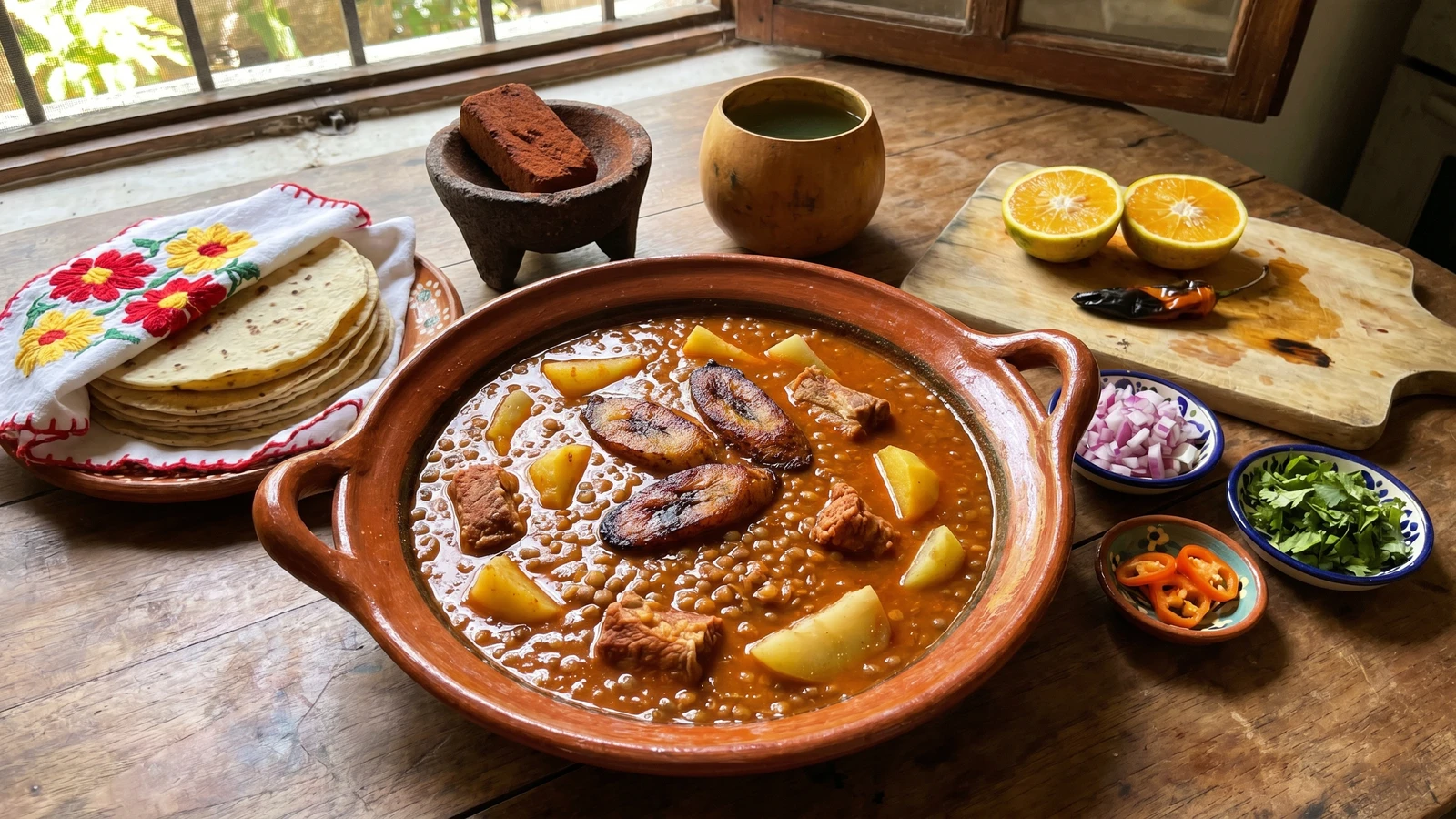
Yucatán's Wednesday lentil stew, built on pork ribs, longaniza, achiote-stained broth, and the sweet jolt of fried black plantain. A peninsula dish that argues sweet and savory belong in the same bowl.
This is from Yucatán. Not from central Mexico, not from the Gulf coast, from the Peninsula, where the cooking carries Maya, Spanish, and Lebanese fingerprints in the same pot and where the calendar of the week tells you what is for lunch. Wednesday is potaje. Ask any señora in Mérida or Valladolid and she will tell you the same thing.
The broth is stained the color of Ticul roof tile by recado rojo, the achiote paste ground with garlic, cumin, oregano, allspice, clove, black pepper, and naranja agria. The recado is not a spice paste in the way the rest of Mexico means it. It is the spine of Yucatecan cooking, and a kitchen without it is not a Yucatecan kitchen. Add to that the pork ribs cooked slowly for the broth, the longaniza for fat and color, the lentils for body, and the chayote and potato for substance, and you have a pot that feeds eight without breaking anyone's budget. Then comes the move that confuses everyone outside the Peninsula: fried sweet plantain on top. Black-skinned, caramelized in manteca, sweet against the savory broth. That contrast is the whole point. Yucatán's cooks have understood sweet and savory in the same bowl for centuries, long before fusion was a word anyone used.
My mother did not cook Yucatecan food. She was jalisciense and her notebook stopped at Tabasco. I learned this potaje in a courtyard kitchen in Mérida from a señora named Doña Conchita who had been cooking it every Wednesday for fifty-three years. She did not measure the recado. She broke off a piece the size of a walnut and that was that. When I asked her how she knew, she shrugged and said, 'Mi mamá lo hacía así.' My mother made it this way. That is the only authority Yucatecan kitchens recognize, and it is enough. Saber cocinar es saber vivir.
Lentils arrived in Yucatán through two routes: the Spanish brought them in the 16th century as part of the broader Iberian legume tradition, and Lebanese immigrants who settled in Mérida in significant numbers between the 1880s and 1920s reinforced the dish as a weekly staple, layering Levantine technique onto the existing colonial recipe. The Wednesday timing for potaje in Yucatecan home cooking is part of a regional weekly menu, codified in the 19th century, that assigns specific dishes to specific days: frijol con puerco on Monday, puchero on Sunday, potaje on Wednesday. The pairing of fried sweet plantain with savory legume stew reflects the deep African and Caribbean influence on Peninsular cuisine, an influence often erased in tourist-facing narratives that frame Yucatecan food as exclusively Maya-Spanish.
Quantity
1 pound
picked over and rinsed
Quantity
1 1/2 pounds
cut into individual ribs
Quantity
1/2 pound
sliced into thick coins
Quantity
1/4 pound
diced
Quantity
2 tablespoons
Quantity
1 medium
finely chopped
Quantity
4
finely chopped
Quantity
2
finely chopped
Quantity
2 tablespoons
Quantity
1 large
peeled and diced
Quantity
2 medium
peeled and cut into 1-inch chunks
Quantity
1
peeled and cut into 1-inch chunks
Quantity
1
charred whole
Quantity
1
left whole
Quantity
2
Quantity
1 sprig
Quantity
1 sprig
Quantity
8 cups
Quantity
1 tablespoon, plus more to taste
Quantity
2
peeled and sliced on the bias
Quantity
1/2 cup
Quantity
from 1 naranja agria (or 2 tablespoons orange juice mixed with 1 tablespoon lime juice)
Quantity
for serving
Quantity
for serving
Quantity
for serving
Quantity
for serving
Quantity
for serving
| Ingredient | Quantity |
|---|---|
| brown lentilspicked over and rinsed | 1 pound |
| pork ribs (costilla de cerdo)cut into individual ribs | 1 1/2 pounds |
| Yucatecan longaniza or fresh chorizosliced into thick coins | 1/2 pound |
| smoked ham or tocinodiced | 1/4 pound |
| manteca de cerdo | 2 tablespoons |
| white onionfinely chopped | 1 medium |
| garlic clovesfinely chopped | 4 |
| ripe Roma tomatoesfinely chopped | 2 |
| recado rojo (achiote paste) | 2 tablespoons |
| carrotpeeled and diced | 1 large |
| yellow potatoespeeled and cut into 1-inch chunks | 2 medium |
| chayotepeeled and cut into 1-inch chunks | 1 |
| chile xkatikcharred whole | 1 |
| chile habaneroleft whole | 1 |
| bay leaves | 2 |
| fresh epazote | 1 sprig |
| fresh hierbabuena | 1 sprig |
| water or light pork broth | 8 cups |
| kosher salt | 1 tablespoon, plus more to taste |
| very ripe plantains (black-skinned)peeled and sliced on the bias | 2 |
| manteca de cerdo for frying | 1/2 cup |
| naranja agria juice | from 1 naranja agria (or 2 tablespoons orange juice mixed with 1 tablespoon lime juice) |
| diced red onion (optional) | for serving |
| chopped cilantro (optional) | for serving |
| sliced chile habanero (optional) | for serving |
| lima agria halves (optional) | for serving |
| hand-pressed corn tortillas (optional) | for serving |
Place the pork ribs in a heavy pot with 8 cups of cold water, one bay leaf, half the chopped onion, and a teaspoon of salt. Bring to a gentle simmer over medium heat. Skim the gray foam in the first ten minutes. Cold water draws the flavor out of the bone slowly. A hard boil clouds the broth and toughens the meat. Cook 45 minutes, until the ribs are tender enough to bite but not falling apart.
Rinse the lentils until the water runs clear. Add them directly to the simmering pork broth along with the remaining bay leaf and the sprig of epazote. Cook 25 to 30 minutes, until the lentils are tender but still hold their shape. Yucatecan lentils are not pureed. They keep their integrity in the broth.
While the lentils cook, heat the 2 tablespoons of manteca in a wide skillet over medium heat. Add the diced ham or tocino and render until the edges crisp. Add the longaniza coins and brown for two minutes per side. Lift the meats out and set aside. In the same fat, fry the remaining chopped onion and garlic until soft and translucent, about five minutes. Add the chopped tomato and cook until it breaks down into a rough sofrito, about six more minutes.
Spoon a ladle of the hot lentil broth into a small bowl and add the recado rojo. Mash with a spoon until the paste fully dissolves into a deep red liquid. The recado is not just spice paste. It is achiote seed ground with garlic, cumin, oregano, black pepper, allspice, clove, and naranja agria. Buy it from a Yucatecan brand or grind your own. The cheap red dye sold as 'achiote paste' in supermarkets is not the same thing.
Stir the sofrito and the dissolved recado into the lentil pot. The broth will turn the color of a Mérida sunset, somewhere between brick and tile. Return the browned longaniza and ham to the pot. Add the carrot, potato, and chayote. Lay the charred xkatik chile and the whole habanero on top. Do not break the habanero. You want its perfume, not its fire.
Bring the pot back to a low simmer. Add the hierbabuena and the naranja agria juice. Cover partially and cook 25 to 30 minutes, until the potato and chayote are tender and the broth has thickened from the lentils releasing their starch. Taste for salt. The recado is assertive, so the salt has to keep up. Fish out the habanero before serving. If it has burst, taste a spoonful before you add anything more. Yucatecan heat is not Sinaloan heat. It builds on the tongue and walks behind every other flavor.
While the potaje finishes, heat the 1/2 cup of manteca in a small skillet over medium-high heat. The plantains must be black-skinned, the kind people buy thinking they are spoiled. Those are the right ones. Fry the slices in a single layer until the edges turn deep caramel and the centers go soft, about two minutes per side. Drain on paper towel. The sweetness against the savory recado is the heart of this dish. Without the plantain, you have lentil soup. With the plantain, you have potaje yucateco.
Ladle the potaje into deep bowls, making sure each one gets a rib, a coin of longaniza, and a piece of every vegetable. Float two or three fried plantain slices on top of each bowl. Set the diced red onion, cilantro, sliced habanero, lima agria, and warm tortillas in small dishes around the table. Each person finishes their own bowl. That ritual is not garnish. It is the dish. Así se hace y punto.
1 serving (about 560g)
Culinary guides, cultural storytelling, and the editorial depth that makes cooking meaningful.
Discover Culinary ExplorerChef Lupita
Aguascalientes' Bajio pozole de lengua, built with cacahuazintle hominy, tender beef tongue, chile ancho and guajillo, with xoconostle brightness and table garnishes.

Chef Lupita
Veracruz's Gulf coast rice from Alvarado, built with seafood stock, tomato, chile chipotle, epazote, shrimp, fish, jaiba, and pulpo, served loose and brothy in a clay cazuela.

Chef Lupita
Costa Chica's wet salt-beef stew, built from chile costeño, guajillo, tomato, manteca, yuca, plantain, and masa dumplings, the ranching pot of Cuajinicuilapa and Pinotepa.

Chef Lupita
Michoacán's P'urhépecha atápakua is a masa-thickened sauce and stew at once, built with pork, chile guajillo, and hierbabuena added only at the end.