
Chef Isabel
Aguaillo de la Sierra de Cadiz
Aguaillo is from the Sierra de Cadiz: cold water, stale bread, garlic, oil and vinegar, closer to a field drink than a bowl of soup, and sharp enough to wake you in the heat.
A cooking platform built around craft, culture, and the stories behind what we eat.
Created by
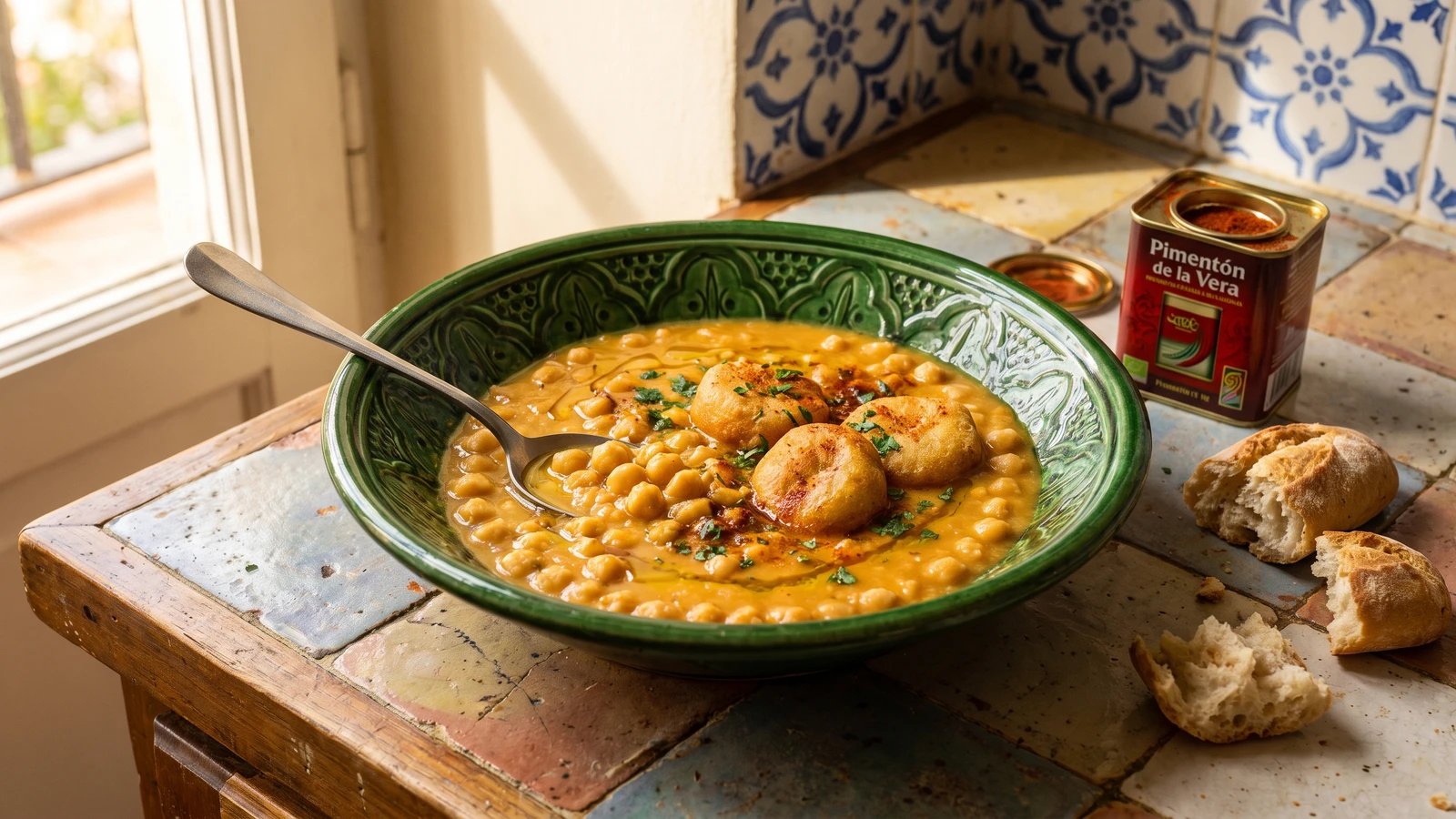
This Granada potaje is cocina de cuchara, spoon food: soaked chickpeas, greens, a slow sofrito, and little fried bread panecillos that drink up the broth.
Potaje de garbanzos con panecillos is Granadino, from Granada's inland Andalusian kitchen, and the panecillos are what make it itself. Not croutons. Not dumplings from somewhere else. They are little fried rolls of bread, egg, garlic, and parsley, stirred in whole so they soften at the edges and stay tender in the middle.
The chickpeas decide the stew before the pot ever goes on the fire. Soak them overnight, then start them in hot water and let them simmer gently until creamy. A hard boil roughs them up and clouds the broth. The sofrito, the slow onion and tomato base, goes low until sweet and dark before the pimentón touches it. Rush that and the potaje tastes thin, and no panecillo can fix it for you.
If you are far from Granada, no hace falta haber pisado España. Use good dried chickpeas from a shop with turnover, frozen spinach if the market greens are tired, and pimentón de la Vera if you can get it. For the bread, use day-old country bread or a plain baguette with the crust trimmed. It changes the crumb a little, but the panecillos still do their work.
This is Lenten food with a full stomach, not a punishment. The Margin in my notebook says only: "panecillos al final," panecillos at the end. Put them in too early and they disappear. Put them in for the last few minutes and the potaje comes to the table as it should. Siempre sale, si lo sigues.
Potajes de vigilia, meatless Lenten stews, are part of the inland Andalusian table, especially around Granada where chickpeas, greens, bread, garlic, and oil could make a serious meal without meat. The panecillos are a home-kitchen answer to scarcity: stale bread enriched with egg, fried, then returned to the pot so nothing useful is wasted. Some Granadino versions add bacalao, salted cod, while others keep the stew plain with greens and panecillos, both belonging to the same abstinence table.
Quantity
400g
soaked overnight
Quantity
1
Quantity
1
halved, for cooking the chickpeas
Quantity
2
lightly crushed, for cooking the chickpeas
Quantity
1.8 litres, plus more as needed
Quantity
300g
washed and chopped
Quantity
300g
peeled and cut into 3cm pieces
Quantity
60ml
Quantity
1
finely chopped
Quantity
1
finely chopped
Quantity
3
finely chopped
Quantity
250g
grated
Quantity
200g
Quantity
1 teaspoon
Quantity
1 pinch
Quantity
1 teaspoon, plus more to taste
Quantity
2
Quantity
90g
crust trimmed and crumbled
Quantity
1
minced, for the panecillos
Quantity
2 tablespoons
chopped
Quantity
1/4 teaspoon
for the panecillos
Quantity
as needed
for shallow-frying
| Ingredient | Quantity |
|---|---|
| dried chickpeassoaked overnight | 400g |
| bay leaf | 1 |
| small onionhalved, for cooking the chickpeas | 1 |
| garlic cloveslightly crushed, for cooking the chickpeas | 2 |
| water | 1.8 litres, plus more as needed |
| spinach or chardwashed and chopped | 300g |
| waxy potatoespeeled and cut into 3cm pieces | 300g |
| extra virgin olive oil | 60ml |
| medium onionfinely chopped | 1 |
| green Italian frying pepperfinely chopped | 1 |
| garlic clovesfinely chopped | 3 |
| ripe tomatoesgrated | 250g |
| canned crushed tomato (optional) | 200g |
| sweet pimentón de la Vera | 1 teaspoon |
| saffron threads (optional) | 1 pinch |
| fine sea salt | 1 teaspoon, plus more to taste |
| large eggs | 2 |
| day-old bread crumbcrust trimmed and crumbled | 90g |
| garlic cloveminced, for the panecillos | 1 |
| parsleychopped | 2 tablespoons |
| fine sea saltfor the panecillos | 1/4 teaspoon |
| olive oilfor shallow-frying | as needed |
Put the chickpeas in a large bowl, cover them with at least three times their volume of cold water, and leave them overnight, 10 to 12 hours. Drain them well. Pésalo, no lo adivines: old chickpeas and a short soak are why this stew turns grainy instead of creamy.
Bring 1.8 litres water to a boil in a heavy pot. Add the drained chickpeas, bay leaf, halved onion, and 2 crushed garlic cloves. The water should cover the chickpeas by about 4cm. Skim the foam, lower the heat, and simmer gently for 1 hour, with the surface only moving quietly.
While the chickpeas cook, warm 60ml olive oil in a frying pan over medium-low heat. Add the chopped onion and green pepper with a pinch of salt and cook 15 minutes, stirring now and then, until soft and dark gold. Add the chopped garlic for 1 minute, then the grated tomato. Cook 12 to 15 minutes more, until the oil separates and the tomato looks thick. Take the pan off the heat, stir in the pimentón and saffron if using, and keep it aside.
After the chickpeas have simmered for 1 hour, remove the halved onion and crushed garlic. Stir in the sofrito, potatoes, greens, and 1 teaspoon salt. Keep the stew at a gentle simmer for 35 to 45 minutes, until the chickpeas are tender and the potatoes give when pressed with a spoon. Add hot water if the stew thickens before the chickpeas are ready.
Beat the eggs in a bowl. Add the bread crumb, minced garlic, parsley, and 1/4 teaspoon salt. Mix until you have a soft paste that holds on a spoon. Let it stand 10 minutes so the bread drinks the egg. If it is loose, add a spoonful more bread crumb; if it is dry, beat in a teaspoon of water.
Pour olive oil into a small frying pan to a depth of 1cm and warm it over medium heat. Shape the bread mixture into 14 to 16 small oval panecillos with two spoons, each about the size of a walnut. Fry them in batches, turning once, until golden on both sides, 2 to 3 minutes total. Drain on a plate.
When the chickpeas are creamy, taste the broth and correct the salt. Lay the fried panecillos whole on top of the potaje and nudge them under the broth. Simmer 5 minutes, no more, so they soften without falling apart. Rest the pot off the heat for 10 minutes before serving.
Serve in deep bowls with chickpeas, greens, potato, and two or three panecillos in each portion. The broth should be thick enough to coat the spoon but still move like a stew. This is not a dry pot of chickpeas. It is cocina de cuchara, and it wants bread beside it.
1 serving (about 520g)
Culinary guides, cultural storytelling, and the editorial depth that makes cooking meaningful.
Discover Culinary ExplorerChef Isabel
Aguaillo is from the Sierra de Cadiz: cold water, stale bread, garlic, oil and vinegar, closer to a field drink than a bowl of soup, and sharp enough to wake you in the heat.

Chef Isabel
Ajilimojili is Jaen's tomato-free cold soup: potato, roasted red pepper, garlic, olive oil, and vinegar pounded into a cool, silky spoonful.

Chef Isabel
Ajo carretero is Soriano, from the pine country of Soria: lamb cooked in a plain garlicky broth, then served the old way, meat first and bread-soaked soup after.

Chef Isabel
Ajoblanco Extremeño is the poor-kitchen cold soup of Extremadura: bread, garlic, oil, egg yolk, vinegar, and icy water, with no almonds. Whisk it slowly and serve it bien fresquito.