
Chef Isabel
Aguaillo de la Sierra de Cadiz
Aguaillo is from the Sierra de Cadiz: cold water, stale bread, garlic, oil and vinegar, closer to a field drink than a bowl of soup, and sharp enough to wake you in the heat.
A cooking platform built around craft, culture, and the stories behind what we eat.
Created by
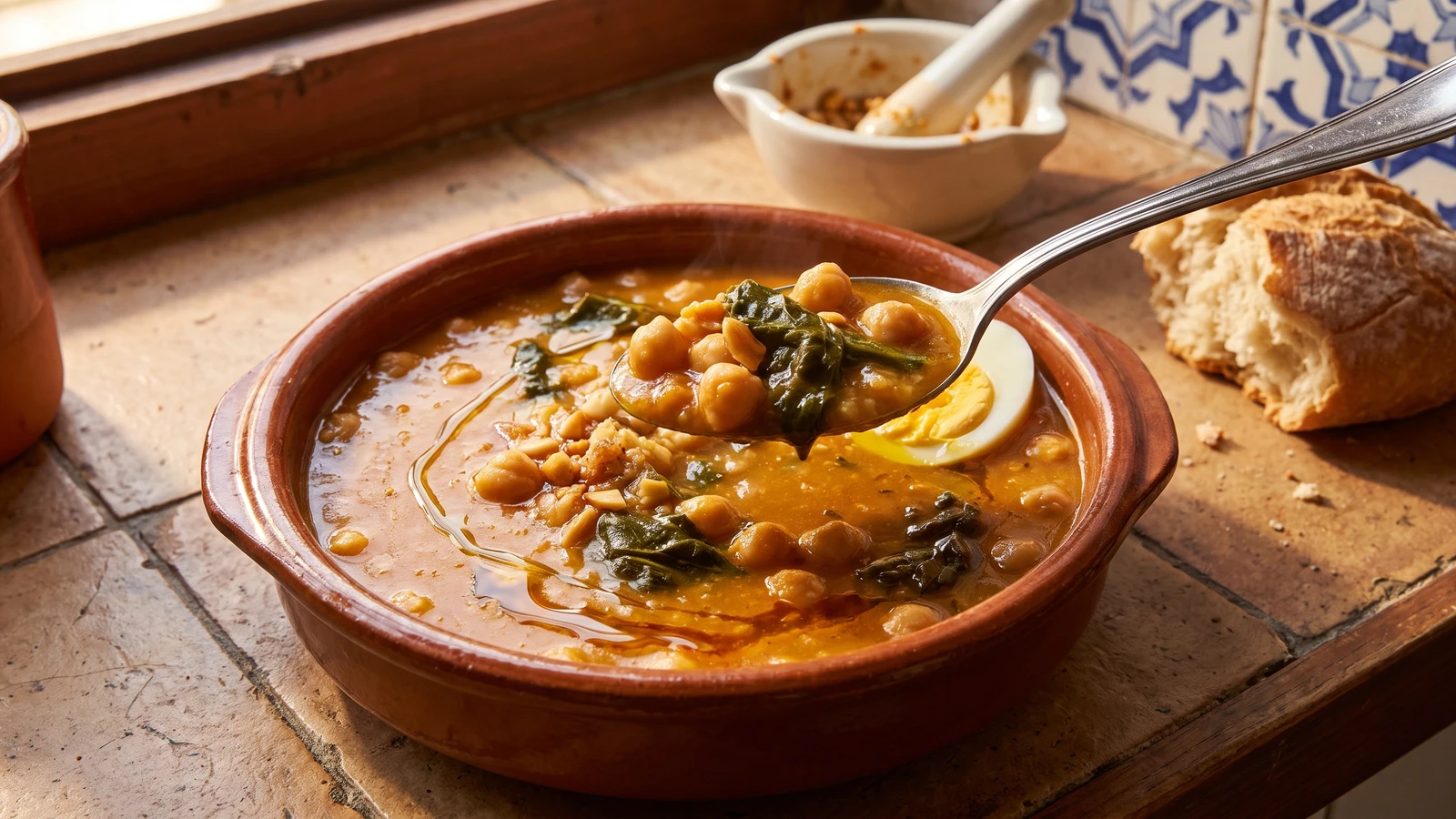
This Andalusian and Manchego chickpea potaje is cocina de cuchara, spoon food: tender garbanzos, chard, slow sofrito, and a fried bread and almond picada that thickens the broth.
Potaje de garbanzos con acelgas belongs to the kitchens of Andalucía and Castilla-La Mancha, especially when Lent asks for a full pot without meat. Chickpeas, chard, onion, tomato, pimentón, and a picada, the pounded thickener of fried bread, almonds, and garlic. That picada is what makes the broth taste held together instead of thin. No cream. Cream would be the wrong answer in the right pot.
The method that decides it is not difficult, but it asks you to stay with the pan. Cook the sofrito, the slow onion and tomato base, until the tomato has lost its raw edge and the oil begins to show at the sides. Then fry the bread, almonds, and garlic gently, pound them with cumin and pimentón, and stir that paste into the chickpeas. It thickens by patience and starch, tal como se hace allí.
If you can't find Spanish garbanzos where you are, use good dried chickpeas from a shop with quick turnover. Canned chickpeas are allowed on a tired Tuesday, and I'll tell you what changes: the broth will be lighter, so simmer the picada a little longer and don't drown the pot. For the greens, chard is the dish here, but spinach is the nearest kitchen substitute and cooks faster. Siempre sale, si lo sigues.
Potajes de vigilia, the meatless stews of Lent and Holy Week, are part of the inland and southern Spanish table, especially across Andalucía and Castilla-La Mancha where chickpeas, greens, bread, garlic, and oil could feed a household without touching the meat larder. Chard and spinach both appear in these pots, depending on the market and the town, while fried bread or almonds are used to thicken the broth in the old practical way. The dish belongs to cocina de cuchara, spoon food, built for abstinence but good enough to outlive the fast.
Quantity
400g
soaked overnight in plenty of cold water
Quantity
1
Quantity
1
peeled and halved, for cooking the chickpeas
Quantity
1
peeled and halved
Quantity
1 teaspoon, plus more to taste
Quantity
60ml
Quantity
1
finely chopped
Quantity
1
finely chopped
Quantity
3
2 sliced and 1 left whole
Quantity
2
grated
Quantity
250g
Quantity
1 teaspoon
Quantity
1/4 teaspoon
Quantity
1/2 teaspoon
Quantity
1 pinch
Quantity
500g
stems chopped and leaves sliced
Quantity
40g
cut into small pieces
Quantity
35g
Quantity
1 tablespoon
Quantity
2
quartered
Quantity
to finish
| Ingredient | Quantity |
|---|---|
| dried chickpeassoaked overnight in plenty of cold water | 400g |
| bay leaf | 1 |
| small onionpeeled and halved, for cooking the chickpeas | 1 |
| carrotpeeled and halved | 1 |
| fine salt | 1 teaspoon, plus more to taste |
| extra virgin olive oil | 60ml |
| large onionfinely chopped | 1 |
| green pepperfinely chopped | 1 |
| garlic cloves2 sliced and 1 left whole | 3 |
| ripe tomatoesgrated | 2 |
| canned crushed tomato (optional) | 250g |
| sweet pimentón de la Vera | 1 teaspoon |
| hot pimentón (optional) | 1/4 teaspoon |
| ground cumin | 1/2 teaspoon |
| saffron threads (optional) | 1 pinch |
| chardstems chopped and leaves sliced | 500g |
| day-old country breadcut into small pieces | 40g |
| blanched almonds | 35g |
| vinagre de Jerez | 1 tablespoon |
| hard-boiled eggs (optional)quartered | 2 |
| extra virgin olive oil (optional) | to finish |
Drain the soaked chickpeas and put them in a heavy pot with the bay leaf, halved onion, carrot, and enough fresh water to cover by 4cm. Bring to a boil, skim the foam, then lower the heat and simmer gently until the chickpeas are tender but still whole, about 1 hour 30 minutes to 2 hours. Salt them in the last 20 minutes, not at the start. Keep 1 litre of the cooking liquid and discard the onion, carrot, and bay leaf.
Warm 45ml of the olive oil in a wide cazuela or heavy pot. Add the chopped onion, green pepper, and the 2 sliced garlic cloves with a pinch of salt. Cook low and steady for 12 to 15 minutes, until the onion is soft and dark gold. Add the grated tomato and cook another 10 minutes, until it thickens and the oil begins to show at the edge. This slow sofrito is where the sweetness comes from; rush it and the pot tastes thin.
Add the chopped chard stems to the sofrito and cook 5 minutes, then add the sliced leaves in handfuls until they collapse. Stir in the cooked chickpeas and 750ml of their cooking liquid. Bring the pot to a quiet simmer and let it cook 10 minutes so the greens and chickpeas begin to taste like one dish.
In a small frying pan, warm the remaining 15ml olive oil. Fry the bread, almonds, and the whole garlic clove over medium-low heat until the bread is golden and the almonds smell toasted, 3 to 4 minutes. Take the pan off the heat and add the sweet pimentón, hot pimentón if using, cumin, and saffron. Scrape everything into a mortar or small processor with the sherry vinegar and 3 tablespoons of chickpea cooking liquid, then pound or blend to a rough paste.
Stir the picada into the pot, rinsing the mortar with a ladle of broth so nothing is wasted. Simmer gently for 15 to 20 minutes, uncovered, until the broth turns lightly thick and brick-gold from the pimentón. Stir from the bottom now and then so the bread does not catch. If it gets too thick, loosen it with a splash of the reserved chickpea liquid.
Taste for salt and let the potaje rest off the heat for 10 minutes. Spoon it into deep bowls with a quarter of hard-boiled egg if you like, and finish with a thin thread of olive oil. It should be brothy enough for a spoon, thick enough that the chickpeas don't look lost.
1 serving (about 480g)
Culinary guides, cultural storytelling, and the editorial depth that makes cooking meaningful.
Discover Culinary ExplorerChef Isabel
Aguaillo is from the Sierra de Cadiz: cold water, stale bread, garlic, oil and vinegar, closer to a field drink than a bowl of soup, and sharp enough to wake you in the heat.

Chef Isabel
Ajilimojili is Jaen's tomato-free cold soup: potato, roasted red pepper, garlic, olive oil, and vinegar pounded into a cool, silky spoonful.

Chef Isabel
Ajo carretero is Soriano, from the pine country of Soria: lamb cooked in a plain garlicky broth, then served the old way, meat first and bread-soaked soup after.

Chef Isabel
Ajoblanco Extremeño is the poor-kitchen cold soup of Extremadura: bread, garlic, oil, egg yolk, vinegar, and icy water, with no almonds. Whisk it slowly and serve it bien fresquito.