Chef Makoa
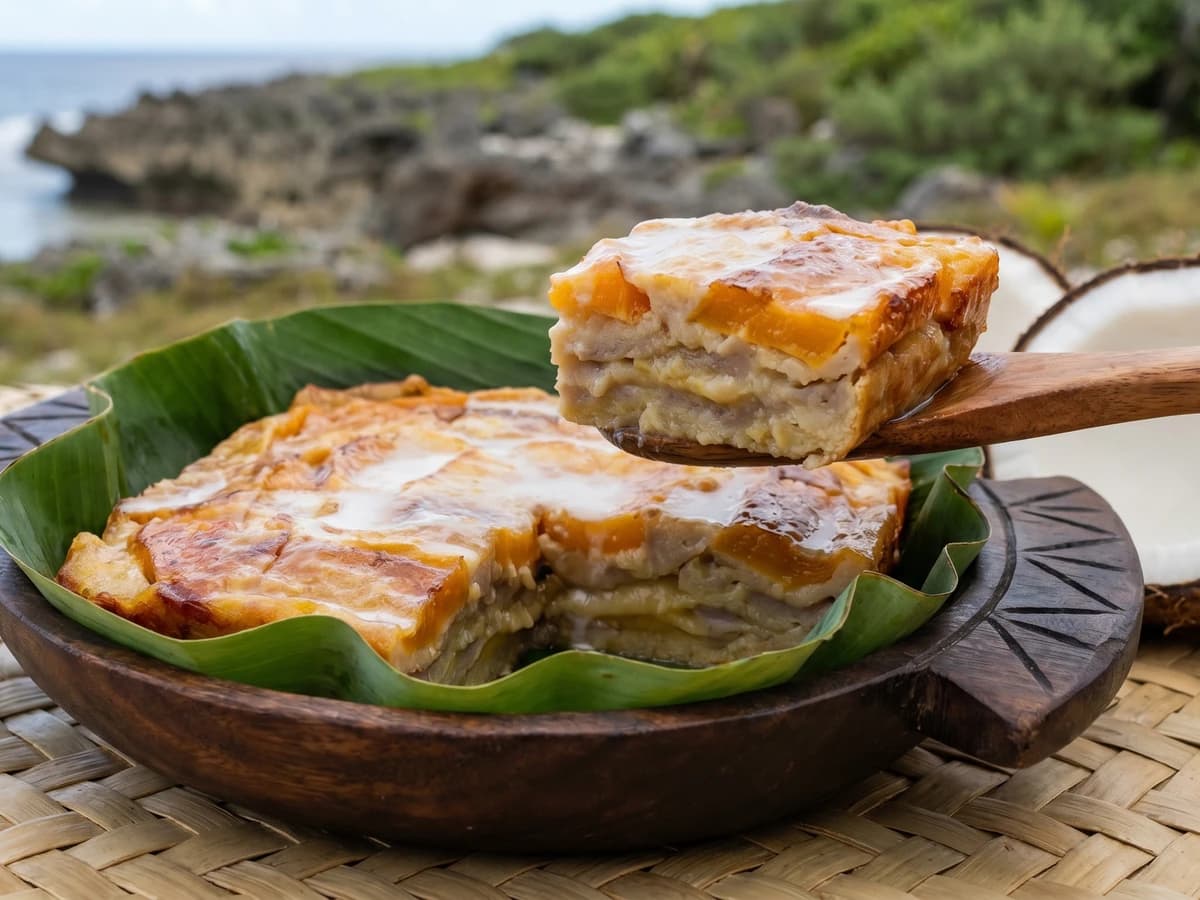
Takihi (Niuean Taro and Pawpaw Bake)
Niue's takihi layers the elder taro with ripe pawpaw and coconut cream, then bakes it slow until the starch softens, the fruit melts, and the whole pan turns glossy and gentle.
A cooking platform built around craft, culture, and the stories behind what we eat.
Created by
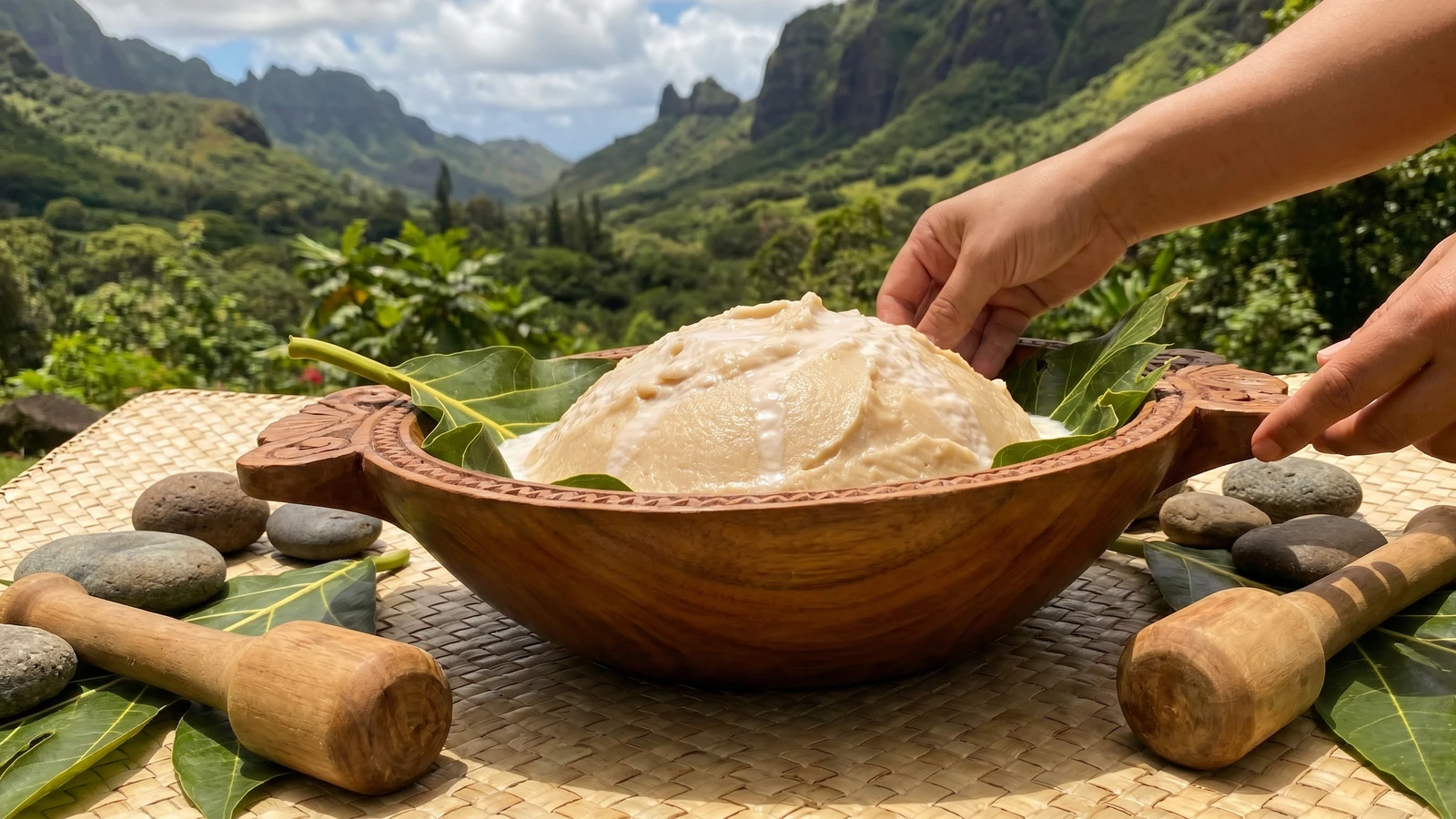
Marquesan popoi starts as mā, breadfruit kept sour in the old pit tradition, then pounded smooth with coconut cream until it sits soft, tangy, and ready for the whole table.
The canoe did not carry groceries. It carried relatives: kalo, ʻulu, mei, niu, the food that could take root when the people found land again. This popoi belongs to the Marquesas, Te Henua ʻEnana / Te Fenua ʻEnata, one name for the Marquesan homeland, where mei, breadfruit, is kept as mā, sour preserved breadfruit, then pounded into popoi, the soft daily paste that sits at the meal like a quiet elder.
This is not my Hawaiian poi, and I no pretend it is. Back home we sit with Hāloa at the papa kuʻi ʻai, the poi-pounding board, and pound kalo into paʻiʻai and poi. In the Marquesas the hand is different: breadfruit feeds the valley, fermentation keeps the season from running away, and the sourness tells you the food is alive in the old keeping way. Tahiti has its poʻe and ʻuru, the Cooks work their kuru, and the atolls keep breadfruit against thin soil and hard weather. Same ocean, different bowls.
The first spoonful can surprise you if you were raised on sweet breadfruit. Popoi has tang. It leans sour, earthy, a little fruity, and that is the point, not a fault. The old people were not throwing away fruit gone bad. They were answering scarcity with knowledge. We no throw out good food.
For a home kitchen, I teach a small, clean batch, not the deep family pit. We steam the fruit, salt it by weight, let a clean souring take hold, then pound it slow with coconut cream until it shines. For the old months-long mā, go sit with Marquesan elders. I can keep the bowl respectful and set the table wide enough.
In the Marquesas, breadfruit was a staple crop in valleys like Taipivai on Nuku Hiva and Atuona on Hiva Oa, and surplus mei was packed into leaf-lined pits as mā so the harvest could feed people after the fresh season passed. Herman Melville, after his 1842 stay in Taipivai, wrote in Typee in 1846 about the daily centrality of breadfruit and popoi, though his visitor's eye could not carry the whole meaning the Marquesan people held. The practice sits with wider Triangle storage wisdom: Hawaiian poi and Tahitian poʻe are pounded-starch cousins, while the atolls kept fermented breadfruit and pulaka because preservation is the island answer to scarcity.
Quantity
2 medium, about 4 to 5 pounds total
or 3 pounds frozen peeled breadfruit chunks
Quantity
2% of cooked breadfruit weight
about 18 grams per 2 pounds cooked flesh
Quantity
2 to 3 tablespoons
Quantity
1/2 cup
as needed
Quantity
1/2 to 1 cup
plus more for serving
Quantity
as needed
for lining the steamer and bowl
| Ingredient | Quantity |
|---|---|
| mature breadfruit (mei)or 3 pounds frozen peeled breadfruit chunks | 2 medium, about 4 to 5 pounds total |
| non-iodized sea saltabout 18 grams per 2 pounds cooked flesh | 2% of cooked breadfruit weight |
| active brine from a previous clean breadfruit ferment or other live lacto-ferment | 2 to 3 tablespoons |
| boiled and cooled water or fresh coconut wateras needed | 1/2 cup |
| fresh coconut creamplus more for serving | 1/2 to 1 cup |
| banana leaves or breadfruit leaves (optional)for lining the steamer and bowl | as needed |
Choose mature breadfruit, mei in the Marquesas, that feels heavy and full, with green skin just beginning to yellow and a little give under your thumb. Too young and it stays hard and plain. Too ripe and sweet, and the ferment runs away from the old sour-starch taste. If the fruit bleeds sticky latex, oil your hands lightly and keep going. Eat what you have, but know what stage you are holding.
Halve or quarter the breadfruit, set it cut-side down in a leaf-lined steamer if you have leaves, and steam 45 to 60 minutes, until a skewer slides through the heart with no fight. Let it cool just enough to handle, then pull away the skin and core. The flesh should break apart in warm, starchy chunks, dry enough to mound but soft enough to mash.
Weigh the cooked breadfruit flesh. Add non-iodized sea salt at 2% of that weight, then mash it in with the live brine and just enough boiled and cooled water or coconut water to make a thick, packable paste. This salt-and-starter step is the clean kitchen stand-in, not the full old pit. The point is to help the souring take hold fast and honest.
Pack the paste hard into a clean 2-quart jar or small crock, pressing out air pockets as you go. Smooth the top, lay a clean piece of banana leaf, breadfruit leaf, or parchment directly on the surface, then set a fermentation weight on top. Close with an airlock lid, or use a loose lid and burp it daily so gas can escape. Keep it at 75F to 82F for 3 to 7 days.
Start checking on day 3. The mā should smell sharp, fruity, and clean, with a deep sour breadfruit aroma, not rotten, not solvent-like, not moldy. The safest mark is pH 4.2 or lower. If it has fuzzy growth, pink or orange streaks, a putrid smell, or the pH has not dropped after several days, discard it. We no throw out good food, but unsafe ferment is not good food.
Scoop the sour mā into a wide bowl. Pound or mash it slow, adding coconut cream a spoonful at a time, then a little water or coconut water only if it needs loosening. You are looking for a soft, cohesive paste with a satin sheen, tangy and mellow, thick enough to hold ridges from the pounder. No rush this part. Pounded starch teaches patience, from Marquesan popoi to Hawaiian poi to Tahitian poʻe.
Serve the popoi at room temperature with a thin pour of coconut cream over the top, family-style, beside fish, pork, greens, or whatever the table has that day. On a weeknight it can sit next to tinned fish or leftovers and still be treated with respect. Deep food is not precious. It is steady. It feeds people.
1 serving (about 180g)
Culinary guides, cultural storytelling, and the editorial depth that makes cooking meaningful.
Discover Culinary ExplorerChef Makoa
Niue's takihi layers the elder taro with ripe pawpaw and coconut cream, then bakes it slow until the starch softens, the fruit melts, and the whole pan turns glossy and gentle.
Chef Makoa
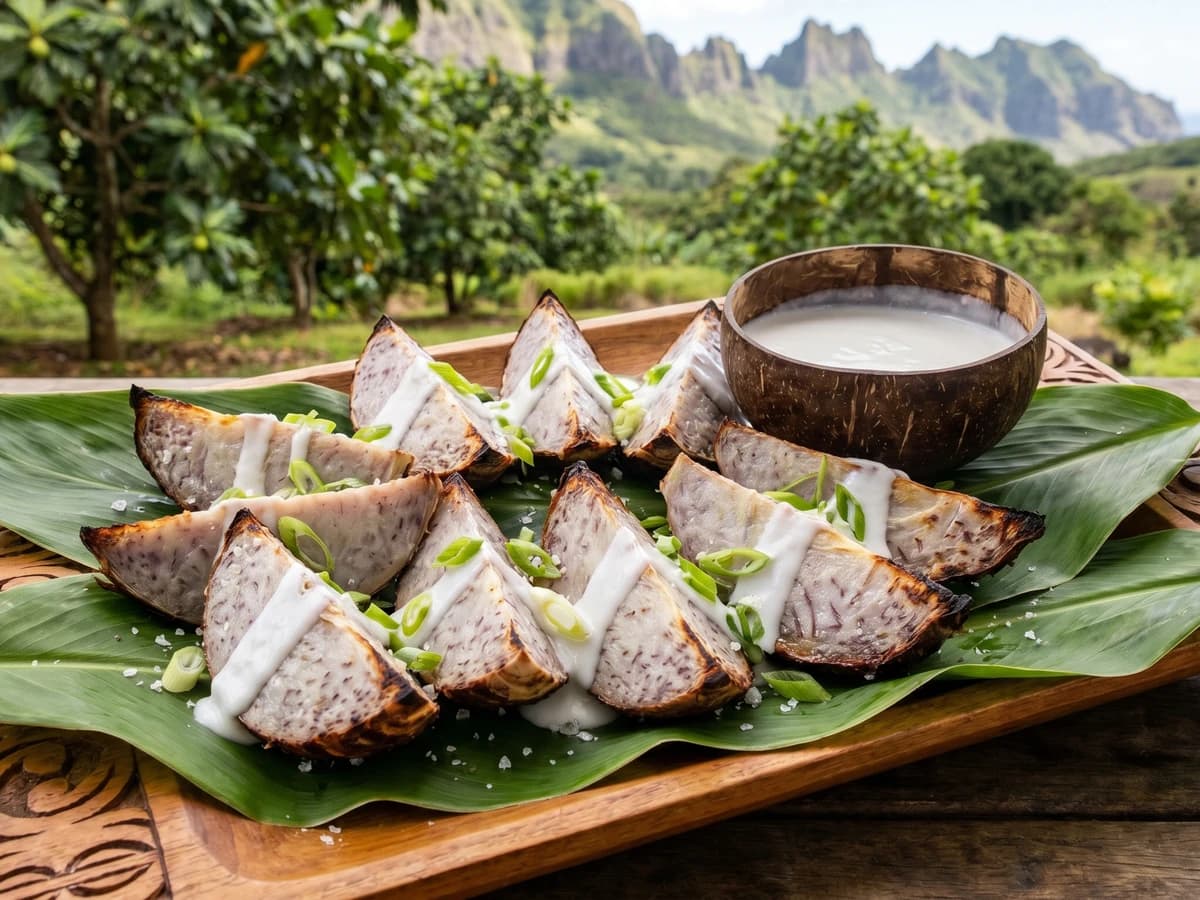
Whole taro roasted firm the Marquesan way, peeled warm, salted simply, and served beside fish with fresh miti haari, the coconut sauce that keeps the table generous.
Chef Makoa
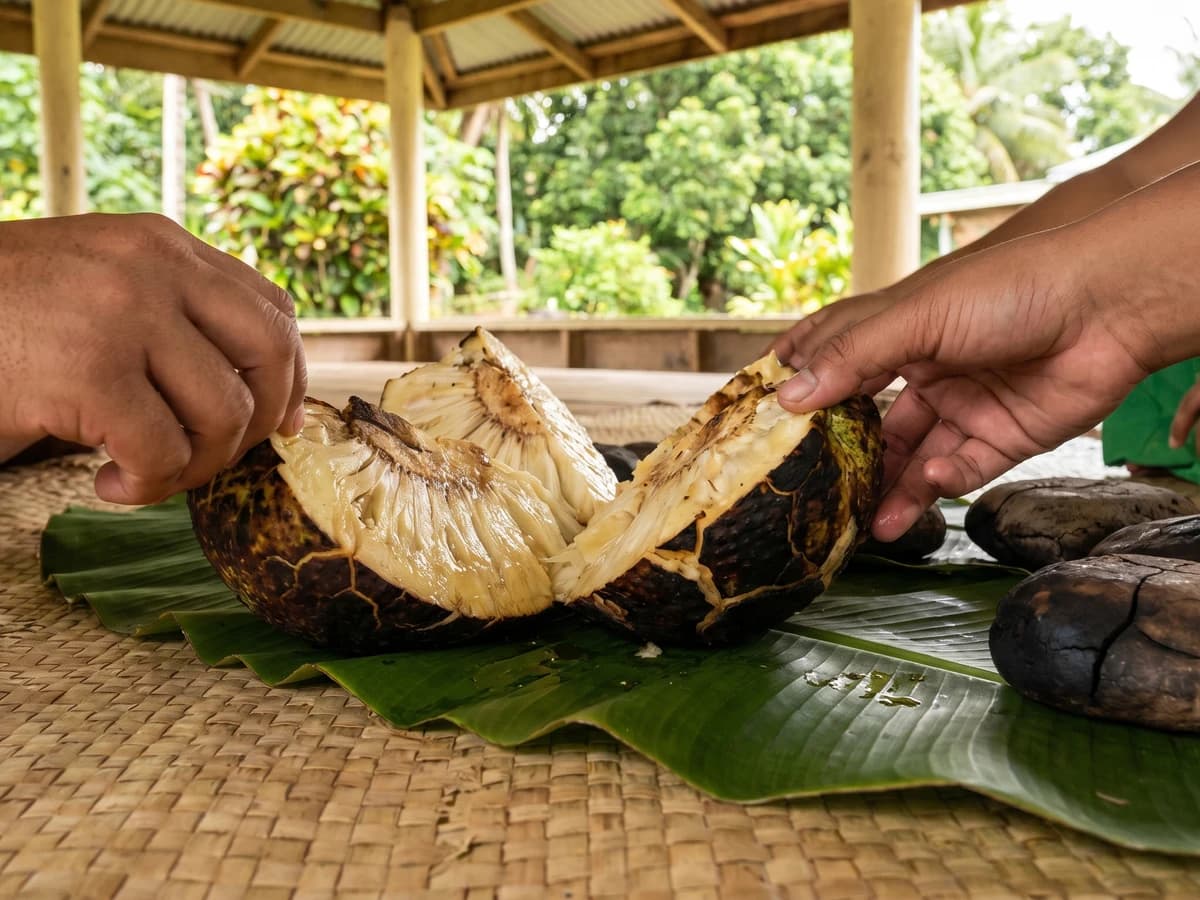
Whole Sāmoan ʻulu cooked in the umu until the skin chars black and the flesh goes golden and soft. One ocean, one canoe, one root, brought home to the table.
Chef Juliette
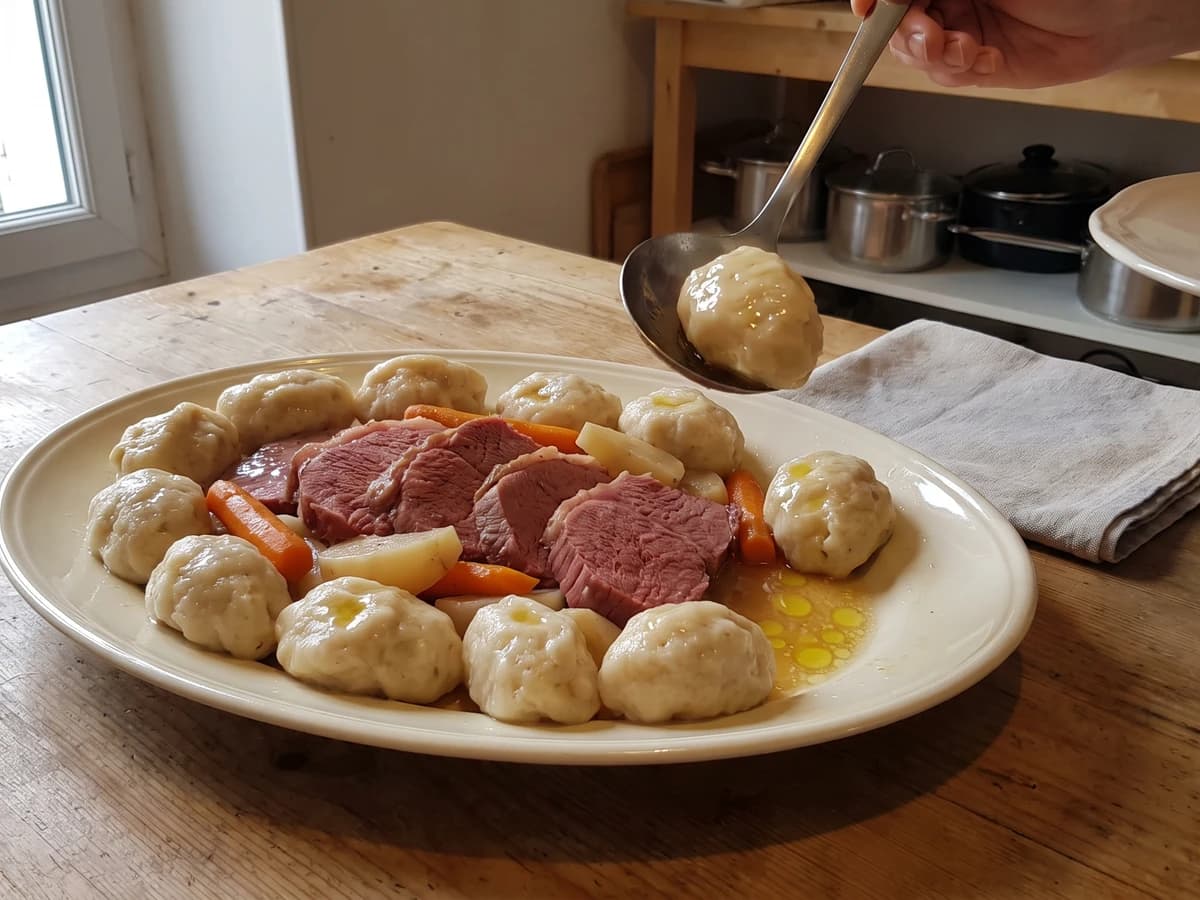
Boulettes au suif, poached beside salt beef, turn equal weights of flour and finely chopped suet into tender, rich dumplings. Keep the beef liquor at a bare tremble and the old garnish works beautifully at home.