
Chef Lupita
Alegrías Queretanas de Amaranto y Piloncillo
Querétaro's mercado candy of popped amaranto pressed with dark piloncillo syrup, pepitas, pecans, and cacahuate, a Bajío sweet that respects the seed before it decorates the table.
A cooking platform built around craft, culture, and the stories behind what we eat.
Created by
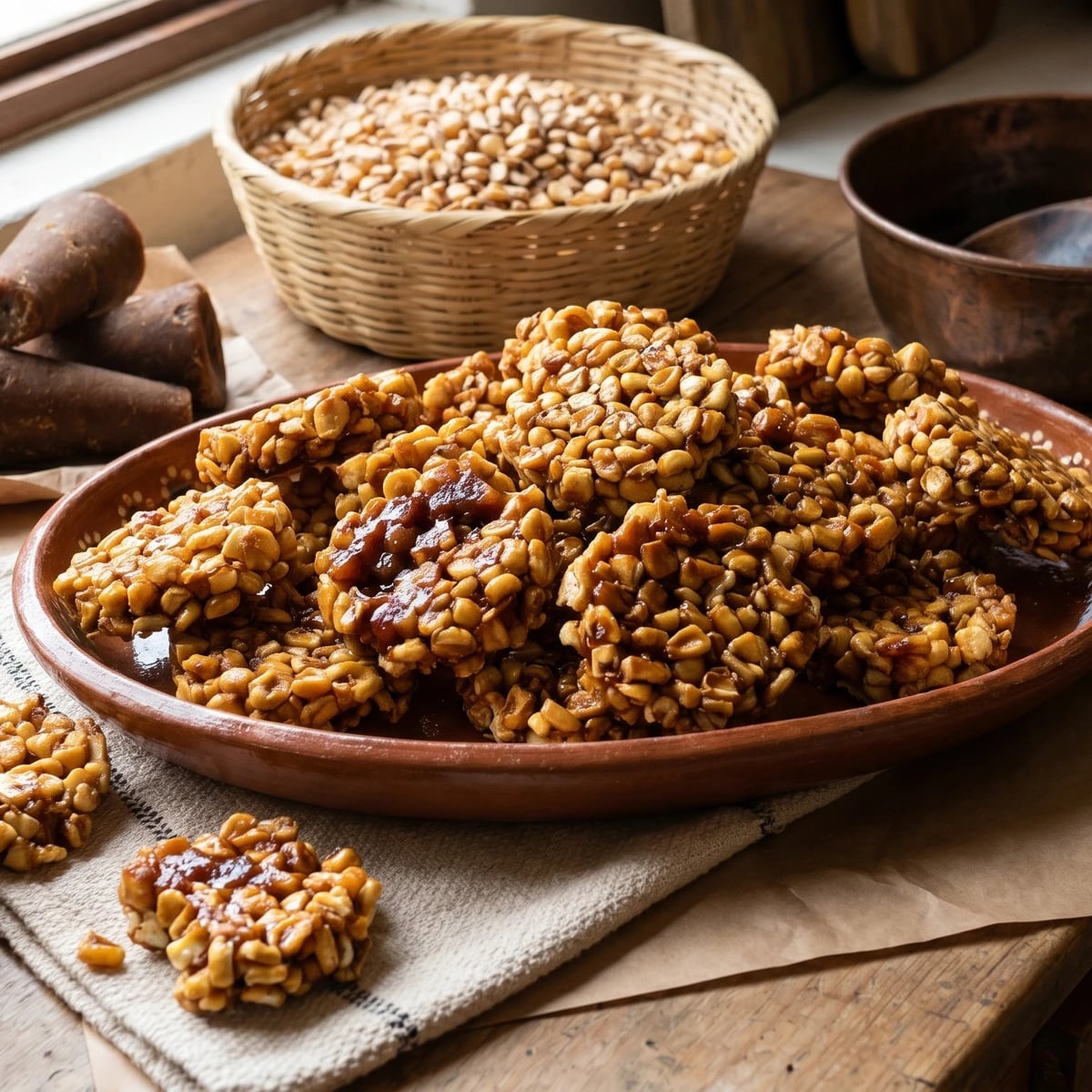
San Luis Potosí's market candy of toasted criollo corn and dark piloncillo, cooked to the hard-ball point and pressed into rough clusters for ferias, holidays, and lean kitchens.
San Luis Potosí, especially the Altiplano and the market sweets of the capital, is where ponteduro belongs. This is not a glossy dulcería candy. It is maíz tostado held together with piloncillo, sold in rough lumps at ferias, carried home in paper, eaten with coffee or atole when the budget is tight and the house still needs something sweet.
The ingredient that defines it is maíz palomero criollo, also called maíz reventador, not cereal from a box. It pops small, toasts hard, and keeps the flavor of corn under the cane syrup. Piloncillo oscuro gives the candy its brown shine, that smell of trapiche and canela. Use brown sugar and the flavor goes flat. Así se hace y punto.
I learned the rhythm from a señora who worked near Mercado González Ortega: one hand on the cazo, one eye on the bubbles, no panic when the syrup starts to thicken. The point is punto de bola dura. Too soft and the clusters slump. Too hard and you punish the teeth. This is maíz, panela, paciencia. Saber cocinar es saber vivir.
Ponteduro preserves an older Mesoamerican habit of eating toasted maize as a portable sweet, originally bound with miel de maguey or native bee honey before cane sugar entered New Spain. Piloncillo arrived after Spanish colonists established sugar-cane trapiches in the 16th century, and the cone-shaped sugar became the practical binder for candies sold at fairs and market stalls across San Luis Potosí. In the potosino version, the geography matters: dry Altiplano maize meets the cane-sugar economy of warmer regions that connect the state to the Huasteca and the Bajío.
Quantity
2/3 cup
picked over
Quantity
1 tablespoon
for popping the maize
Quantity
12 ounces
chopped
Quantity
3/4 cup
Quantity
1 stick, about 3 inches
Quantity
1/2 teaspoon
Quantity
1 teaspoon
| Ingredient | Quantity |
|---|---|
| maíz palomero criollo (maíz reventador)picked over | 2/3 cup |
| aceite de maízfor popping the maize | 1 tablespoon |
| piloncillo oscurochopped | 12 ounces |
| water | 3/4 cup |
| Mexican cinnamon stick (canela mexicana) | 1 stick, about 3 inches |
| fine sea salt | 1/2 teaspoon |
| fresh lime juice | 1 teaspoon |
Line a sheet pan with dried corn husks, totomoxtle, or wax paper. Set two metal spoons and a small bowl of water next to the stove. Ponteduro waits for nobody once the syrup reaches its point. Have the landing ready before you touch the piloncillo.
Heat a wide heavy pot or cazo over medium-high. Add the aceite de maíz and the maíz palomero criollo. Cover and shake constantly until the kernels pop small and uneven, 3 to 5 minutes. Criollo maize does not open like movie-theater popcorn. It opens tighter, with more chew and more corn flavor. That is what you want.
Spread the popped maize on a dry comal or heavy skillet over medium heat. Toast for 3 to 4 minutes, stirring often, until the pale kernels take on a light golden edge and smell nutty. This second toasting is why ponteduro tastes like maíz, not just sugar. Do not walk away.
Combine the chopped piloncillo, water, canela, salt, and lime juice in a copper cazo or heavy saucepan. Bring to a simmer over medium heat, stirring until the piloncillo dissolves completely. If the piloncillo leaves grit, strain the syrup through a fine sieve and return it to the cazo. Market piloncillo is real cane sugar, not factory perfume. Sometimes it carries a little earth with it.
Boil the piloncillo syrup without stirring until it reaches 250F to 255F, the hard-ball point. If you do not have a thermometer, drop a little syrup into cold water. It should form a firm ball that holds its shape but still bends before it snaps. The bubbles will slow down and look thick, and the smell will move from raw cane to deep caramel and canela. Too soft and the clusters sag. Too hard and you punish the teeth.
Remove the canela stick. Add the toasted maize to the hot syrup all at once and fold fast with a wooden spoon until every kernel is coated. Work from the bottom of the cazo and turn the maize over itself. You should see amber threads of piloncillo pulling between the kernels. That is the binder. No me vengas con atajos.
While the mixture is still hot but manageable, use two lightly damp spoons to scoop rough clusters onto the prepared tray. Press each one just enough to hold together. Do not compact them into stones. Ponteduro should be firm, irregular, and generous, the kind of candy sold by weight on butcher paper at a feria table.
Let the clusters cool completely, about 20 minutes. They should lift cleanly from the husks or paper and hold their shape without sticking to your fingers. Store in a glass jar or tin at room temperature for up to 10 days. Do not refrigerate them. Humidity is the enemy of sugar work, and San Luis Potosí cooks know to make this on a dry day when they can.
1 serving (about 25g)
Culinary guides, cultural storytelling, and the editorial depth that makes cooking meaningful.
Discover Culinary Explorer
Chef Lupita
Querétaro's mercado candy of popped amaranto pressed with dark piloncillo syrup, pepitas, pecans, and cacahuate, a Bajío sweet that respects the seed before it decorates the table.

Chef Lupita
Guanajuato's Day of the Dead alfeñiques are cane-sugar figures pressed in dry molds, finished with bright icing, and set on Talavera guanajuatense platones for the altar.

Chef Lupita
Guanajuato's Bajio rice pudding, slow-cooked with piloncillo, leche de cabra, canela, and orange peel until the milk thickens into something dark, practical, and unmistakably regional.

Chef Lupita
Aguascalientes's Calvillo guava paste, cooked in a copper cazo until the fruit and cane sugar tighten into a firm slab, then sliced thick beside queso fresco de rancho.