
Chef Lupita
Almendrados Conventuales Poblanos
Puebla's convent almond cookies, made from blanched almonds, sugar syrup, egg yolks, canela, and patient hands, the kind of sweet that belongs beside coffee in talavera, not in a plastic bakery box.
A cooking platform built around craft, culture, and the stories behind what we eat.
Created by
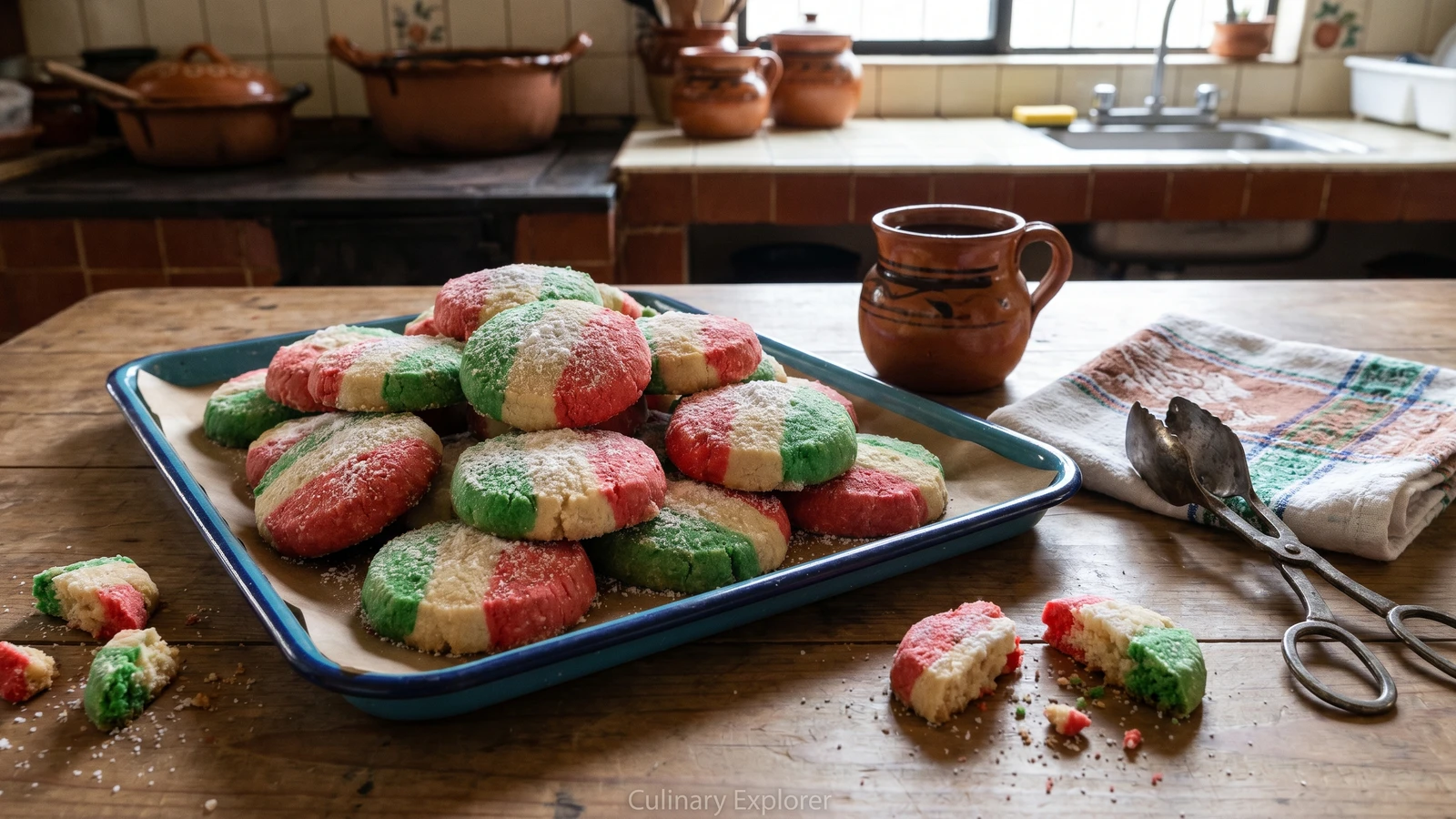
Ciudad de Mexico's panaderia polvorones, crumbly rounds of manteca shortbread pressed in red, white, and green, the kind bought by the quarter kilo for merienda and Christmas tables.
Ciudad de Mexico, especially the old panaderias around Centro, La Merced, and the neighborhoods where bread is still bought by weight, is where these polvorones tricolor live most honestly. They are not fancy cookies. They are panaderia cookies: crumbly, generous, sweet enough, and colored like the flag because Mexican bakers know how to make even a merienda carry a little ceremony.
The ingredient that matters is manteca de cerdo. Not butter first. Not margarine. Manteca gives the cookie its dry, sandy crumble, the way it breaks under your teeth and then melts. Butter adds flavor, yes, so I use a little, but the structure belongs to the lard. La manteca es el sabor, even in pastry. People act surprised that Mexican baking uses pork fat. Preguntale a las senoras del mercado. They have known this longer than food magazines have been afraid of it.
The technique is restraint. You do not beat this dough until it is fluffy like cake batter. You cream the fat and sugar just enough, work in the flour until the dough holds, then divide it into three colors and press them together without overworking. Overmix and the polvoron turns tough. Bake until set, not browned. The white stripe should stay pale. The red and green should look like panaderia sugar, not a traffic light.
My mother bought cookies like these in paper bags on the walk back from the market in Colonia Roma. She didn't call them dessert. They were for cafe, for children after school, for the table when someone came by without warning. Saber cocinar es saber vivir, and knowing how to make a cookie that keeps for days is household intelligence.
Polvorones descend from Spanish shortbread traditions brought to Mexico during the colonial period, especially from Andalusian sweets made with lard and wheat flour. In Mexico, panaderias adapted the form into everyday bakery cookies sold by weight, and the red, white, and green version became tied to civic holidays, Christmas trays, and the visual language of the Mexican flag. Unlike wedding-style nut cookies, Mexican panaderia polvorones are usually plainer, larger, and built for coffee, hot chocolate, or atole.
Quantity
1/2 cup
room temperature
Quantity
1/4 cup
room temperature
Quantity
3/4 cup
sifted
Quantity
1
Quantity
2 teaspoons
Quantity
2 1/4 cups
Quantity
1/2 cup
Quantity
1/2 teaspoon
Quantity
1/2 teaspoon
Quantity
1/3 cup
divided for coating the colored dough
Quantity
as needed
Quantity
as needed
Quantity
2 tablespoons
for dusting after baking
| Ingredient | Quantity |
|---|---|
| manteca de cerdoroom temperature | 1/2 cup |
| unsalted butterroom temperature | 1/4 cup |
| powdered sugarsifted | 3/4 cup |
| large egg yolk | 1 |
| Mexican vanilla extract | 2 teaspoons |
| all-purpose flour | 2 1/4 cups |
| cornstarch | 1/2 cup |
| fine sea salt | 1/2 teaspoon |
| baking powder | 1/2 teaspoon |
| granulated sugardivided for coating the colored dough | 1/3 cup |
| red gel food coloring | as needed |
| green gel food coloring | as needed |
| powdered sugar (optional)for dusting after baking | 2 tablespoons |
Line two baking sheets with parchment. Heat the oven to 325F. Polvorones bake low because you want them set and crumbly, not browned like galletas de mantequilla. If the bottoms go dark, the flavor turns harsh.
Beat the manteca de cerdo, butter, and sifted powdered sugar until smooth and pale, about 2 minutes by mixer or 4 minutes by hand with a wooden spoon. Do not whip it like frosting. This cookie needs tenderness, not air. Add the egg yolk and Mexican vanilla and mix until just combined.
Whisk the flour, cornstarch, salt, and baking powder in a separate bowl. Add the dry mixture to the fat mixture in two additions, mixing only until the dough comes together in soft clumps. It should feel sandy but hold when pressed in your palm. That texture is correct. No me vengas con atajos.
Divide the dough into three equal portions. Leave one plain. Knead a small amount of red gel coloring into one portion and green gel coloring into another. Use your fingertips and stop as soon as the color is even. Overworking the dough wakes up the gluten, and then the cookie loses the delicate crumble that makes it a polvoron.
Roll each color into a rope about 12 inches long. Lay the green, plain, and red ropes side by side, pressing gently so they touch without smearing. Roll the joined dough once or twice to make a single thick log with three visible stripes. Wrap and chill for 30 minutes, until firm enough to slice cleanly.
Cut the chilled log into 1/2-inch rounds with a sharp knife. Put the granulated sugar in a shallow plate and press each cookie lightly into the sugar on both sides. Set them 1 inch apart on the prepared trays. They spread only a little, if you respected the dough.
Bake for 16 to 18 minutes, rotating the trays halfway through. The tops should look dry and set, with the white stripe still pale. The bottoms may be barely golden. Do not wait for color on top. By then you have overbaked them. Asi se hace y punto.
Let the polvorones cool on the tray for 10 minutes before moving them. Hot polvorones break if you stare at them too hard. Once firm, transfer to a rack and dust lightly with powdered sugar if you want the panaderia finish. Serve with cafe de olla, atole de vainilla, or hot chocolate.
1 serving (about 27g)
Culinary guides, cultural storytelling, and the editorial depth that makes cooking meaningful.
Discover Culinary ExplorerChef Lupita
Puebla's convent almond cookies, made from blanched almonds, sugar syrup, egg yolks, canela, and patient hands, the kind of sweet that belongs beside coffee in talavera, not in a plastic bakery box.

Chef Lupita
Ciudad de Mexico's panaderia banderillas are long sticks of hojaldre pressed with sugar, baked until amber, and finished with a hard glaze for coffee at the kitchen table.

Chef Lupita
Mérida's pale egg-yolk-and-vanilla kisses, tiny cookies built on eight yolks and a perfume of orange blossom, sandwiched with guava paste and dusted heavy with powdered sugar.

Chef Lupita
Hidalgo's bisquet de nata carries Pachuca's mining history into the breakfast table: a Cornish-style bread softened by Mexican nata, split warm and eaten with café de olla.