
Chef Lupita
Buñuelos Tabasqueños
Tabasco's posada-season buñuelos are thin rectangular wheat pastries fried until blistered, then finished with canela sugar or a dark miel de piloncillo that belongs on the holiday table.
A cooking platform built around craft, culture, and the stories behind what we eat.
Created by
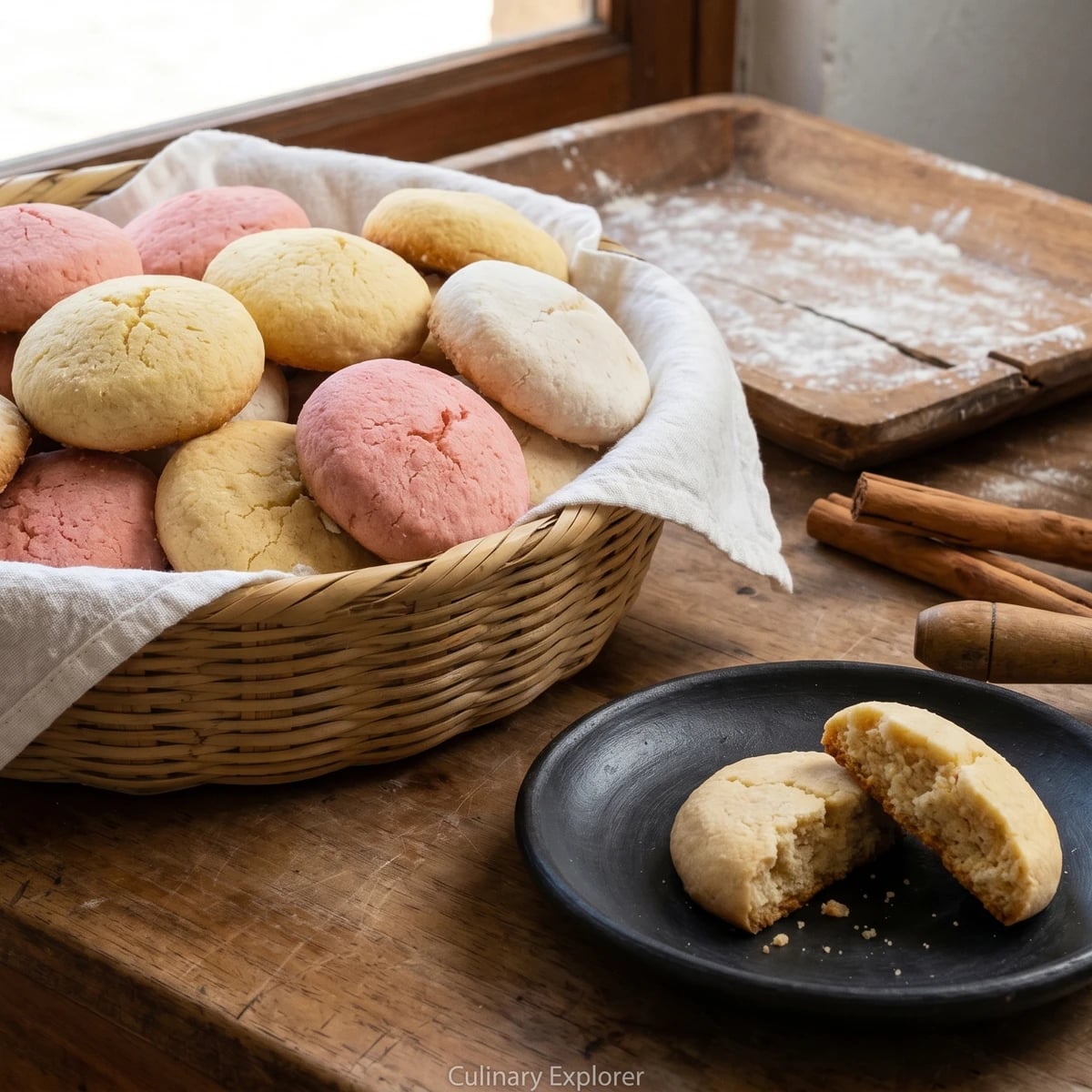
Highland Chiapas polvorones, crumbly wheat cookies worked with manteca de cerdo, sugar, and canela, sold in pink, yellow, and white rows in San Cristobal dulcerias.
Chiapas, Los Altos first. San Cristobal de las Casas is where these polvorones sit in dulcerias by color, pale yellow, soft pink, white, stacked on cracked wooden trays beside turuletes and suspiros. This is not a chile dish. Not all Mexican food is chile and lime. Cada estado, su propia cocina.
The cookie depends on wheat flour and manteca de cerdo. That highland wheat tradition came through convent kitchens, bakeries, and market ovens, then the señoras made it practical: flour, fat, sugar, canela, the dough pressed by hand until it holds together but still breaks into sandy crumbs under your teeth. La manteca es el sabor. Use butter and you'll get another cookie.
I learned this version from a woman near the dulcerias off Real de Guadalupe who pinched the dough in her palm and told me, "if it shines, you worked it enough." She was right. The dough should feel soft, greasy in the honest way, and barely obedient. No me vengas con atajos. Polvoron means it must crumble. That is the point.
Polvorones descend from Spanish shortbread cookies brought into colonial Mexico, where wheat flour, sugar, and animal fat entered regional convent and bakery traditions. In Chiapas, especially in the highland bakery culture around San Cristobal de las Casas and Comitan, these cookies became mercado sweets sold by color rather than by elaborate decoration. The use of manteca de cerdo reflects the practical fat of household baking before industrial shortening changed many panaderia recipes in the 20th century.
Quantity
3 cups
plus more for dusting
Quantity
1 cup
at room temperature
Quantity
3/4 cup
Quantity
1/4 cup
Quantity
2
at room temperature
Quantity
1 teaspoon
Quantity
1 teaspoon
Quantity
1/2 teaspoon
Quantity
1/2 teaspoon
Quantity
1 tablespoon
only if the dough will not hold together
Quantity
a few drops
for pink polvorones
Quantity
a few drops
for yellow polvorones
| Ingredient | Quantity |
|---|---|
| all-purpose wheat flourplus more for dusting | 3 cups |
| pork lard (manteca de cerdo)at room temperature | 1 cup |
| granulated sugar | 3/4 cup |
| powdered sugar | 1/4 cup |
| large egg yolksat room temperature | 2 |
| Mexican vanilla extract | 1 teaspoon |
| ground Mexican canela | 1 teaspoon |
| baking powder | 1/2 teaspoon |
| fine sea salt | 1/2 teaspoon |
| milk (optional)only if the dough will not hold together | 1 tablespoon |
| red food coloring (optional)for pink polvorones | a few drops |
| yellow food coloring (optional)for yellow polvorones | a few drops |
Place the room-temperature manteca de cerdo in a large bowl. Beat it with a wooden spoon or mixer for 3 to 4 minutes, until it looks lighter and soft enough to spread. Add the granulated sugar and powdered sugar and beat again until the mixture looks creamy, not fluffy like cake batter. This is panaderia dough. It needs body.
Beat in the egg yolks one at a time, then add the Mexican vanilla. The mixture should look smooth and glossy. If the manteca looks broken or grainy, keep beating for another minute. Fat carries the canela and sugar through the flour. That is why the cookie crumbles correctly.
In another bowl, whisk the wheat flour, ground Mexican canela, baking powder, and salt. Add this to the manteca mixture in two additions. Mix just until the flour disappears and the dough gathers in soft clumps. Do not knead it like bread. Wheat flour has gluten, and if you work it too hard the polvoron turns tough instead of sandy.
Divide the dough into three portions. Leave one plain. Work a few drops of red coloring into the second portion for pink polvorones and a few drops of yellow coloring into the third. Mix only until the color is even. In San Cristobal, the colors tell you the tray before the flavor tells you the cookie.
Flatten each portion into a thick disk, wrap, and refrigerate for 30 minutes. This is not wasted time. The flour hydrates, the manteca firms, and the cookies keep their shape in the oven. Skip the rest and they spread like they have no discipline.
Heat the oven to 325F. Line two baking sheets with parchment. Roll the dough gently to about 1/2 inch thick on a lightly floured surface, or press it by hand if you want the market look. Cut into 2-inch rounds and place them 1 inch apart. Gather scraps by pressing, not kneading. The surface should look matte and tender.
Bake for 16 to 18 minutes, rotating the pans halfway through. The bottoms should be lightly golden and the tops should stay pale, not browned. Pink must still look pink. Yellow must still look yellow. If they brown deeply, the sugar tastes bitter and the color is gone.
Let the polvorones cool on the baking sheet for 10 minutes before touching them, then move them to a rack with a thin spatula. Hot polvorones break if you stare at them too hard. Once cool, they should crumble at the first bite and leave fine sugar and flour on your fingers. Así se hace y punto.
1 serving (about 31g)
Culinary guides, cultural storytelling, and the editorial depth that makes cooking meaningful.
Discover Culinary Explorer
Chef Lupita
Tabasco's posada-season buñuelos are thin rectangular wheat pastries fried until blistered, then finished with canela sugar or a dark miel de piloncillo that belongs on the holiday table.

Chef Lupita
Chiapas highland empanadas from Comitán, baked with a tender wheat and lard dough wrapped around slow-cooked cajeta de leche quemada, made for panadería trays and afternoon coffee.

Chef Lupita
Highland Chiapas empanadas from Comitán, folded around pineapple cooked down with piloncillo and canela, then baked until the pastry is pale gold, tender, and firm enough for a market basket.

Chef Lupita
Chiapas highland biscuits from Comitán, tender with egg yolk and manteca de cerdo, baked pale blond and sturdy enough for coffee, the kind sold from Pilita Seca's wooden trays.