Chef Lupita
Acúmara Tatemada al Comal
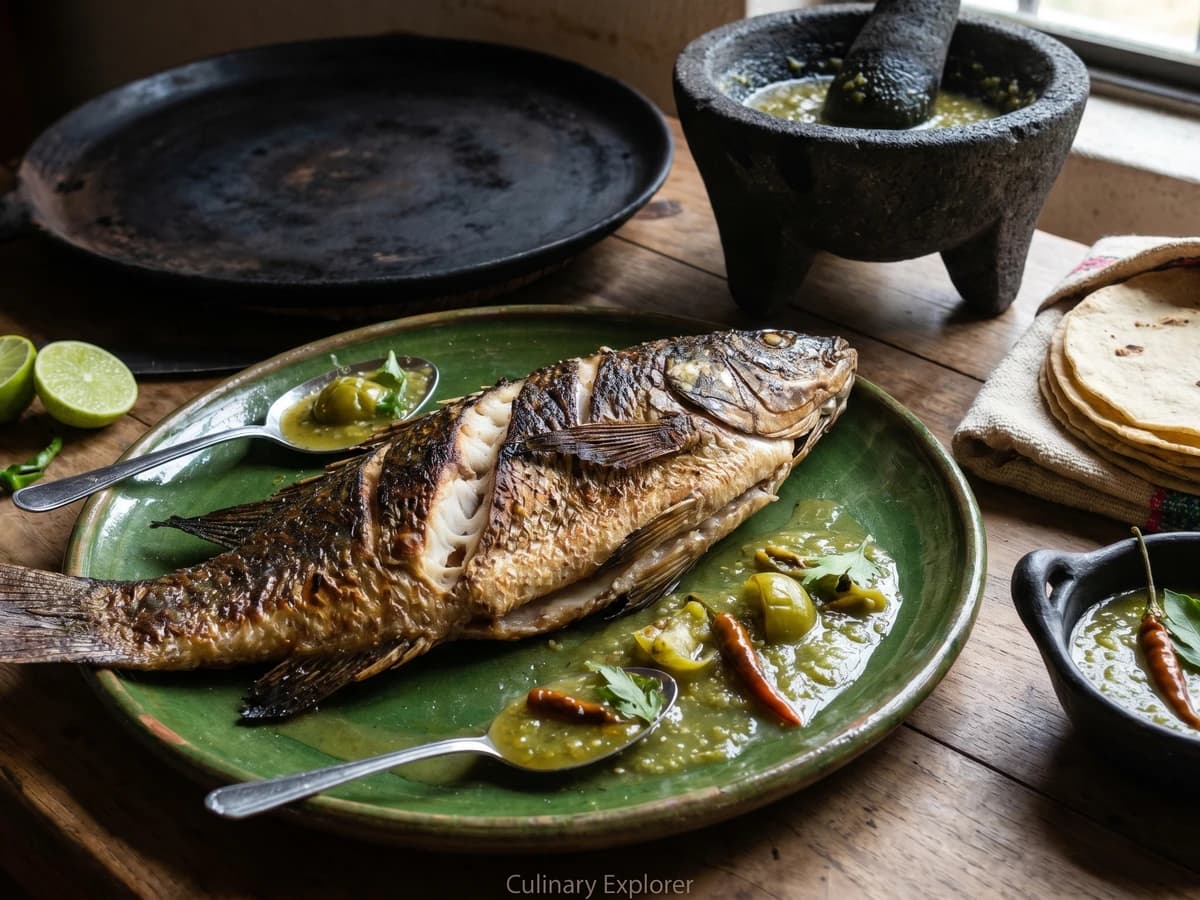
Michoacán's Lake Pátzcuaro acúmara, a whole kurucha from the lago tatemada on a comal de leña and served with chile perón atápakua, corn tortillas, and P'urhépecha discipline.
A cooking platform built around craft, culture, and the stories behind what we eat.
Created by
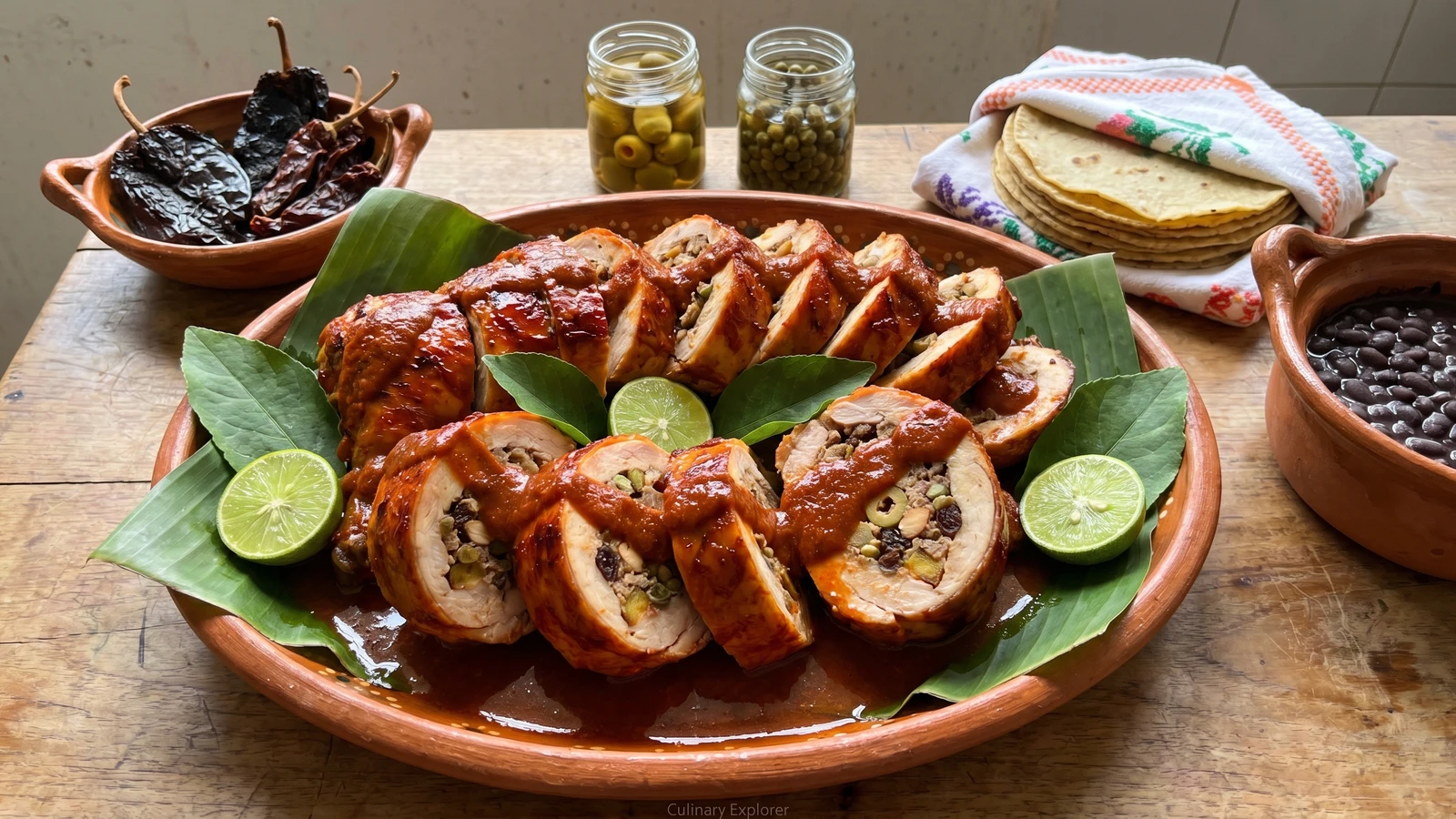
Veracruz's festive stuffed chicken, boned whole and packed with pork picadillo, raisins, almonds, olives, capers, ancho, and chipotle, then roasted until the skin is lacquered and the table goes quiet.
Veracruz, especially the port and the Sotavento, knows how to put the sea route and the family table in the same dish. This pollo relleno jarocho belongs to baptisms, December dinners, Sunday meals when the good platter comes down, and kitchens where the señora has already told the butcher exactly how to bone the bird. The chicken stays whole, the skin stays intact, and the inside gets filled with picadillo. That is the work.
The filling tells you where you are. Pork, jitomate de bola, chile ancho, chile chipotle seco, raisins, almonds, green olives, and capers. The olives and capers are not decoration. They are Veracruz, the old port speaking through the pot. Some families add acuyo, hoja santa, because Veracruz kitchens understand that leaf better than most of the country. Use it lightly. It should perfume the filling, not bully it.
I learned this version from a cook near Tlacotalpan who tied the chicken with cotton thread while telling me, without looking up, that people who overfill the bird are people who don't know patience. She was right. The picadillo needs room to settle, the chicken needs room to roast, and the sauce needs time to stain the skin red-brown. No me vengas con atajos. If you want a festive Veracruz chicken, make the picadillo properly, tie the bird properly, and roast it until the juices run clean.
Serve it on a clay platter with black beans, arroz blanco, warm corn tortillas, and the pan sauce spooned over the slices. This is a 32-state cuisine. Cada estado, su propia cocina.
Veracruz's cooking was shaped by its role as Mexico's principal Atlantic port after the Spanish founded Villa Rica de la Vera Cruz in 1519, which is why olives, capers, almonds, raisins, and olive oil appear naturally in local home cooking. Stuffed poultry dishes in Veracruz grew from colonial picadillo traditions, where meat was stretched and seasoned with fruit, nuts, and brined ingredients brought through port trade. The jarocho version differs from central Mexican roast chicken because its flavor leans on olives, capers, tomato, and coastal herbs rather than cream, cheese, or heavy dried-chile sauces.
Quantity
1, 4 to 5 pounds
boned with skin intact and wings and drumsticks left on
Quantity
2 teaspoons, plus more to taste
Quantity
1 teaspoon
Quantity
2 tablespoons
Quantity
3
stemmed and seeded
Quantity
2
stemmed
Quantity
3 tablespoons
divided
Quantity
1 pound
not lean
Quantity
1
finely chopped
Quantity
3
finely chopped
Quantity
3
roasted and chopped
Quantity
1
diced
Quantity
1/3 cup
Quantity
1/3 cup
chopped
Quantity
1/3 cup
chopped
Quantity
2 tablespoons
rinsed
Quantity
1 small
finely chopped
Quantity
1/2 teaspoon
Quantity
1/4 teaspoon
Quantity
1/2 teaspoon
Quantity
1/2 cup
Quantity
1 cup, plus more if needed
Quantity
2
Quantity
for serving
Quantity
for serving
Quantity
for serving
Quantity
for serving
| Ingredient | Quantity |
|---|---|
| whole chickenboned with skin intact and wings and drumsticks left on | 1, 4 to 5 pounds |
| kosher salt | 2 teaspoons, plus more to taste |
| freshly ground black pepper | 1 teaspoon |
| fresh lime juice | 2 tablespoons |
| dried chile anchostemmed and seeded | 3 |
| dried chile chipotlestemmed | 2 |
| manteca de cerdodivided | 3 tablespoons |
| ground porknot lean | 1 pound |
| small white onionfinely chopped | 1 |
| garlic clovesfinely chopped | 3 |
| jitomates de bola or Roma tomatoesroasted and chopped | 3 |
| small ripe plantaindiced | 1 |
| raisins | 1/3 cup |
| blanched almondschopped | 1/3 cup |
| pitted green oliveschopped | 1/3 cup |
| capersrinsed | 2 tablespoons |
| hoja santa leaffinely chopped | 1 small |
| ground cinnamon | 1/2 teaspoon |
| ground clove | 1/4 teaspoon |
| dried Mexican oregano | 1/2 teaspoon |
| dry white wine or chicken broth | 1/2 cup |
| chicken broth | 1 cup, plus more if needed |
| bay leaves | 2 |
| warm corn tortillas (optional) | for serving |
| arroz blanco (optional) | for serving |
| black beans (optional) | for serving |
| lime halves (optional) | for serving |
Lay the boned chicken skin side down on a board. Rub the inside and outside with salt, black pepper, and lime juice. Refrigerate uncovered while you make the filling. If you are not comfortable boning a whole chicken, ask a real butcher to do it and tell them to keep the skin intact. That is not a shortcut. That is knowing where the skilled hands are.
Heat a dry comal over medium. Toast the chile ancho about 20 to 30 seconds per side, just until the skin softens and smells sweet. Toast the chile chipotle briefly, closer to 10 seconds per side, because it is already smoked and turns harsh if burned. Cover the toasted chiles with hot water and soak for 20 minutes.
Drain the chiles and blend them with the roasted tomatoes and 1/2 cup chicken broth until smooth. Strain through a fine-mesh sieve. Press hard on the solids. You want a smooth red base that will cling to the pork and later stain the chicken skin.
Melt 2 tablespoons manteca de cerdo in a wide skillet over medium heat. Add the ground pork and cook until it loses its raw color and begins to brown at the edges. Add the onion and garlic and cook until the onion turns translucent. Stir in the strained chile-tomato base and cook until the fat starts to separate, about 6 minutes. La manteca es el sabor, and here it carries the chile into the meat.
Add the diced plantain, raisins, almonds, olives, capers, hoja santa, cinnamon, clove, oregano, and wine or broth. Cook, stirring often, until the mixture is thick and almost dry, 10 to 12 minutes. Taste for salt carefully because the olives and capers already speak. Let the picadillo cool completely before stuffing the chicken. Hot filling inside raw poultry is bad kitchen discipline.
Heat the oven to 375F. Spoon the cooled picadillo down the center of the boned chicken. Do not pack it like cement. Fold the sides of the chicken over the filling, skin side out, and tie every 1 1/2 inches with cotton kitchen twine until it holds a firm oval shape. Close any openings with skewers. If filling spills out now, it will spill out worse in the oven.
Rub the outside with the remaining 1 tablespoon manteca de cerdo. Place the chicken seam side down in a clay cazuela or roasting pan with the bay leaves and remaining 1/2 cup chicken broth. Roast for 45 minutes, basting twice with the pan juices. The skin should begin turning red-brown and glossy.
Lower the oven to 350F and continue roasting until the thickest part of the chicken and the center of the stuffing both reach 165F, usually 30 to 45 minutes more. Add a splash of broth if the pan dries out. Do not guess with stuffed poultry. Use the thermometer. The old cooks knew by touch because they had made it a hundred times. You have a tool, use it.
Transfer the chicken to a board and rest 20 minutes before cutting. Skim excess fat from the pan juices but leave enough sheen to make the sauce taste alive. Slice crosswise into thick rounds so every piece shows chicken, skin, and picadillo. Serve on a clay platter with black beans, arroz blanco, corn tortillas, lime halves, and the pan sauce spooned over the top. Así se hace y punto.
1 serving (about 525g)
Culinary guides, cultural storytelling, and the editorial depth that makes cooking meaningful.
Discover Culinary ExplorerChef Lupita
Michoacán's Lake Pátzcuaro acúmara, a whole kurucha from the lago tatemada on a comal de leña and served with chile perón atápakua, corn tortillas, and P'urhépecha discipline.

Chef Lupita
Puebla's weekday adobo of pork shoulder braised in a thick guajillo and ancho sauce sharpened with vinegar, cumin, and clove. The deep red of a market spice stall, the dish a poblana cooks without thinking.

Chef Lupita
Loreto's pit-roasted clams, planted hinge-up in beach sand and tatemadas under a fast fire of dried romerillo brush, the resinous Baja desert shrub that gives this dish its smoke.

Chef Lupita
Oaxaca's eighth mole, the silky, almond-and-cinnamon almendrado, served over poached chicken. Mild, sweet, restrained, and a quiet rebuttal to anyone who thinks Mexican food has to be hot to be Mexican.