Chef Lupita
Acúmara Tatemada al Comal
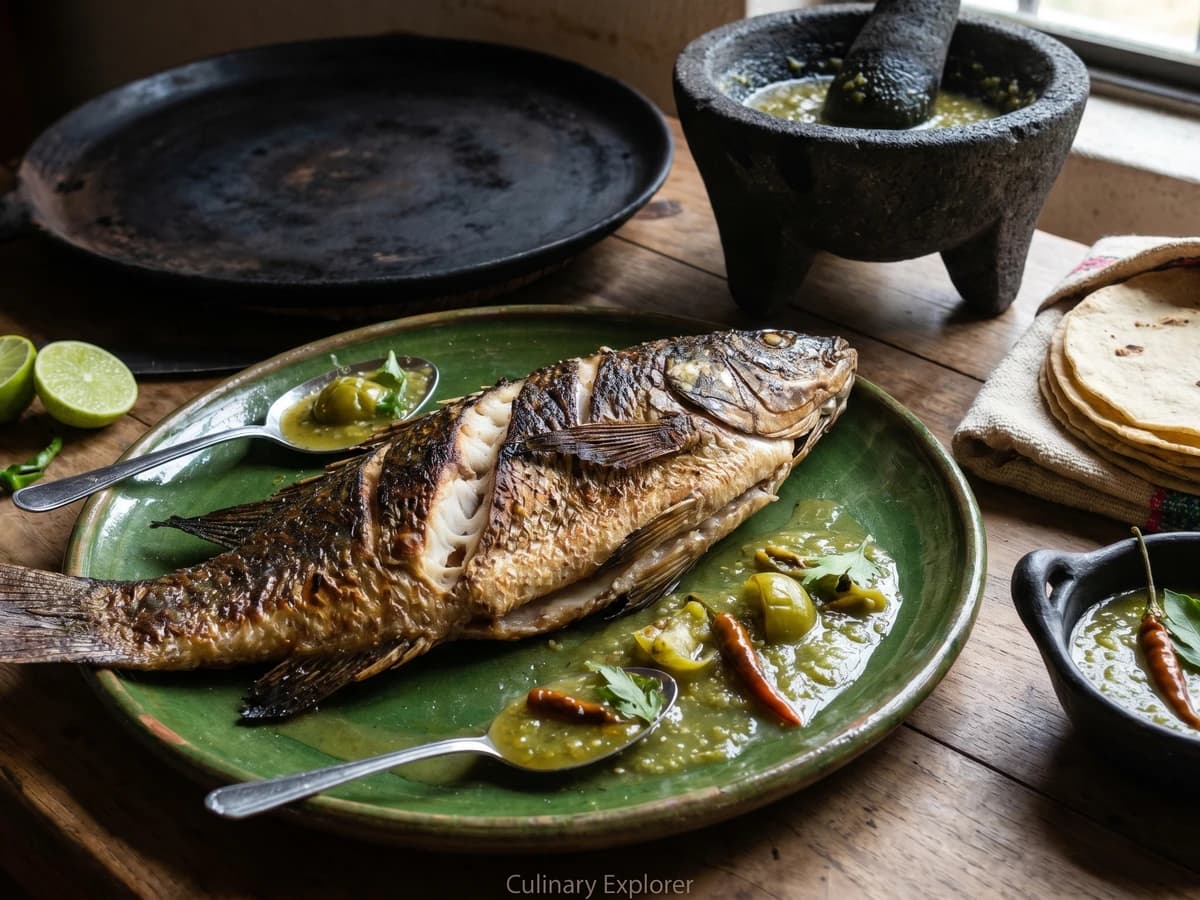
Michoacán's Lake Pátzcuaro acúmara, a whole kurucha from the lago tatemada on a comal de leña and served with chile perón atápakua, corn tortillas, and P'urhépecha discipline.
A cooking platform built around craft, culture, and the stories behind what we eat.
Created by
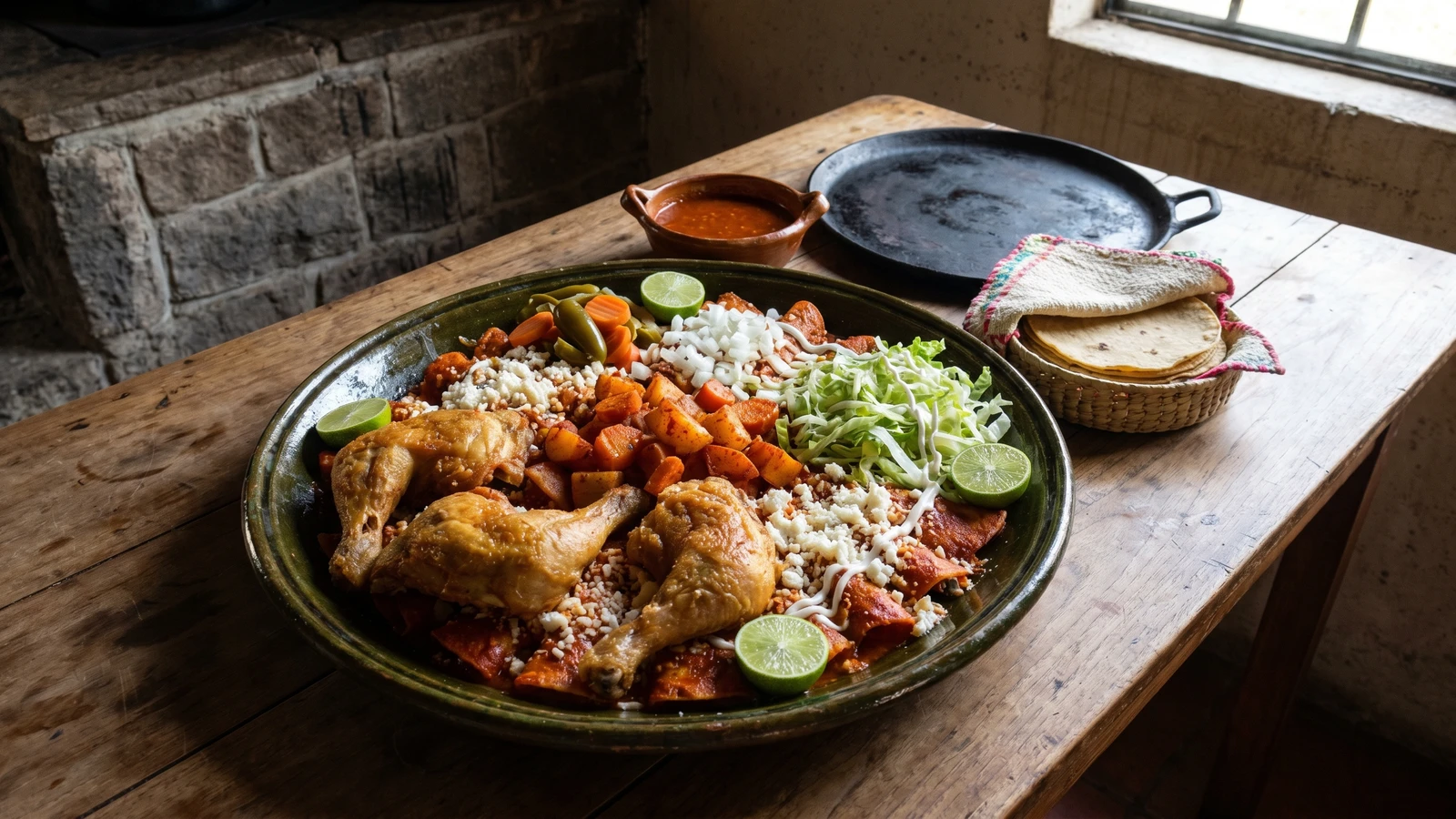
Michoacan plaza-style chicken fried in manteca de cerdo, set over guajillo-stained enchiladas placeras with papa, zanahoria, queso Cotija, and the plain authority of comida de mercado.
Michoacan, especially the Meseta P'urhepecha and the Lake Patzcuaro region, knows how to feed a plaza. This pollo placero lives in that world: market day in Uruapan, fiestas near Zacán, kitchens around Cherán and Cocucho, women working beside a fogón with a comal blackened by leña. The plate is not delicate. It is chicken fried in manteca de cerdo, enchiladas placeras stained red with chile guajillo, papa and zanahoria from the milpa edges, queso Cotija from the highlands, and a clay plate that can carry abundance without pretending to be fancy.
The salsa is what ties it to the plaza. Guajillo gives the red color, ancho gives body, and a little puya gives bite without turning the dish into a dare. P'urhepecha cooking has its own deep vocabulary: kurucha from the lago, atápakua thickened with masa, acúmara gathered from the monte when the season is right. This plate is not atápakua, and it is not kurucha, but it belongs to the same kitchens where those dishes are taught, repeated, corrected, and remembered.
I learned a version like this from cocineras tradicionales who had cooked for fiestas since before anyone called them heritage bearers. They did not measure the lard. They knew by the sound of the tortilla hitting the pan. They did not ask whether Cotija could be replaced with yellow cheese. It cannot. Cada estado, su propia cocina. This is a 32-state cuisine, and Michoacan does not need to borrow anybody's costume.
Serve it family-style in barro from Capula or Tzintzuntzan if you have it. Let the chicken rest on the enchiladas so the lard and chile soak down into the tortillas. La cocina no es decoración, es trabajo. Saber cocinar es saber vivir.
Michoacan's P'urhepecha communities around the Meseta and Lake Patzcuaro formed one of Mesoamerica's major political and culinary regions under the Cazonci, the ruler of the pre-Hispanic P'urhepecha state that resisted Mexica expansion before the Spanish conquest. The UNESCO inscription of Traditional Mexican Cuisine as Intangible Cultural Heritage in 2010 used the Michoacan paradigm as a central model, citing the living transmission of milpa, nixtamal, market cooking, and ceremonial food through cocineras tradicionales. Pollo placero is a later plaza and fiesta plate, shaped by colonial poultry and lard, but its service over corn tortillas, chile sauce, market vegetables, and regional cheese belongs to the same public cooking economy preserved by women in Zacán, Janitzio, Cocucho, Cherán, and Uruapan.
Quantity
1
cut into 8 pieces
Quantity
2 teaspoons, plus more to taste
Quantity
1 teaspoon
Quantity
4
finely grated
Quantity
2 tablespoons
Quantity
1/2 teaspoon
Quantity
1/2 cup, plus 3 tablespoons
for frying the chicken and tortillas
Quantity
10
stemmed and seeded
Quantity
2
stemmed and seeded
Quantity
2
stemmed and seeded
Quantity
3
Quantity
1/2 medium
Quantity
3
unpeeled
Quantity
1/2 teaspoon
Quantity
1/4 teaspoon
Quantity
1/2 teaspoon
Quantity
1 cup
as needed
Quantity
18
preferably made from fresh nixtamal masa
Quantity
4 medium
peeled and cut into 1/2-inch cubes
Quantity
4 medium
peeled and cut into 1/2-inch cubes
Quantity
1/2 small
finely diced
Quantity
1 cup
crumbled
Quantity
2 cups
thinly shredded
Quantity
1/2 cup
Quantity
1/2 cup
Quantity
for serving
| Ingredient | Quantity |
|---|---|
| whole chickencut into 8 pieces | 1 |
| kosher salt | 2 teaspoons, plus more to taste |
| freshly ground black pepper | 1 teaspoon |
| garlic clovesfinely grated | 4 |
| fresh lime juice | 2 tablespoons |
| dried Mexican oregano | 1/2 teaspoon |
| pork lard (manteca de cerdo)for frying the chicken and tortillas | 1/2 cup, plus 3 tablespoons |
| dried chile guajillostemmed and seeded | 10 |
| dried chile anchostemmed and seeded | 2 |
| dried chile puyastemmed and seeded | 2 |
| Roma tomatoes | 3 |
| white onion | 1/2 medium |
| garlic clovesunpeeled | 3 |
| cumin seed | 1/2 teaspoon |
| whole black peppercorns | 1/4 teaspoon |
| dried Mexican oregano | 1/2 teaspoon |
| chicken broth or chile soaking liquidas needed | 1 cup |
| corn tortillaspreferably made from fresh nixtamal masa | 18 |
| red potatoespeeled and cut into 1/2-inch cubes | 4 medium |
| carrotspeeled and cut into 1/2-inch cubes | 4 medium |
| white onionfinely diced | 1/2 small |
| queso Cotijacrumbled | 1 cup |
| romaine lettucethinly shredded | 2 cups |
| crema Mexicana | 1/2 cup |
| pickled jalapenos and carrots (optional) | 1/2 cup |
| lime halves (optional) | for serving |
Pat the chicken dry. Rub it with salt, pepper, grated garlic, lime juice, and Mexican oregano. Let it rest at room temperature for 30 minutes while you make the salsa. If you have time, season it the night before and refrigerate it uncovered. Dry skin fries better. Wet chicken spits in the lard and gives you pale skin.
Heat a dry comal over medium. Toast the guajillo, ancho, and puya chiles separately, 15 to 25 seconds per side, just until fragrant and pliable. The guajillo gives the plaza-red color, ancho gives body and sweetness, puya gives a clean bite. Do not blacken them. Burned chile turns bitter and then the whole plate tastes careless.
Put the toasted chiles in a bowl and cover with hot water for 20 minutes. On the same comal, roast the tomatoes, onion, and unpeeled garlic until the skins blister and the onion has dark spots. Peel the garlic. Toast the cumin seed and peppercorns for a few seconds, just until they smell awake.
Drain the chiles and blend them with the roasted tomatoes, onion, garlic, cumin, peppercorns, oregano, and enough broth or soaking liquid to move the blades. Blend until smooth. Strain through a fine-mesh sieve. This is comida de plaza, yes, but the salsa still has to be clean. The women who sell this in Uruapan and Pátzcuaro do not leave chile skins in the sauce.
Melt 2 tablespoons of lard in a cazuela over medium heat. Pour in the strained salsa. It will jump, so stand like you mean it. Cook 8 to 10 minutes, stirring often, until the color deepens and the lard begins to show at the edges. Taste for salt. La manteca es el sabor. Oil will fry it, but it will not taste like Michoacan.
Boil the diced potatoes and carrots in salted water until just tender, 8 to 10 minutes. Drain well. Heat 1 tablespoon lard in a skillet and toss the vegetables with 3 tablespoons of the red salsa and a pinch of salt until they are stained orange-red and lightly glossy. Papa and zanahoria are not decoration here. They are the plaza plate's weight and economy.
Heat the remaining 1/2 cup lard in a wide heavy skillet or cazuela over medium. Lay in the chicken skin side down, without crowding. Fry 12 to 15 minutes per side, turning as needed, until the skin is deep golden and the thickest pieces register 165F. If the skin browns too fast, lower the heat. You want crisp edges and juicy meat, not scorched garlic.
Warm the tortillas briefly on the comal so they bend without cracking. Dip each tortilla into the warm red salsa, then pass it through a thin layer of hot lard for 10 to 15 seconds per side. Fold in half or roll loosely. They should be soft, stained red, and lightly fried, not crisp like tostadas.
Arrange 3 enchiladas placeras on each plate or in a wide barro platter. Spoon the red-stained potatoes and carrots over them. Add fried chicken on top or to the side. Scatter with diced white onion and crumbled queso Cotija. Add shredded lettuce, a thin thread of crema Mexicana, pickled jalapenos and carrots, and lime halves. Serve at once, with extra salsa in a clay cazuelita.
1 serving (about 560g)
Culinary guides, cultural storytelling, and the editorial depth that makes cooking meaningful.
Discover Culinary ExplorerChef Lupita
Michoacán's Lake Pátzcuaro acúmara, a whole kurucha from the lago tatemada on a comal de leña and served with chile perón atápakua, corn tortillas, and P'urhépecha discipline.

Chef Lupita
Puebla's weekday adobo of pork shoulder braised in a thick guajillo and ancho sauce sharpened with vinegar, cumin, and clove. The deep red of a market spice stall, the dish a poblana cooks without thinking.

Chef Lupita
Loreto's pit-roasted clams, planted hinge-up in beach sand and tatemadas under a fast fire of dried romerillo brush, the resinous Baja desert shrub that gives this dish its smoke.

Chef Lupita
Oaxaca's eighth mole, the silky, almond-and-cinnamon almendrado, served over poached chicken. Mild, sweet, restrained, and a quiet rebuttal to anyone who thinks Mexican food has to be hot to be Mexican.