Chef Lupita
Acúmara Tatemada al Comal
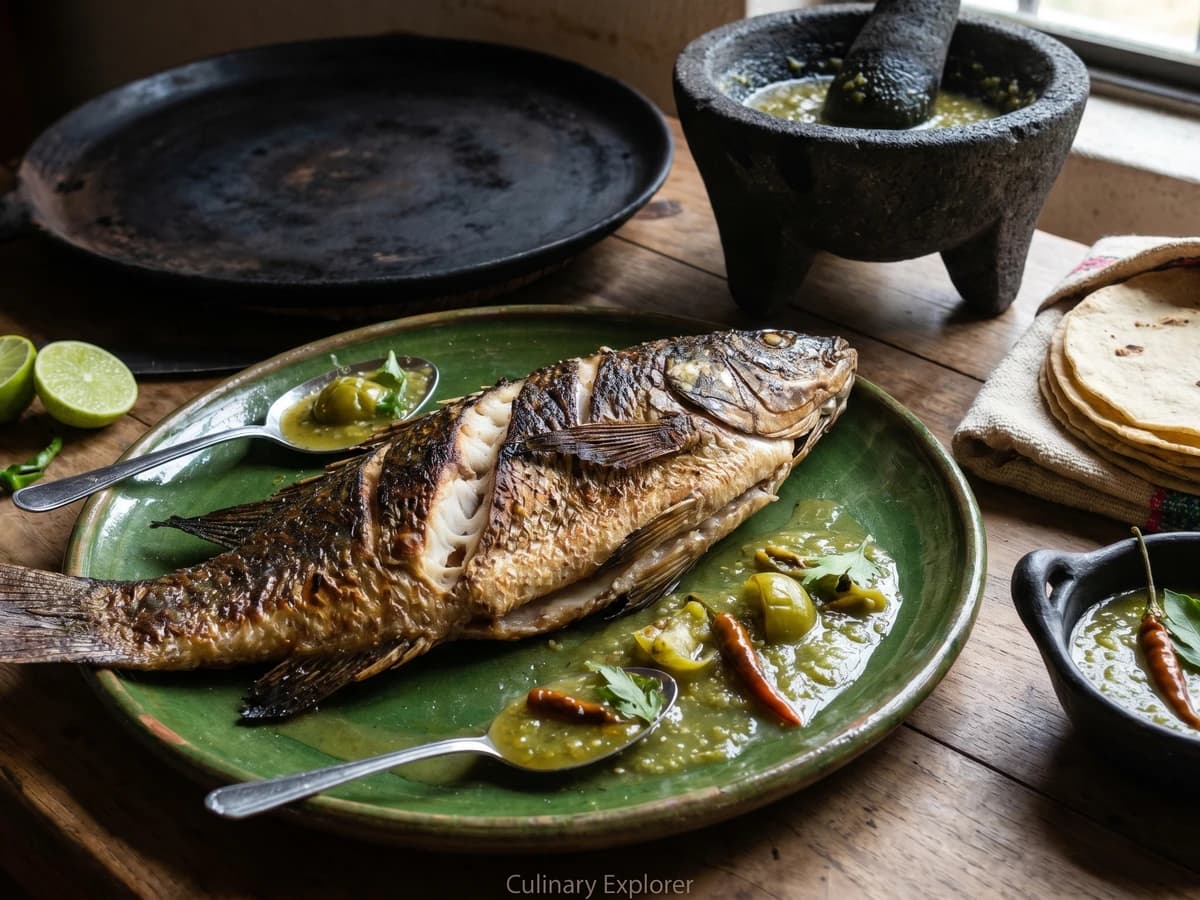
Michoacán's Lake Pátzcuaro acúmara, a whole kurucha from the lago tatemada on a comal de leña and served with chile perón atápakua, corn tortillas, and P'urhépecha discipline.
A cooking platform built around craft, culture, and the stories behind what we eat.
Created by
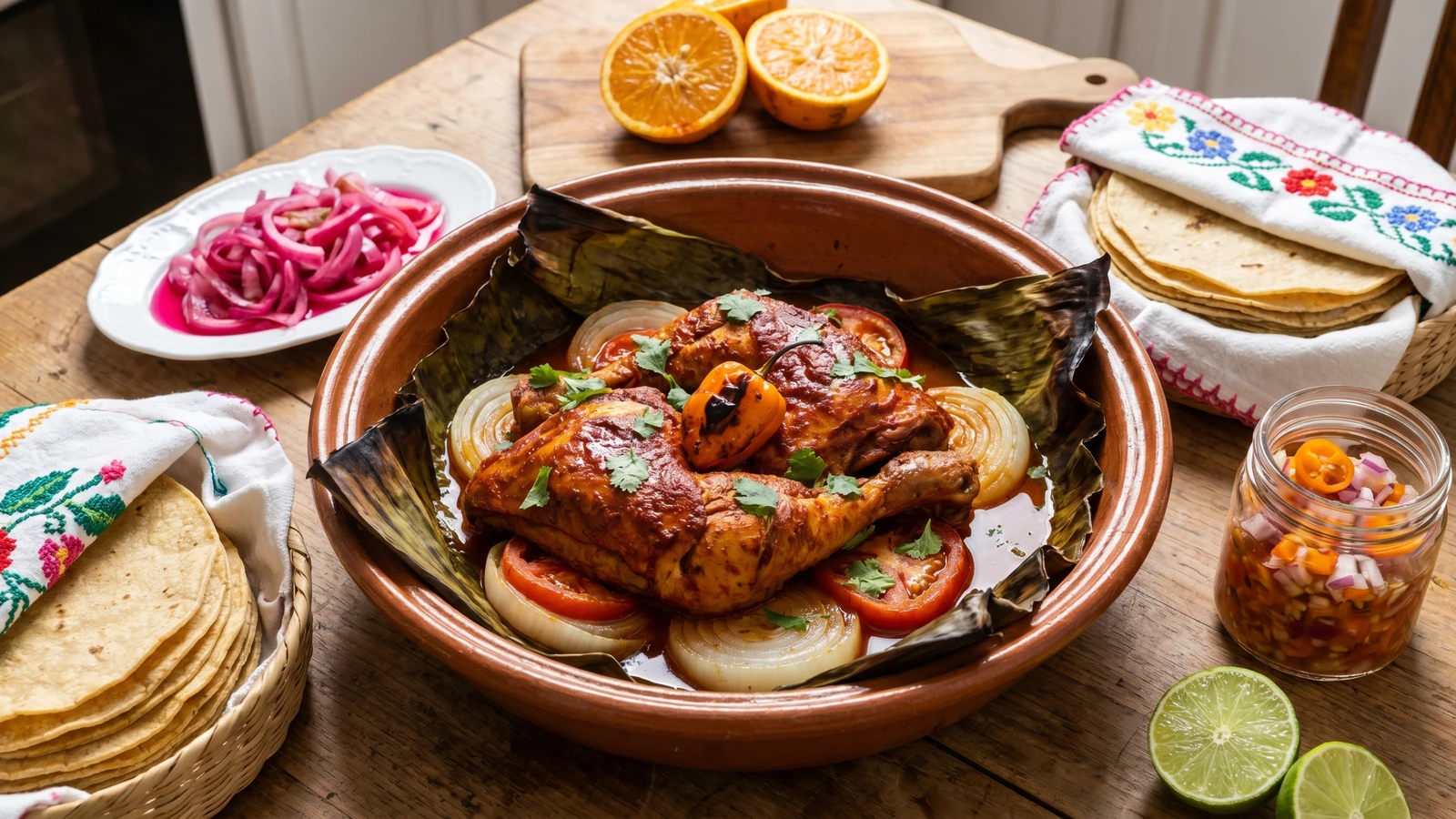
Yucatán's weeknight pibil. Chicken marinated in recado rojo and sour orange, wrapped in banana leaf, baked low and slow until the meat falls from the bone and the leaf perfumes everything it touches.
This is from Yucatán. Not from Mexico in general, not from the colonial idea of Mexican food that travels on airline menus. Yucatán. The peninsula has its own cuisine, its own chiles, its own herbs, its own techniques, its own language threading through the names of the dishes: pibil, xnipec, tikinxic, salbutes, panuchos. If you do not know the difference between Yucatecan food and what gets served as Mexican food in most of the world, this recipe is a good place to start.
Pibil is Mayan. The word comes from "pib," the earthen pit oven where meat wrapped in banana leaves is cooked over hot stones, buried for hours, and pulled out tender enough to fall apart. Cochinita pibil, the pork version, is the famous one. Pollo pibil is its everyday cousin, what a señora in Mérida or Valladolid makes on a Tuesday when she does not have a whole pig and twelve hours to bury it. The technique is the same. The recado rojo is the same. The banana leaf is non-negotiable. Without it, you are not making pibil. You are making achiote chicken.
The recado is the dish. Achiote ground with allspice, pepper, cloves, cumin, oregano, garlic, salt, all thinned with naranja agria, the sour orange of the peninsula. Naranja agria is not a substitution for regular orange juice. It is a different fruit, sharper, more bitter, halfway between lime and orange. If you cannot find it, you mix sweet orange with lime and a splash of vinegar. That is the workaround peninsular cooks living away from home use, and I will tell you what it is: a compromise, not an upgrade.
My mother did not cook Yucatecan food. She was from Jalisco. But in her notebook there is a page from 1991, recado rojo proportions copied from a woman she met at a wedding in Mérida. The note in the margin reads: "naranja agria, no de otra," sour orange, nothing else. She underlined it twice. Cada estado, su propia cocina.
Pibil derives from the Yucatec Maya word 'pib,' meaning earthen pit oven, a cooking method documented in the peninsula since the pre-Hispanic period and still used in traditional preparations for the Day of the Dead celebration known as Hanal Pixán, when families bake mucbipollo, a large tamale, in backyard pits. The achiote seed at the heart of recado rojo is native to tropical Mesoamerica and was used by the Maya as both food coloring and body paint long before European contact; the spice blend in modern recado rojo, with its peppercorns, cloves, cumin, and allspice, reflects the layered influence of Spanish, Caribbean, and Lebanese immigration on the Yucatán peninsula, particularly through the port of Progreso in the 19th and early 20th centuries. The use of sour orange (Citrus aurantium), introduced by the Spanish but adopted as if it had always belonged, ties nearly every traditional Yucatecan dish to a single defining acid.
Quantity
3 1/2 pounds
thighs, drumsticks, and split breasts
Quantity
3.5 ounces
Yucatecan brand like El Yucateco or Marin
Quantity
3/4 cup
or 1/2 cup orange juice plus 1/4 cup lime juice plus 2 tablespoons white vinegar
Quantity
6
peeled
Quantity
1 teaspoon
Quantity
1 teaspoon
Quantity
1 teaspoon
preferably Yucatecan
Quantity
1/2 teaspoon
Quantity
2
Quantity
1 tablespoon
Quantity
3 tablespoons
melted
Quantity
1 large package (about 1 pound)
fresh or frozen, thawed if frozen
Quantity
1
sliced into thick rings
Quantity
2
sliced into thick rounds
Quantity
1
left whole, do not pierce
Quantity
2
Quantity
1
sliced paper-thin
Quantity
1/2 cup
or 1/3 cup orange juice plus 3 tablespoons lime juice
Quantity
1 teaspoon
Quantity
1/2 teaspoon
Quantity
for serving
warmed
Quantity
for serving
| Ingredient | Quantity |
|---|---|
| bone-in, skin-on chicken piecesthighs, drumsticks, and split breasts | 3 1/2 pounds |
| achiote paste (recado rojo)Yucatecan brand like El Yucateco or Marin | 3.5 ounces |
| fresh sour orange juice (naranja agria)or 1/2 cup orange juice plus 1/4 cup lime juice plus 2 tablespoons white vinegar | 3/4 cup |
| garlic clovespeeled | 6 |
| whole black peppercorns | 1 teaspoon |
| whole allspice berries (pimienta gorda) | 1 teaspoon |
| dried Mexican oreganopreferably Yucatecan | 1 teaspoon |
| ground cumin | 1/2 teaspoon |
| whole cloves | 2 |
| kosher salt | 1 tablespoon |
| manteca de cerdo (pork lard)melted | 3 tablespoons |
| banana leavesfresh or frozen, thawed if frozen | 1 large package (about 1 pound) |
| large white onionsliced into thick rings | 1 |
| large tomatoessliced into thick rounds | 2 |
| fresh chile habaneroleft whole, do not pierce | 1 |
| bay leaves | 2 |
| large red onion (for cebollas encurtidas)sliced paper-thin | 1 |
| fresh sour orange juice (for cebollas encurtidas)or 1/3 cup orange juice plus 3 tablespoons lime juice | 1/2 cup |
| dried Mexican oregano (for cebollas encurtidas) | 1 teaspoon |
| kosher salt (for cebollas encurtidas) | 1/2 teaspoon |
| hand-pressed corn tortillas (optional)warmed | for serving |
| chile habanero salsa or salsa xnipec (optional) | for serving |
Heat a dry comal or small skillet over medium-low. Add the peppercorns, allspice, oregano, cumin, and cloves. Toast for about 60 to 90 seconds, shaking the pan, until the kitchen smells warm and slightly peppery. Allspice is not optional here. Pimienta gorda is the spice of the peninsula, the one that ties this dish to Mérida and not to anywhere else. Tip the spices into a molcajete or spice grinder and grind to a fine powder.
Crumble the achiote paste into a blender. Add the ground spices, the garlic cloves, the salt, the sour orange juice, and the melted lard. Blend until completely smooth, scraping down the sides as needed. The recado should be the color of brick dust, thick enough to coat a spoon but loose enough to pour. Taste it. It should be sharp from the sour orange, deep from the achiote, and slightly bitter from the spices. That bitterness will soften as the chicken marinates.
Place the chicken pieces in a large glass or ceramic bowl. Pour the recado over the chicken and use your hands to work it into every piece, under the skin where you can. Cover and refrigerate for at least 8 hours, preferably 12 to 24. The sour orange tenderizes the meat and the achiote stains it through to the bone. This is not a step you rush. No me vengas con atajos.
Pass the banana leaves over an open gas flame or hot comal for a few seconds per section, until the dull green turns glossy and pliable. The leaf will release its perfume as it softens. This step makes the leaf flexible and brings out the green, herbaceous aroma that perfumes the chicken as it cooks. Wipe each leaf clean with a damp cloth.
Preheat the oven to 325°F. Line a heavy Dutch oven or deep ceramic cazuela with two or three overlapping banana leaves, letting them drape over the sides. Lay the tomato rounds and white onion rings on the bottom. Tuck the bay leaves in. Arrange the marinated chicken on top, pouring any leftover recado over the pieces. Nestle the whole habanero on top, unpierced. Fold the overhanging banana leaves over the chicken to seal the package. If gaps remain, cover with additional leaves.
Cover the cazuela tightly with its lid or with a double layer of foil pressed against the rim. Bake for 1 hour and 45 minutes to 2 hours. The chicken is done when the meat pulls away from the bone with no resistance and the recado has darkened into the meat. The original pibil is buried in a pit and cooked over hot stones for hours. The oven is the compromise. The banana leaf and the long, sealed cook are not.
While the chicken bakes, combine the paper-thin red onion with the sour orange juice, oregano, and salt in a glass bowl. Toss with your hands. Let sit at room temperature for at least 30 minutes. The onions will turn from purple to magenta as the acid does its work. These are not optional. Pollo pibil without cebollas encurtidas is a meal missing its other half. La cocina no es decoración, es trabajo.
Bring the closed cazuela to the table. Peel back the banana leaves at the table so everyone smells the moment when the leaf opens and the recado-stained chicken is revealed. Discard the whole habanero, or set it aside for the brave. Pile the chicken and its braising juices into warm tortillas with a generous mound of cebollas encurtidas and a few drops of salsa habanero. Eat it with your hands. Así se hace y punto.
1 serving (about 325g)
Culinary guides, cultural storytelling, and the editorial depth that makes cooking meaningful.
Discover Culinary ExplorerChef Lupita
Michoacán's Lake Pátzcuaro acúmara, a whole kurucha from the lago tatemada on a comal de leña and served with chile perón atápakua, corn tortillas, and P'urhépecha discipline.

Chef Lupita
Puebla's weekday adobo of pork shoulder braised in a thick guajillo and ancho sauce sharpened with vinegar, cumin, and clove. The deep red of a market spice stall, the dish a poblana cooks without thinking.

Chef Lupita
Loreto's pit-roasted clams, planted hinge-up in beach sand and tatemadas under a fast fire of dried romerillo brush, the resinous Baja desert shrub that gives this dish its smoke.

Chef Lupita
Oaxaca's eighth mole, the silky, almond-and-cinnamon almendrado, served over poached chicken. Mild, sweet, restrained, and a quiet rebuttal to anyone who thinks Mexican food has to be hot to be Mexican.