Chef Lupita
Acúmara Tatemada al Comal
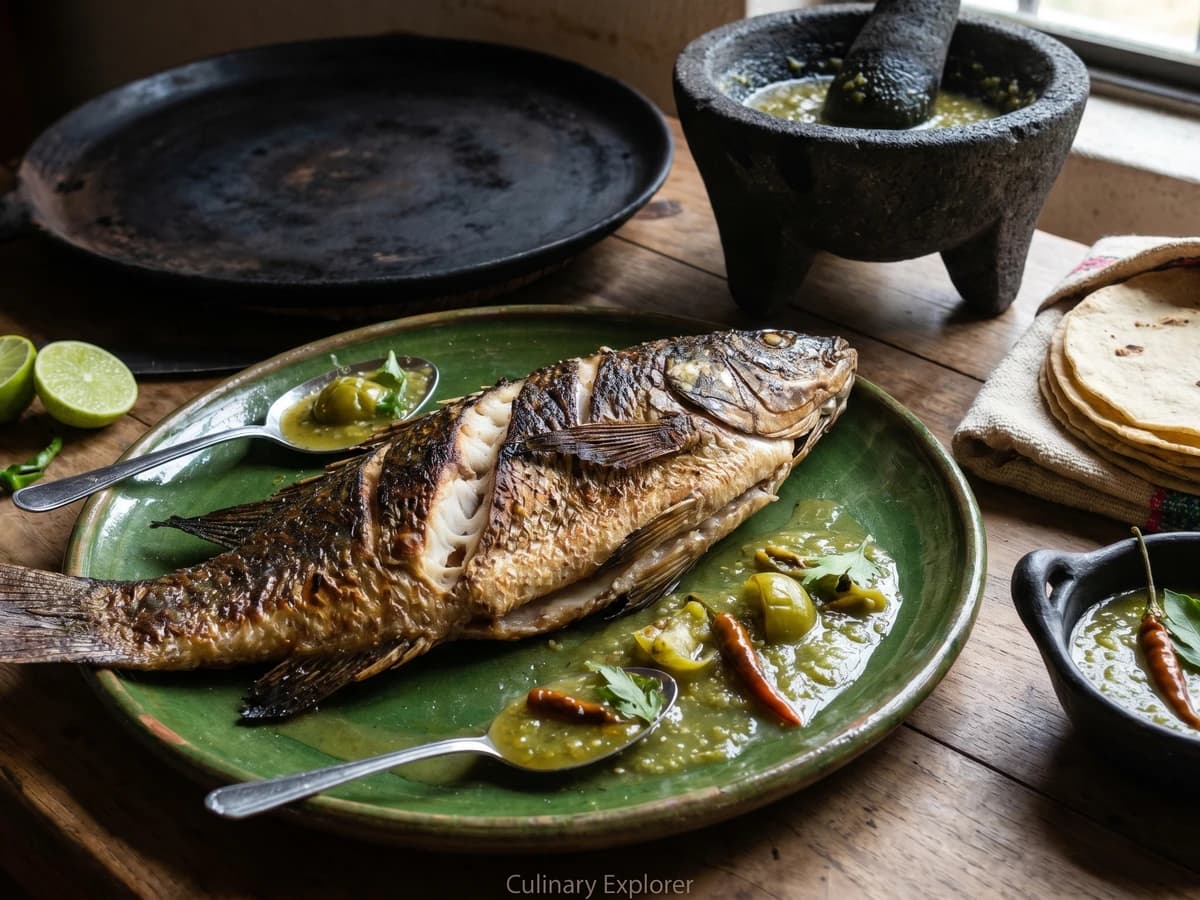
Michoacán's Lake Pátzcuaro acúmara, a whole kurucha from the lago tatemada on a comal de leña and served with chile perón atápakua, corn tortillas, and P'urhépecha discipline.
A cooking platform built around craft, culture, and the stories behind what we eat.

Created by
Veracruz's Sotavento chicken in rust-red peanut sauce, built from toasted chile ancho, chile chipotle seco, jitomate de bola, acuyo, and cacahuate fried in manteca until thick enough to coat the spoon.
Veracruz first. This dish lives in the Sotavento, the southern Gulf plain around Tlacotalpan, Alvarado, and the lower Papaloapan, where the river runs into the port pantry and the kitchen carries Afro-Veracruzano memory. It is chicken for a family table: thick sauce, rice, black beans, tortillas in a servilleta, and a red clay cazuela set down in the middle so nobody has to ask for seconds.
The ingredient that makes it Veracruz is the cacahuate worked into chile ancho, chile chipotle seco, jitomate de bola, garlic, pimienta gorda, and hoja santa, called acuyo on that coast. Do not confuse this with peanut butter sauce. You toast the peanuts yourself because raw peanut tastes green and jarred peanut butter tastes like a school lunch. No me vengas con atajos.
I learned a version near the mercado in Tlacotalpan from a woman who browned the chicken in manteca, then fried the blended sauce until it sounded heavy against the spoon. That sound matters. A raw nut paste sits on the tongue; a fried encacahuatado turns glossy, rust-red, and deep enough to hold the chicken without sliding off.
My mother did not make this dish. She was Jalisco to the bone. But in her notebook, beside a Veracruz fish recipe copied from a neighbor, she wrote: 'cacahuate needs fire before water.' She was right. Saber cocinar es saber vivir. Cada estado, su propia cocina.
The word cacahuate comes from Nahuatl tlalcacahuatl, "earth cacao," for a peanut domesticated in South America and carried through Mesoamerican and colonial trade until it became ordinary market food in Mexico. On the Sotavento coast of Veracruz, the colonial port economy, sugar estates, cattle country, and free Afro-Mexican communities made La Tercera Raiz visible in home cooking, especially in thick nut and seed sauces built for poultry and pork. Pollo encacahuatado belongs to that meeting place: indigenous chiles and jitomate, Spanish spices such as clove and canela, and Afro-Veracruzano technique for turning peanuts into a serious gravy.
Quantity
3 pounds
or 1 whole chicken cut into 10 pieces
Quantity
2 teaspoons, divided, plus more to taste
Quantity
1/2 teaspoon
Quantity
1/2 medium
for the chicken broth
Quantity
3
lightly crushed, for the chicken broth
Quantity
2
Quantity
5 cups
Quantity
3
stemmed and seeded
Quantity
2
preferably chipotle meco or morita, stemmed and seeded if less heat is wanted
Quantity
1 cup plus 2 tablespoons
preferably with skins; toast 1 cup for the sauce and reserve 2 tablespoons for serving
Quantity
3, about 1 pound
halved; use 5 Roma tomatoes if that is what the market has
Quantity
1 small
quartered
Quantity
4
unpeeled
Quantity
1 thick slice
torn into pieces; or use 1 corn tortilla
Quantity
3 tablespoons
divided
Quantity
2
Quantity
4
Quantity
3
Quantity
1/2 teaspoon
Quantity
1 small piece, about 1 inch
or 1/4 teaspoon ground canela
Quantity
1 large
center rib removed and leaf torn, plus small leaves for serving if available
Quantity
1 tablespoon
Quantity
2 to 3 cups
as needed
Quantity
1
passed over a flame until pliable, for lining the serving cazuela
Quantity
for serving
| Ingredient | Quantity |
|---|---|
| bone-in, skin-on chicken thighs and drumsticksor 1 whole chicken cut into 10 pieces | 3 pounds |
| kosher salt | 2 teaspoons, divided, plus more to taste |
| freshly ground black pepper | 1/2 teaspoon |
| white onionfor the chicken broth | 1/2 medium |
| garlic cloveslightly crushed, for the chicken broth | 3 |
| bay leaves | 2 |
| water | 5 cups |
| dried chile anchostemmed and seeded | 3 |
| dried chile chipotle secopreferably chipotle meco or morita, stemmed and seeded if less heat is wanted | 2 |
| raw unsalted peanutspreferably with skins; toast 1 cup for the sauce and reserve 2 tablespoons for serving | 1 cup plus 2 tablespoons |
| jitomates de bolahalved; use 5 Roma tomatoes if that is what the market has | 3, about 1 pound |
| white onionquartered | 1 small |
| garlic clovesunpeeled | 4 |
| stale bolillotorn into pieces; or use 1 corn tortilla | 1 thick slice |
| manteca de cerdodivided | 3 tablespoons |
| whole cloves | 2 |
| black peppercorns | 4 |
| whole allspice berries (pimienta gorda) | 3 |
| dried Mexican oregano | 1/2 teaspoon |
| Mexican canelaor 1/4 teaspoon ground canela | 1 small piece, about 1 inch |
| hoja santa (acuyo) leafcenter rib removed and leaf torn, plus small leaves for serving if available | 1 large |
| pineapple vinegar (vinagre de pina) or apple cider vinegar | 1 tablespoon |
| reserved chicken brothas needed | 2 to 3 cups |
| banana leaf square (optional)passed over a flame until pliable, for lining the serving cazuela | 1 |
| cooked white rice, black beans, and warm corn tortillas (optional) | for serving |
Season the chicken with 1 teaspoon of the salt and the black pepper. Put the chicken in a pot with the half onion, 3 crushed garlic cloves, bay leaves, and water. Bring to a gentle simmer, skim the foam from the top, and cook 20 to 25 minutes, until the chicken is mostly cooked and the broth tastes like chicken, not water. Transfer the chicken to a tray and strain the broth. The chicken finishes in the sauce, where it must reach 165F at the thickest part.
Heat a dry comal or heavy skillet over medium. Toast 1 cup of the peanuts for 5 to 7 minutes, shaking the pan often, until they smell deep and nutty and the skins darken in spots. Rub off only the loose skins. Leave some behind for color and character. Raw peanut tastes green. Toasted peanut tastes like Veracruz.
On the same comal, toast the chile ancho about 25 seconds per side, just until the skin softens, darkens, and smells like dried fruit. Toast the chile chipotle seco more carefully, 10 to 15 seconds per side, because it is already smoked and turns bitter if you scorch it. Put the chiles in a bowl, cover with hot water, and soak 15 minutes. Drain them. Use broth for the sauce, not the soaking water.
Place the halved jitomates de bola, quartered onion, and 4 unpeeled garlic cloves on the comal. Turn them until the tomatoes collapse at the edges, the onion has black spots, and the garlic is soft inside its skin. Peel the garlic. Melt 1 tablespoon of the manteca in a small skillet and fry the bolillo pieces or tortilla until golden. Toast the cloves, peppercorns, allspice, and canela for 20 seconds, just until fragrant.
In a blender, combine the toasted peanuts, soaked chiles, charred tomatoes, onion, peeled garlic, fried bolillo or tortilla, toasted spices, Mexican oregano, hoja santa, vinegar, and 2 cups of the reserved broth. Blend for a full 2 to 3 minutes, until the sauce is as smooth as your blender can make it. A metate would make it silkier. The blender works if you give it time.
Wipe out a wide cazuela or Dutch oven and melt the remaining 2 tablespoons manteca over medium heat. Pat the chicken pieces dry. Brown them skin side down first, 3 to 4 minutes per side, until the skin takes color and the pot smells like roasted chicken fat. Remove the chicken to a plate. La manteca es el sabor, and now it carries the flavor of the bird.
Pour the blended sauce into the same cazuela. It will sputter, so stir with authority. Cook 8 to 10 minutes, scraping the bottom, until the sauce darkens to rust-red, thickens heavily, and the fat begins to freckle at the edges. If it still smells like raw peanut, keep cooking. This step is where a paste becomes encacahuatado. Asi se hace y punto.
Return the chicken to the cazuela and spoon the sauce over every piece. Add enough reserved broth to loosen the sauce so it moves slowly around the chicken but still coats the spoon. Cover and simmer over low heat for 20 to 25 minutes, turning once, until the chicken reaches 165F and the sauce is thick and glossy. Taste for salt. Let it rest 10 minutes before serving. Line the serving cazuela with banana leaf if using, scatter with chopped toasted peanuts and small torn hoja santa leaves, and bring it to the table with white rice, black beans, and warm corn tortillas. Veracruz at the table. Not flour tortillas. Cada estado, su propia cocina.
1 serving (about 550g)
Culinary guides, cultural storytelling, and the editorial depth that makes cooking meaningful.
Discover Culinary ExplorerChef Lupita
Michoacán's Lake Pátzcuaro acúmara, a whole kurucha from the lago tatemada on a comal de leña and served with chile perón atápakua, corn tortillas, and P'urhépecha discipline.

Chef Lupita
Puebla's weekday adobo of pork shoulder braised in a thick guajillo and ancho sauce sharpened with vinegar, cumin, and clove. The deep red of a market spice stall, the dish a poblana cooks without thinking.

Chef Lupita
Loreto's pit-roasted clams, planted hinge-up in beach sand and tatemadas under a fast fire of dried romerillo brush, the resinous Baja desert shrub that gives this dish its smoke.

Chef Lupita
Oaxaca's eighth mole, the silky, almond-and-cinnamon almendrado, served over poached chicken. Mild, sweet, restrained, and a quiet rebuttal to anyone who thinks Mexican food has to be hot to be Mexican.