Chef Lupita
Acúmara Tatemada al Comal
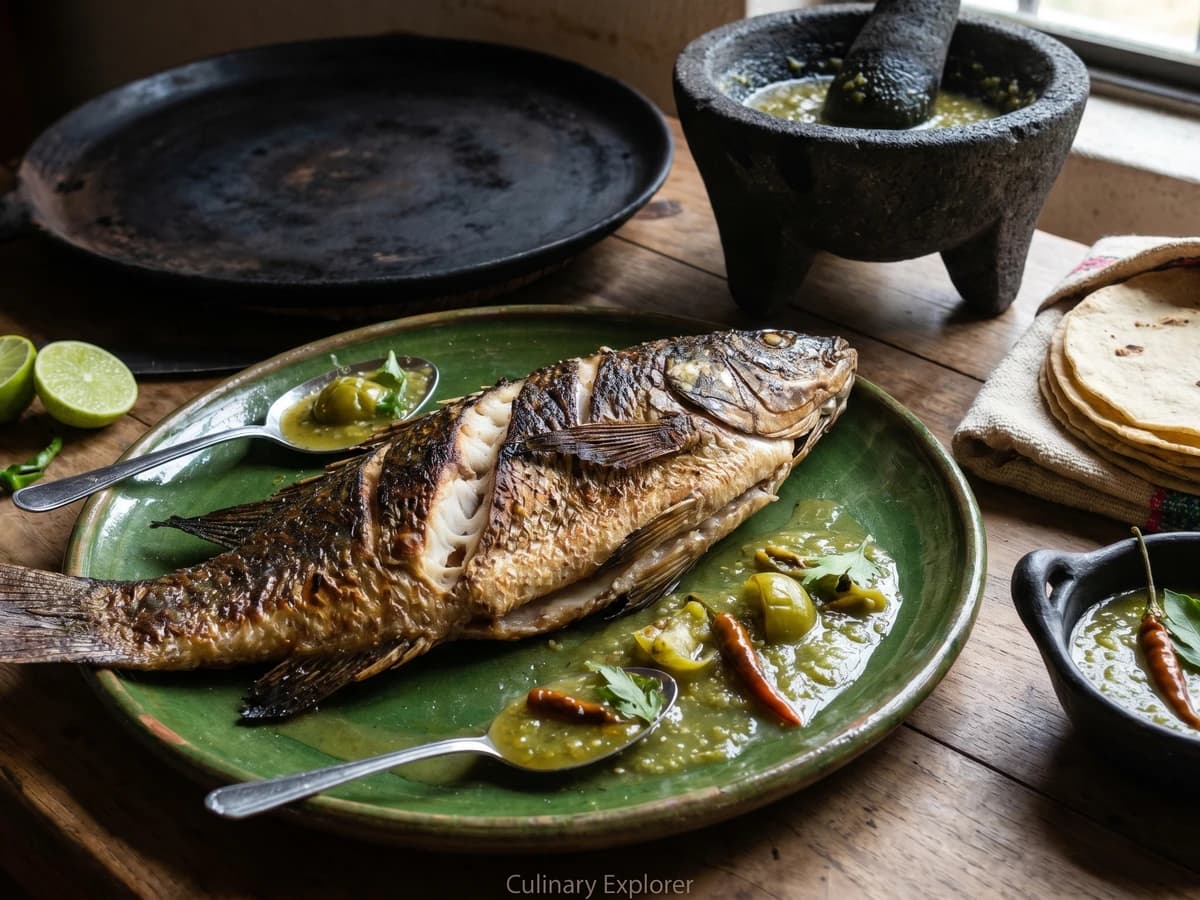
Michoacán's Lake Pátzcuaro acúmara, a whole kurucha from the lago tatemada on a comal de leña and served with chile perón atápakua, corn tortillas, and P'urhépecha discipline.
A cooking platform built around craft, culture, and the stories behind what we eat.

Created by
Central Veracruz chicken in a green acuyo sauce, where tomatillo gives brightness, serrano gives the edge, and hoja santa brings the anise perfume that no jarred seasoning can fake.
Veracruz, the central green corridor around Xalapa, Coatepec, Naolinco, and Misantla, is where this pollo al acuyo lives. Not the port's tomato, olives, and capers this time. This is the inland kitchen, humid and leafy, where acuyo grows beside the house and the cook cuts what she needs before the cazuela goes on the fire.
Acuyo is hoja santa, a heart-shaped leaf with the smell of anise, black pepper, and damp earth after rain. In Veracruz they call it acuyo. In other states you will hear hoja santa, momo, tlanepa. Cada estado, su propia cocina. The leaf is not decoration. It is the seasoning. Tomatillo gives acidity, chile serrano gives a clean edge, garlic and onion hold the base, but the acuyo is what makes the sauce Veracruzano.
I learned this version from a woman outside Naolinco who kept her acuyo plant behind the kitchen door. She simmered the tomatillos, blended the leaf fresh, browned the chicken in manteca, and thickened the sauce with a little nixtamalized corn masa. No cumin. No heavy spice cabinet. The leaf already did the work. She served it in a clay cazuela with black beans and tortillas folded in a cotton servilleta. That is the table this dish belongs to.
If your hoja santa has no smell, do not make this today. Ask the women at the market who cut theirs in the morning. Pregúntale a las señoras del mercado. They know. Saber cocinar es saber vivir.
Hoja santa, botanically Piper auritum, is native to Mesoamerica and has long been used in Gulf and southern Mexican cooking by Nahua, Totonac, and other Indigenous communities for wrapping, perfuming, and seasoning food. Chicken and pork lard entered central Veracruz kitchens after Spanish livestock arrived in New Spain in the 16th century, which makes pollo al acuyo a post-conquest guiso built on an older Indigenous sauce logic of tomatillo, chile, corn, and aromatic leaves. The Veracruz name acuyo is regionally specific, while the same leaf appears under other names in Oaxaca, Tabasco, Chiapas, and Puebla, proof again that this is a 32-state cuisine.
Quantity
3 1/2 pounds
Quantity
2 teaspoons, plus more to taste
Quantity
2 tablespoons
Quantity
1 1/2 pounds
husked and rinsed
Quantity
3
stemmed
Quantity
1/2 medium
roughly chopped
Quantity
4
peeled
Quantity
7 large
thick stems removed, 6 torn for the sauce and 1 reserved for the pot
Quantity
1 1/2 cups, as needed
Quantity
2 tablespoons
Quantity
1/4 cup
for mixing the masa
Quantity
for serving
Quantity
for serving
warmed
Quantity
for serving
| Ingredient | Quantity |
|---|---|
| bone-in, skin-on chicken thighs and drumsticks | 3 1/2 pounds |
| kosher salt | 2 teaspoons, plus more to taste |
| manteca de cerdo | 2 tablespoons |
| tomatilloshusked and rinsed | 1 1/2 pounds |
| fresh chile serranostemmed | 3 |
| white onionroughly chopped | 1/2 medium |
| garlic clovespeeled | 4 |
| fresh hoja santa leaves, also called acuyothick stems removed, 6 torn for the sauce and 1 reserved for the pot | 7 large |
| low-salt chicken broth or water | 1 1/2 cups, as needed |
| fresh nixtamalized corn masa or masa harina | 2 tablespoons |
| waterfor mixing the masa | 1/4 cup |
| frijoles negros de olla (optional) | for serving |
| hand-pressed corn tortillas (optional)warmed | for serving |
| white rice (optional) | for serving |
Pat the chicken dry and season it all over with the kosher salt. Let it sit while you prepare the sauce ingredients, about 20 minutes. Bone-in chicken matters here. Boneless breast dries out before the acuyo has time to perfume the sauce.
Put the tomatillos and chile serrano in a saucepan and cover with water. Bring to a simmer and cook 8 to 10 minutes, until the tomatillos turn olive green and soften but do not collapse into mush. This is not a roasted salsa. You want a clean green sauce that lets the hoja santa speak.
Drain the tomatillos and serranos, reserving 1 cup of their cooking liquid. Blend them with the white onion, garlic, 6 torn hoja santa leaves, and 1/2 cup of the reserved liquid until smooth. The blender is fine here. A señora in Veracruz will use the tool that gets dinner on the table, as long as you respect the ingredient. The sauce should smell like tomatillo, garlic, and that deep anise-green acuyo perfume.
Melt the manteca de cerdo in a wide clay cazuela or heavy Dutch oven over medium heat. Add the chicken skin side down in a single layer and brown it 5 to 7 minutes per side. You are not trying to cook it through yet. You are building the browned fat that will carry the tomatillo and acuyo. La manteca es el sabor.
Lift the chicken onto a plate. Pour the blended sauce into the same cazuela, careful because it will sputter. Cook 6 to 8 minutes, scraping the browned bits from the bottom, until the green color deepens and the sharp raw smell of onion and tomatillo settles down. If you skip this frying, the sauce tastes unfinished. No me vengas con atajos.
Return the chicken and any juices to the cazuela. Add 1 cup chicken broth or water, just enough so the sauce comes halfway up the pieces. Lay the reserved hoja santa leaf over the chicken. Cover and simmer gently for 25 to 30 minutes, turning the pieces once, until the chicken is tender and the thickest piece reaches 165F.
Mix the fresh masa or masa harina with 1/4 cup water until smooth. Stir it into the sauce and simmer uncovered for 5 to 8 minutes more. The sauce should coat a spoon but still move easily around the chicken. Do not thicken this with wheat flour. This is a corn kitchen before it is anything else.
Let the pollo al acuyo rest off the heat for 10 minutes. Taste the sauce and adjust the salt. Serve family-style in the cazuela with frijoles negros de olla, warm corn tortillas, and white rice. The softened hoja santa leaf can stay on top so everyone sees what seasoned the pot. Así se hace y punto.
1 serving (about 560g)
Culinary guides, cultural storytelling, and the editorial depth that makes cooking meaningful.
Discover Culinary ExplorerChef Lupita
Michoacán's Lake Pátzcuaro acúmara, a whole kurucha from the lago tatemada on a comal de leña and served with chile perón atápakua, corn tortillas, and P'urhépecha discipline.

Chef Lupita
Puebla's weekday adobo of pork shoulder braised in a thick guajillo and ancho sauce sharpened with vinegar, cumin, and clove. The deep red of a market spice stall, the dish a poblana cooks without thinking.

Chef Lupita
Loreto's pit-roasted clams, planted hinge-up in beach sand and tatemadas under a fast fire of dried romerillo brush, the resinous Baja desert shrub that gives this dish its smoke.

Chef Lupita
Oaxaca's eighth mole, the silky, almond-and-cinnamon almendrado, served over poached chicken. Mild, sweet, restrained, and a quiet rebuttal to anyone who thinks Mexican food has to be hot to be Mexican.