Culinary Explorer

A cooking platform built around craft, culture, and the stories behind what we eat.
Discover Culinary Explorer
Politiki Salata (Πολίτικη Σαλάτα) from Constantinople

Politiki Salata (Πολίτικη Σαλάτα) from Constantinople

Created by

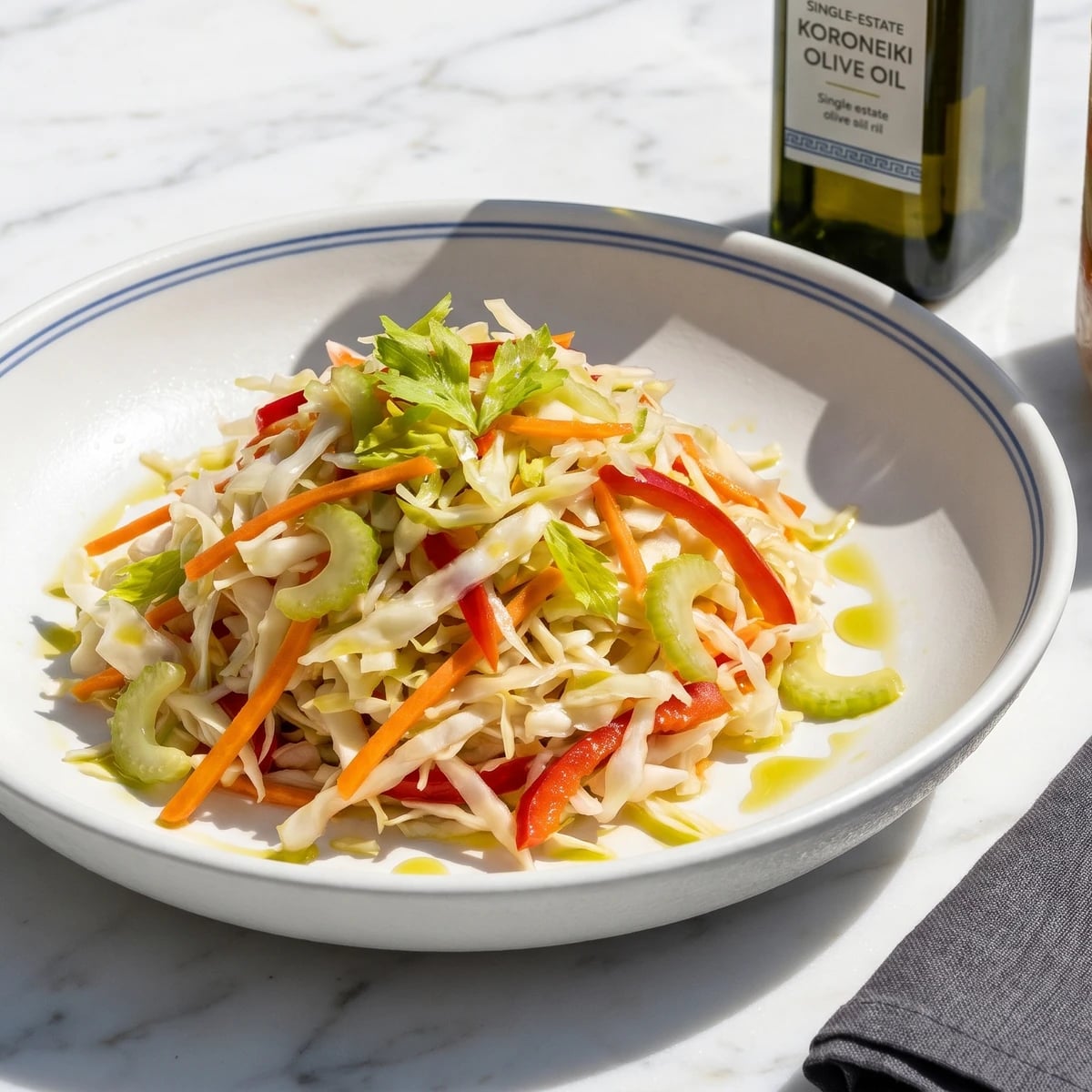
Constantinople's cabbage slaw is brined until tangy, crisp, and a little wild at the edges, then dressed simply with Koroneiki oil, because the days in the jar are the recipe.

Salads
Greek
Make Ahead
Batch Cooking
Weeknight
35 min
Active Time
0 min cook73 hr 35 min total
Yield10 to 12 servings

Politiki salata is Constantinople's cabbage slaw, not a freshly dressed lahanosalata. Politiki means from the Poli, the City, and this salad tastes of that urban Greek kitchen: white cabbage, carrot, celery, and sweet red pepper, salted and left until sour enough to wake up a plate of beans or fish.

The one method that decides it is salting before the vinegar brine. Vinegar poured straight over raw cabbage gives you a sharp outside and a tired, squeaky center. Salt first, let the vegetables shed their own juice, then pack them tightly under brine. That is how they stay crisp while the sourness goes all the way through.

I serve it cold, drained just enough, with olive oil poured at the table. It is everyday food, make-ahead food, and nistisimo without anyone needing to fuss over it. The region is the dish's surname, and here the surname is the City.

Politiki salata belongs to Constantinople's Greek Orthodox kitchen, where Politiki means 'of the Poli,' the City. The dish sits between lahanosalata, fresh cabbage salad, and toursi, pickle: shredded winter vegetables are salted, pressed, and soured so they can keep ready beside oily beans, fish, and fasting dishes. After the 1955 Istanbul pogrom and the 1964 expulsions, many Constantinopolitan Greek families carried dishes like this to Athens, Thessaloniki, and the diaspora, and the name stayed with the city.

The technique, the tradition, and the story behind every dish.

Discover Culinary Explorer

Ingredients

firm white cabbage (lachano)

Quantity

1.2kg

trimmed, cored, and finely shredded

carrots

Quantity

250g

peeled and cut into fine matchsticks

celery stalks with leaves

Quantity

180g

stalks thinly sliced and leaves chopped

sweet red horn peppers or Florina peppers

Quantity

180g

seeded and cut into thin strips

garlic cloves

Quantity

3

thinly sliced

fine non-iodized sea salt

Quantity

35g

for salting the vegetables

white wine vinegar

Quantity

500ml

5% acidity

cool water

Quantity

500ml

fine non-iodized sea salt

Quantity

10g

for the brine

extra virgin Koroneiki olive oil

Quantity

60ml

for serving

Equipment Needed

  • 2-liter glass preserving jar with lid
  • fermentation weight or small clean glass jar that fits inside the preserving jar
  • mandoline with hand guard

Instructions

  1. 1

    Prepare the jar

    Wash a 2-liter glass preserving jar, its lid, and a fermentation weight or small clean jar that fits inside the mouth. Let them air-dry while you cut the vegetables. This salad keeps because it is clean, salty, sour, and fully covered.

  2. 2

    Cut the vegetables

    Shred the cabbage into thin ribbons, about 4 to 5mm wide. Cut the carrots into fine matchsticks, slice the celery thinly, chop the celery leaves, and cut the peppers into narrow strips. Don't grate everything into fluff. Politiki salata should crunch under your teeth.

  3. 3

    Salt and rest

    Put the cabbage, carrots, celery, celery leaves, peppers, and garlic in a large nonreactive basin. Sprinkle over the 35g salt and work it through with your hands for 2 to 3 minutes, until the cabbage begins to glisten. Let it stand for 1 hour, turning it twice. The salt must go in before the vinegar: it draws out the vegetable juices so the slaw cures crisp all the way through, instead of tasting sharp only on the surface.

  4. 4

    Make the brine

    Stir the vinegar, water, and 10g salt together until the salt dissolves. The brine should taste clean, salty, and sharply sour. If your tap water smells strongly of chlorine, use boiled and cooled water.

  5. 5

    Pack under brine

    Pack the salted vegetables into the jar by the handful, pressing down hard after each addition. Pour in any juices left in the basin, then add enough vinegar brine to cover the vegetables by 2cm. Leave 3cm headspace at the top. Set the weight on the vegetables so no cabbage floats above the liquid.

    If a few strips keep floating, tuck a clean cabbage leaf over the top and weigh that down. The brine is the roof. Keep the salad under it.
  6. 6

    Cure for days

    Close the jar and refrigerate it for at least 3 days, turning or pressing the vegetables down once a day. By the third day the cabbage should be tangy, crisp, and stained lightly orange from the carrot and pepper. Five days is better if you like a sharper salad.

    If the brine smells spoiled, turns ropy, or the vegetables feel slimy, throw the jar away. A good jar smells sour, garlicky, and cabbage-clean.
  7. 7

    Dress to serve

    Lift out only what you need with a clean fork and let it drain for a minute. Dress that portion with Koroneiki olive oil at the table. No extra salt. Serve cold or just off the chill, beside beans, fried fish, roasted meat, or a nistisimo spread for the fasting table.

Chef Tips

  • Use dense winter cabbage with tight pale leaves. Bagged pre-shredded cabbage has already lost its snap, and this salad has nowhere to hide that. Liga kai kala: a few good vegetables, cut cleanly.
  • The celery matters. Use the leaves as well as the stalks, because they give the salad its sharp green smell. If you have only pale, tired celery, wait or make another salad.
  • Keep oil out of the storage jar. Oil belongs on the portion you serve, not floating over the brine for three weeks. Dress what you eat, close the jar, and put it back cold.
  • This is a good fasting-table salad. It cuts through fasolada, revithada, fried potatoes, olives, and bread without needing cheese or eggs. Orthodox kitchens knew how to eat well on plain days.

Advance Preparation

  • Make the salad at least 3 days before you plan to serve it. Five days gives a deeper sourness and a better crunch.
  • Once cured, keep it refrigerated for up to 3 weeks, as long as the vegetables stay under brine and you use a clean fork each time.
  • The vegetables can be cut and salted in the morning, then packed after the 1-hour rest. Do not dress with oil until serving.

Frequently Asked Questions

Nutrition Information

1 serving (about 180g)

Calories
90 calories
Total Fat
5 g
Saturated Fat
1 g
Trans Fat
0 g
Unsaturated Fat
4 g
Cholesterol
0 mg
Sodium
1050 mg
Total Carbohydrates
10 g
Dietary Fiber
4 g
Sugars
5 g
Protein
2 g

Note: Chef personas and recipes are created with AI assistance. Cook with care: follow safe food-handling practices, check doneness with a thermometer when needed, and adapt for allergies and your kitchen.

Where cooking meets culture.

Culinary guides, cultural storytelling, and the editorial depth that makes cooking meaningful.

Discover Culinary Explorer

More from Greek Salads & Horta

Browse the full collection