
Chef Dimitra
Cretan Staka me Avga (Στάκα με αυγά)
In Crete, eggs meet staka, sheep's-milk cream warmed until its butter separates, making a breakfast so rich it needs only bread and restraint.
A cooking platform built around craft, culture, and the stories behind what we eat.
Created by
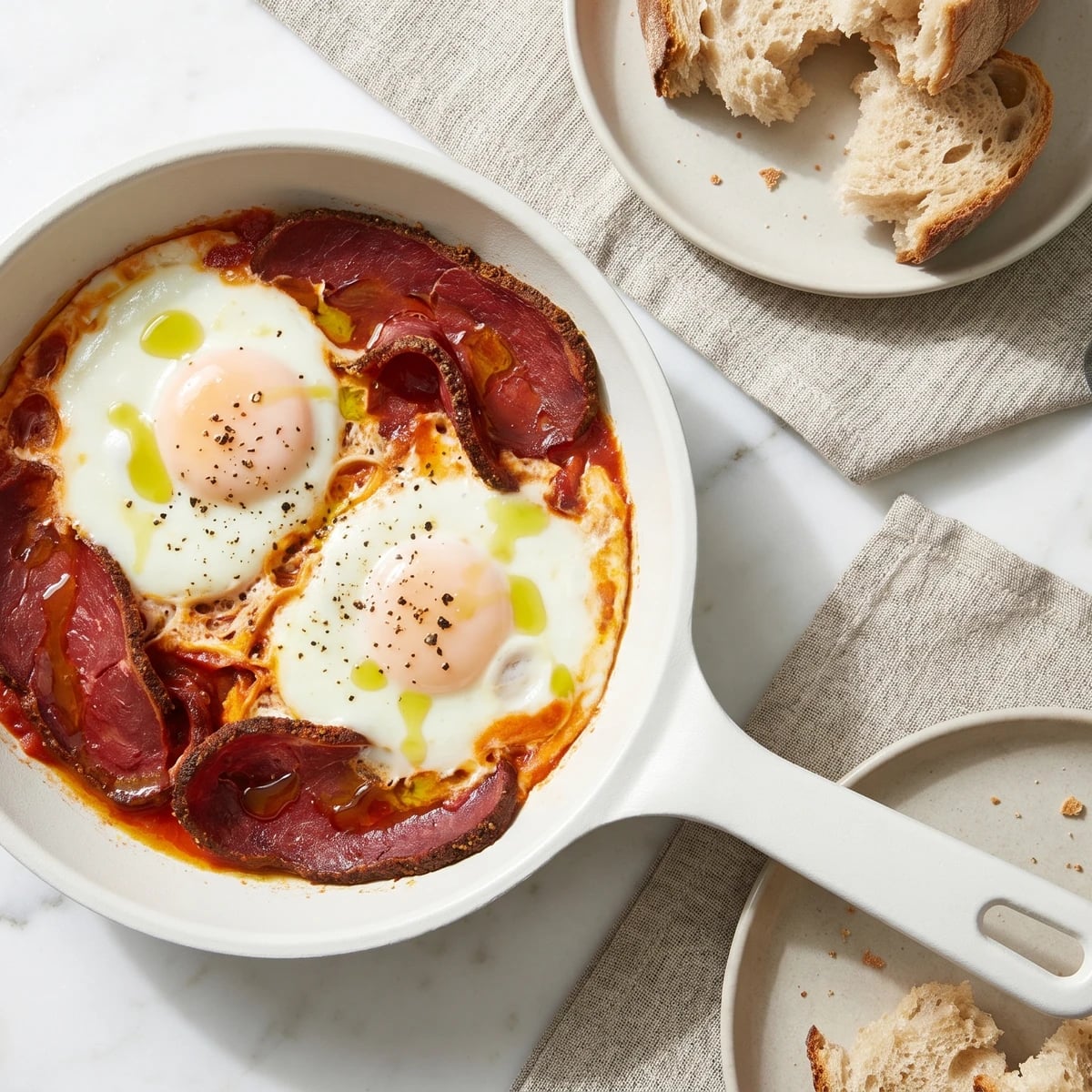
Politiki eggs with pastourma are a quick Asia Minor breakfast: cured beef warmed gently in fat, tomato just softened, eggs set low and slow over the spiced pan.
Politiki avga me pastourma are eggs from the Constantinopolitan and Asia Minor table, with pastourma as their surname. Thin slices of cured beef, wrapped in çemen, warm in the pan before the eggs go in, so the fat carries fenugreek, garlic, and paprika through every bite.
The one rule is low heat. Pastourma is already cured, so you're not cooking it like fresh meat. You're waking it up. Push the heat and the spice crust catches, turning sharp and bitter before the eggs have even set. Keep the pan gentle and the yolks soft, and you get breakfast that tastes much larger than its few ingredients.
A little tomato belongs when the tomato is good, especially in summer. If it isn't, leave it out and make the plainer pan. Λίγα και καλά. My grandmother Despina would have called this food for a hungry morning, not a recipe, but a recipe written down is a recipe saved.
Pastourma entered Greek cooking most strongly through the Ottoman urban kitchens of Constantinople, Smyrna, and Cappadocia, then traveled with Asia Minor refugees after 1922. Its coating, called çemen, is built on fenugreek, garlic, and red pepper, and it marks the dish as Politiki rather than mainland village cooking. Eggs with pastourma belong to the same shared breakfast world as pastırmalı yumurta, but Greek refugee families kept their own pan habits, often adding ripe tomato when the season allowed.
Quantity
80g
thinly sliced, paper removed
Quantity
4
Quantity
20ml
Quantity
15g
Quantity
120g
grated or finely chopped
Quantity
1 pinch
Quantity
to finish
Quantity
as needed
for serving
| Ingredient | Quantity |
|---|---|
| Greek pastourma (παστουρμάς)thinly sliced, paper removed | 80g |
| large eggs | 4 |
| extra virgin olive oil | 20ml |
| unsalted butter | 15g |
| small ripe tomatograted or finely chopped | 120g |
| fine sea salt | 1 pinch |
| freshly ground black pepper | to finish |
| country breadfor serving | as needed |
Set a small heavy frying pan over low heat. Add the olive oil and butter, letting the butter melt gently without browning. This dish is quick, so have the eggs cracked into a bowl and the pastourma ready beside the stove.
Lay the pastourma slices in the fat for 30 to 45 seconds, just until they loosen, shine, and scent the pan. Don't fry them hard. The çemen, the fenugreek and garlic spice paste on the outside, turns bitter if it scorches, and that is the whole dish spoiled.
Add the grated tomato around the pastourma, not on top of it, and cook for 2 minutes until the raw smell leaves and the juices thicken slightly. You want a small glossy base, not a sauce. In winter, skip the tomato unless you have a good one.
Slide in the eggs, keeping the yolks whole. Salt only the whites, because pastourma already carries plenty. Cover the pan and cook over low heat for 3 to 4 minutes, until the whites are set and the yolks are still soft.
Finish with black pepper and bring the pan straight to the table. Eat with country bread dragged through the spiced oil, tomato, and yolk. This is not a tidy dish. It is breakfast with authority.
1 serving (about 250g)
Culinary guides, cultural storytelling, and the editorial depth that makes cooking meaningful.
Discover Culinary Explorer
Chef Dimitra
In Crete, eggs meet staka, sheep's-milk cream warmed until its butter separates, making a breakfast so rich it needs only bread and restraint.

Chef Dimitra
Andros's froutalia is a thick pan omelet of potatoes, village sausage, and herbs, cooked slowly so the potatoes soften first and the eggs set around them.

Chef Dimitra
Ionian and Cretan strapatsada is the summer egg pan: ripe tomato cooked down until sweet, feta folded in at the end, and eggs kept soft enough for bread.

Chef Dimitra
Mani's tomato eggs are made hearty with rendered syglino, sharp sfela, and ripe tomato cooked down until the oil shows at the edge of the pan.