Chef Graziella
Casoncelli alla Bergamasca
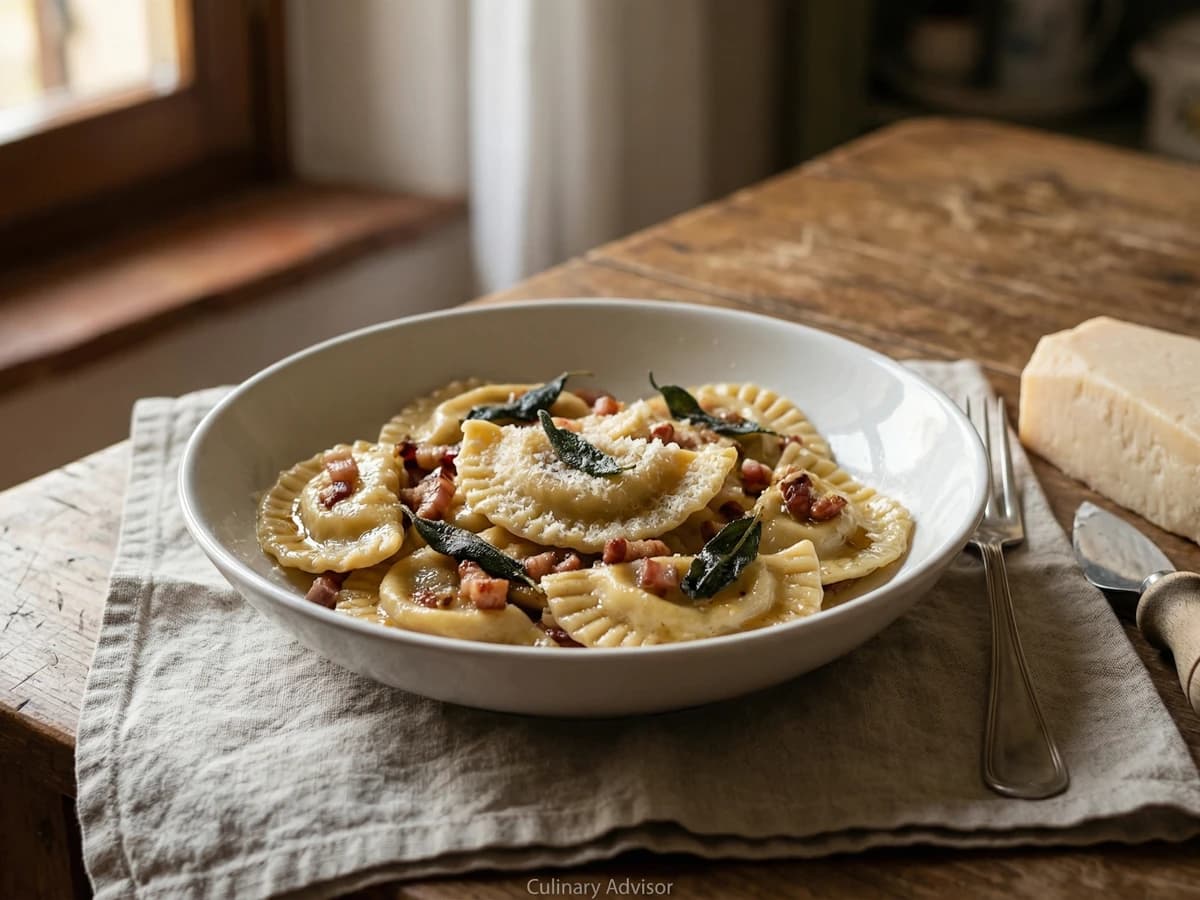
The stuffed pasta of Bergamo's valleys, where crushed amaretti in the meat filling creates a sweet-savory balance that exists nowhere else in Italy. Dressed simply in browned butter and sage.
A cooking platform built around craft, culture, and the stories behind what we eat.
Created by
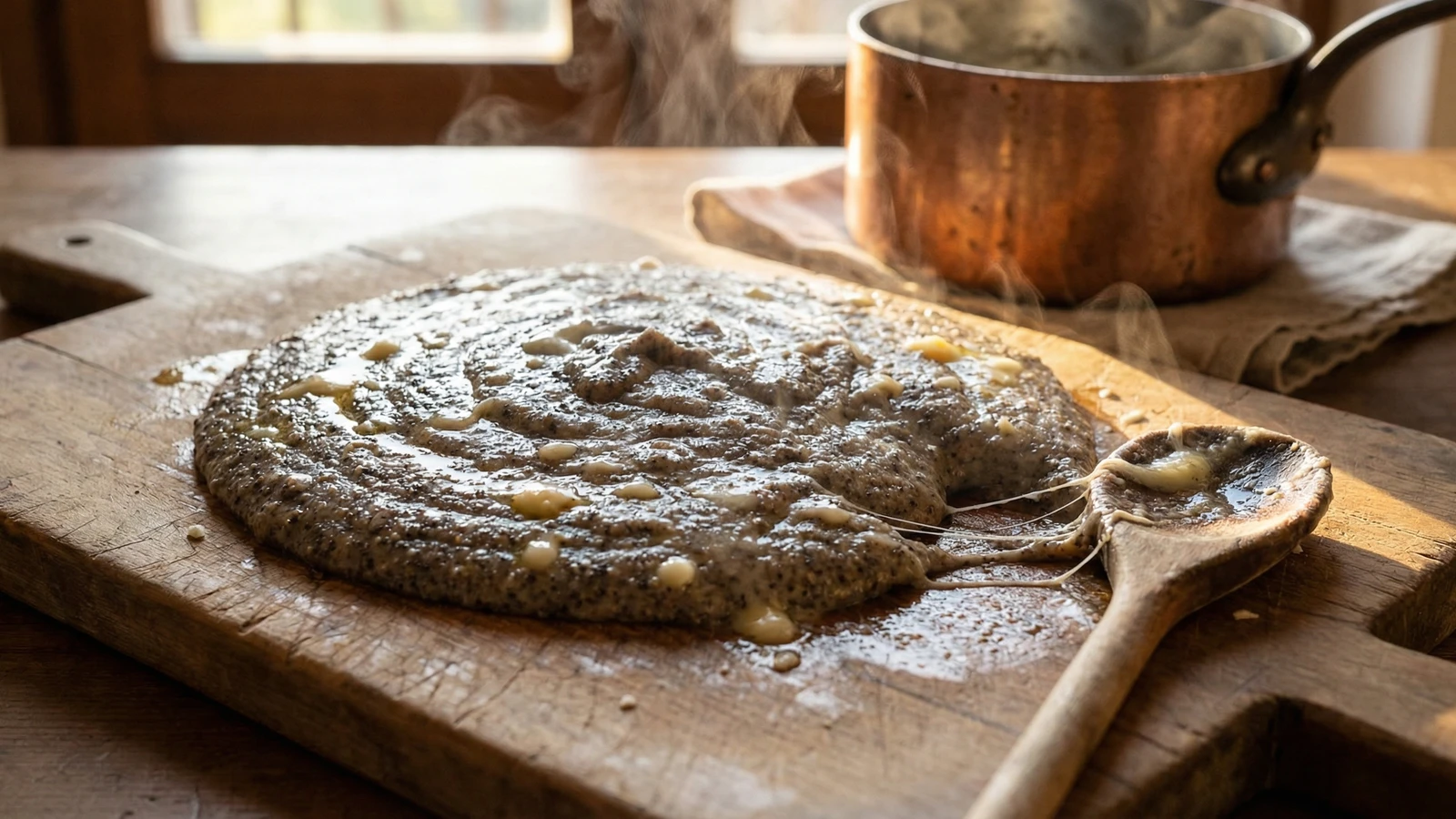
The dark polenta of Valtellina, where buckwheat flour meets cornmeal and local alpine cheese transforms a peasant dish into something that sustained mountain people through centuries of hard winters.
Polenta taragna is not the golden polenta you know. It is darker, nuttier, more complex. The buckwheat flour that gives it its distinctive color and flavor grows where corn cannot, in the high valleys of Valtellina near the Swiss border. This is mountain food, created by people who understood that survival required calories, warmth, and the wisdom to use what the land provided.
The name comes from the tarai, the long wooden stick used to stir the pot. For an hour, sometimes longer, the cook stands at the hearth and stirs. There is no other way. Instant polenta is an abomination here, a betrayal of everything this dish represents. The slow cooking allows the starches to hydrate properly, the buckwheat to release its earthy perfume, the cornmeal to become tender without becoming paste.
The cheese is not optional, and the cheese must be correct. Bitto, aged in the high alpine meadows, or Casera from the Valtellina valley: these are what tradition demands. They melt into the hot polenta, creating strings and pockets of richness. American substitutes will not taste the same, but a good young fontina or taleggio comes closer than most. What you cannot substitute is the butter. It must be generous. The mountains are cold, and this dish was made to fortify.
Buckwheat arrived in the Alpine valleys from Central Asia in the 15th century, thriving at altitudes where corn struggled to mature. Valtellina farmers began blending the two grains, creating taragna as a way to stretch precious cornmeal while adding nutrition. The dish became so central to mountain life that families measured wealth partly by how much cheese they could melt into their polenta.
Quantity
1 cup
Quantity
2 cups
Quantity
10 cups
Quantity
1 tablespoon
Quantity
8 tablespoons (1 stick)
cut into pieces
Quantity
12 ounces
cut into small cubes
| Ingredient | Quantity |
|---|---|
| buckwheat flour | 1 cup |
| coarse cornmeal | 2 cups |
| cold water | 10 cups |
| kosher salt | 1 tablespoon |
| unsalted buttercut into pieces | 8 tablespoons (1 stick) |
| Bitto or Casera cheesecut into small cubes | 12 ounces |
Whisk together the buckwheat flour and cornmeal in a bowl. This ensures even distribution when you add them to the water. The buckwheat is finer and can clump if added separately.
Pour the cold water into a heavy pot, preferably copper if you have it, otherwise a thick-bottomed Dutch oven. Add the salt. Beginning with cold water and adding the flour before heating prevents lumps more effectively than any amount of whisking into boiling water.
While the water is still cold, add the flour mixture in a slow, steady stream, whisking constantly. Continue whisking until no lumps remain and the mixture is smooth. Only then do you turn on the heat.
Place the pot over medium heat. As the mixture warms, switch from a whisk to a long wooden spoon or paddle. Stir constantly in one direction. When the polenta begins to bubble, reduce the heat to low. The surface should show only occasional lazy bubbles, never a rolling boil. Continue stirring for 45 minutes to one hour.
The polenta is ready when it pulls away from the sides of the pot cleanly and has thickened to a consistency that holds its shape on a spoon for a moment before slowly sliding off. The raw flour taste should be gone, replaced by a toasted, earthy sweetness. Taste it. Your palate tells you more than any timer.
Remove the pot from the heat. Add the butter pieces and stir vigorously until completely melted and incorporated. Add the cheese cubes and continue stirring. The cheese should melt into strings and pockets, not disappear completely. Some small pieces remaining is correct and traditional. The polenta should become glossy and rich.
Pour the polenta onto a large wooden board set in the center of the table, as they do in Valtellina, or into warmed individual bowls. Serve at once. Polenta taragna waits for no one. It stiffens as it cools, and the cheese loses its pull. Call everyone to the table before you add the cheese, not after.
1 serving (about 400g)
Culinary guides, cultural storytelling, and the editorial depth that makes cooking meaningful.
Discover Culinary ExplorerChef Graziella
The stuffed pasta of Bergamo's valleys, where crushed amaretti in the meat filling creates a sweet-savory balance that exists nowhere else in Italy. Dressed simply in browned butter and sage.

Chef Graziella
The Milanese cutlet made with pork instead of veal: bone-in, pounded thin, breaded simply, fried in clarified butter until the crust shatters at the touch of a fork. This is not schnitzel. This is older.
Chef Graziella
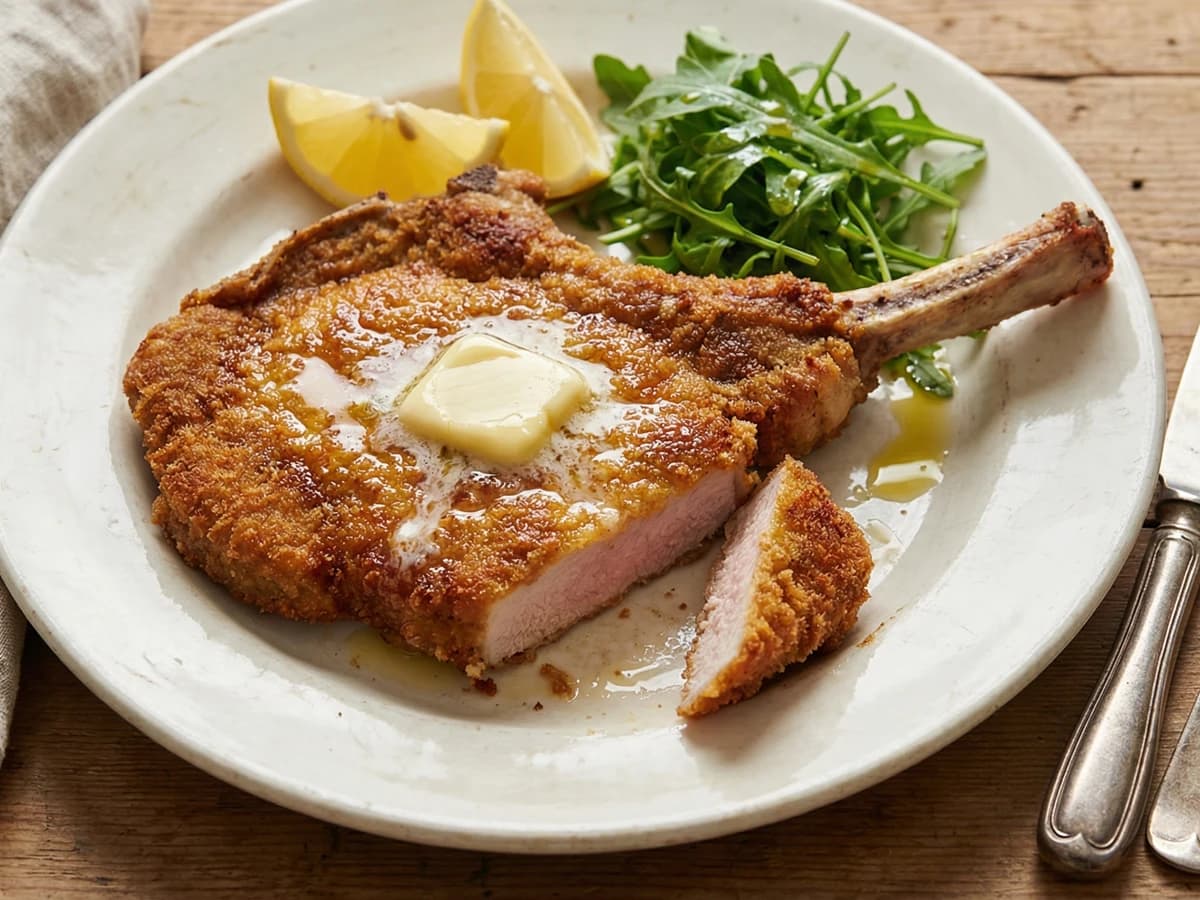
The original bone-in veal cutlet of Milan, pounded thin and fried in clarified butter until the crust shatters and the meat stays juicy. The Viennese borrowed this dish. The Milanese perfected it.
Chef Graziella
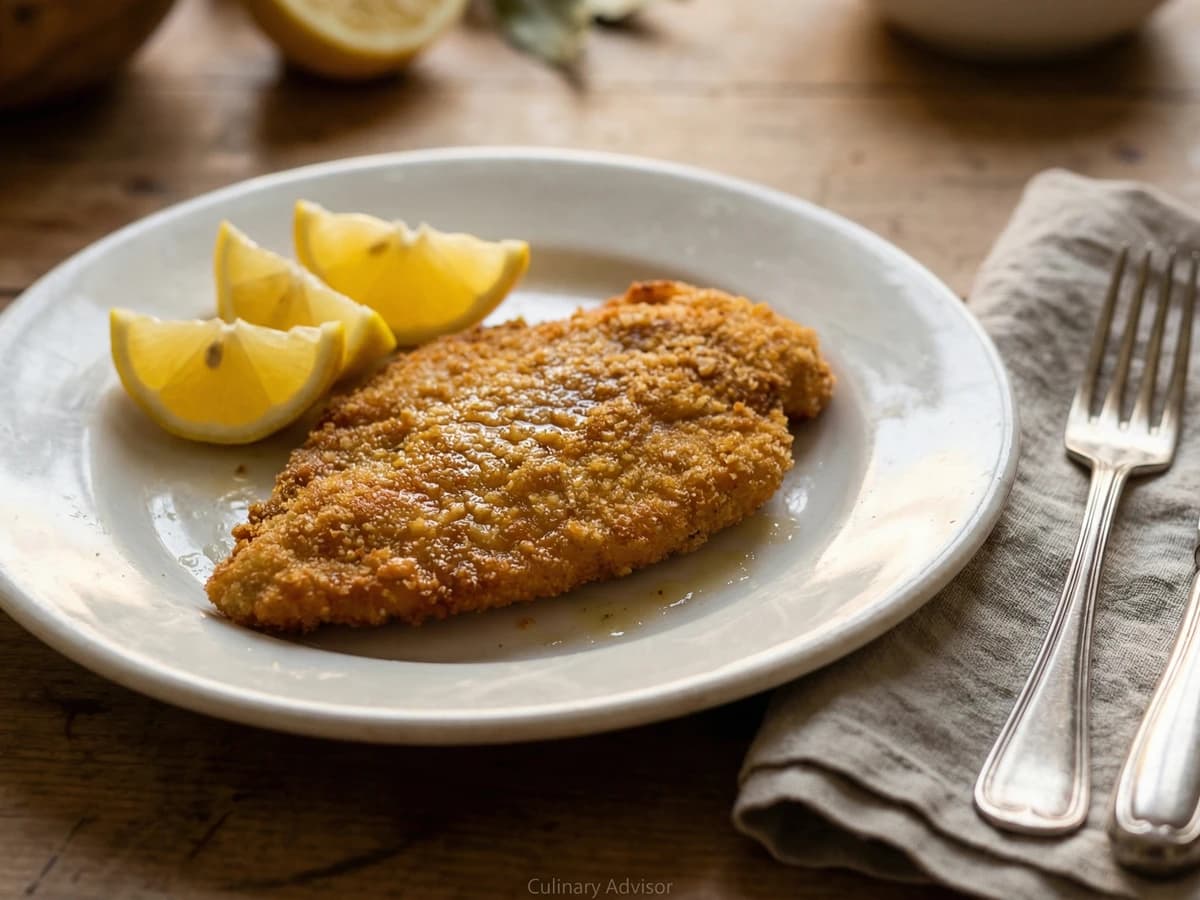
The golden cutlet of Lombardy, where chicken is pounded thin, coated in the finest crumbs, and fried in butter until it shatters at the touch of a fork. Lemon is the only adornment it needs.