
Chef Makoa
Ahimaʻa Puaʻa (Tahitian Earth-Oven Pork)
Tahitian puaʻa cooked in the spirit of the ahimaʻa, the earth oven of maʻa Tahiti, wrapped in banana leaf and held low and slow until the meat gives in two fingers.
A cooking platform built around craft, culture, and the stories behind what we eat.
Created by
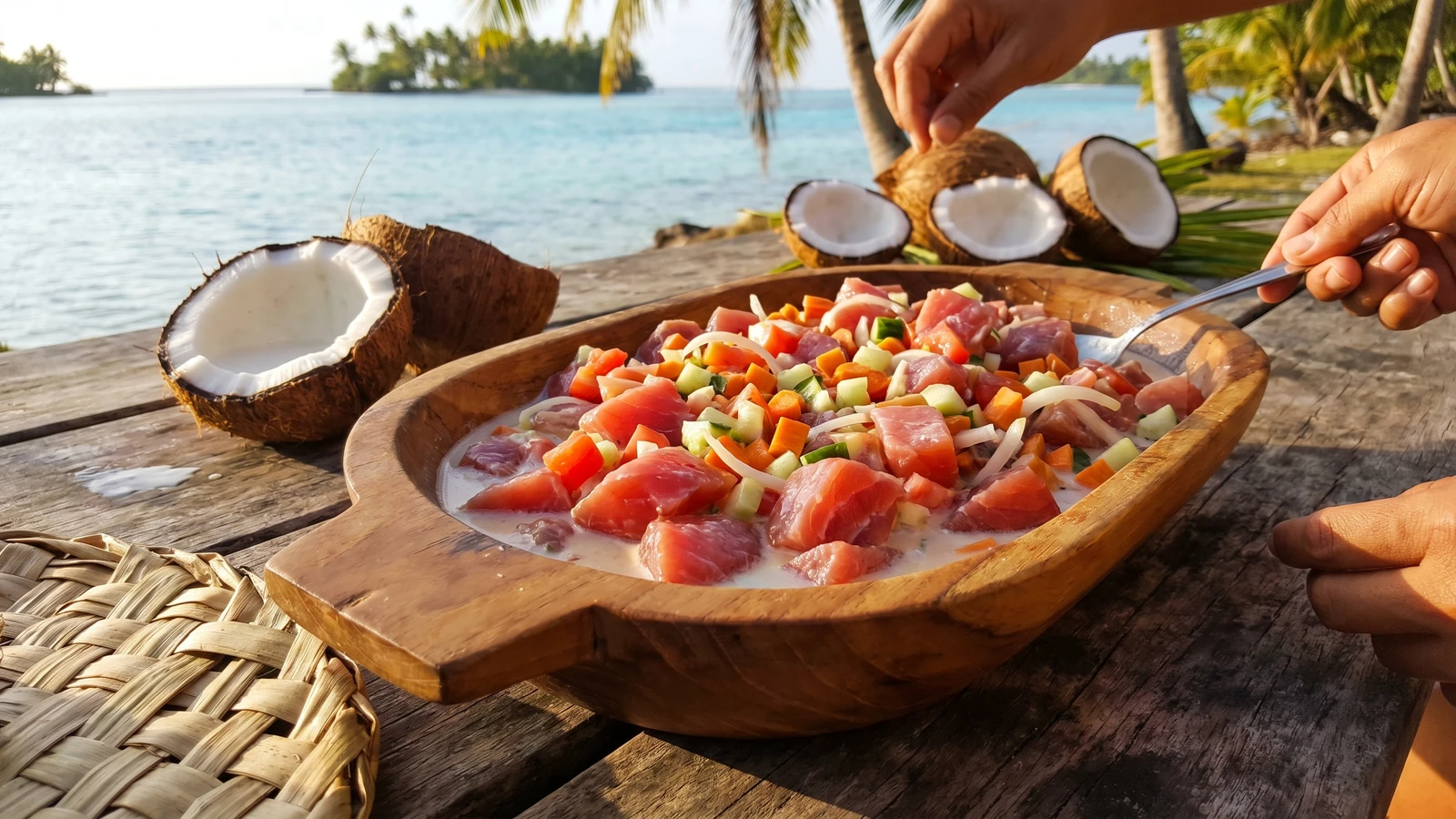
Raw ʻahi turned just enough in lime, bathed in fresh coconut milk, and run through with cucumber and tomato. Tahiti calls it ʻia ota; poisson cru is the French name sitting beside it.
One ocean caught this fish, but Tahiti gives it this bowl. ʻIa ota, raw fish, is the reo Tahiti name under the French poisson cru, and when I first ate it at a cousin's table near Papeʻete, nobody made a big speech. They just set the bowl down cold, white with coconut milk, red with tuna, green with cucumber, and let the food talk first.
This is Tahitian food, clear and named. Sāmoa has oka iʻa, Tonga has ʻota ʻika, the Cook Islands have ika mata, and back home in Hawaiʻi we make poke with limu and ʻinamona. Same fish, different bowl. The family shows because each island keeps its own hand, not because we smear them into one nameless plate.
The whole law is the fish. Buy ʻahi from somebody who can tell you when it came out of the water, not just what it costs. Fresh fish smells like the ocean and almost nothing else. Then be gentle: lime close to the table, coconut milk after, vegetables last so they stay crisp. No need make it precious. Just don't let it sit there until the acid turns it hard.
For the deep parts of Tahiti's maʻa, the foodways and the table around it, I send you to Tahitian elders and cooks. They should tell their own story. I cook this open-handed, one ocean, one canoe, one root, and this one belongs to Tahiti.
ʻIa ota is Tahiti's raw-fish-and-coconut dish, widely known today by the French colonial name poisson cru, with the older reo Tahiti name still carrying the food's first identity. Its cousins run across the Triangle: oka iʻa in Sāmoa, ʻota ʻika in Tonga, ika mata in the Cook Islands, and poke in Hawaiʻi, each shaped by its own island's reef, market, and table. The dish also shows how Polynesian food keeps living in the present, with ancestral fish-and-coconut knowledge sharing space with French, Chinese, and everyday market influences in modern Tahiti.
Quantity
1 pound
cut into 3/4-inch cubes
Quantity
4 to 5
juiced
Quantity
1 1/4 cups
or well-stirred thick canned coconut milk
Quantity
1 small
seeded and diced
Quantity
2
seeded and diced
Quantity
1 small
thinly sliced
Quantity
1 medium
julienned or cut into fine matchsticks
Quantity
2
thinly sliced
Quantity
1 to 1 1/2 teaspoons
plus more to taste
Quantity
1 lime
for serving
| Ingredient | Quantity |
|---|---|
| sashimi-grade ʻahi tunacut into 3/4-inch cubes | 1 pound |
| limesjuiced | 4 to 5 |
| fresh coconut milkor well-stirred thick canned coconut milk | 1 1/4 cups |
| cucumberseeded and diced | 1 small |
| ripe tomatoesseeded and diced | 2 |
| sweet onionthinly sliced | 1 small |
| carrotjulienned or cut into fine matchsticks | 1 medium |
| green onionsthinly sliced | 2 |
| fine sea saltplus more to taste | 1 to 1 1/2 teaspoons |
| lime wedges (optional)for serving | 1 lime |
Set a wide mixing bowl in the fridge while you cut the vegetables and fish. This is a quick dish, but quick doesn't mean careless. The bowl should feel cool, the knife should be sharp, and everything should be ready before the lime touches the ʻahi.
Cut the ʻahi into clean 3/4-inch cubes, wiping the knife if it drags. Look at the fish before you trust it raw: glossy flesh, clean ocean smell, no sourness, no gray tired edges. If the fish doesn't make you want to eat one cube plain, no make this dish today.
Put the fish in the chilled bowl with 1 teaspoon sea salt and enough lime juice to coat it well. Toss gently and let it sit 3 to 5 minutes, just until the outside of each cube turns pale and opaque while the center stays rosy. The lime is turning the fish, not cooking it through.
Pour off most of the lime juice, leaving only a bright gloss clinging to the tuna. This keeps the bowl from turning sharp and watery. Let it go too long and the acid makes the fish tight, and no blame the fish for what the cook let happen.
Fold in the fresh coconut milk until the fish is bathed white and glossy. Taste the coconut milk first; it should smell sweet and clean, not stale. A thick canned coconut milk is fine on a weeknight, but stir it hard so the cream and water come back together.
Add the cucumber, tomato, sweet onion, carrot, and green onion last. Fold with a soft hand so the tomato doesn't break down and the cucumber keeps its bite. Taste for salt and lime. You want cold, creamy, bright, and clean, with the tuna still reading fresh through the coconut.
Spoon the ʻia ota into a carved wooden bowl or a plain serving bowl set on a woven mat, and serve with lime wedges. Eat it the same hour you make it. Dress it, bless it, eat it. This dish waits for no one.
1 serving (about 365g)
Culinary guides, cultural storytelling, and the editorial depth that makes cooking meaningful.
Discover Culinary ExplorerChef Makoa
Tahitian puaʻa cooked in the spirit of the ahimaʻa, the earth oven of maʻa Tahiti, wrapped in banana leaf and held low and slow until the meat gives in two fingers.
Chef Makoa
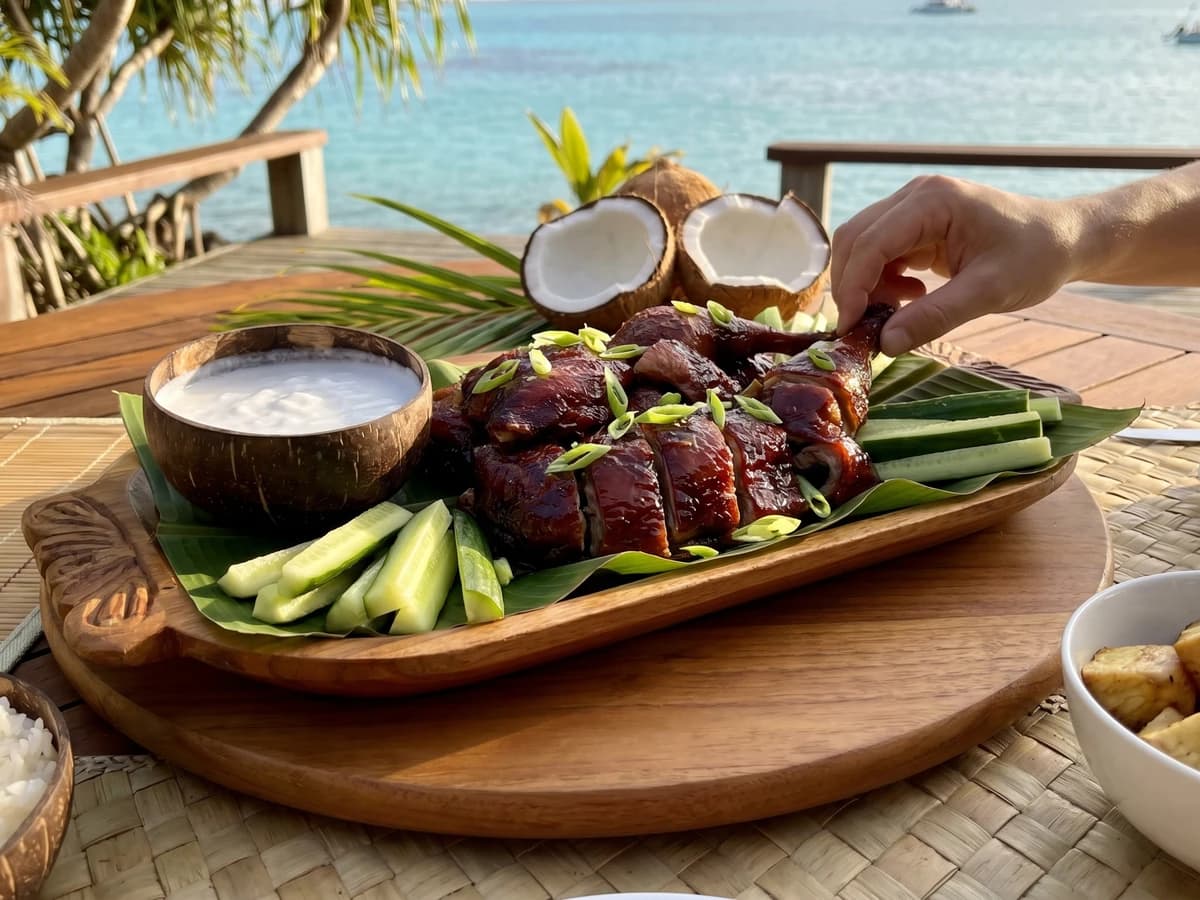
Glossy Chinese-Tahitian roast duck from Papeʻete, lacquered with soy, honey, and five-spice, carved for the lazy Susan, then dipped into thick fresh coconut milk beside rice, ʻuru, and a crowded table.
Chef Makoa
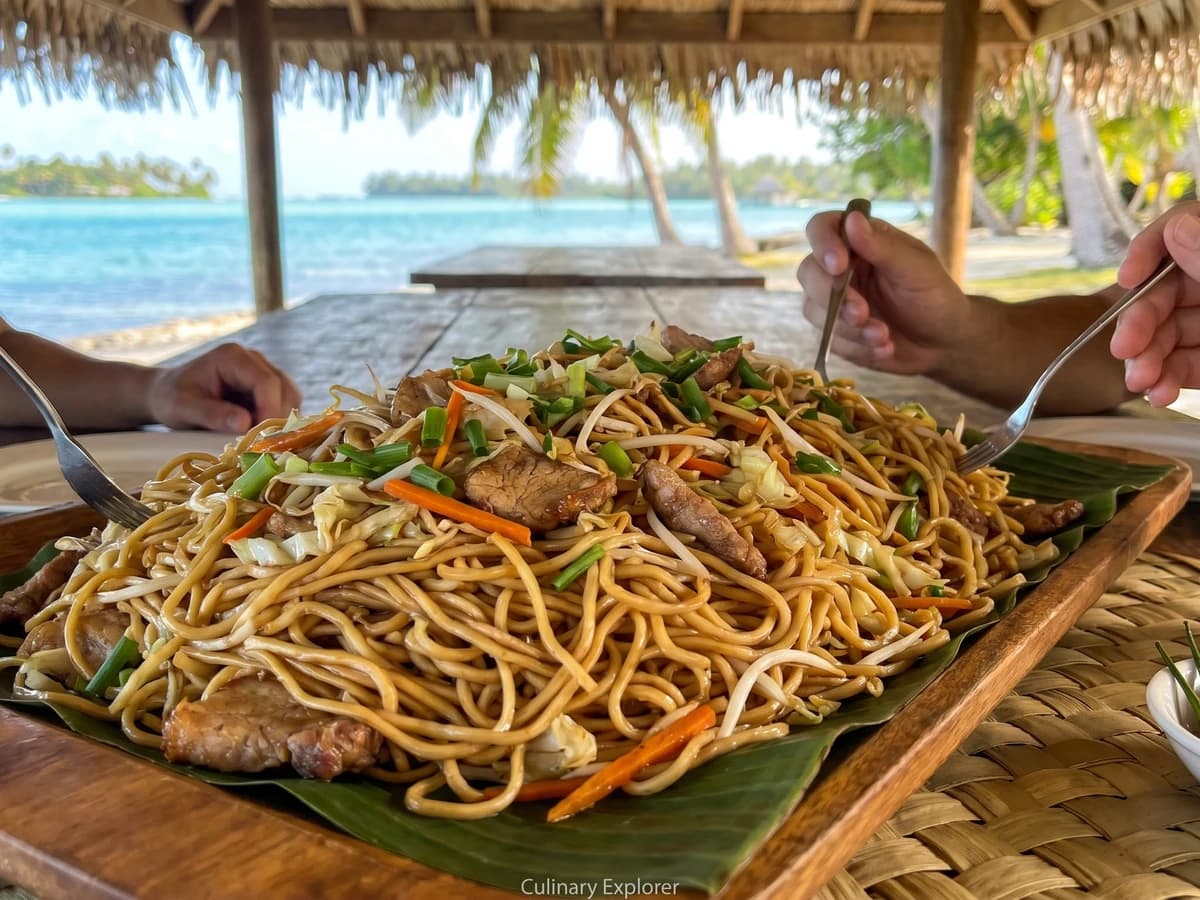
Tahiti's chao men is Hakka chow mein made fully local: glossy egg noodles, pork, cabbage, carrot, and green onion, fast from the wok and generous enough for the table.

Chef Makoa
Tahiti's fāfaru takes raw ʻahi into miti fāfaru, a pungent fermented seawater brine, then brings it back to the table with mitihue, breadfruit, and the lesson that good funk is food kept alive.