
Chef Makoa
ʻAwa (Hawaiian Kava Root Drink)
Hawaiian ʻawa is kava root kneaded cool, strained into an ʻapu coconut cup, and shared with a quiet hand: earthy, peppery, calming, and far older than the tourist glass.
A cooking platform built around craft, culture, and the stories behind what we eat.
Created by
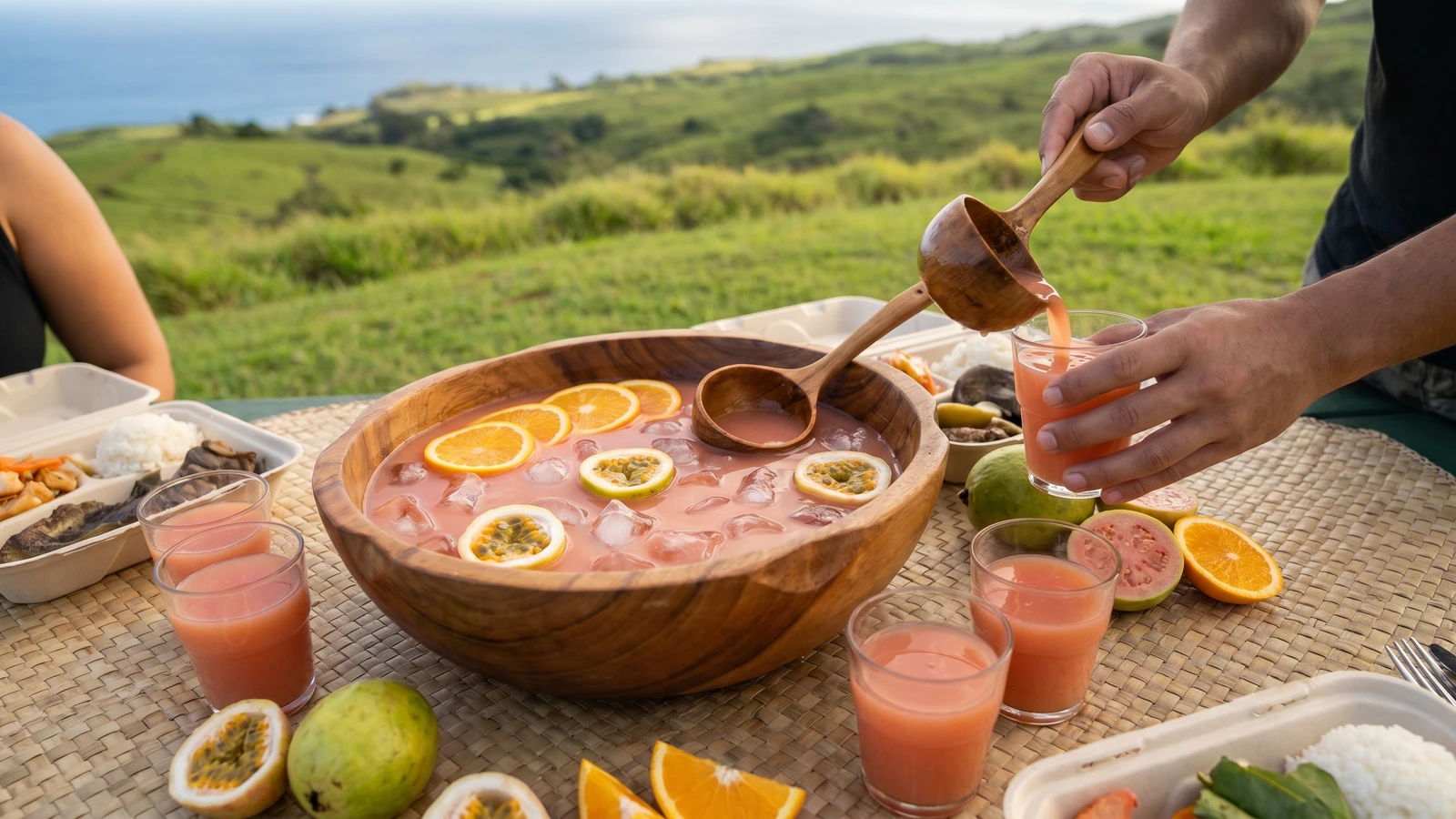
Maui's everyday cooler, lilikoi, orange, and guava stirred bright and cold, the kind of juice that belongs beside plate lunch, beach picnics, and hotel breakfast trays.
Some foods are genealogy, and some are the everyday cups that tell you where you are before anybody says the island name. POG belongs to Hawaiʻi, and more specifically to Maui, born in a dairy kitchen in 1971 and carried from school lunches to plate-lunch counters to the airline tray. No need make it sacred when it's not. This one is everyday aloha, cold and bright, and still it knows its place.
Lilikoi, the passion fruit, gives the edge. Orange gives the round sweet body. Guava, kuawa, gives that pink smell people remember from backyards and roadside stands, though the fruit itself came later with all the crossings and changes that made modern Hawaiʻi food what it is. Deep food, not mission food, that's one doorway. But local food is real too. Spam musubi, plate lunch, shave ice, POG in a paper cup, that's how the islands actually eat now.
Across the Triangle, the cousins all have their own cold cups: Tahiti with fresh fruit by the lagoon, Sāmoa and Tonga with coconut and citrus on the feast table, the Cooks with fruit drinks poured for the whole family. Same ocean, different bowl. This one is Hawaiian, Maui's hand, and you serve it cold and close to drinking so the lilikoi stays alive and the guava doesn't go flat.
POG was created on Maui in 1971 by Mary Soon for Haleakalā Dairy, blending passion fruit, orange, and guava into a juice that became part of Hawaiʻi's modern local food life. It is not an ancestral canoe-crop preparation like poi, ʻulu, or the imu foods, but it sits honestly in the post-plantation, plate-lunch Hawaiʻi table, where introduced fruits and everyday convenience became local memory. The name simply comes from the initials of passion fruit, orange, and guava, but the drink became one of those small tastes that tells many people, at once, they have landed in Hawaiʻi.
Quantity
2 cups
strained
Quantity
2 cups
freshly squeezed if possible
Quantity
2 cups
Quantity
1 to 2 tablespoons
to taste
Quantity
1 tablespoon
to brighten
Quantity
for serving
| Ingredient | Quantity |
|---|---|
| passion fruit juice or lilikoi pureestrained | 2 cups |
| orange juicefreshly squeezed if possible | 2 cups |
| guava nectar or guava juice | 2 cups |
| honey or cane sugar (optional)to taste | 1 to 2 tablespoons |
| fresh lime juice (optional)to brighten | 1 tablespoon |
| ice | for serving |
If you're starting with fresh lilikoi, scoop the pulp and press it through a fine strainer until you have a sharp, golden juice with no hard seeds. That tart edge is the voice of the drink, so don't bury it. If you're using bottled passion fruit juice, taste first; some are already sweet.
Pour the lilikoi, orange juice, and guava into a pitcher in equal parts and stir until the color turns soft sunset-pink and even. This is the whole law of POG: passion for bite, orange for body, guava for perfume. Simple. No fuss.
Taste it cold if you can, because warm juice lies to you. If it needs help, add a little honey or cane sugar for sweetness, or a squeeze of lime if the guava is too heavy. Eat what you have, yeah? Every brand of juice is different, so let your tongue finish the job.
Chill the pitcher until very cold, then pour over ice right before drinking. Stir once more before serving, since guava settles a little. Serve it with plate lunch, sandwiches, poke, or a picnic spread, cold and abundant enough for one more cup.
1 serving (about 255g)
Culinary guides, cultural storytelling, and the editorial depth that makes cooking meaningful.
Discover Culinary ExplorerChef Makoa
Hawaiian ʻawa is kava root kneaded cool, strained into an ʻapu coconut cup, and shared with a quiet hand: earthy, peppery, calming, and far older than the tourist glass.

Chef Makoa
A quiet Hawaiian cup from native koʻokoʻolau leaves, steeped golden and clean, the kind of comfort the kūpuna kept close beside māmaki and shared without fuss.

Chef Makoa
Hawaiʻi's lilikoʻi, pressed from wrinkled passion fruit and chilled sweet-tart, is everyday local refreshment: bright enough straight, gentle enough to stir into POG.

Chef Makoa
Hawaiʻi's māmaki leaf steeped into a smooth, earthy, caffeine-free cup, old household lāʻau brought forward for a quiet modern kitchen.