
Chef Isabel
Aguaillo de la Sierra de Cadiz
Aguaillo is from the Sierra de Cadiz: cold water, stale bread, garlic, oil and vinegar, closer to a field drink than a bowl of soup, and sharp enough to wake you in the heat.
A cooking platform built around craft, culture, and the stories behind what we eat.
Created by
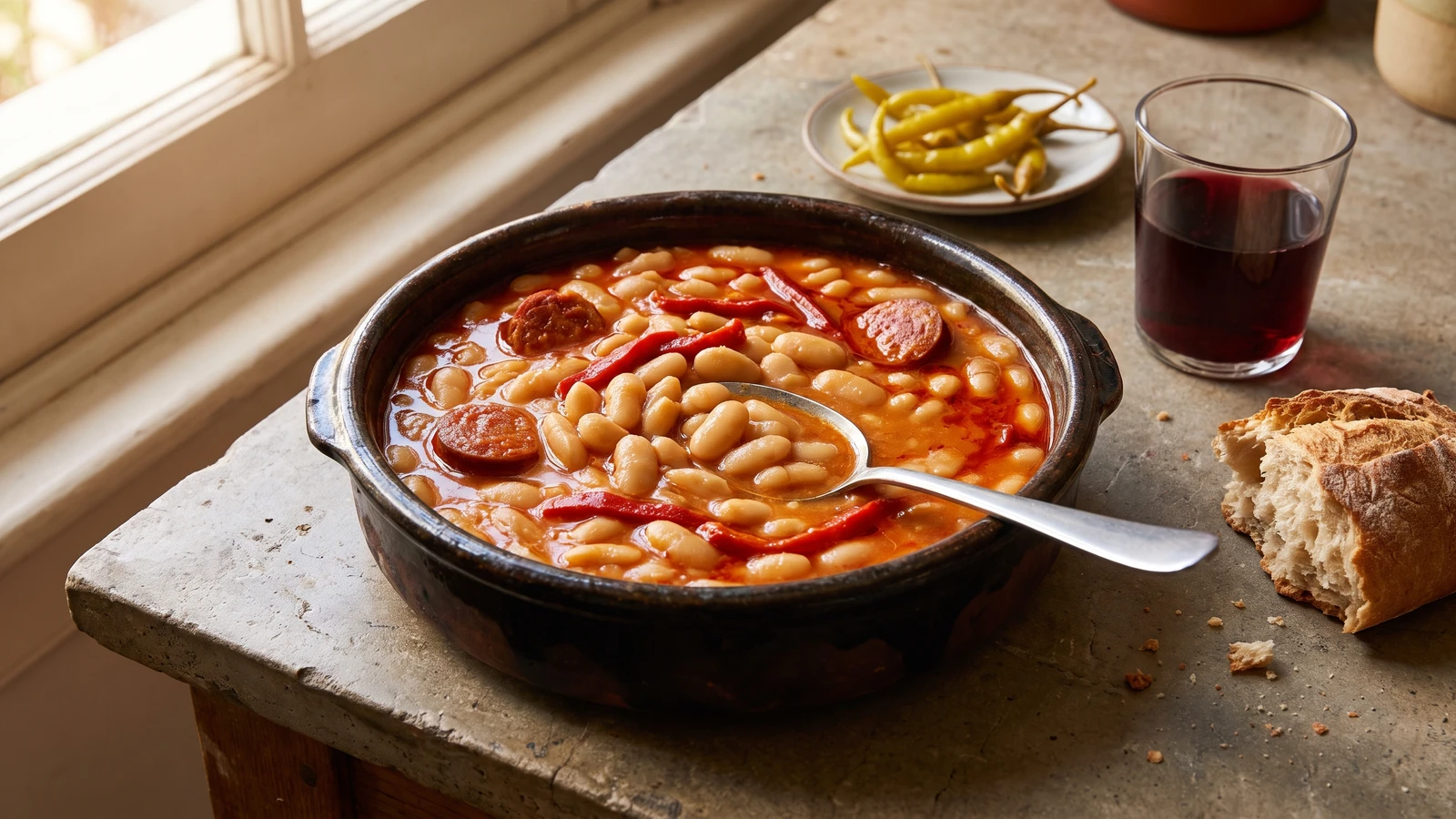
Pochas a la Riojana belong to La Rioja: fresh white beans simmered gently, then thickened with a pureed piquillo sofrito and a little chorizo until the broth turns sweet, red, and spoon-coating.
Pochas a la Riojana are La Rioja's late-summer bean stew, made with fresh white shelling beans, piquillo peppers, and a little chorizo that stains the pot red with pimenton. Navarra loves pochas too, often paler and cleaner with vegetables. La Rioja leans into the sweet red pepper and the cured larder. That is what makes this pot riojana, not just a neighbour's beans.
The method that decides it is the sofrito, the slow onion base. Cook the onion and green pepper low until they go soft and golden, then let the tomato lose its water and the piquillos turn sweet in the oil. Puree part of that with a ladle of tender beans and broth, then return it to the pot. No flour. No clever thickener. The beans and peppers make their own body if you give them time.
Fresh pochas are a market gift, and they don't want the rough treatment of dried beans. Keep them at a quiet tremble, never a hard boil, or the skins split and the stew turns cloudy instead of creamy. If you are far from La Rioja, frozen pochas are the best substitute and need no apology. Dried small white beans work when they must, but they taste earthier and take longer, so soak them well and be patient.
No hace falta haber pisado Espana. You need good beans, real chorizo, piquillos from a jar, and a heavy pot. Let it rest before you serve it, because cocina de cuchara, spoon food, always gathers itself after the heat. Siempre sale, si lo sigues.
Pochas are fresh shelling beans harvested before drying, a late-summer and early-autumn food of the Ebro valley shared by La Rioja, Navarra, and Aragon. In La Rioja, the pot often takes its color from the cured pork larder and from red peppers, especially piquillos, which thicken the broth into a sweet red cream. Across the regional line, Navarrese pochas are often served more simply with vegetables or with clams; the Riojan version is fuller, redder, and tied to chorizo.
Quantity
700g
rinsed and picked over
Quantity
120g
cut into thick coins
Quantity
60ml
divided
Quantity
180g
finely chopped
Quantity
120g
finely chopped
Quantity
3 cloves
finely chopped
Quantity
180g
grated
Quantity
180g
drained, with 2 peppers reserved in strips
Quantity
1 teaspoon
Quantity
1
Quantity
1.2 litres, plus more as needed
Quantity
7g, plus more to taste
Quantity
to serve
| Ingredient | Quantity |
|---|---|
| fresh shelled pochas, or frozen pochasrinsed and picked over | 700g |
| chorizo riojano or good Spanish cooking chorizocut into thick coins | 120g |
| extra virgin olive oildivided | 60ml |
| yellow onionfinely chopped | 180g |
| green Italian pepperfinely chopped | 120g |
| garlicfinely chopped | 3 cloves |
| ripe tomatograted | 180g |
| jarred piquillo peppersdrained, with 2 peppers reserved in strips | 180g |
| sweet pimenton de la Vera | 1 teaspoon |
| bay leaf | 1 |
| cold water | 1.2 litres, plus more as needed |
| fine sea salt | 7g, plus more to taste |
| pickled guindillas (optional) | to serve |
Warm 2 tablespoons of the olive oil in a heavy pot over medium-low heat. Add the chorizo coins and cook them gently for 2 to 3 minutes, just until the oil turns red and glossy. Lift the chorizo onto a plate. Don't brown it hard; you want its pimenton in the oil, not dry little coins.
Add the remaining olive oil, the onion, green pepper, and a pinch of the measured salt to the same pot. Cook over low heat for 15 to 18 minutes, stirring now and then, until the vegetables are soft, sweet, and dark gold at the edges. Add the garlic for 1 minute, then the grated tomato. Cook another 10 minutes, until the tomato has lost its water and the oil shows around the edges.
Chop all but the reserved piquillo strips and stir them into the sofrito with the sweet pimenton. Cook for 3 minutes, keeping the heat low so the pimenton smells warm and sweet but never scorches. Return the chorizo to the pot, add the pochas and bay leaf, then pour in enough cold water to cover the beans by about 3cm.
Bring the pot slowly to a simmer, then lower the heat until the surface barely trembles. Cook uncovered, or half-covered if your kitchen is dry, until the pochas are tender and creamy inside, 35 to 55 minutes for fresh or frozen beans. Add small splashes of hot water if the beans rise above the liquid. Do not boil them hard and do not stir roughly; shake the pot by the handles when you need to move things around.
When the beans are tender, remove the bay leaf. Scoop out 1 ladle of beans, plenty of softened piquillo and onion, and about 250ml of broth. Puree until smooth with an immersion blender or in a jug blender, then stir it back into the pot gently. This is the riojana trick: the piquillo sofrito and the beans thicken the stew themselves, so the broth turns sweet, red, and spoon-coating.
Add the remaining salt, then simmer 5 to 10 minutes more at the same quiet tremble. Taste and correct the salt only at the end, because the chorizo gives up salt as it cooks. Take the pot off the heat, lay the reserved piquillo strips on top, and rest it 15 minutes before serving. The broth settles, the red oil gathers at the rim, and the beans stay whole.
1 serving (about 450g)
Culinary guides, cultural storytelling, and the editorial depth that makes cooking meaningful.
Discover Culinary ExplorerChef Isabel
Aguaillo is from the Sierra de Cadiz: cold water, stale bread, garlic, oil and vinegar, closer to a field drink than a bowl of soup, and sharp enough to wake you in the heat.

Chef Isabel
Ajilimojili is Jaen's tomato-free cold soup: potato, roasted red pepper, garlic, olive oil, and vinegar pounded into a cool, silky spoonful.

Chef Isabel
Ajo carretero is Soriano, from the pine country of Soria: lamb cooked in a plain garlicky broth, then served the old way, meat first and bread-soaked soup after.

Chef Isabel
Ajoblanco Extremeño is the poor-kitchen cold soup of Extremadura: bread, garlic, oil, egg yolk, vinegar, and icy water, with no almonds. Whisk it slowly and serve it bien fresquito.