Chef Thomas
Anchovy Sauce
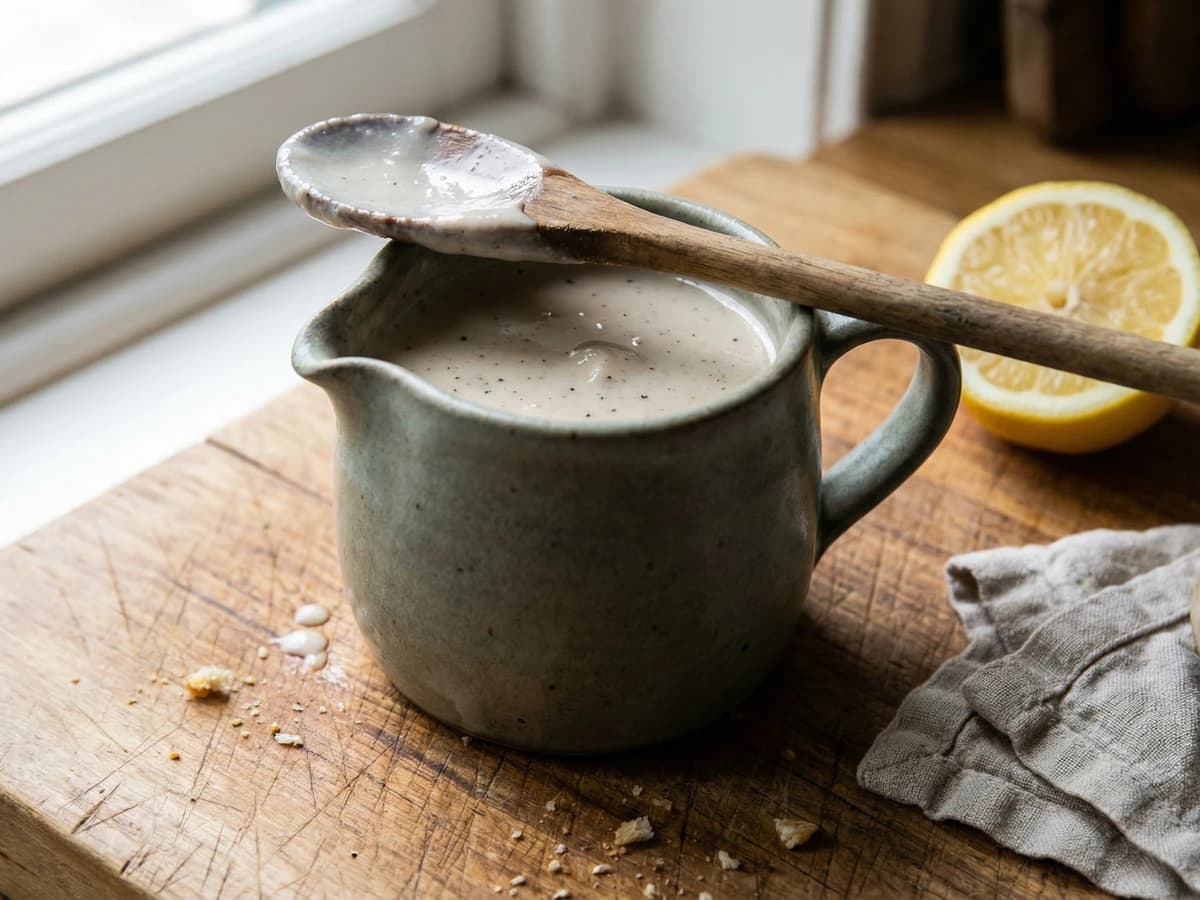
A proper white sauce sharpened with pounded anchovy, the old Georgian trick for waking up a piece of poached fish or a slice of roast lamb on a Sunday in spring.
A cooking platform built around craft, culture, and the stories behind what we eat.
Created by Chef Thomas
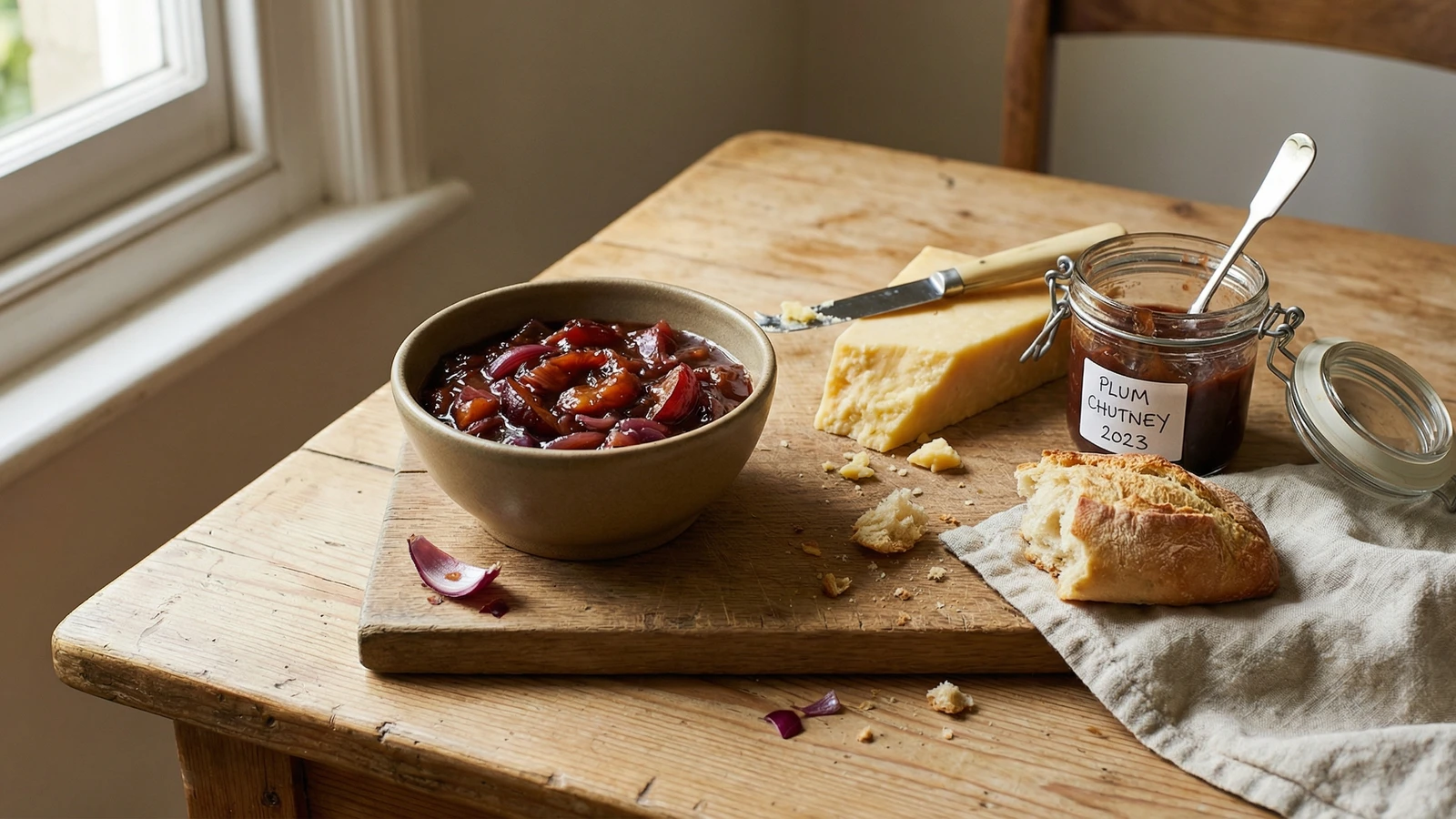
A dark, glossy plum chutney for the slow end of September, when the trees are heavy and the evenings start asking for cheese, bread, and something with a bit of warmth in it.
There's a week in September, sometimes two if the weather holds, when the plums come in faster than anyone can eat them. The greengrocer puts a crate outside with a hand-written sign. The garden tree drops fruit into the grass overnight. People you barely know turn up at the door with carrier bags. This is the week to make chutney.
A plum chutney is a quiet kind of cooking. You chop, you tip everything into a wide pan, and then you let the kitchen do most of the work. For an hour or so the house fills with the smell of vinegar and brown sugar and warm spice, sharp at first, then deeper, until it settles into something like mulled wine left on the hob. By the end the plums have given up entirely and become a dark, glossy, mahogany-coloured thing that wants to live on a cheese board.
This isn't food for tonight. It's food for November, December, the long slow evenings when someone unexpected drops in and you need to put bread and cheese and a small bowl of something sticky on the table without thinking too hard about it. A jar of chutney made in September is a small letter to your future self. Right food, right evening.
I wrote it down in the notebook the first year I made it: "Plums. Vinegar. Cloves. The kitchen smells like the end of something good." That's still the best note I've managed.
Quantity
1.5kg
stoned and roughly chopped
Quantity
2 medium
finely chopped
Quantity
4
finely chopped
Quantity
a thumb
peeled and grated
Quantity
300ml
Quantity
350g
Quantity
1 teaspoon
Quantity
1 teaspoon
lightly crushed
Quantity
2
Quantity
4
Quantity
1
Quantity
1 teaspoon
Quantity
a good pinch
Quantity
1
zest only
| Ingredient | Quantity |
|---|---|
| ripe plumsstoned and roughly chopped | 1.5kg |
| red onionsfinely chopped | 2 medium |
| garlic clovesfinely chopped | 4 |
| fresh gingerpeeled and grated | a thumb |
| cider vinegar | 300ml |
| soft dark brown sugar | 350g |
| black mustard seeds | 1 teaspoon |
| coriander seedslightly crushed | 1 teaspoon |
| cinnamon sticks | 2 |
| cloves | 4 |
| star anise | 1 |
| flaky sea salt | 1 teaspoon |
| dried chilli flakes | a good pinch |
| unwaxed orangezest only | 1 |
Wash your jars and lids in hot soapy water, rinse them well, then put them on a tray in a low oven, around 120C, until completely dry. Leave them there until you need them. Hot chutney goes into hot jars. Cold jars crack and warm jars sweat. This is one of the few rules worth keeping.
Put the mustard seeds and crushed coriander seeds into a dry, heavy pan over a medium heat. Shake them around for a minute or so, until the mustard seeds start to pop and the kitchen smells warm and slightly bitter, like an old spice tin opened on a Saturday morning. Trust your nose. The moment they smell ready, they are.
Add the onions, garlic, and grated ginger to the pan with the toasted spices and a splash of the vinegar. Cook gently for ten minutes or so, until the onions have collapsed and gone soft and translucent. You're not browning them. You're coaxing them into something sweet and yielding before the plums arrive.
Tip in the chopped plums, the rest of the vinegar, the sugar, the cinnamon sticks, cloves, star anise, salt, chilli flakes, and orange zest. Stir everything together. It will look alarming at this stage. Pale, watery, full of unmelted sugar, with whole spices bobbing about. Don't worry. The pan does the work from here.
Bring it gently to a simmer and let it bubble away, uncovered, for an hour to an hour and a half. Stir now and then, more towards the end as it thickens and starts to want to catch on the bottom. The chutney is ready when you can drag a wooden spoon across the base of the pan and it leaves a clear channel that holds for a few seconds before the chutney slides back in. The colour will have gone from bright pink-red to a deep, dark, glossy mahogany. The kitchen will smell like Christmas arriving early.
Fish out the cinnamon sticks, the star anise, and as many of the cloves as you can find. Spoon the hot chutney into the hot jars, right up to the top. Wipe the rims clean with a damp cloth, screw the lids on tightly, and leave them on the counter to cool. You'll hear the lids pop down as they seal. Label them with the date and put them somewhere cool and dark.
1 serving (about 15g)
Culinary guides, cultural storytelling, and the editorial depth that makes cooking meaningful.
Discover Culinary ExplorerChef Thomas
A proper white sauce sharpened with pounded anchovy, the old Georgian trick for waking up a piece of poached fish or a slice of roast lamb on a Sunday in spring.

Chef Thomas
A spiced autumn chutney made from a glut of apples and a quiet afternoon, simmered down until the kitchen smells of October and the jars line up on the counter like a small, useful insurance policy.
Chef Thomas
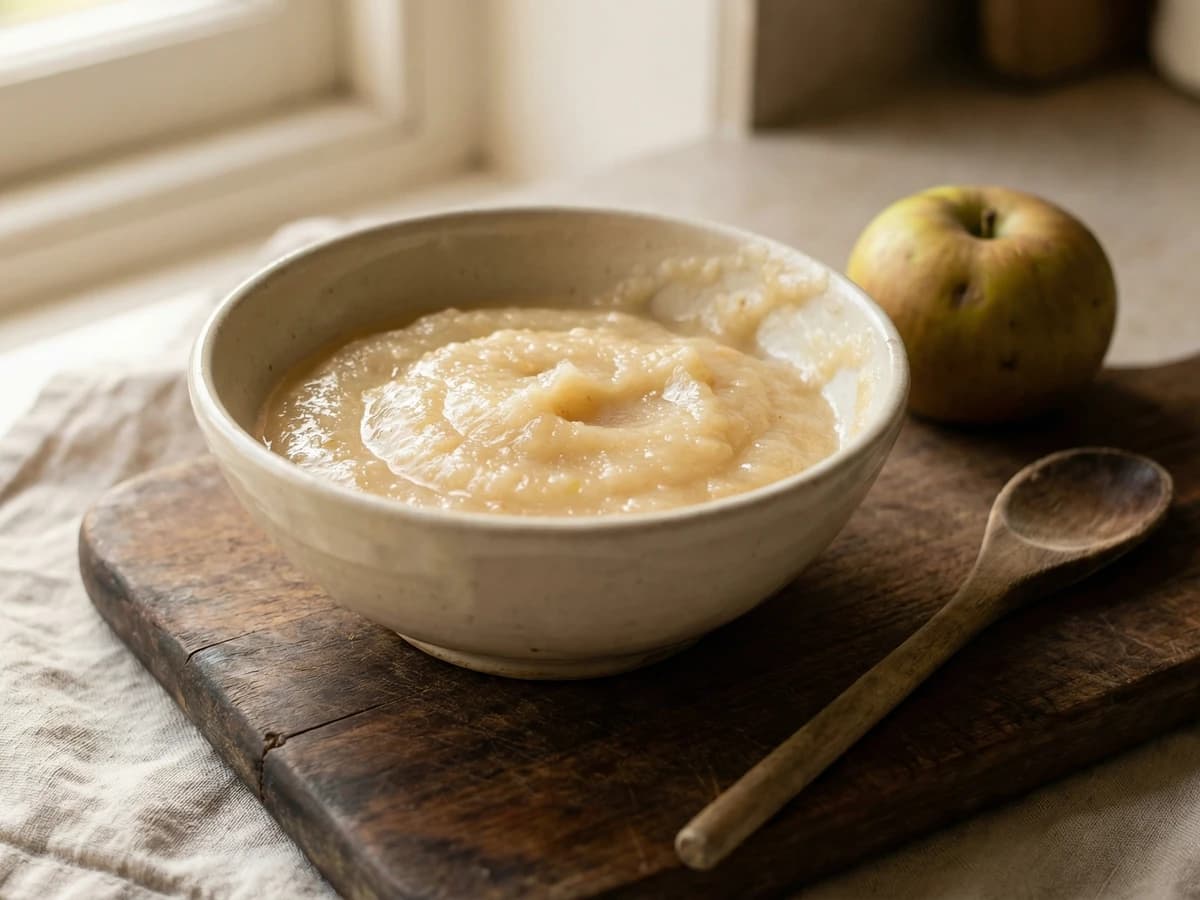
A bowl of sharp, fluffy Bramley apple sauce, made in the time it takes to carve the pork, the kind of small condiment that quietly makes the whole meal make sense.
Chef Thomas
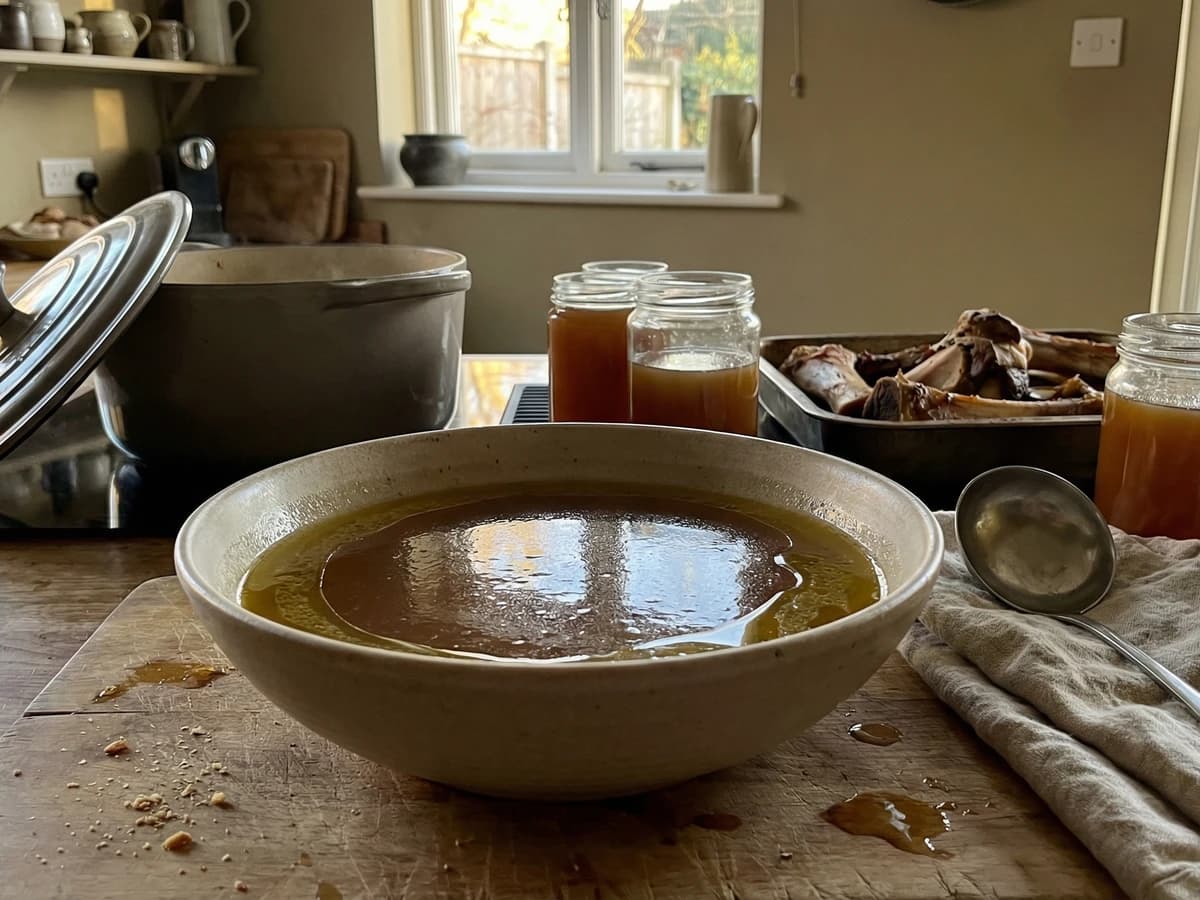
Beef bones roasted until dark, then coaxed for a long afternoon into a deep amber stock, the foundation of every good gravy, every braise, every bowl of winter soup worth the trouble.